

Missions are how players engage with EVILBANE's PvE content, alone or as a squad of up to four. Two mission types have been shown so far, and both are designed around cooperation (see Co-Op and Multiplayer). Each one leans on the game's weapon-swapping and skill setup, so the way a team approaches a mission flows directly from its loadouts and timing in combat.
Confirmed Mission Types
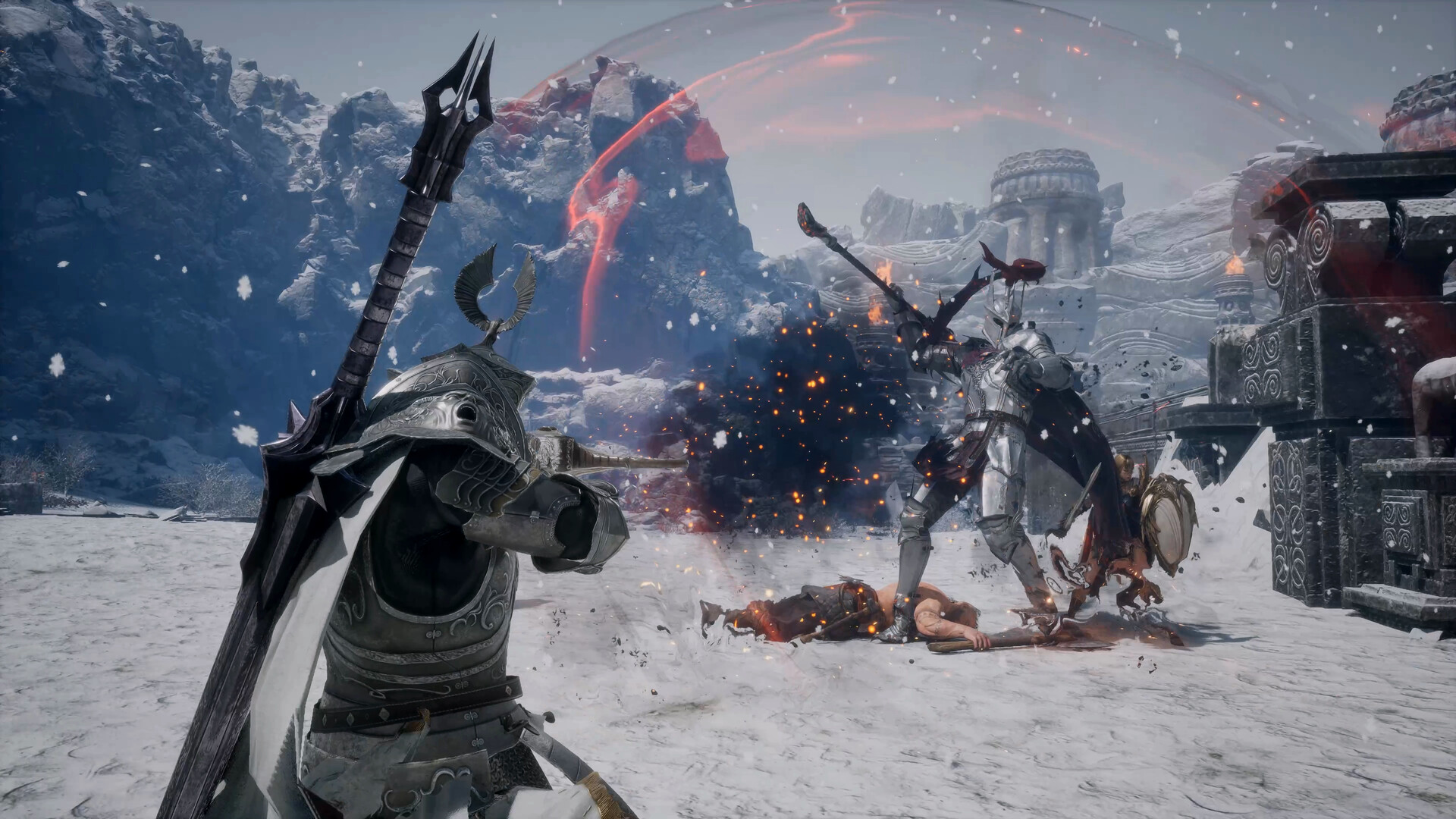
Mode | Description |
|---|---|
Boss Battle | Coordination-heavy fights against demonic foes that reward meticulous teamwork. These encounters are built so a squad has to work together carefully rather than fight as individuals, tying back to the rise of the Archdemon that shattered the world. |
Territory Infiltration | A squad breaks into an enemy stronghold and clears objectives inside it. The focus is on a team pushing into hostile ground together and working through what the location throws at them. |
Progression Loop
Completing missions unlocks greater challenges and higher rewards, so finishing content opens up tougher content and better payoffs over time. Progress is not only personal. The developer has said the result of each mission carries into the wider world, which is why the game asks for cooperation across the whole player base rather than only inside a single party. Every battle is framed as liberating ground the enemy holds, and the shared goal the campaign builds toward is territory recovery. How that world state is tracked, and how far one squad can move it, has not been detailed.
Mission Design
Beyond the mission types themselves, the developer has described how a single operation is laid out. Each mission is built around a central objective, with optional secondary tasks layered on top that hand out bonus rewards and tactical advantages for squads that take them on. Crucially, players are given freedom in how they tackle an operation: a team can push for direct action, look for alternate routes into the area, or lean on members filling specialized support roles. That flexible structure is meant to suit different playstyles and give a mission replay value rather than a single fixed path.
This ties back into the wider loadout-driven design. Because a squad's options in the field flow from its weapons and its Heavenstone System picks, the way a team divides up objectives and roles is shaped by what each player brings. The official framing places this inside a larger, persistent campaign where the choices a team makes feed into a broader, evolving conflict (see Co-Op and Multiplayer).
The director has also described the shape of the space these operations run in. The game is not open-world; it uses an open-field structure built around mission-based operations, so an operation drops a squad into a sizeable area built for that job rather than a seamless map you wander. Boss encounters are described as a core part of progressing through each region, which ties the two confirmed mission types directly to how far you have pushed.
Named Operations
Six individual operations have been named. They are the six the publisher demonstrated on stage at the game's first public showing, listed in its Korean-language announcement of that event. No official English names have been published for them, so the table lists each operation as published alongside a literal translation. Treat the translated column as descriptive rather than final, and expect the naming to change before release.
Operation (as published) | Literal translation |
|---|---|
이교도의 은신처 | Heretics' Hideout |
전초기지 파괴 | Destroy the Outpost |
악마 추종자 | Demon Followers |
성소 복원 | Restore the Sanctuary |
고립된 마을 해방 | Liberate the Isolated Village |
타락한 도미니온 | The Corrupted Dominion |
These are individual operations rather than additional mission types. They sit inside the two confirmed categories above, and their names give a sense of the objectives a squad is sent to complete: clearing out cultist positions, destroying enemy infrastructure, restoring holy ground, and freeing settlements the demonic side has taken. Because they were shown as a demo line-up, treat the set as a snapshot of what was playable at that event rather than the finished mission list.
How Much Was Playable
The developer has given one figure for scale. The pre-alpha build had seven operations implemented as of November 2025, when sign-ups opened for the Steam test. Read that as how much content existed at that point in development, not as the number of missions the finished game will ship with.
What Is Not Yet Public
The full mission roster: only the two mission types above have been shown, and the total number of missions or modes has not been revealed.
Campaign structure: how the larger campaign is organized, paced, or branched is not yet detailed.
Rewards: specific drops, loot tables, or reward tiers have not been announced.