
Loading...
Loading...
Quest System
September 7, 2026 at 02:53 AM
Added the named quests confirmed in the shipped game, the expiring and phase-gated journal icons, the point of no return and the three romance options
The Blood of Dawnwalker's quest system has no formal distinction between main quests and side quests. Instead, players encounter stories of varying scale and significance, all feeding into the Narrative Sandbox framework. The player's objective throughout the game, saving Coen's family from Greifberg, can be approached through countless combinations of quests, alliances, and actions.
Many quests offer two distinct approaches depending on the time of day. Human/day approaches tend to involve diplomacy, favors, and combat using the directional sword system. Vampire/night approaches let players use supernatural abilities and stealth, but they face different enemies and greater resistance from Brencis's nocturnal forces.
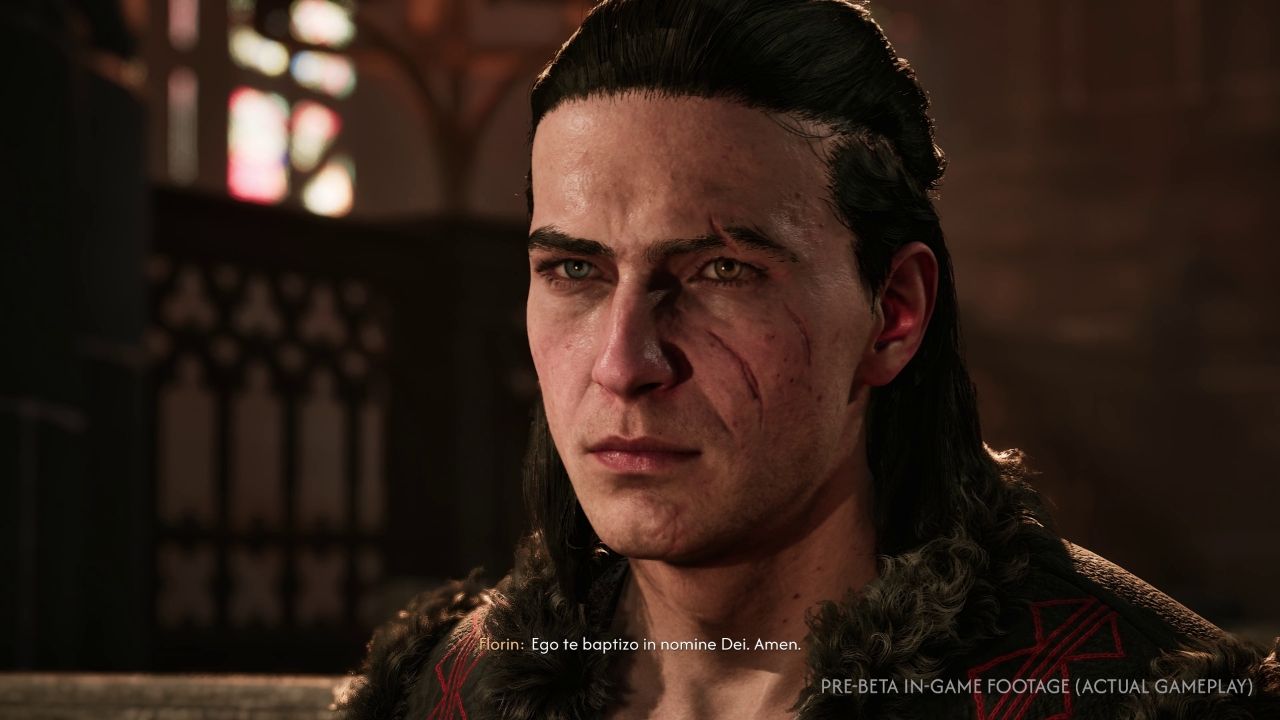
Rebel Wolves demonstrated this duality at Gamescom 2025 with a cathedral quest in the Silberkreis district:
Night version (Day 8): Coen infiltrates the cathedral and encounters the ancient vampire Xanthe, who uses Shadowstep abilities to move through the building. The encounter focuses on vampire-on-vampire combat
Day version: Coen searches for Saint Mihai's legendary sword. He fights Murohni, a creature born from a failed vampire transformation, and eventually encounters the corrupted Saint Mihai himself. Mihai was a historical Dawnwalker entombed alive centuries ago by villagers who discovered his nature. Centuries of starving during the day while regenerating at night drove him insane
These are not slight variations. The two paths feature entirely different enemies, narratives, and rewards.
NPCs have their own lives and react to the player's actions and to the changing state of the world. Side characters can become allies, enemies, or casualties depending on the player's choices. The blood craving system adds another dimension: feeding on an important NPC during a nighttime interaction can permanently lock the player out of that character's quest lines.
The time-as-a-resource mechanic means quests have real stakes. Helping one village might mean another falls while the player is away. Some quests have implied countdowns where events progress whether the player is present or not. Because only 30 days and 30 nights are available, completing every quest in one playthrough is impossible by design.
The absence of a gating main quest cuts the other way too. Once the prologue's walled area opens up, nothing stops a player from walking straight across the map to Brencis in his castle at the centre of the city and starting the final confrontation immediately. Doing it that early means going in badly under-levelled, without the abilities unlocked by draining his lieutenants, but the route is open from the moment the world is.
In early July 2026, roughly eight minutes of gameplay from an early quest called Deep Down were shown. A still-human Coen ventures into an underground tomb in search of Lazar, a villager who has gone missing. The quest layers three of the game’s core systems together: investigation, exploration, and combat.
Using Focus Mode, Coen studies ancient clay tablets and wall murals scattered through the ruin. Reading them rewards the player with hidden lore and special loot, and it pieces together the tomb’s history: it holds a warrior who once fought the vrakhiri and chose to burn alive rather than be turned into a vampire. The trail of murals leads to her sarcophagus. The sequence ends with a boss fight against The Forgotten Guardian, a sword-wielding sentinel that protects the tomb.
Former Witcher 3 lead quest designer Mateusz Tomaszkiewicz confirmed that romance is part of the quest system: "Of course there is romance... You can expect to build relationships with characters." These relationships are woven into the narrative sandbox rather than being separate romance questlines.
Journal entries carry their time cost before the player accepts them, and two icons flag conditional quests. A blue clock marks a quest that will expire if it is left too long. A sun or a moon marks one that can only be started during that half of the cycle, which is the game’s way of saying that a lead is not lost, only out of reach until the phase turns.
A point of no return is signposted before the finale, and the pressure of the clock eases once the story passes it. Play also continues after the main quest is finished rather than ending there.
Quests confirmed by name in the shipped game include the following. They are listed alphabetically rather than in the order they can be found, since the game does not enforce one.
Quest | Notes |
|---|---|
A Bulwark Against Darkness | A named quest in the valley. |
Blasphemy | A named quest in the valley. |
Cursed Chasm | Leads to the broken bridge in the north-west of the Briar Sloughs and to the legendary sword Durandal. |
Echoes of Silenced Bells | A named quest in the valley. |
Forge it Anew | Concerns reforging a blade from recovered shards. |
Home Sweet Home | A named quest in the valley. |
Into the Den | A named quest in the valley. |
Letters to Lunka | Tied to Coen’s sister. |
The Firebrand | A named quest in the valley. |
The Gilded Gauntlet | Ends with Coen drinking Ambrus’s blood, which unlocks the vampiric ability Scarlet Shield. |
The Heart Wants What It Wants | A named quest in the valley. |
Under Watchful Eyes | A named quest in the valley. |
Where Loyalty Lies | A named quest in the valley. |
The Manumits, a rebel group opposed to vrakhir rule, can be joined during play. Three romance options exist across the campaign.