
Loading...
Loading...
Progression System
May 25, 2026 at 03:57 PM
Added Journey Level System section (account-wide level confirmed at April 2026 second AMA) and Confirmed Design Boundaries section (solo-only main story, no PvP, no trading, no transformations, 6+ character launch floor, sequential story updates)
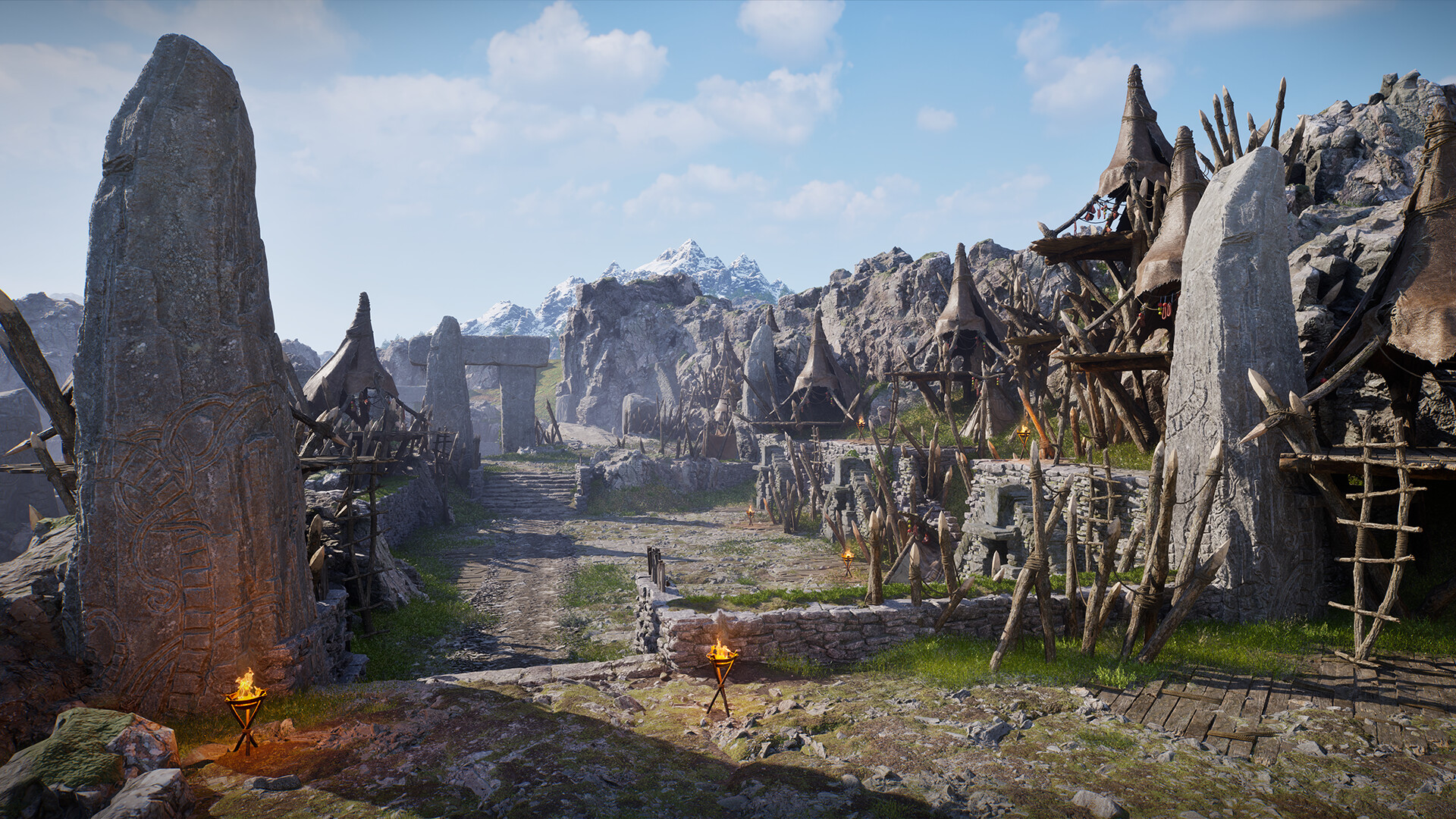
The Progression System in Vindictus: Defying Fate connects character leveling, ability trees, weapon crafting, and material gathering into a single account-wide progression loop. Player power grows by leveling the account, spending Ability Points on permanent upgrades, and crafting and enhancing weapons that boost combat stats.
Character growth is account-based rather than per-character. When your account reaches level 4, all four playable characters are level 4 with the same base stat increases. You do not need to grind each character separately. Leveling one benefits all of them.
XP comes from story progression, combat encounters, and boss kills. Characters can be switched at any campsite. Since levels and Ability Points are shared across the account, swapping from Lann to Karok mid-session does not mean starting over at a lower power level.
The ability system splits into two categories:
Tree | Scope | Effect |
|---|---|---|
Shared Abilities | Account-wide | Utility and survivability upgrades. Increased Flovian Flask capacity, higher base HP and damage, improved combat resource management. Every character benefits from these. |
Exclusive Abilities | Per-character | Character-specific enhancements that improve Active Skills and combat style. Each playable character has their own tree. Lann gets faster dodges, Fiona gets stronger counters, Karok gets more impactful Clashes, and Delia gets refined parry follow-ups. |
Abilities unlock sequentially through branching skill trees. Once purchased, they are permanent. There is no respec. This makes every point spent a long-term strategic decision.
Ability Points are stored at the account level, so points earned on one character can be spent on another's Exclusive tree. The split between Shared and Exclusive means you can specialize one character heavily while still keeping a baseline of survivability buffs that follow all four into combat.
Ability Points come from multiple sources, with exploration the most efficient early on:
Source | Notes |
|---|---|
Exploration chests | The primary source early on. Hidden across each region, often gated by ziplining, climbing, or solving environmental puzzles. |
Boss kills | Faction bosses and Special Mission bosses award AP in chunks, typically larger amounts than chest pickups. |
Story progression | Some major story beats trigger AP awards as part of completion. |
Finding all hidden AP in a region requires thorough exploration. Checking every side path, climbing every surface, and opening every chest.
Higher-tier ability nodes require specific upgrade materials beyond raw AP. These materials gate the most impactful unlocks in both trees:
Material | Used For |
|---|---|
Still Crystal of Eternity | Unlocks key mid-level Shared Ability nodes. |
Frozen Orb of Origins | Unlocks the ultimate Shared Ability node (final unlock in the shared tree). |
Burning Crystal of Eternity | Unlocks key mid-level Exclusive Ability nodes. |
Tempestuous Orb of Origins | Unlocks the ultimate Exclusive Ability node (final unlock in each character's tree). |
Weapons are crafted at the blacksmith Graham in Colhen. The system is straightforward:
Defeat bosses or complete Special Missions to obtain Blueprints.
Gather materials: Hanner (currency), Charcoal, Findium, and rarer resources from exploration.
Visit Graham and select "Craft & Enhance Weapons" to craft the weapon.
Blueprints are account-wide. Once unlocked, any character meeting the requirements can use them.
Weapons are class-exclusive:
Character | Weapon Type |
|---|---|
Twin Swords | |
Longsword and Shield | |
Battle Pillar | |
Bastard Sword |
See the Weapon Crafting article for full details on Blueprint sources and crafting workflow.
Weapons can be enhanced multiple times using Hanner plus materials from exploration and missions. Each enhancement raises the weapon's Weapon Level, boosting attack power, critical chance, and precision stats:
Stat | Effect at Each Enhancement Step |
|---|---|
Attack | Higher base damage across the full combo tree and active skill damage. |
Critical Chance | Improved odds of landing a critical hit. |
Precision | Hits land at the intended damage level more reliably and interact more favorably with target resistances. |
Progression is linear and predictable, with no random failure chance, but each weapon has a maximum enhancement cap. When you hit the cap, you craft a new weapon from a higher-tier Blueprint to keep progressing.
An important detail for inventory management: weapons in Defying Fate function as equippable stat upgrades managed through the Fitting Room at the Boutique. They do not take up regular inventory slots.
The inventory divides into three categories:
Category | Description |
|---|---|
Combat Items | Flovian Flasks and consumables, with 5 quickslots for fast access during fights. |
Materials | Crafting resources like Charcoal, Findium, and Crystals. |
Valuables | Items that exist primarily to be sold to NPC merchants for Hanner. |
Excess consumables auto-transfer to storage when inventory fills, so players do not have to micromanage bag space mid-mission.
The April 2026 second AMA confirmed that character growth in Vindictus: Defying Fate is structured around a single account-wide level the team refers to as the Journey Level. Rather than maintaining individual experience pools for each playable character, every fight, mission, and story beat feeds the same shared level pool, and every character on the account scales together.
This design choice exists so that swapping from Lann to Karok or pulling out Evie when she ships does not feel like restarting at low power. Players who reach Journey Level 4 see all four (or eventually six-plus) characters at level 4 with the appropriate base stat increases. Active Skill mastery, weapon enhancement, and character-specific Exclusive Ability nodes still live on the individual character, so swapping is not a strict equivalence, but the base-stat floor is shared.
Beyond the Journey Level loop, the April 2026 second AMA confirmed a set of design boundaries that govern what is and is not part of the launch experience:
Boundary | Status |
|---|---|
Main story | Solo-only. The narrative is designed for individual players to follow without other player characters in cutscenes. |
Co-op multiplayer | Supported up to 4 players via matchmaking or invite codes; progression is separate from the campaign and covers Special Missions only. |
PvP | Not in the launch design. |
Player-to-player trading | No direct trading system at launch. |
Transformation mechanics | Not planned at launch. |
Roster floor | At least six characters at launch (April 2026 AMA: "6 is the floor we're working toward"). |
Story content rolls out sequentially through post-launch updates rather than shipping in a single drop. The team referenced Mabinogi Heroes Season 1 only as a cadence model, not as carry-over content.
A typical progression loop looks like this:
Run a mission or explore a region, gathering AP from chests and Hanner plus materials from drops and breakables.
Return to Colhen, spend AP on Shared and Exclusive ability nodes, craft or enhance the next weapon tier at Graham.
Re-enter combat with stronger stats from both the ability tree and the enhanced weapon. Tackle a harder fight to drop the next Blueprint and the next batch of materials.
Because everything is account-wide, time invested on one character translates into progress for the entire roster. Switching characters at a campsite to take a different style into a tougher fight is supported and encouraged.
