
Loading...
Loading...
Loadouts and Arsenal
September 12, 2026 at 12:56 AM
Named the six progression tracks, added a table of individually named weapons, vehicles and gear with their Season 1 unlock levels, and restated what the developers have and have not published
Instead of choosing from preset classes or heroes, WARDOGS players build a fresh loadout every time they spawn. Using their cash, they pick from a shared pool of weapons, equipment, and utility items, from rocket launchers to a marksman’s rifle and ghillie suit, to suit the situation in front of them.
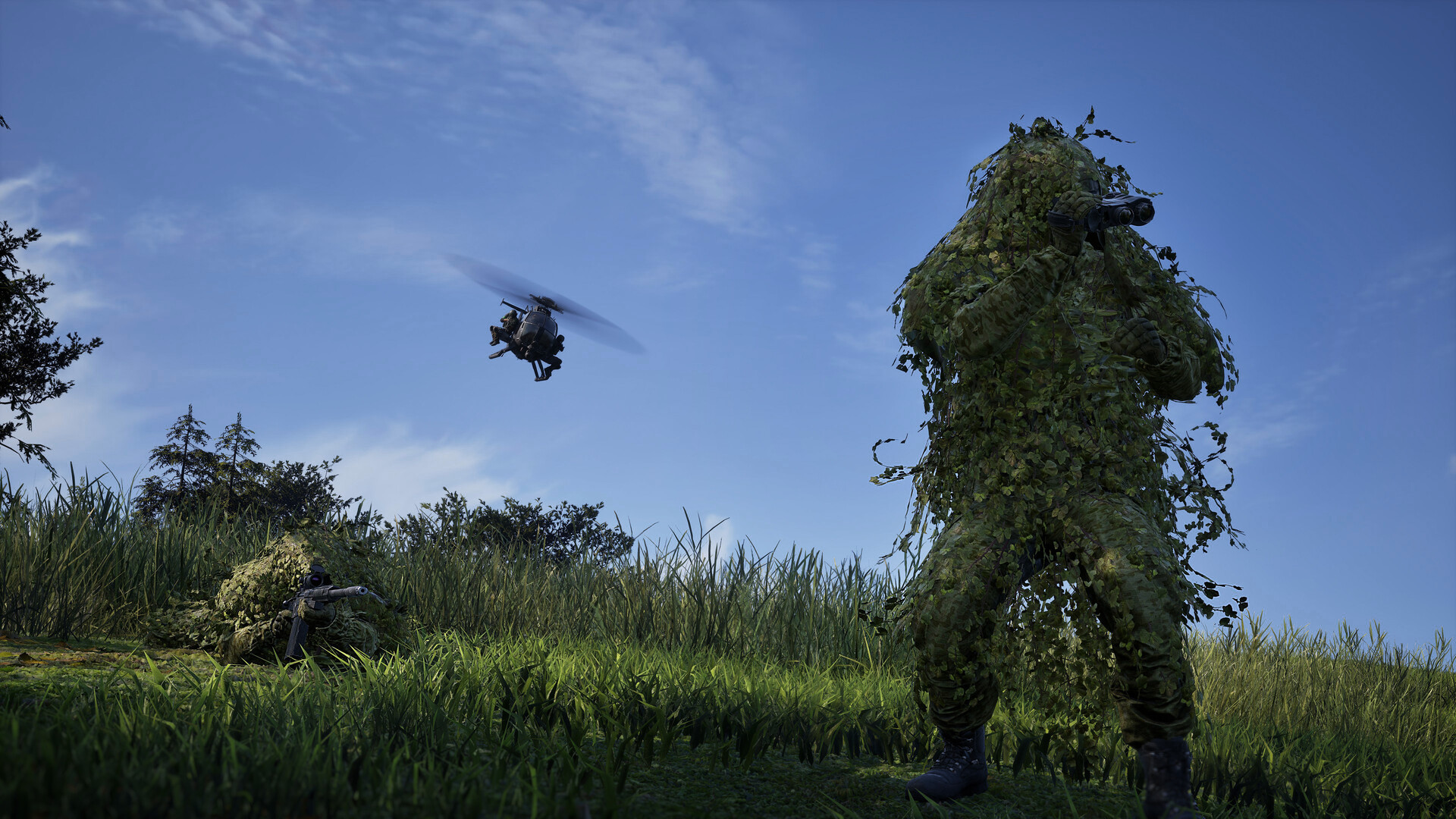
Although there are no fixed classes, the sandbox supports a wide range of combat roles to spend cash on, including close-quarters fighting, sniping and spotting, medical support, building, demolitions, transport, logistics, and artillery. Buying specialist gear for these roles earns experience across six progression tracks, named in the Season 1 patch notes as Career, Medic, Support, Driver, Pilot, and Recon. Each track gates its own items behind its own levels, so the gear a player keeps buying is the gear they unlock more of. Profits can also be converted into Gold Bars for cosmetic unlocks.
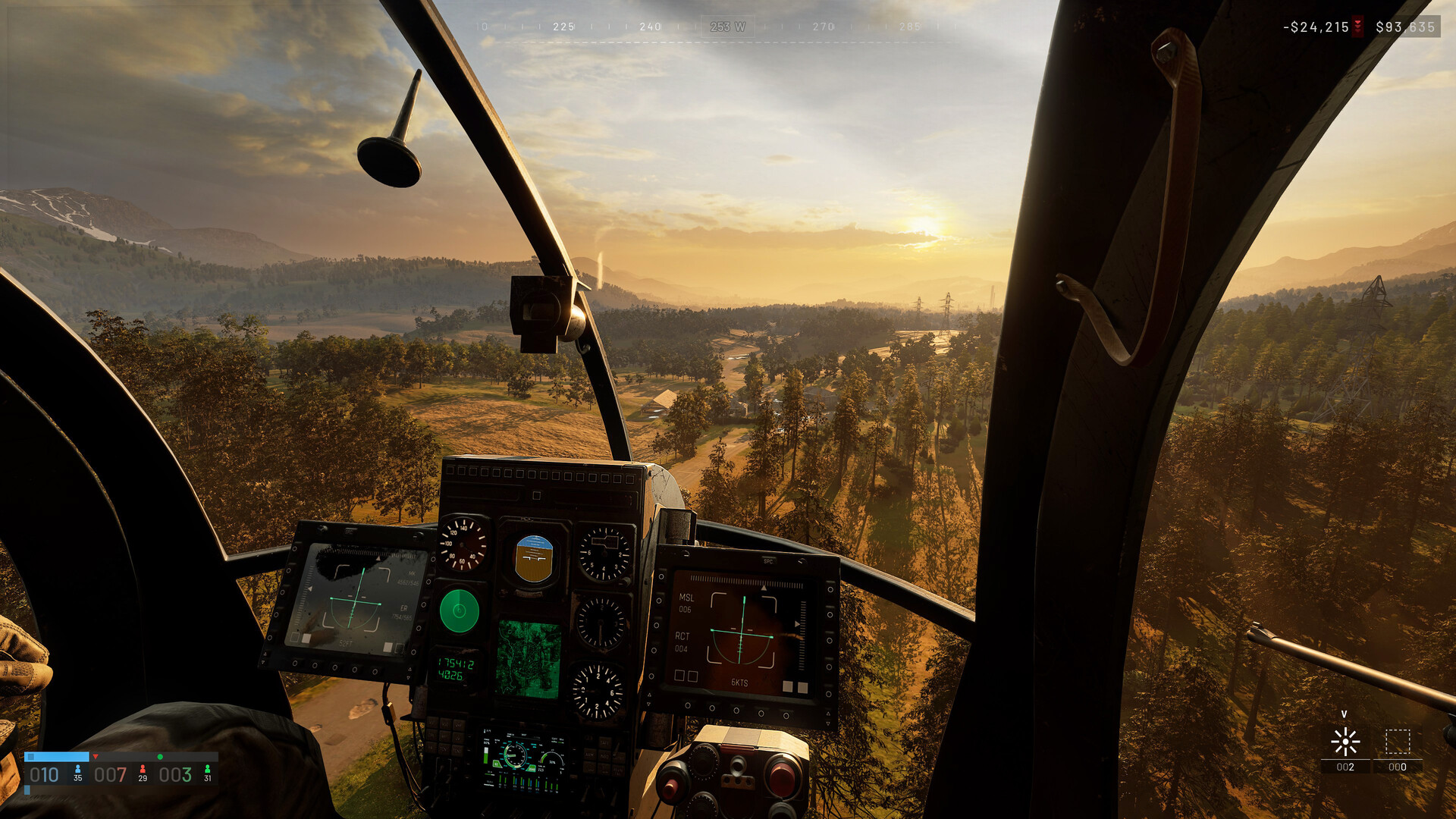
The developers point to Medic and Pilot as examples of these player-defined roles: rather than picking a class, a player simply buys the gear that fits the job, whether that means medical equipment to keep teammates alive or a helicopter to move them around the map. Because the choice is made through the buy menu each life, the same player can field a different role on the very next spawn.
The arsenal reaches well beyond infantry gear. WARDOGS is a combined-arms shooter, so players can also buy vehicles, from helicopters that ferry troops to tanks, among them a heavily armoured tank and a long-range artillery tank. A well-funded team can field air support and ground armour alongside its foot soldiers. Planned additions such as fighter jets are set to arrive after early access rather than at launch, alongside expanded weapon categories and further maps and vehicles. The developers have still not published an armoury page, but the number of individually named models has grown. Four appear in the storefront listing for the optional Supporter Pack, whose camouflage patterns are tied to specific starter weapons and one aircraft: an A-91 rifle, a Bushmaster, a KH-2002, and the Littlebird helicopter. Each weapon camo is branded to one of the three factions, an A-91 for Valkyra, a Bushmaster for Lonestar, and a KH-2002 for Manticore, and the Littlebird pattern is styled as a taxi livery in a nod to ferrying teammates to the zone.
Because every role is bought rather than locked in, players can change their approach from life to life, shifting from frontline assault to support or vehicle crew as the match and their budget allow.
The list below is not an armoury. It gathers the weapons, vehicles, attachments, and gear that official material has named so far, most of them as a side effect of the Season 1 balance pass published on 9 September 2026 rather than through any published roster. As of 11 September 2026 the developers have not released a complete weapon or vehicle list, so treat this as a floor rather than a full inventory. Weapon designations that appear only on the heads-up display in store screenshots are left out, because a label in a screenshot does not confirm what ships.
The patch notes list each item against the progression track that unlocks it and the level it unlocks at. Several of those levels moved when the season began.
Item | Track | Season 1 unlock level |
|---|---|---|
Sports Parachute | Career | 35 |
Large Backpack | Career | 55 |
762x54mm AP | Career | 82 |
556mm AP | Career | 83 |
Deagle | Career | 85 |
Artillery Tank | Career | 90 |
PP-19 50-round drum magazine | Medic | 29 |
Large Hammer | Support | 8 |
Medium Hammer | Support | Not published |
6-10x MRAD scope | Recon | Not published |
6-10x MOA scope | Recon | Not published |
Small armoured supply crate | Pilot | Not published |
Little Bird with miniguns | Pilot | Not published |
Z20 Lakota | Pilot | Not published |
URAL | Driver | 3 |
Kodiak Assault | Driver | 6 |
Dune Buggy | Driver | 8 |
Kodiak Flatbed | Driver | 10 |
Large Supply Crate | Driver | 16 |
URAL Covered | Driver | 18 |
Music Tape H | Driver | 23 |
URAL Attack | Driver | 25 |
Humvee with minigun | Driver | 30 |
Heavy Tank | Driver | 35 |
Bought from a vendor | Not applicable |
Deployable 155mm, 122mm, and flare munitions exist alongside those, and at launch they were changed to take up more room in a loadout. The Large Hammer sits in two places at once: it unlocks on the Support track and is also sold by a vendor, at separate prices.
The studio spells the light helicopter two ways in its own copy. The Supporter Pack listing writes Littlebird as one word, and the Season 1 patch notes write Little Bird as two. Both are official text and neither has been corrected, so both spellings appear here.
Shooting is built on a physics-based ballistics model rather than hitscan. Rounds penetrate light cover, thin walls, and foliage, they ricochet off hard surfaces, and they drop over distance, so long shots ask the shooter to read range rather than simply centre the sight. The studio worked with ballistics specialists on the underlying model, which is the same programme of work that produced the flight handling described under Development.
The presentation carries the same detail. Inspect animations exist not only for weapons but for equipment items as well, so gear a player has bought can be looked over in the same way a rifle can.
Marksmanship is treated as its own discipline within that model. The developers list zeroing, bullet drop, projectile velocity, and ricochets as the variables a shooter has to read, along with range finding and spotting targets for squadmates, and they say ghillie suits are genuinely effective as concealment. They have also ruled out two conventions of the genre: there are no scope glints to give a sniper away and no sweet-spot damage gimmick, so a long shot is a question of reading the distance rather than hitting a scripted band.
