Loading...
Loading...
Crafting and Resources
June 26, 2026 at 06:56 AM
Updated the bronze and tin economy for Test 45 (Bronze smelts from Malachite, Cassiterite becomes Tin Ingots for Longswords), and noted Iron Ore fragment yields and resource day-gating
Almost everything in Anvil Empires is made by a player. Weapons, armour, food, structures, and siege engines all start as raw materials gathered from the world, processed through workshops, and assembled into finished items. The game ships with around a hundred and fifty distinct resources spread across nine categories, plus the ingot tier system that drives gear progression.
Category | Examples | Use |
|---|---|---|
Raw natural | Branch piles, berry bushes, flint, clay, stone chunks | Starter tier; gathered with bare hands or basic tools. |
Wood | Mireland Beech, Briar Spruce, North Astrian Pine | Trees yield logs that become planks and reinforced planks. |
Mineral | Iron ore, coal, malachite, cassiterite, lead | Smelted into ingots at a Furnace. |
Animal products | Bones, fat, meats, pelts, sinew, feathers, eggs | Hunting and fishing yield; feed cooking and leather processing. |
Crops | Wheat, cabbage, flax | Farmable; each yields seeds for replanting plus a primary product such as flour or fiber. |
Smithing components | Bronze armour plating, blade types | Intermediate parts for the Forge. |
Processed materials | Ingots, planks, leather, linen, stone bricks, mortar | Output of workshops, fed into structures and gear. |
Munitions | Arrows, scorpion arrows, catapult boulders | Ammunition for combat and siege. |
Currency | Silver | Earned via the bounty system and trade; spent at town vendors. |
Smelting raw ore at a Furnace yields one of four ingot tiers, which form the backbone of weapon and armour progression. Higher ingot tiers consistently outperform lower ones for the same item type.
Tier | Source | Typical Use |
|---|---|---|
Iron | Iron ore | Standard mid-tier weapons and armour: Iron Sword, Iron Shield, Iron Mace. |
Bronze | Smelted from Malachite mined at Malachite Mines (overworld and underworld); a Bronze Ingot now needs three Malachite and no longer requires Cassiterite | Early to mid-tier kit: Bronze Sword, Bronze Knife, Bronze Axe. |
Lead | Lead ore | Specialised use; trade resource and component material. |
Steel | Higher-tier processing | Top-tier weapon and armour material in the current build. |
Forge: Turns ingots and components into weapons, armour pieces, and tools.
Furnace: Smelts ore into ingots and processes specific raw inputs into refined materials.
Grain Mill: Processes wheat into flour and seeds into animal feed; can be operated manually or driven by a Hand Crank Adapter.
Tilled Field: The base unit of Farming production; planted with seeds for wheat, cabbage, or flax.
Hearth, Oven, Pantry: Cooking stations that turn raw food into cooked meals and store them for the household.
Repair Bench: Maintains tools and equipment in the field.
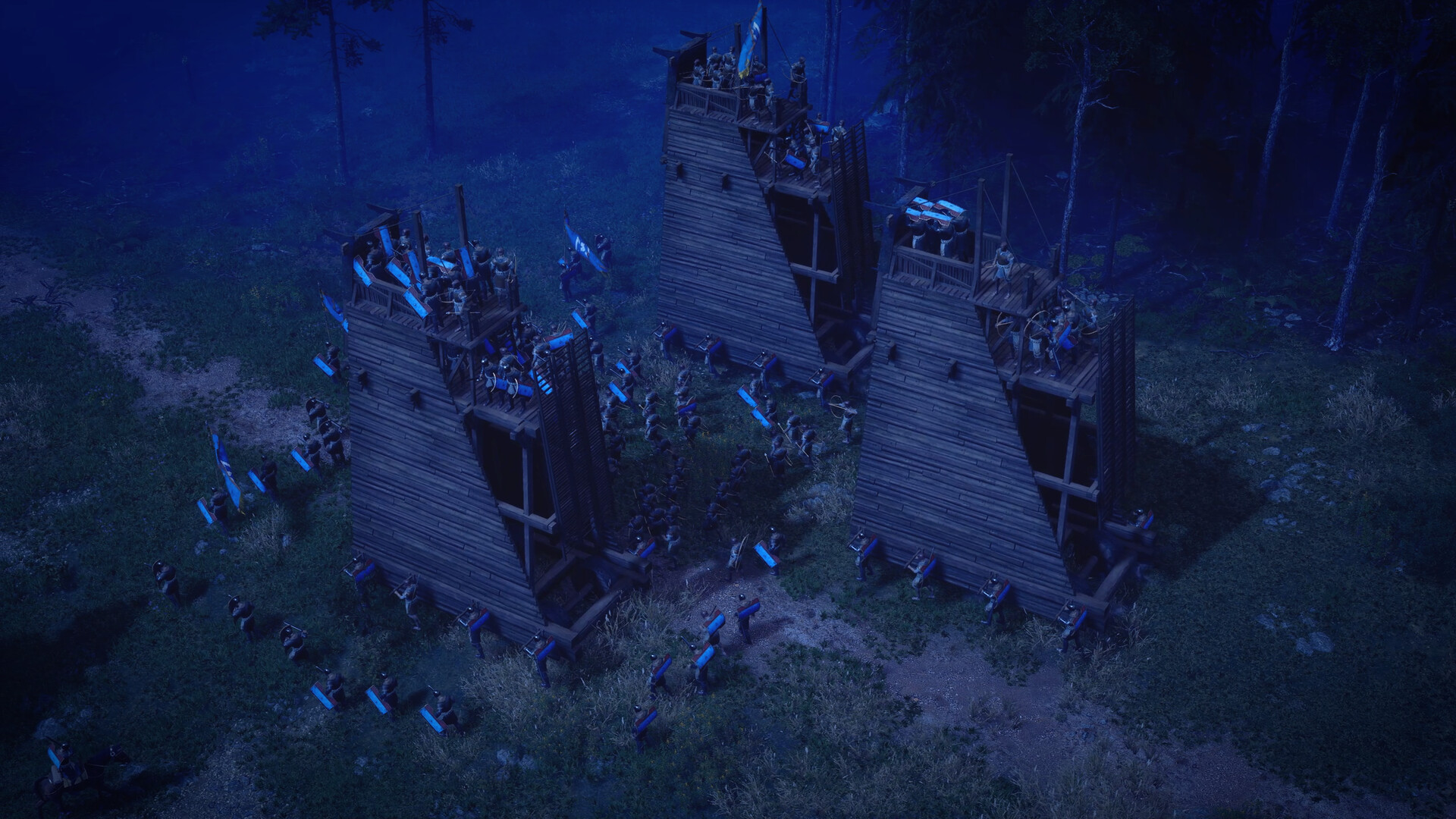
A typical production chain in a faction looks like this: a homestead farmer plants Tilled Fields with wheat and flax; a hunter brings in deer meat and pelts; a miner extracts iron ore and clay; ingredients flow into a town Furnace and Grain Mill; ingots feed the Forge for arms and armour; cooked meals stack in the Pantry; and a caravan packs barrels of bread, arrows, and ingots and takes them out to the supply camps. Players are free to specialise in any link of the chain; almost no one does the whole loop alone.
The most recent build reworked several resource chains. Bronze Ingots are now smelted from Malachite rather than Cassiterite, while Cassiterite Ore is processed into Cassiterite Fragments and then smelted into Tin Ingots, which are required to craft Longswords. Iron Ore now breaks down into four Iron Fragments and Coal Chunks into four Coal Fragments. Heavy Armour now requires Steel to craft. Some world resources also unlock only after an age has been running for a set number of days: Hemp after two days, Coal after three, and Tin after four, and Coal mining is no longer restricted by temperature or season.
Farming
Cooking