

Streets of Rogue 2 unfolds in a single, persistent, procedurally generated island nation rather than the separate levels of the original game. The developer has stated the map is more than 10,000 times the size of a single level from the first game, and that everything is contained in one continuous open world without loading screens between activities. Each new save generates a whole island country with cities, towns, rivers, and forests, then loads and unloads sections in the background as the player moves.
Scale and Structure
The world is built using a system of chunks: handcrafted pieces of map (interiors, parks, road intersections, and other features) that the game stitches together procedurally. The world is measured in three nested units: tiles are the smallest unit of the world (the base grid square), chunks are sections such as a building interior, a park, or a road intersection, and regions are the largest unit.
Unit | Description | Size Range |
|---|---|---|
Region | The largest unit of the open world; contains multiple chunks. | From 4x4 chunks (smallest) up to 16x16 chunks (largest). |
Chunk | A handcrafted section such as a building interior, park, or road intersection. | From 8x8 tiles (smallest) and 16x16 tiles (normal) up to 64x64 tiles (largest, equal to the smallest region). |
Tile | The smallest unit of the world; the base grid square that chunks are made from. | 1x1 tile. |
Compared with the original game, the sequel offers a much wider variety of chunk sizes: twelve total, up from three in the first game. Smaller chunks were added to fill out cities so they feel dense rather than full of empty space. See Chunks and World Generation for the full breakdown of how the chunk system works and how chunks are authored.
Locations and Biomes
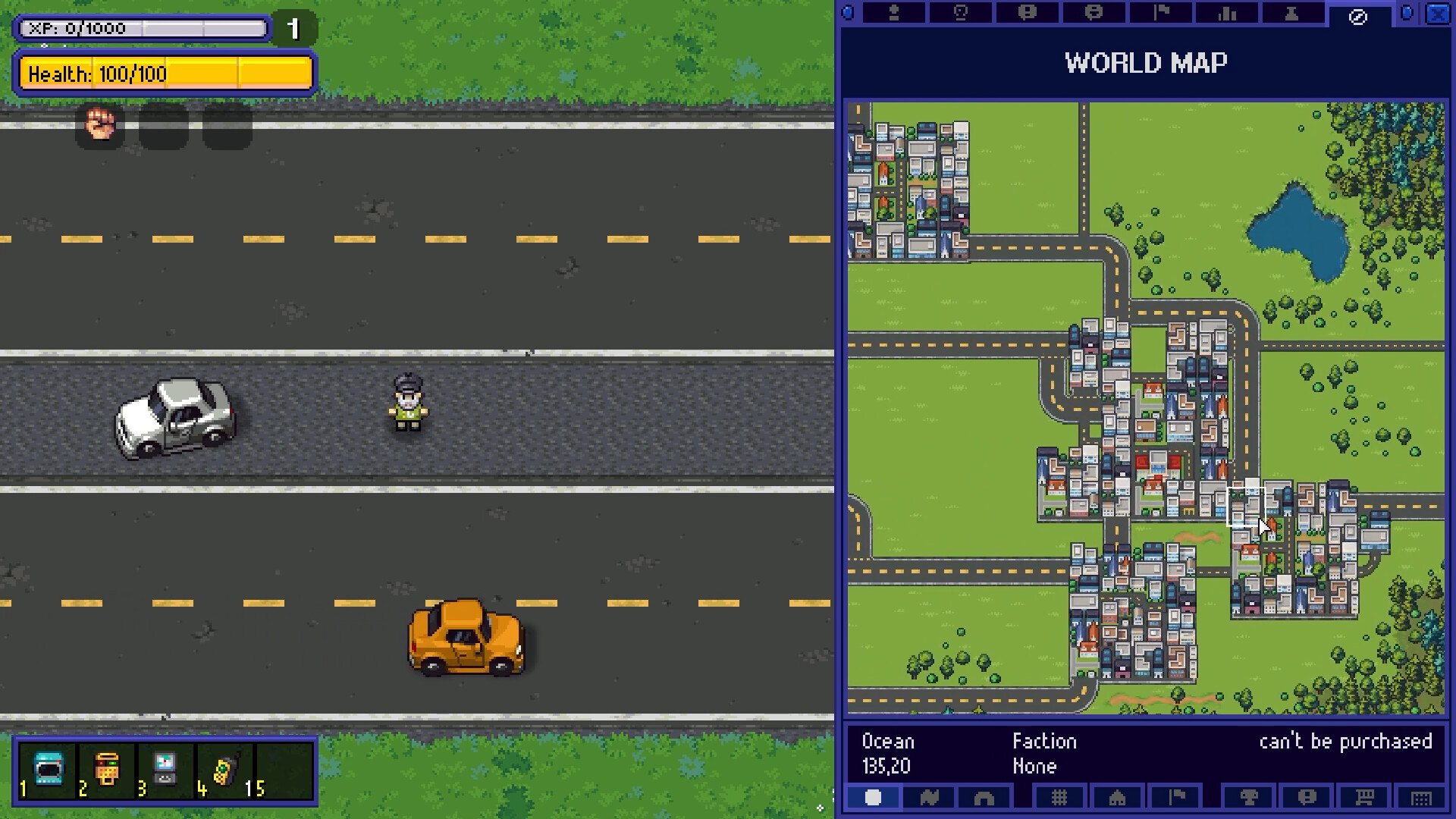
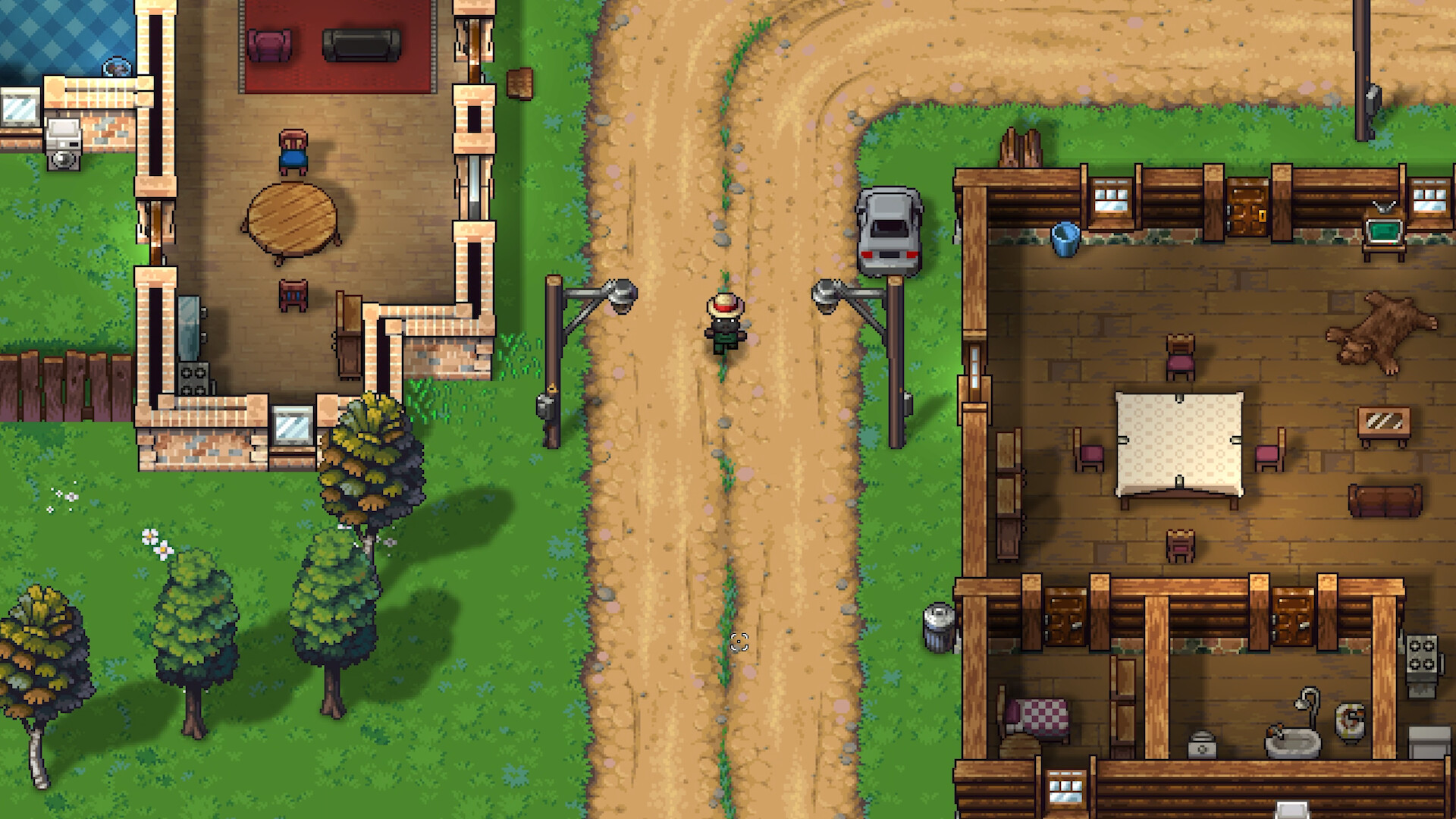
The developer has publicly described or shown locations including neon-lit cities, serene countryside, mysterious caves, sunlit islands, creepy graveyards, sewer environments, and crypt environments. Cities are denser than they were in earlier alpha builds, with smaller filler chunks now used to avoid the over-open spaces players complained about. Forest, sand, sewer, and crypt biome textures are confirmed; transition tiles between biomes have been a recurring focus of patch fixes. Dirt walking paths now properly connect to concrete roads and to unique-chunk paths, and unique chunks themselves can extend dirt paths from one chunk to another for more natural connections.
World Features and Biomes
The terrain layer is built from a defined set of features. Most are in current builds; one of the bigger ones is not yet generated at all, though the world already reserves room for it.
Feature | Status | Notes |
|---|---|---|
Grasslands | In game | The baseline overland biome. |
Forest | In game | Built in several layers, with the inner layers becoming darker and denser. |
Beach | In game | The coastal transition between land and ocean. |
Ocean | In game | Open water. Crossing it requires a boat; see Vehicles. |
Island | In game | Can appear in the middle of a lake or out in the ocean. |
Lake | In game | Inland water. Deep water allows drowning. |
River | In game | Boats may eventually become a way to travel rivers into areas that are dangerous to reach by land. |
Road | Complete | Concrete roads carry vehicle traffic between settlements. |
Walking Path | Complete | Dirt paths that connect into roads and can extend from one unique chunk to another. |
Badlands | In game | Most textures and some objects have been created, and the developer's August 2026 status lists the Badlands tileset as mostly implemented alongside a new set of objects. |
Mountains | In development | Not yet generated, but spaces for them are already carved into existing worlds. |
Bridge | Planned | Committed in design but not built. |
Settlements
Populated places come in eleven varieties. Seven are generated in current builds, and the four that are not include a gorilla settlement that pairs with the Gorilla character Class.
Settlement | Status | Notes |
|---|---|---|
Standard City | In game | The baseline city type that the other city variants derive from. |
Industrial City | In game | Production-oriented city variant. |
Port Town | In game | Coastal settlement, tied to the boat and island systems. |
Run-Down City | In game | Low-prosperity city variant. |
High-Class City | In game | Affluent city variant. Sturdier building materials tend to concentrate in higher-tier areas. |
Suburbs | In game | Residential belt around larger settlements. |
Rural Town | In game | Small agricultural settlement. |
Abandoned City | In development | Coded but not yet generated into worlds. |
Shanty Town | In development | Coded but not yet generated into worlds. |
Small Village | In development | Coded but not yet generated into worlds. |
Gorilla Village | In development | A settlement for the game's gorilla population, who have their own faction. |
Landmarks and Material Locations
Two placement systems sit between the terrain and the settlements. Landmarks are notable structures that appear outside cities, and world generation deliberately places them where they make sense rather than scattering them at random. Material locations are map positions where a particular crafting material is abundant; they can be spread across an open area or contained inside a building, and some of them take the form of animals rather than deposits.
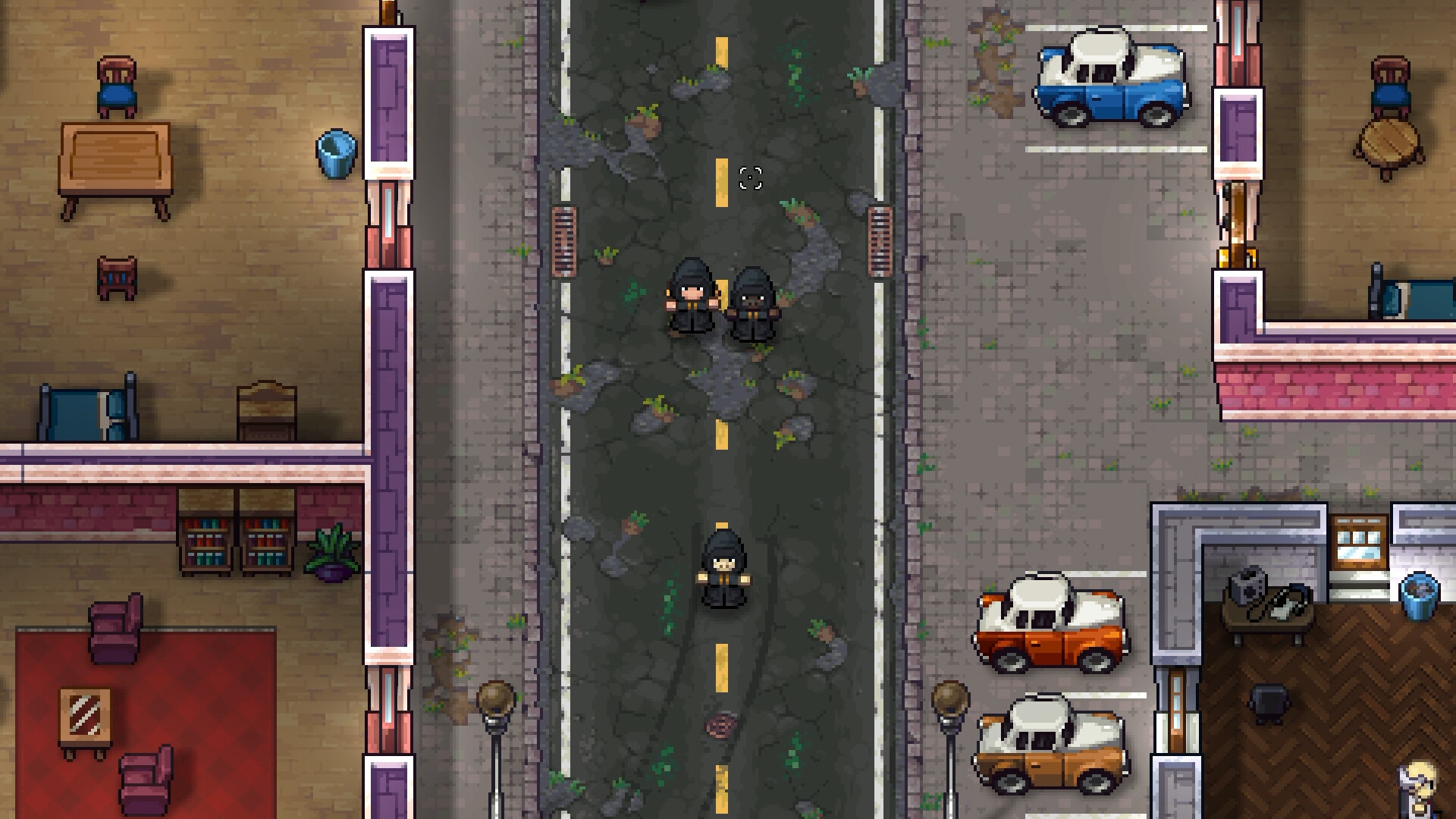
The developer has not settled on what happens when a player tries to walk off the edge of the map, and has joked that the answer will probably involve a giant shark.
Who Lives Where
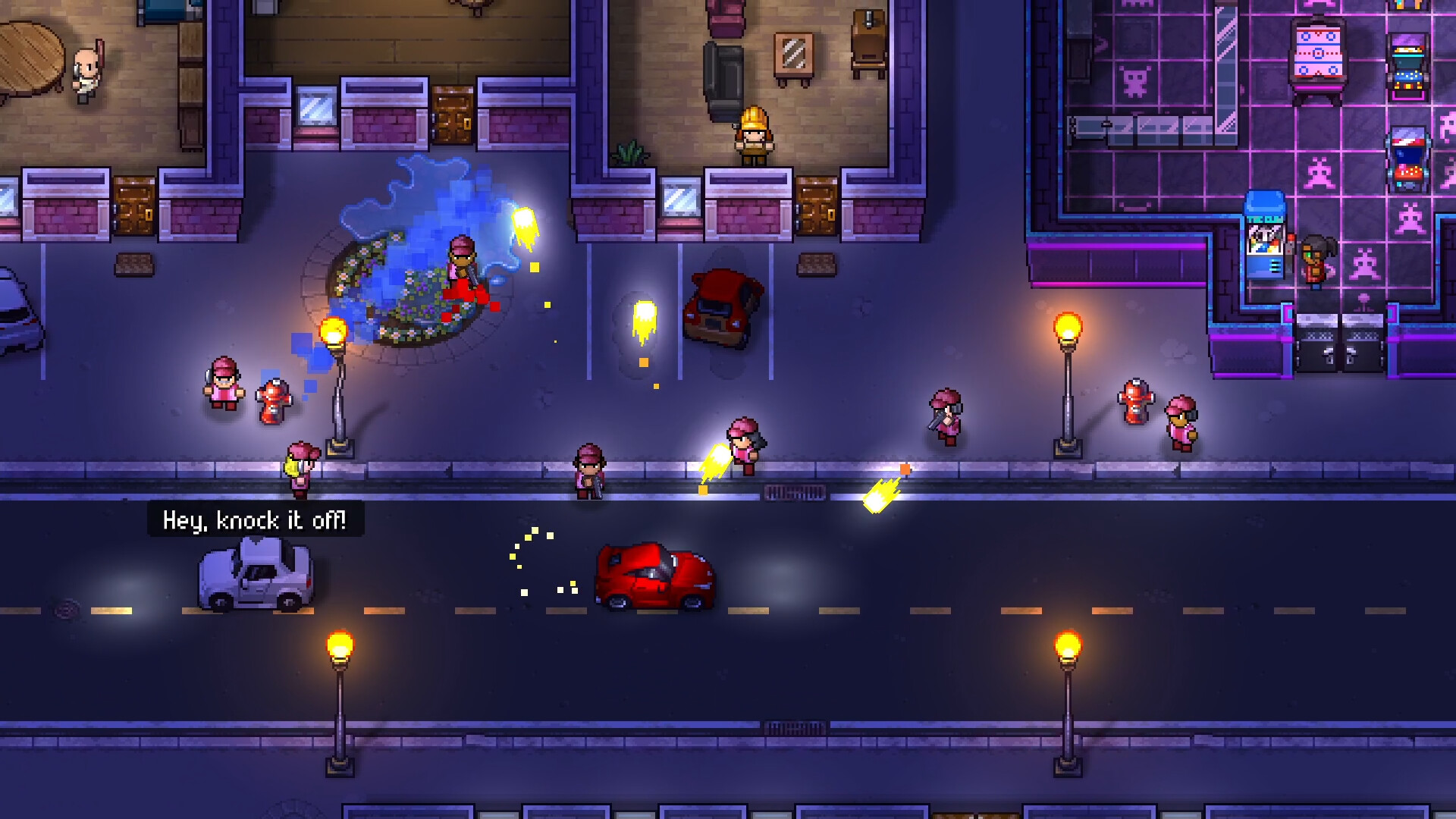
Population is assigned rather than sprinkled. A dedicated system gives permanent NPCs a home, a job, and a rotating set of leisure venues, and it works to keep home slots and job slots roughly in balance with as few vacancies as possible. On top of that layer sit non-permanent NPCs, who are spawned near the player to make the world feel busy and removed again once the player is far enough away. The same spawning logic drives road traffic. For now those non-permanent characters only walk or drive around, but the intent is for them to eventually visit venues and use objects the way permanent residents do.
Cities, Mayors, and the President
Cities across the world are run by Mayors, who answer to the President. Each Mayor's dwelling is a multi-floor structure that functions as a dungeon, and the developer has described Mayor archetypes including a cultist mayor with a massive following (and even a podcast) and a sewer-dwelling cannibal mayor whose primary source of protein is other NPCs. Mayors and their cities are the main interface between the player and the world's politics, and bringing them down is central to the game's progression.
Dungeons
Underground and enclosed areas function as dungeons. The developer has described wild caves and Mayor offices, with additional types such as cannibal hideouts, house basements (sometimes with luxurious touches such as basement swimming pools), sewer environments, and crypt environments either shipping or in development. Procedurally-generated dungeon maps are programmed but deferred until after Early Access. An underwater dungeon concept has been described as a future addition tied to boat travel; see Vehicles for the boat system.
Destructible Environments
The world is heavily destructible, and the material a building is made from governs how easy it is to break into or move through. Wood and brick can be smashed through, including by ramming with a sufficiently powered vehicle, while steel structures are tougher and may require vehicle modifications or special weapons. Sturdier construction tends to appear in higher-tier areas, gating brute-force entry by region tier. The developer has noted that nearly every object in the world has its own wreckage state when destroyed.
A Dynamic World
The world is intended to be dynamic and shaped by the player's actions. The developer has described random events that occur over time and can affect factions and the standing of Mayors, which in turn can influence conditions across regions. Level design within chunks is built to support multiple valid approaches to objectives, with options like vents for syringes, computers to hack, and windows to break and climb through, so that players are rarely funneled down a single path. The same dynamism applies to combat encounters, NPC routines, and quest delivery.
Streaming and Saving
Chunks of the world are loaded on demand. World generation versioning was added in 2025 so that a saved world remembers which generation rules it used and reloads under those rules, allowing the game to update world-gen without invalidating prior saves. Players can also choose which world-gen version to use when starting a new game. The minimap updates as chunks load and may display black squares for unloaded sections in fast-moving cases. The engine runs on Unity and has been actively optimized; world-generation time has been reduced by roughly fifty percent compared to earlier alpha builds.
Player Modification
The same authoring tools the team uses to build the world will eventually be available to players. See Level Editor and Workshop for the planned post-Early-Access tools that let players create their own chunks and entire levels.