

This article is incomplete
Some sections are missing or need additional details. Help improve it by contributing.
Quests are the main source of directed work in Streets of Rogue 2. They are produced by a generation system rather than authored one by one, but the developer has said the sequel will mix handcrafted quests into the procedural pool because the first game's lack of quest context was a common complaint. The details below come from the public roadmap and dev posts, and the game is still in development.
Questgivers
Questgivers are created as part of world generation. The developer has said he has not fully settled who in the world becomes a questgiver or for what purpose, though he has ideas. Mayors and city authorities are among the NPCs who hand out work, which ties quests into the Mayors and the President progression.
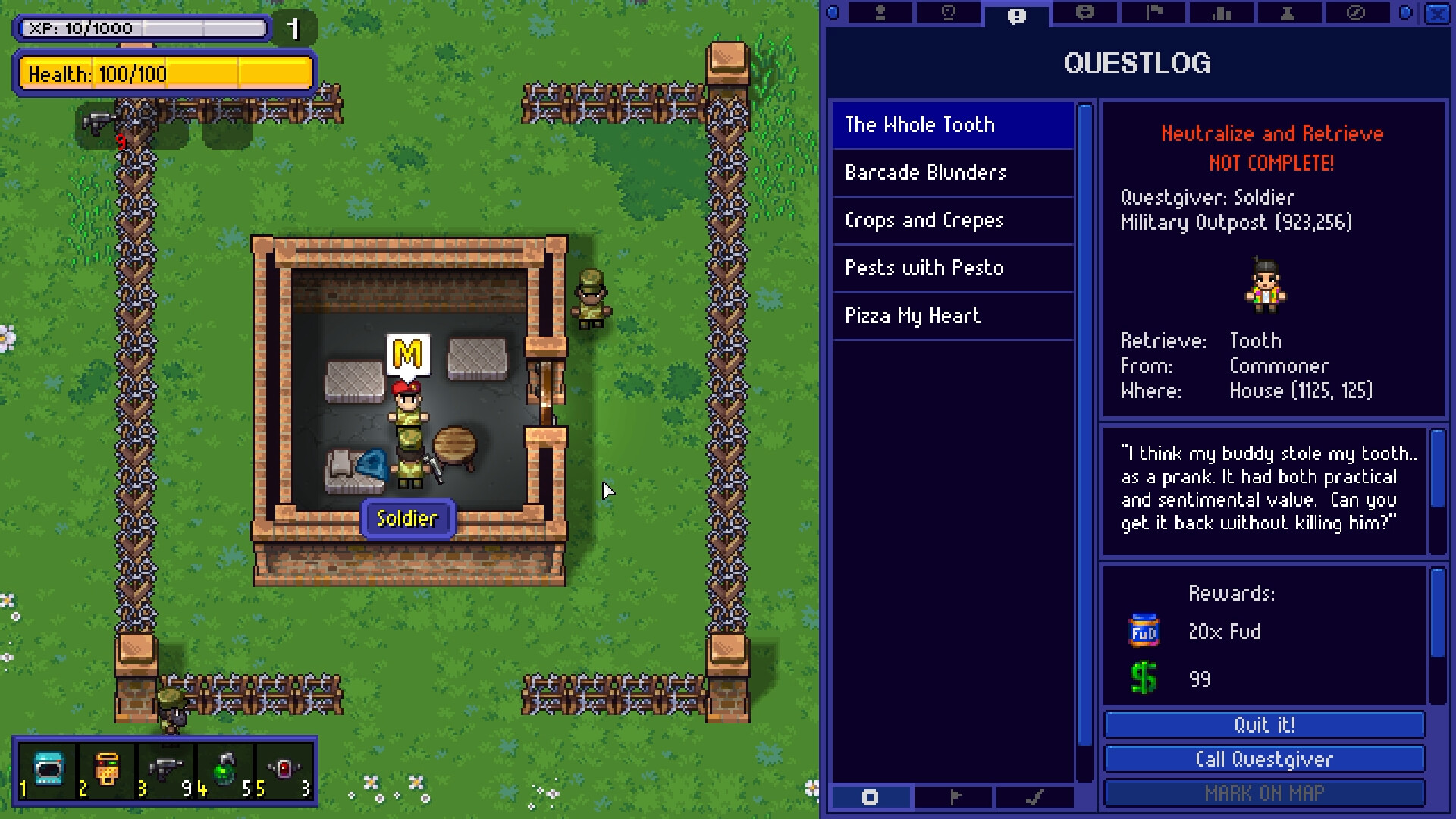
Returning to a questgiver in person to close out a quest was flagged in early testing as bad for pacing, because the world is far larger than the first game's levels. A cell phone system is planned so the player can stay in contact with questgivers remotely. Internal builds already let the player call quest-givers from the interface to receive new work.
Quest Generation
When the player interacts with a questgiver, the game attempts to build a quest from who that questgiver is, the surrounding area, and a range of other inputs. A generated quest can be very random or very specific depending on what the system is fed. Objects, items, cars, or NPCs may be created specifically for a quest, or the quest may reuse elements already produced during world generation. The developer's stated goal is a system versatile enough that making new quests is easy, possibly to the point where players could author their own for Workshop content.
Quest objects placed into chunks are randomized at the marker level, so a chest, a safe, or a kidnapped person can all fill the same slot in a chunk.
Quest Structure
Element | State | Detail |
|---|---|---|
Goals | In game, expanding | Example goals given by the developer include neutralizing a specific person and stealing an item from a chest. Internal setup exists for a number of goal types beyond the first game, with more planned. |
Tracking | Complete | The system that orchestrates and tracks in-progress quests was carried over largely intact from the first game, where it had already been tested at length. |
Solutions | In game, expanding | The developer wants a wider variety of resolutions per quest, keyed to the player's skill set, inventory, and standing in the world. This grows as the systems it depends on grow. |
Quest Events | In development | A key point of difference from the first game. Events can fire at various points during a quest and range from simple to heavily scripted. The developer has said this needs more content and could not be seen in the most recent demo builds. |
Flavor Text | In game, sparse | A matching system pairs written flavor text with the elements of a generated quest. If the game generates a soldier asking the player to retrieve blueprints from a casino, it looks for text matching all four elements, then falls back to three, and so on. The developer has said content in this system is very sparse at present. |
Optional Bonuses | In game, bare-bones | An extended version of the first game's quest bonuses, allowing a wider set of contributing factors and rewards. |
Rewards
A quest's reward is decided before the quest is fully generated, and it is shown in the bubble above the questgiver's head. The intent is to let the player judge whether a job is worth taking before walking over and starting a conversation. The reward chosen accounts for the questgiver's type, the world tier, and the player's current status. The developer has described the framework as in place and noted it remains to be seen whether showing rewards up front works well in practice.
Faction Quests
Reputation with a faction gates access to that faction's work, so improving standing with a group opens up the jobs it offers. The developer expects faction-oriented quests to make up a significant share of the less random quests in the game. The full faction roster and the reputation scale are covered under Gameplay Systems.
Multiplayer Quests
Quest sharing in co-op has not been settled. The developer has listed the open questions himself: who receives the reward or whether both players do, how experience is divided, whether players can switch sharing off entirely, and what counts as another player being involved in a quest at all. Quests are also among the elements that will scale to the number of players taking part in an activity.