

Overview
State of Decay 3 supports online co-op for up to four players. Co-op is one of the headline features highlighted by Undead Labs and is one of the four focus areas of the May 2026 closed alpha. The co-op model is described as untethered, which means players are not bound to the host's location and can split up across the world map.
How Co-Op Works
Aspect | Confirmed Info |
|---|---|
Player Count | Up to four players in a single shared session. |
Untethered Movement | Each player can roam the map independently, and everyone starts at their own point on the map. |
Shared Progress | Each player contributes to overall progress in the shared world. |
Server Hosting | The world is hosted on a server rather than purely on the host's machine, which is what enables untethered play. |
Shared Save Tech | The shared-save technology is Undead Labs' own, and shipped first in Grounded. |
Server-Based World | The world runs on a dedicated server rather than a player's machine. The third game has been reported as server-based rather than peer-hosted, though the studio has not spelled the architecture out itself. |
Offline Community Management | One player can start a game, and others can log in and manage the shared communities even when the original map creator is offline. |
Difficulty Scaling | The game scales up in difficulty as more players join a session, so a full four-player squad faces a tougher world than a solo run. |
Settlements | A single community can hold up to three settlements at once. |
Enclaves | Non-player survivor groups, called enclaves, can be recruited into the community. |
Capability String | Listed on console storefronts as online co-op for two to four players and online multiplayer for two to four players, alongside single player. |
Console Subscription | Online console play requires a platform subscription that includes online multiplayer, sold separately. On PlayStation 5 that is PlayStation Plus. |
Shared Community | Players can start a community together from scratch and combine strategies, then develop and expand a shared community that reflects their choices. |
Why Untethered Co-Op Matters
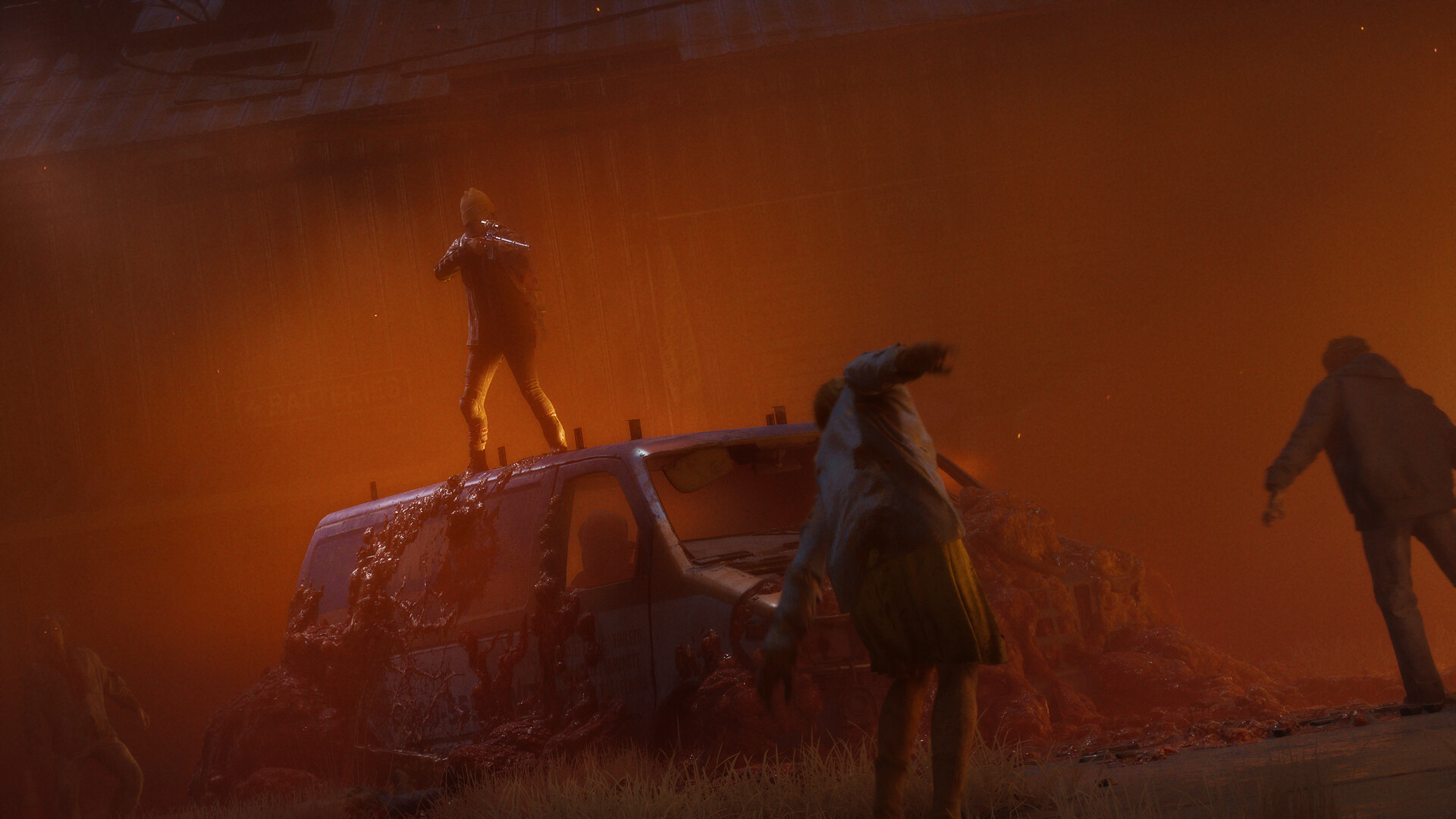
The previous game in the series tied co-op players to the host through a movement leash, which became a long-running point of community feedback. Franchise co-creator Brant Fitzgerald has acknowledged this directly when announcing the closed alpha, saying the team has been listening to that feedback. In the third game, four players can pursue different objectives in different parts of the same world at the same time, which changes how groups split labor between scavenging, defending the base, and tackling combat objectives.
Server-Based and Less Restrictive
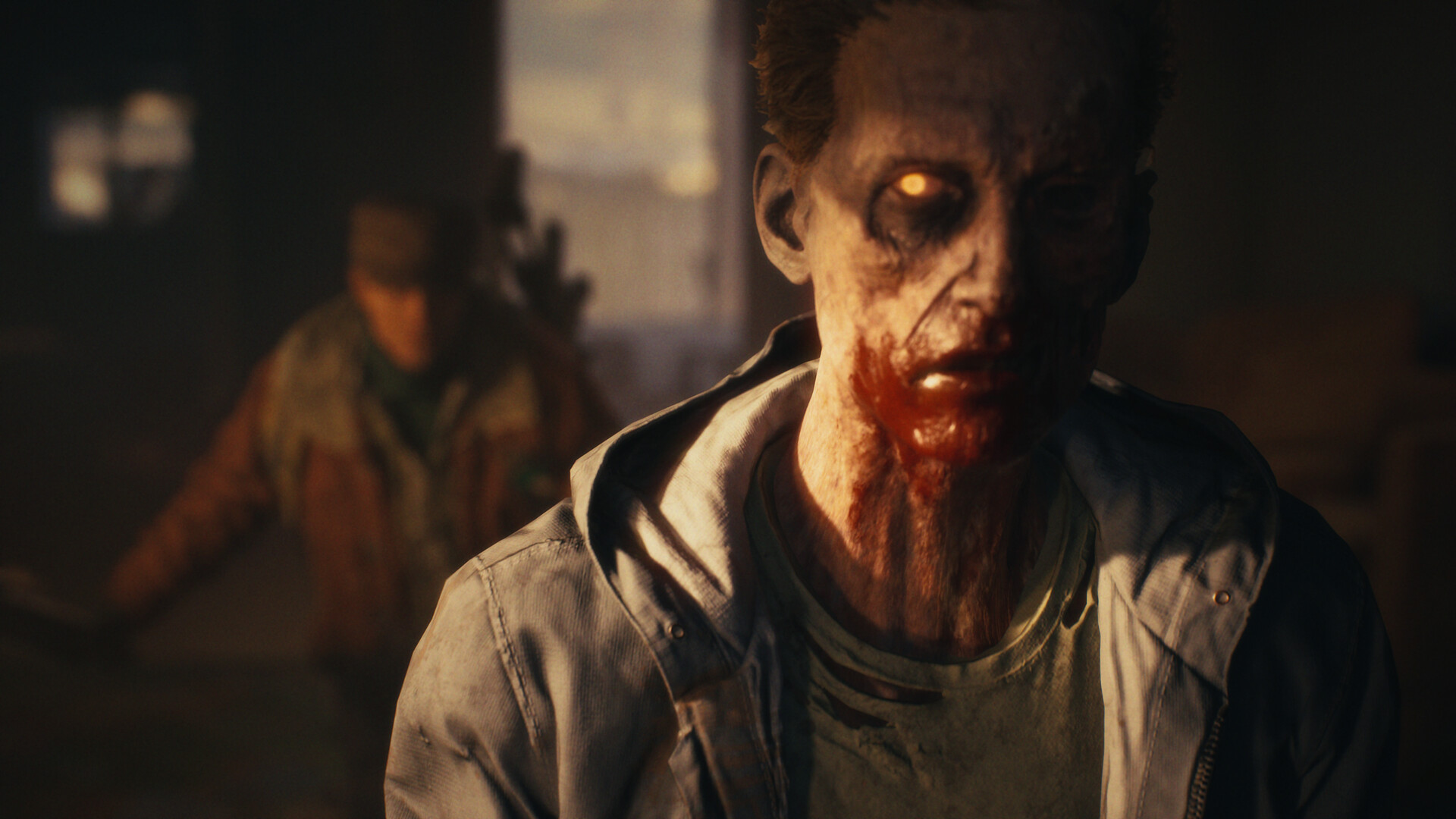
Studio lead Philip Holt has described the third game's online model as server-based rather than peer-hosted, which is the technical reason co-op can be far less restrictive than the previous game in the series. Holt framed the goal as meeting player expectations for online play: one player can start a game, and friends can drop in and manage the shared survivor community even when the player who created the map is offline. There are no hard limits on player movement, and the studio has said there is much less tethering than before, though it was careful not to commit to specific limits until more testing on the server infrastructure is done.
The third game also keeps a dedicated single-player mode, because most players chose to play solo in the earlier games. Difficulty scales up as more players join a session, so the same world becomes tougher with a full four-player squad than it is for a lone survivor. That keeps solo play a first-class way to experience the campaign rather than a stripped-down fallback.
Settlements and Enclaves
At the June 2026 gameplay reveal the studio confirmed that a single survivor community can run up to three settlements at the same time, rather than being limited to one home base. The world is also populated by enclaves, which are independent groups of non-player survivors that a community can recruit from to grow its roster. Both systems give a four-player squad more to coordinate, since settlements and recruited survivors are shared across the same world.
The storefront listings put a subscription requirement on console co-op that is easy to miss. Online multiplayer on a console needs a platform subscription that includes online play, sold separately, and the PlayStation 5 listing states plainly that PlayStation Plus is required for online play while single player needs nothing. The same listing counts the modes as one player offline and four players online, which matches the capability strings on the other storefront.
What is Not yet Public
Specifics about progression saving across sessions, character ownership rules when a host or guest leaves, drop-in or drop-out behavior, and matchmaking flow have not yet been publicly confirmed for the third game. These details will be filled in as the closed alpha and later reveals make them concrete.
Cross-Play
Co-op is paired with cross-play across PC and Xbox. See Cross-Platform Play for the platform list and Xbox Play Anywhere details.
Untethered Co-Op in Detail
Untethered co-op is the term the studio has used to describe how State of Decay 3's four-player sessions handle player movement, and the Creative Director has since used the phrase "untethered multiplayer" directly when explaining why the test programme has to scale up. Each of the four players can roam the open world independently, with their own starting point on the map and their own scavenging route, instead of being held inside a movement leash around the host. That is what allows a four-player squad to split labor: one survivor can be defending the home base, another can be running a long-range supply route, and the remaining two can be tackling a combat objective together, all inside the same shared world at the same moment.
The model is built on shared-save technology that Undead Labs developed itself and that shipped first in Grounded, with the third State of Decay extending it from shared saves to a world several players can own at once. Hosting the world on a server, rather than purely on the host's machine, is what makes the untethered movement possible. It also means a host who logs out should not strand their guests, although the precise behaviour for session continuity has not been laid out in public detail yet.
Why It Matters for the Series
Co-op players in the previous game in the series were tied to the host through an explicit movement leash, which became a long-running point of community feedback. The leash meant that a guest who wandered too far from the host was snapped back, which limited the kind of split-up scavenging runs that work naturally in a four-player squad. Franchise co-creator Brant Fitzgerald acknowledged this directly when announcing the May 2026 closed alpha, saying the team has been listening to that feedback, and untethered co-op is the headline answer.
For squads, the practical change is that the four players can now act as a real cooperative crew rather than a host plus three companions. A typical session can have everyone starting at their own point on the map, working different objectives, and converging only when a fight calls for it or when a base under attack needs more defenders.
Studio Head Philip Holt framed this directly at the 2024 Xbox Games Showcase, describing the third entry as designed so that "the boundaries in which you can go off independently are going to be much, much greater than they were in State of Decay 2." Untethered co-op is the practical mechanic that delivers on that pitch.
Co-Op and Permadeath
Co-op runs against the same permadeath stakes as solo play. A surviving member of the survivor community who falls in a four-player session is still gone for good, and the wider community in the player's settlement reacts to that loss through the expanded narrative systems the studio has described. That gives shared scavenging runs the same weight that the series is known for, with the added twist that the death may have happened inside a friend's part of the world.
Cross-Play Coverage
The four-player squad is not restricted to a single platform. Cross-Platform Play covers any mix of Xbox Series X|S, Steam, and the Microsoft Store. For players on the Microsoft Store version, Xbox Play Anywhere keeps the entitlement valid on both an Xbox console and a Windows PC under the same Xbox account, so a player can drop in from whichever device they happen to be on.
Co-Op Is Optional, and Expected to Stay a Minority
The studio has been unusually direct that the shared world is not meant to displace solo play. Philip Holt has said he expects a majority of players will still play the game on their own, and that the reveal trailer deliberately opens on a single character before introducing the other three in order to signal that to the audience.
Early alpha feedback has been described as pointing the same way from the other direction: participants who signed up intending to play alone have reported enjoying the co-op, with staff attributing that to the untethered design letting a player go off and do their own thing for a stretch before rejoining the group. That is the practical difference from a leashed co-op mode, where a solo-minded player has nowhere to go.
No solo-specific difficulty settings, scaling rules or content differences have been described. See Permadeath for the stakes that apply either way.
What Is Not yet Public
Whether the world persists when the host logs out, and whether one of the guests can become the new host on the fly.
Drop-in or drop-out rules for mid-session joins, and how long a session can pause waiting for absent players.
How loot, recruitment outcomes, and survivor relationships in a friend's session carry back to the visiting player's own community.
The matchmaking flow for finding strangers to co-op with, as distinct from friend invites.
Whether the four-player cap is hard, or whether private sessions can be configured smaller (two-player or three-player) without changing the broader rules.
Status
Information on this page reflects publicly confirmed details as of August 27, 2026. Specifics will be expanded as the playable build reveals more.