

This article is incomplete
Some sections are missing or need additional details. Help improve it by contributing.
Overview
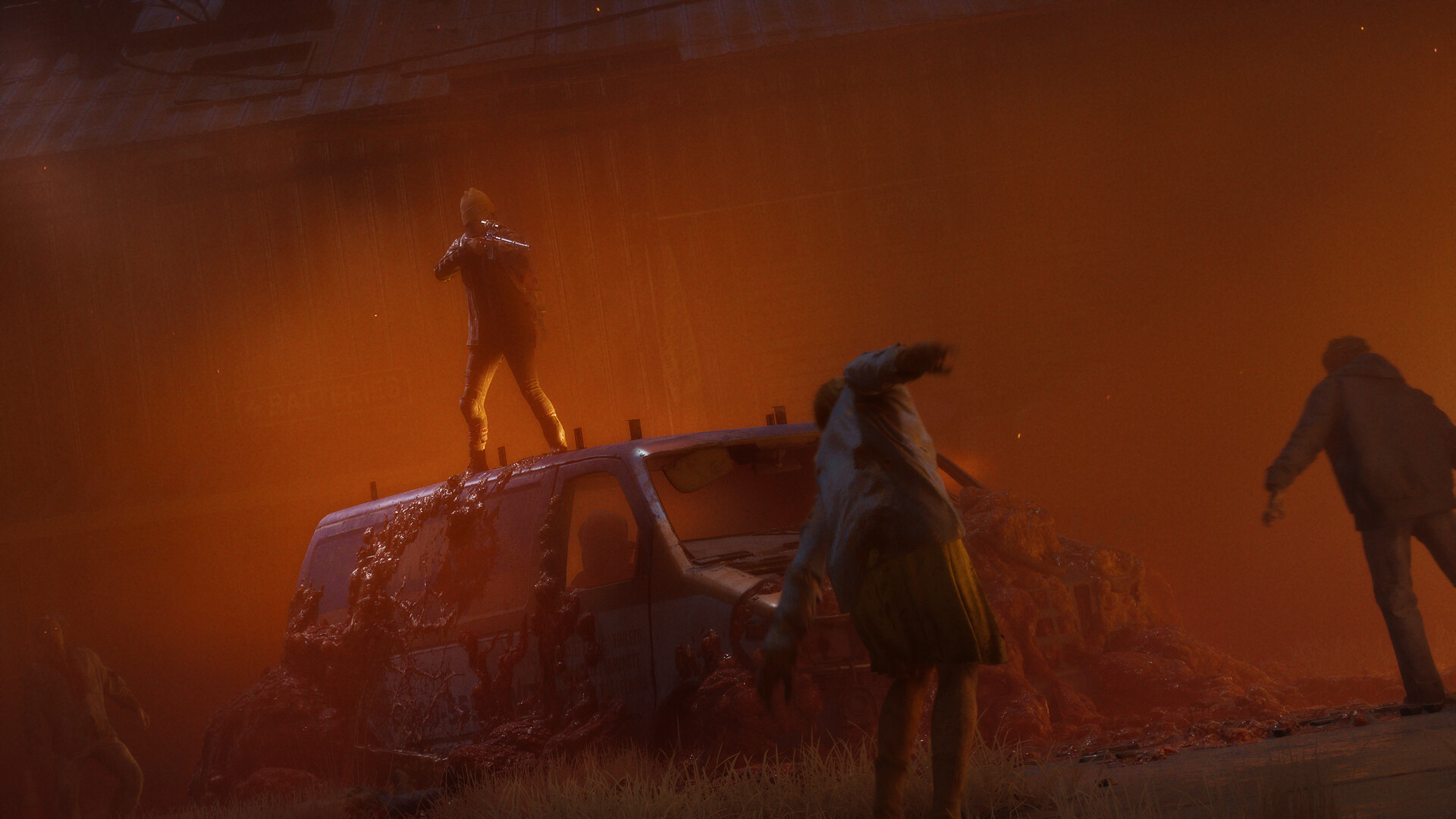
State of Decay 3's enemies are post-apocalypse zombies that have evolved over the years since the outbreak. Visually they are described as more decayed, with darkened, shriveled skin and increasingly ragged silhouettes. The infestation itself has visibly evolved across the world: brain-like pink tendrils now spread across structures, suggesting that the plague has begun to alter the environment as well as its hosts.
What Will Not Be in the Game
Franchise co-creator Brant Fitzgerald confirmed when announcing the May 2026 closed alpha that infected wildlife such as zombie animals, which appeared in the original 2020 cinematic concept trailer, will not be in the final game. The 2020 trailer was a pre-rendered concept and did not represent the in-game build.
Confirmed Enemy Types
Enemy | Description |
|---|---|
Screamer | A zombie with exposed, molten-looking lung tissue. The exposed lungs are described as destructible weak points that can be targeted in combat. |
Standard Zombies | The everyday infected. More decayed in appearance for the third game, with darkened and shriveled skin. |
Plague Nest | A dynamic infestation hub that behaves according to a changing persona. Nests vary in how fast they spread and how dangerous they are, and clearing one is high-risk, high-reward. |
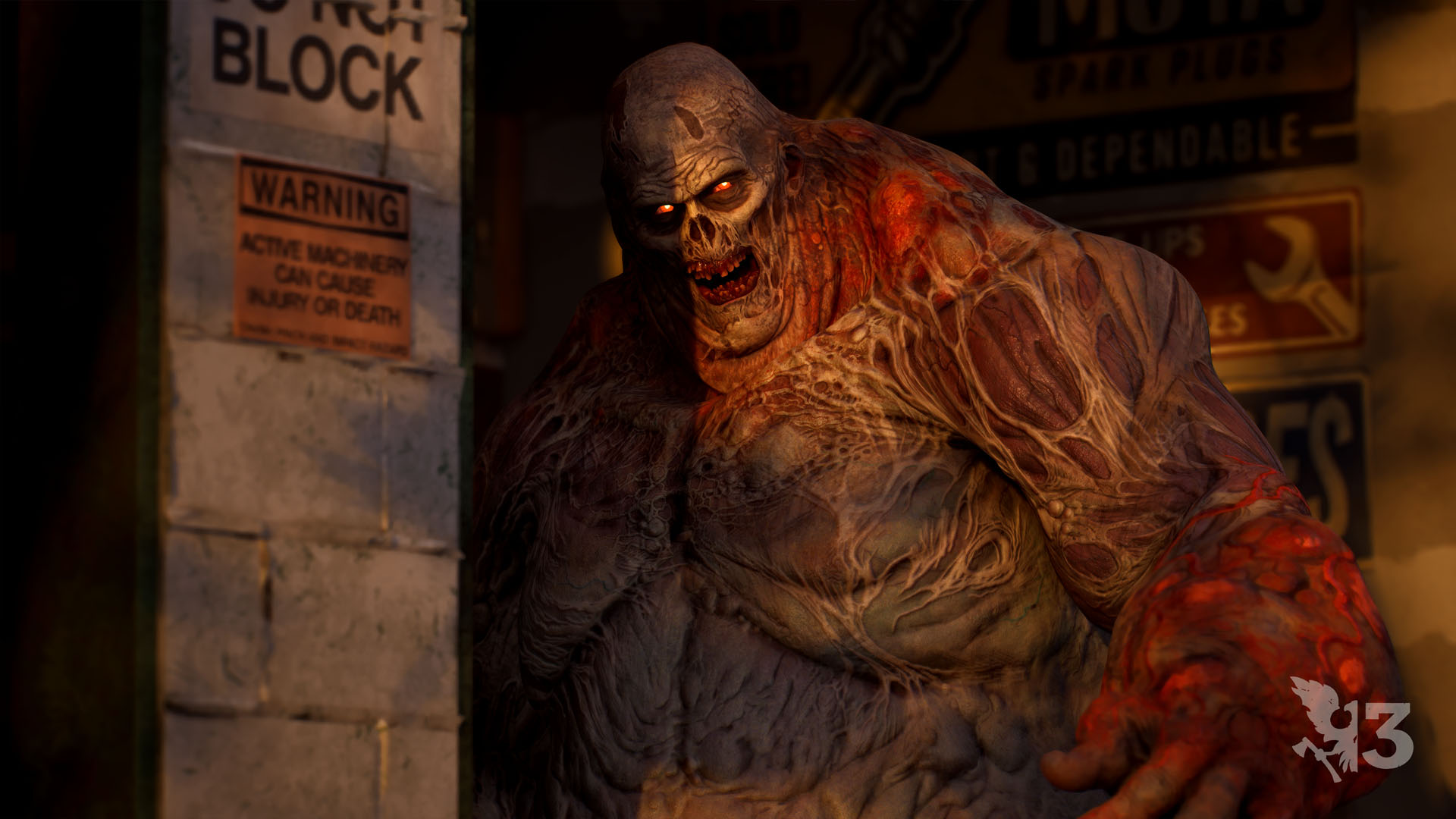
Bloater | A bloated infected shown twice in the official screenshot set released with the 2026 gameplay reveal, and used as the header image on the game's official home page. Its behaviour and weak points have not been described in public. |
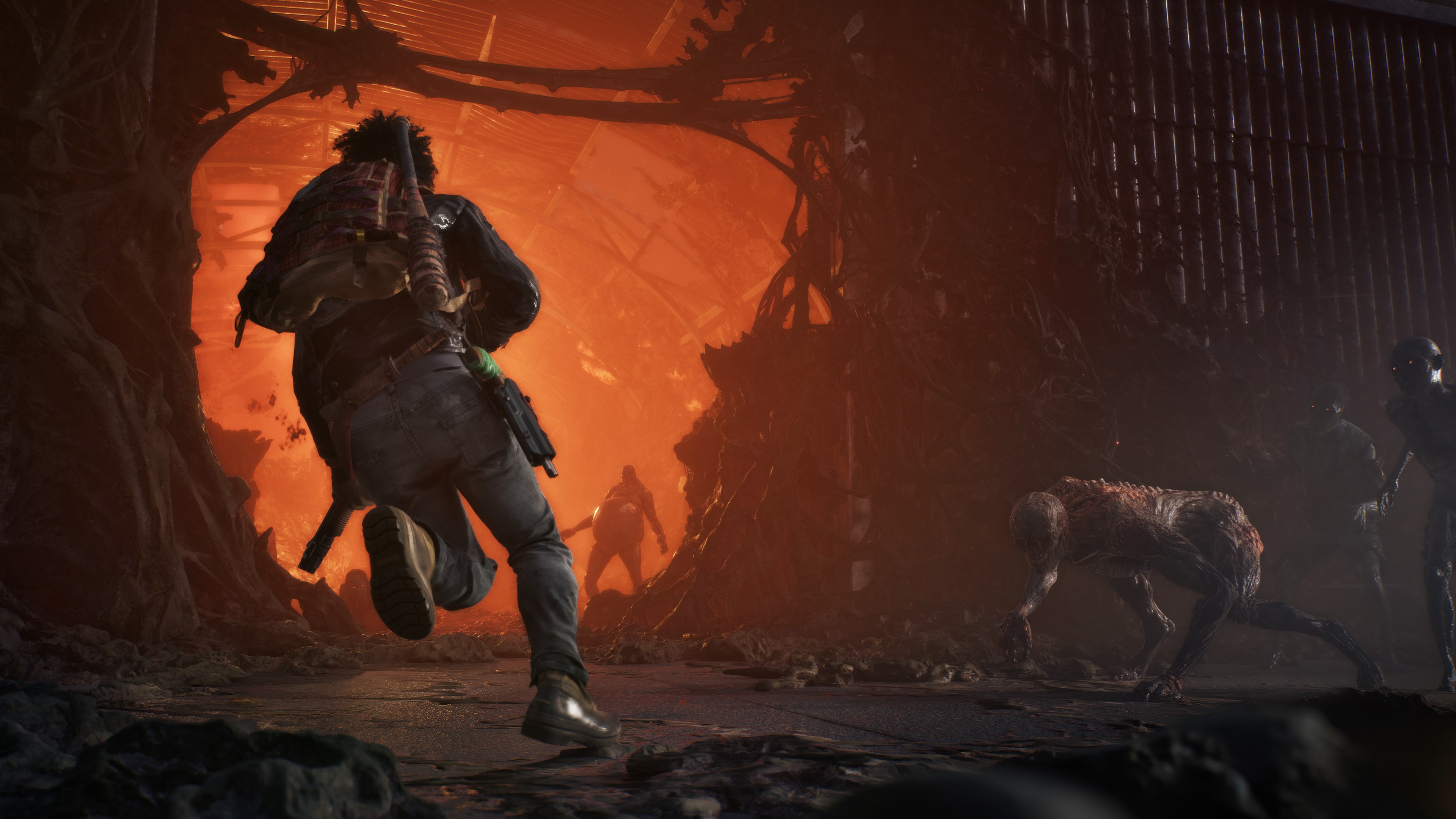
Feral | A lean, fast-looking infected named in the official 2026 screenshot set. As with the Bloater, no stats, attack patterns or counters have been published for the third game. |
Juggernaut | A heavyweight infected named by the studio and captioned in the official screenshot set released for gamescom 2026, where one is shown peeking out from behind a wall. The studio has said it is designed to combine with the other special types rather than appear alone. No stats, health values, spawn rules or attack patterns have been published for the third game. |
How Much of the Roster Carries Over
Creative Director Kevin Patzelt answered the continuity question directly at the June 2026 reveal: the enemy lineup is the same as the previous game in the series, but evolved. That is a statement about the shape of the roster, not a promise that any individual enemy behaves the way it used to, and the studio has not published stats, health values, spawn rules or counters for a single enemy type in the third game.
Two names beyond the Screamer have now appeared on official assets. The screenshot set released with the 2026 gameplay reveal captions a Bloater in two separate images and a Feral in a third, and the Bloater image is also used on the official home page. Those captions are the whole of what is public: the names are confirmed for this game, and everything about how they fight is not.
The same reveal described how ordinary infected are told apart. A slow, desiccated, eroded zombie behaves differently from a fresher, less decayed one, and both behave differently from one wearing armor. Reading an enemy's condition before committing to a swing is part of the redesigned combat rather than a cosmetic detail.

Plague Aesthetic
Beyond individual enemies, the plague itself has become a visual feature of the world. Pink, brain-like tendrils spread across buildings and infrastructure in trailer footage, which Undead Labs has described as showing how the infestation now alters the environment. Specific gameplay implications, such as whether infested architecture acts as a kind of in-world objective or hazard, have not yet been publicly confirmed and may become clearer in the closed alpha playtest or later reveals.
What is Not yet Public
This page will be expanded as the closed alpha and later reveals make new entries concrete in the playable build.
The Plague as Environment
The plague that drives the world of State of Decay 3 has had years to spread, and its presence in the world is more than the zombies that walk through it. Brain-like pink tendrils now spread across structures, which suggests the infection has begun to alter the environment itself, not just the bodies of the infected. Visually, the undead are more decayed than in earlier entries: darker, shriveled skin and increasingly ragged silhouettes, with the same passage of time reflected in their movement and their appearance.
The studio has since confirmed one concrete gameplay consequence of the plague's spread: it cannot be ignored. The plague threat grows in power if it is left unchecked, so players cannot simply seal themselves inside a base and wait it out. That turns the infestation from pure set dressing into an active pressure that pushes communities to keep fighting back across the world.
Confirmed Enemy: The Screamer
A specific named enemy publicly confirmed for the third entry is the Screamer. The Screamer is described with molten lungs, which has been singled out in studio communications as one of the marquee new threats. The first-party Xbox publication that quoted the studio on the third entry's design framed the Screamer as an early example of how the redesigned combat against the undead is supposed to feel in Unreal Engine 5: situation-aware enemy responses, enhanced dismemberment, and a stronger sense that each enemy is a specific threat rather than a generic obstacle.
What Has Been Explicitly Ruled Out
Franchise co-creator Brant Fitzgerald confirmed when announcing the May 2026 closed alpha that infected wildlife, which appeared in the original 2020 cinematic concept trailer as zombie animals, will not be in the final game. The 2020 trailer is treated by the studio as a pre-rendered concept that did not represent the actual in-game build. Material from that 2020 piece should be read as concept art rather than confirmed in-game content.
Why Reactive Animations Matter for Enemies
The same engine work that drives reactive combat also drives enemy behaviour. Hits to a specific body part are reflected in a situation-aware animation response, dismemberment severs limbs cleanly, and the broader enemy roster is being designed to support those reactions visually. For the player, that means a fight reads less like a stagger animation lottery and more like a specific cause-and-effect interaction: a shot that severs an arm should land as that, not as a generic flinch.
Plague Nests
The June 2026 gameplay reveal introduced Plague Nests, dynamic hubs of infestation that act with their own agenda rather than sitting still. Each nest follows a persona, a behavior pattern that can change how quickly the infestation around it spreads and how hard it is to deal with. Nests double as high-risk, high-reward loot locations, so a community has to weigh the danger of attacking one against what it can gain. This ties into the wider rule that the plague cannot simply be ignored, because leaving the infestation unchecked lets it grow in power.
Published screenshot captions also point at environmental pressure sitting alongside the infected. One official image shows a group of survivors under smoke from a wildfire, looking up at the glowing eyes of zombie predators, which suggests weather and fire events share the world with the plague rather than the infestation being the only hazard. How that resolves mechanically has not been explained.
Old Zombies and Fresh Zombies
The studio splits the ordinary infected into two broad states rather than treating them as one crowd. Zombies that were infected years ago, at the start of the outbreak, are still walking, and they shamble slowly and look desiccated. Zombies turned more recently move with noticeably more vigour. The distinction is a direct consequence of the game's setting years after the initial collapse, and it means a group of walkers can contain both slow stragglers and genuinely fast threats.
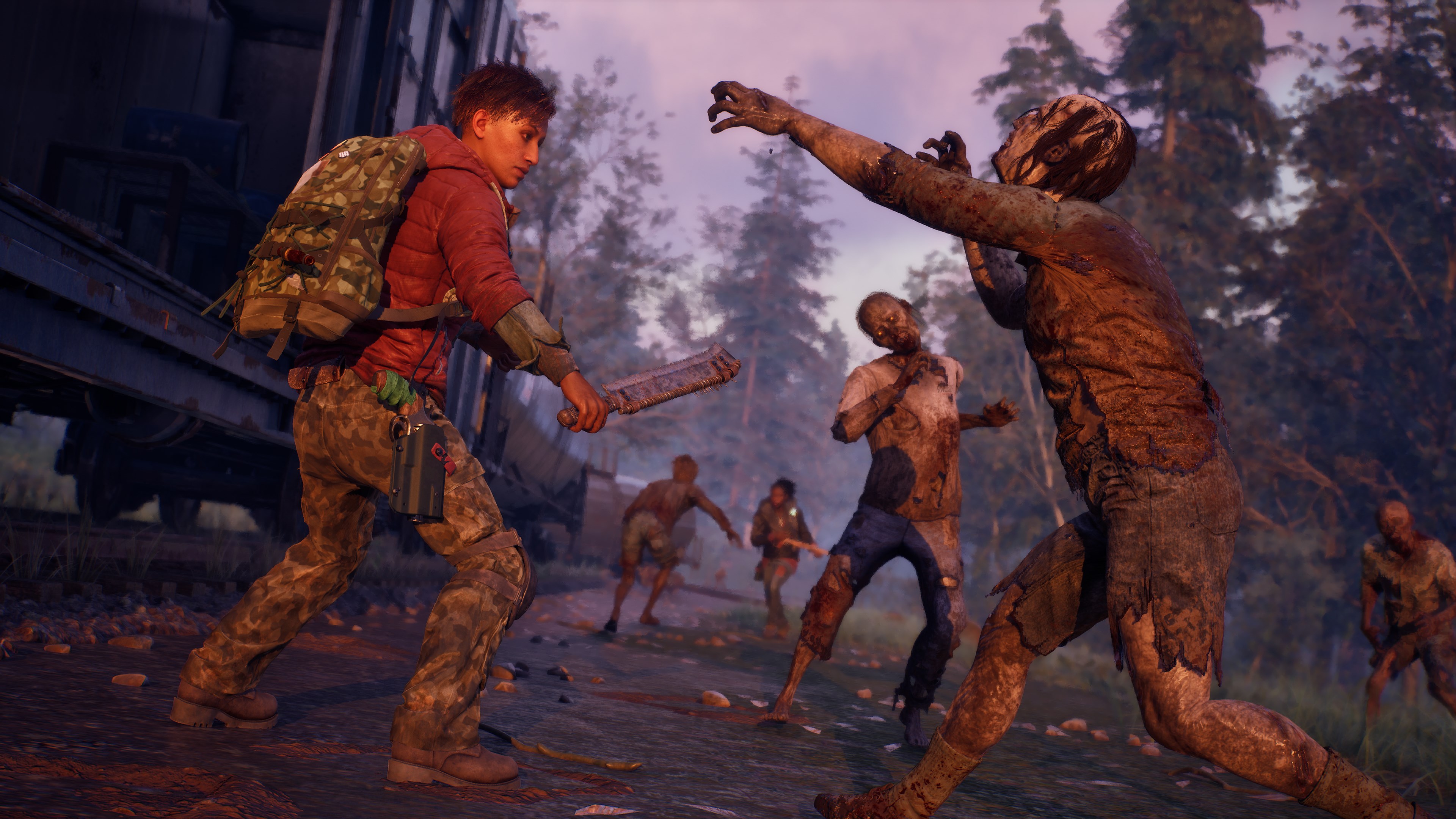
On top of that split, the studio has said zombies are further differentiated by how much armour and protective material they picked up in life, which changes how much punishment they absorb. See Combat for how the two attack inputs interact with that.
Bloater Bile and Chain Reactions
The Bloater is the enemy the studio has described in the most mechanical detail, to the point that staff have called the 2026 reveal "the Bloater's trailer". Its behaviour is built to feed the game's other systems rather than to work in isolation.
When a Bloater is killed or provoked it spews bile, which pools on the ground. Those pools are flammable. A Molotov thrown into one ignites it, and the fire spreads from pool to pool and on to any zombie standing in it, producing chain reactions across an infestation. Survivors are not exempt: a character who has been splashed with bile can be set alight by a teammate's incendiary, which the studio has confirmed does happen in co-op sessions.
The design principle the studio has stated for this is that a creature is a feature: each enemy is defined by what it does and by how that behaviour collides with the rest of the simulation, rather than by a stat line. The art team's job is then to make that function readable, which is why the Bloater is colour-separated from the infestation around it and given a distinct silhouette and pose set so it can be identified at distance.
Inside a Plague Nest
The studio has now described what a Plague Nest actually contains. Where the previous game's plague structures were single objects to be destroyed, those act as nodes on a wider network in the third game, and the network leads back to a much larger infestation. The studio's stated figure is that a nest is four to six times the size of what one of those single structures suggested.
Element | What It Does |
|---|---|
Blister nodes | Growths that pop, detonate and release gas when disturbed. |
Spitters | A ranged infected type named as part of the nest's defending force. |
Biologic mass | The connective gunk of the nest itself, described as actively trying to kill intruders. |
Outbound forces | The nest sends infected towards player settlements, so it cannot simply be ignored. |
The studio has framed clearing one as a timing problem rather than a gear check. A nest grows stronger while the player grows stronger, so waiting until a community is comfortably equipped means facing a bigger nest, and the intended tension is being pushed to attack slightly before feeling ready. Staff have compared the encounter to a raid. Left alone entirely, the studio's stated consequence is that the infestation overruns the map.
The Juggernaut, Feral, Bloater and Screamer have all been named as present, and the studio has said they are designed to combine with one another rather than appear in isolation. The Juggernaut spent most of that period confirmed only in spoken developer commentary; it reached the published screenshot set in August 2026, when the official gamescom gallery captioned one peeking out from behind a wall. Its presence is the whole of what is confirmed. Nothing about how it fights in the third game has been described.
What Is Not yet Public
The full roster of named special enemies beyond the four named so far.
How far the evolved versions of returning enemy types differ from their earlier behaviour, since only the names have been shown.
Health, damage, and resistance numbers for any enemy type.
Spawn rules and density on the open-world map.
How the infestation tendrils interact with the player and with the base, beyond their visual presence in the environment.
Related Pages
See Combat for the underlying fight systems, Permadeath for the consequences of losing a fight against any of these enemies, and the State of Decay 3 Overview for the world context.
Status
Information on this page reflects publicly confirmed details as of August 27, 2026. Additional enemy entries will be added as the playable build reveals them.