

Overview
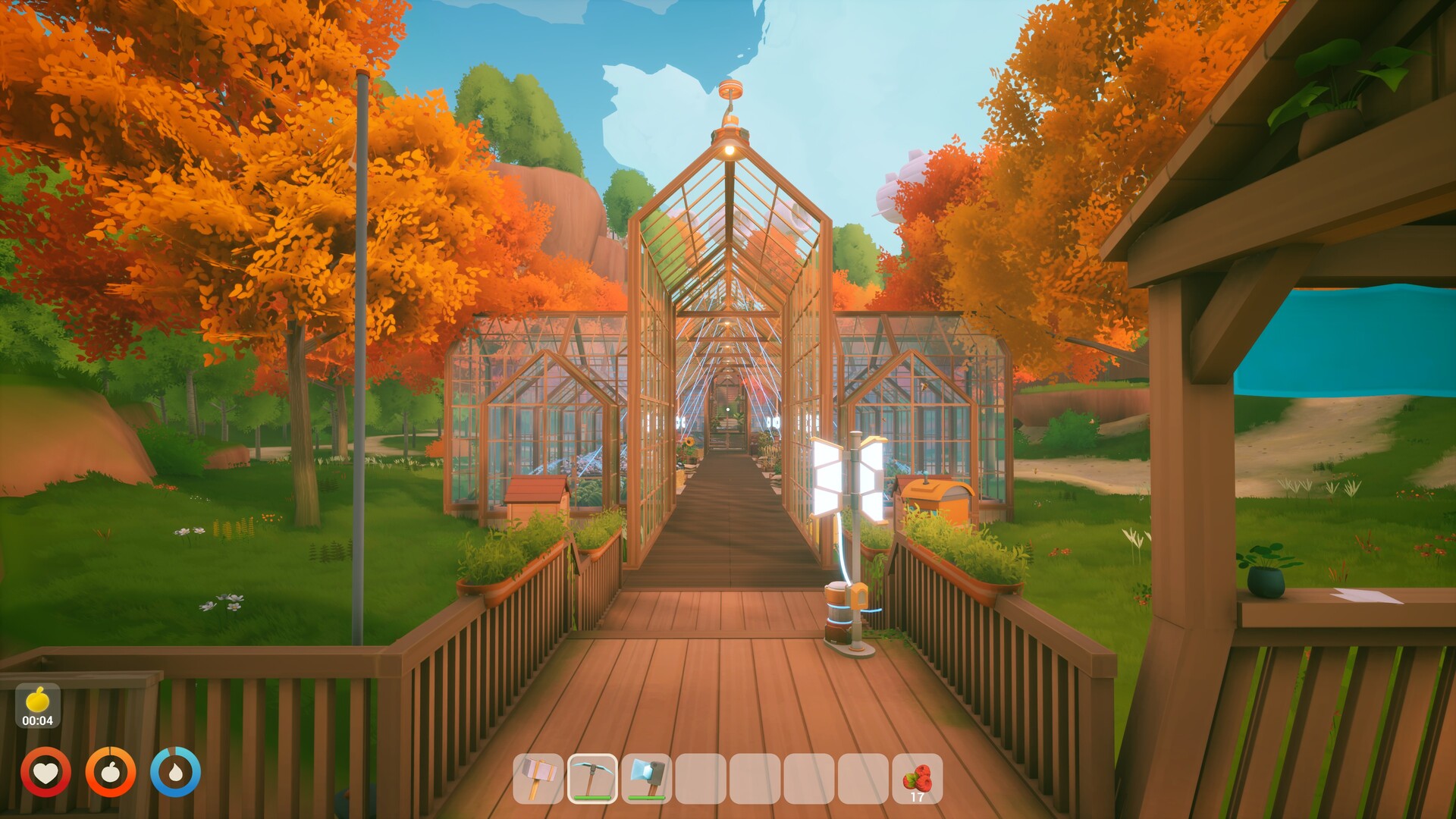
Greenhouses are enclosed glass-walled structures in Solarpunk that protect crops from storm damage. They are built using the standard building system with glass wall pieces, and they become essential for any reliable farming operation once thunderstorms start destroying unprotected plants.
Why Greenhouses Matter
Solarpunk's weather system includes thunderstorms that can destroy unprotected crops, potentially wiping out an entire harvest. Without a greenhouse, players have to time their planting and harvesting around storm cycles or accept periodic crop loss. With a greenhouse, planted crops are sheltered and grow at their normal rate regardless of the weather outside.
The cooking system also depends on a reliable crop supply. Tomatoes, carrots, paprika, and watermelon are all grown on the surface, and unprotected outdoor crops can be destroyed by storms, so any serious cooking or trade operation needs at least one greenhouse to keep ingredient flow steady through the storm season.
Construction
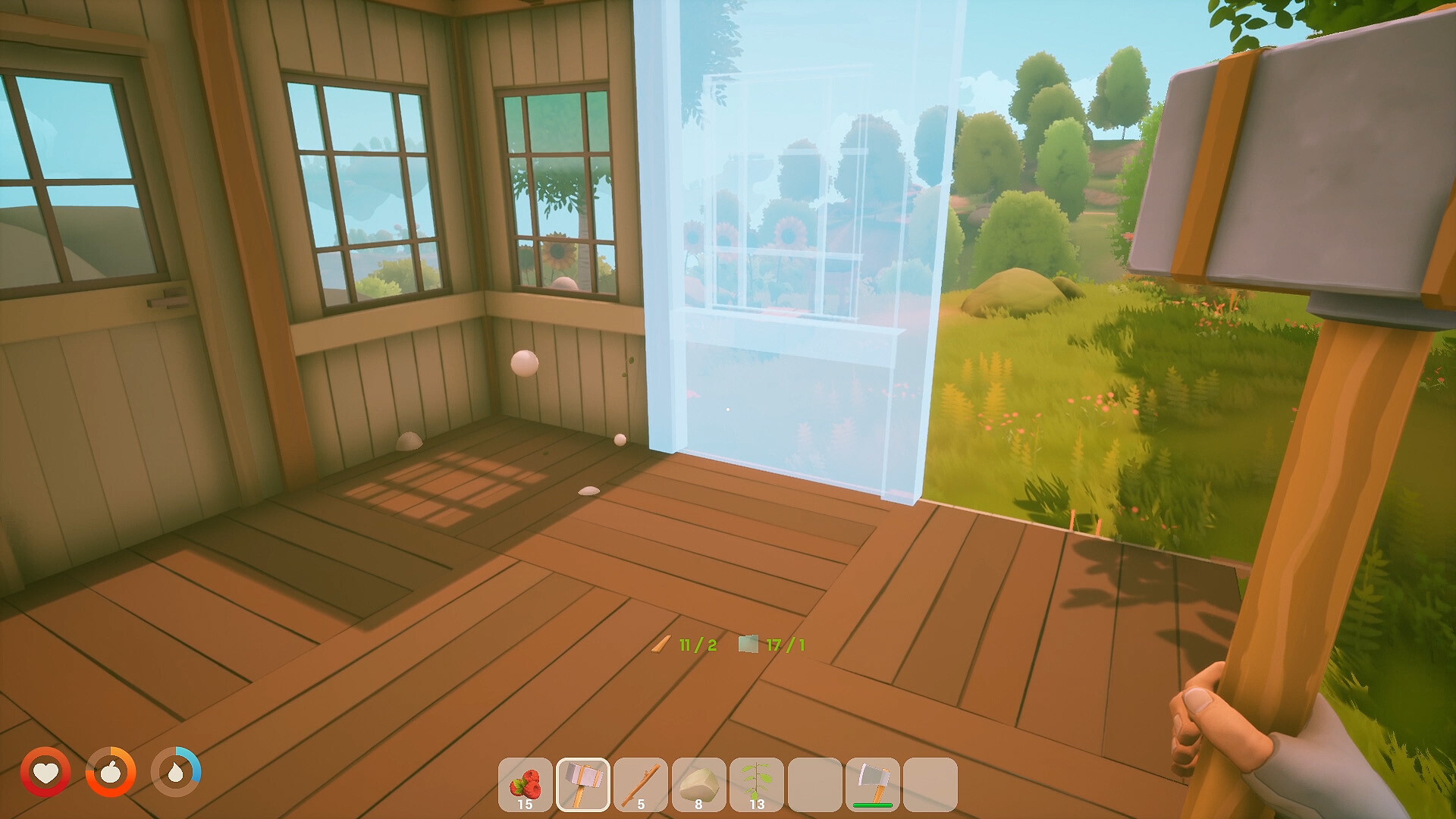
Greenhouses are not a separate building piece. They are built using the same foundation, wall, door, and roof pieces as any other structure in the building system, with two specific material choices:
Glass walls: crafted from Sand. Glass was added as a Kickstarter stretch goal alongside brick. Glass walls let sunlight reach the crops inside while sealing out the weather above.
Foundation, doors, and roofs: built using whatever material the player has on hand. Wood is the cheapest and most common; brick is also available.
The standard greenhouse design is a simple enclosed box: foundation, four walls with at least one door frame, and a roof to seal it overhead. Players who want larger farms can build multi-floor greenhouses by adding stairs and another set of foundations on top.
What Grows Inside
Every confirmed crop in Solarpunk can be planted inside a greenhouse. The growth rate is the same as outdoor planting; the only difference is storm protection.
Crop | Primary use |
|---|---|
Cotton | Cloth for crafting (slow grower) |
Berries / Raspberry | Cooking ingredient and direct food |
Wheat | Cooking staple |
Tomatoes | Cooking ingredient |
Carrots | Cooking ingredient |
Paprika | Cooking ingredient |
Watermelon | Cooking ingredient |
Watering Inside Greenhouses
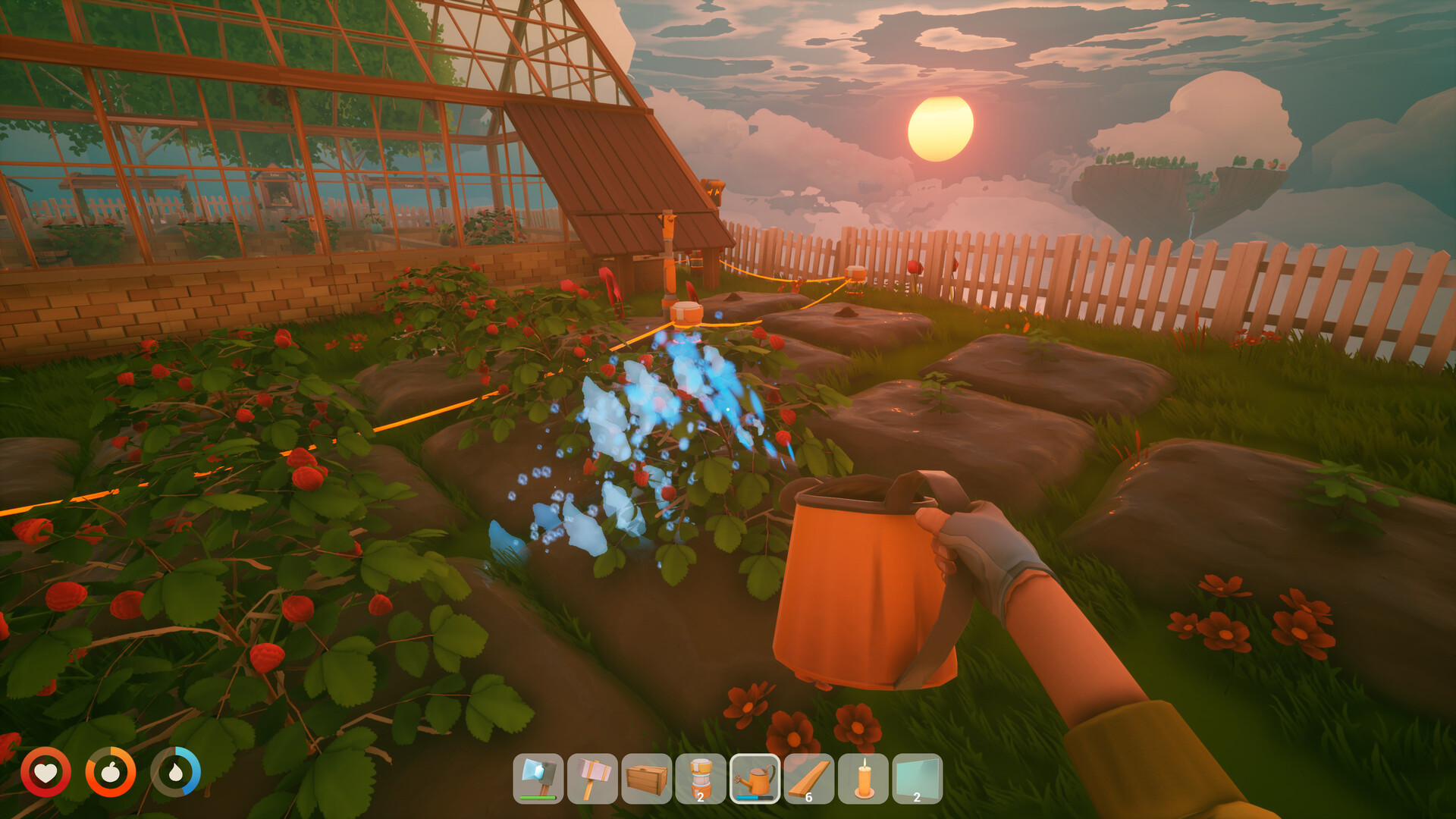
Crops inside greenhouses still need water. The standard watering options apply:
Manual watering with a Watering Can.
Farming robots and drones that draw power from the energy system and water crops automatically. These work inside greenhouses just as they do outdoors.
Players running large greenhouse farms typically pair them with automation so the entire farm waters itself while the player handles other tasks.
Tips
Build the first greenhouse before unlocking cooking-system crops to protect investment from the first storm.
Build greenhouses next to your solar farm and battery bank so farming drones have a short power cable run.
Use a single greenhouse for staples (Cotton, Wheat) and a second for high-value cooking crops (Tomato, Watermelon).
Connect greenhouse drones to logic switches so they pause overnight when solar drops.
Connection to Other Systems
Farming and Plants: greenhouses are the storm-safe option for every crop type.
Weather System: thunderstorms damage outdoor crops only; greenhouse crops are protected.
Building and Construction: greenhouses are standard structures with glass walls; no special piece type.
Cooking: every confirmed cooking ingredient grows in greenhouses without storm risk.
Energy System: watering drones inside greenhouses still draw power like any other automation device.
Thunderstorm Loop Fix
Version 1.3.0 fixes a bug that could leave thunderstorms repeating in a loop for some players. This does not remove the normal need to protect exposed crops from storms.
Version 1.3.0-304818 reached Steam on September 30, 2026. The announcement placed the console rollout after platform approval; a matching live version has not been confirmed for PlayStation 5, Xbox Series X|S or Nintendo Switch 2 as of October 8. Check the installed version before relying on these changes on another platform.