

Overview
The energy system is one of the central mechanics in Solarpunk. Nearly every machine and automated device requires power to function. Energy is generated from renewable sources, stored in batteries, and distributed through cables or wireless connections to where it is needed.
Energy Generation
Solarpunk provides multiple ways to generate power, all from renewable sources that fit the game's optimistic setting:
Solar power: generated from the sun during daylight hours. Output varies with weather; storms and cloud cover reduce generation.
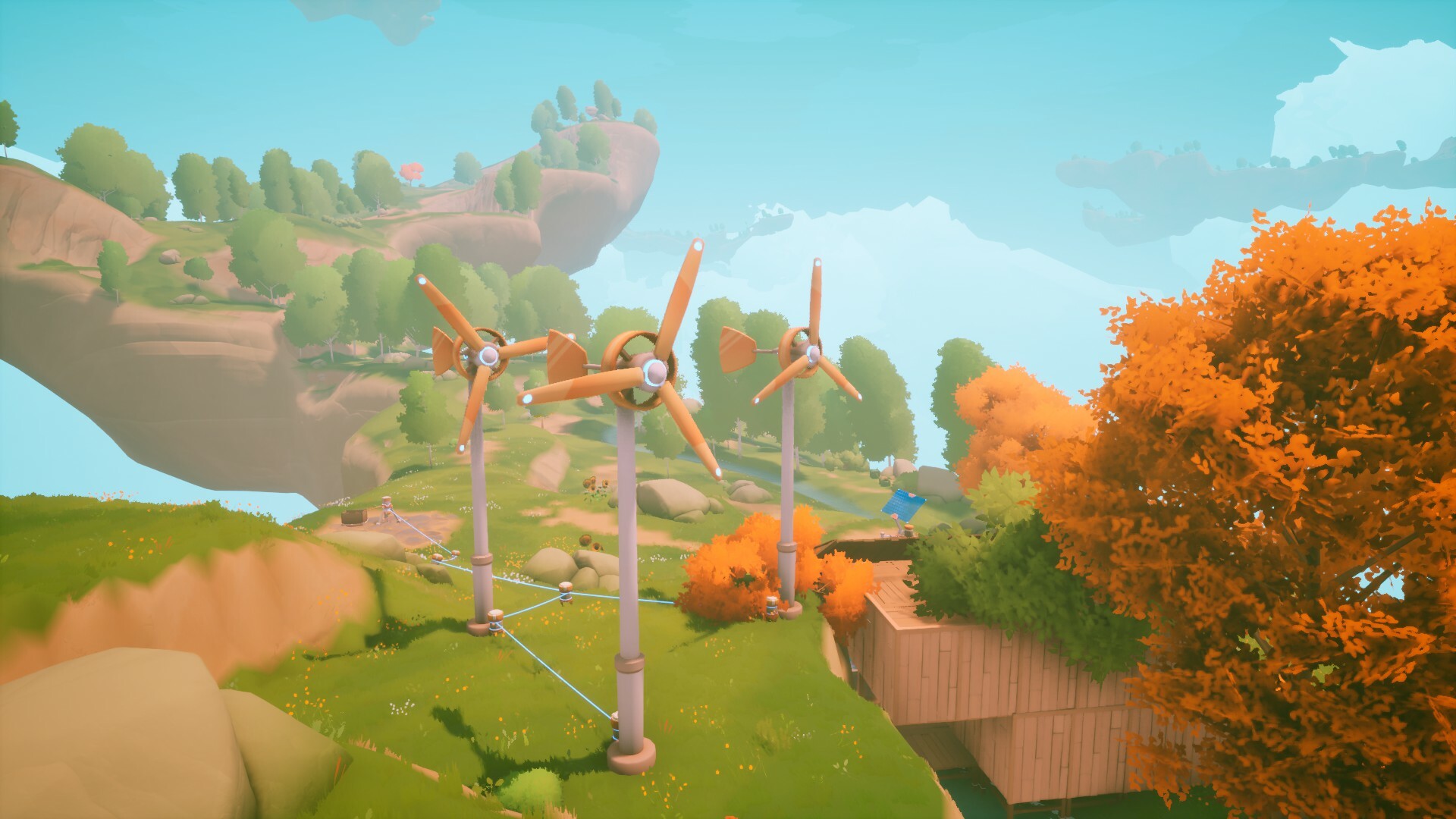
Wind power: generated from wind, which works at any time of day and complements solar power at night or during storms.
Water power: generated from water as a third renewable source, giving players another option for keeping the grid supplied.
Because weather affects how much power each source produces, players plan ahead and combine sources so the base keeps running through changing conditions.
Energy Storage
Because generation fluctuates with the time of day and the weather, batteries store surplus power for later use. Stored energy keeps machines running when the sun is down or the wind drops.
Energy Distribution
Cables
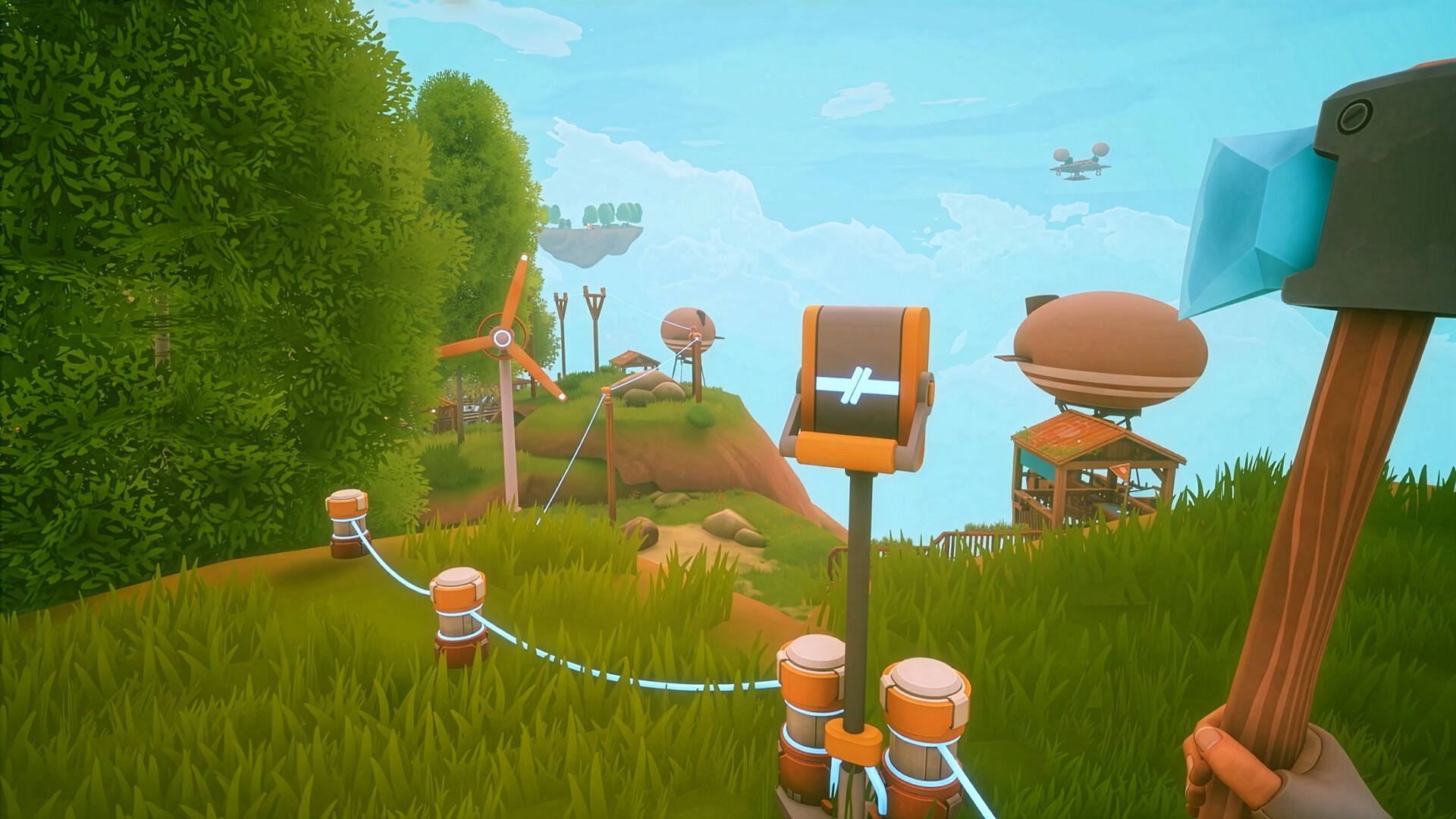
Players can drag cables around the base to connect generators, batteries, and machines. Cables are the direct way to wire power from where it is made to where it is used.
Wireless Power
Wireless power keeps the base running without needing cables everywhere. It lets players move power around the base more cleanly, reducing cable clutter while still feeding machines and devices.
Switches and Network Control
Switches let players turn entire power networks, or individual sections, on and off. For example, players can shut down automation machines at night to conserve stored battery power for other systems.
Energy Crafting Table
Powered devices are built at a dedicated Energy Crafting Table rather than the general crafting bench. Its recipe list groups the game's electrical hardware into roughly two dozen entries, which between them cover generation, storage, logic, production and lighting:
Group | Devices |
|---|---|
Generation | Solarpanel, Windmill, Skyturbine, Energy Generator |
Storage and transfer | Battery, Cable, Wireless Power Base, Circuitboard |
Logic and sensing | Weather Station, Rain Sensor, Daytime Sensor, Controllable Logic Block, Lever, Network Display |
Production and gathering | Drill, Fishing Drone, Forester, Transport Drone, Energy Furnace |
Farming and animals | Sprinkler, Water Trough (powered), Animal Transportation, Animal Receiving Station |
Lighting | Standing Lamp, Wireless Light, Small Wireless Lamp |
Logistics | Postbox, Advanced Dock |
Recipes list their inputs directly on the table. The Solarpanel, described in-game as generating energy when exposed to the sun, is built from iron, glass and copper, which links the energy system back to mining and resource gathering.
Reading the Network Display
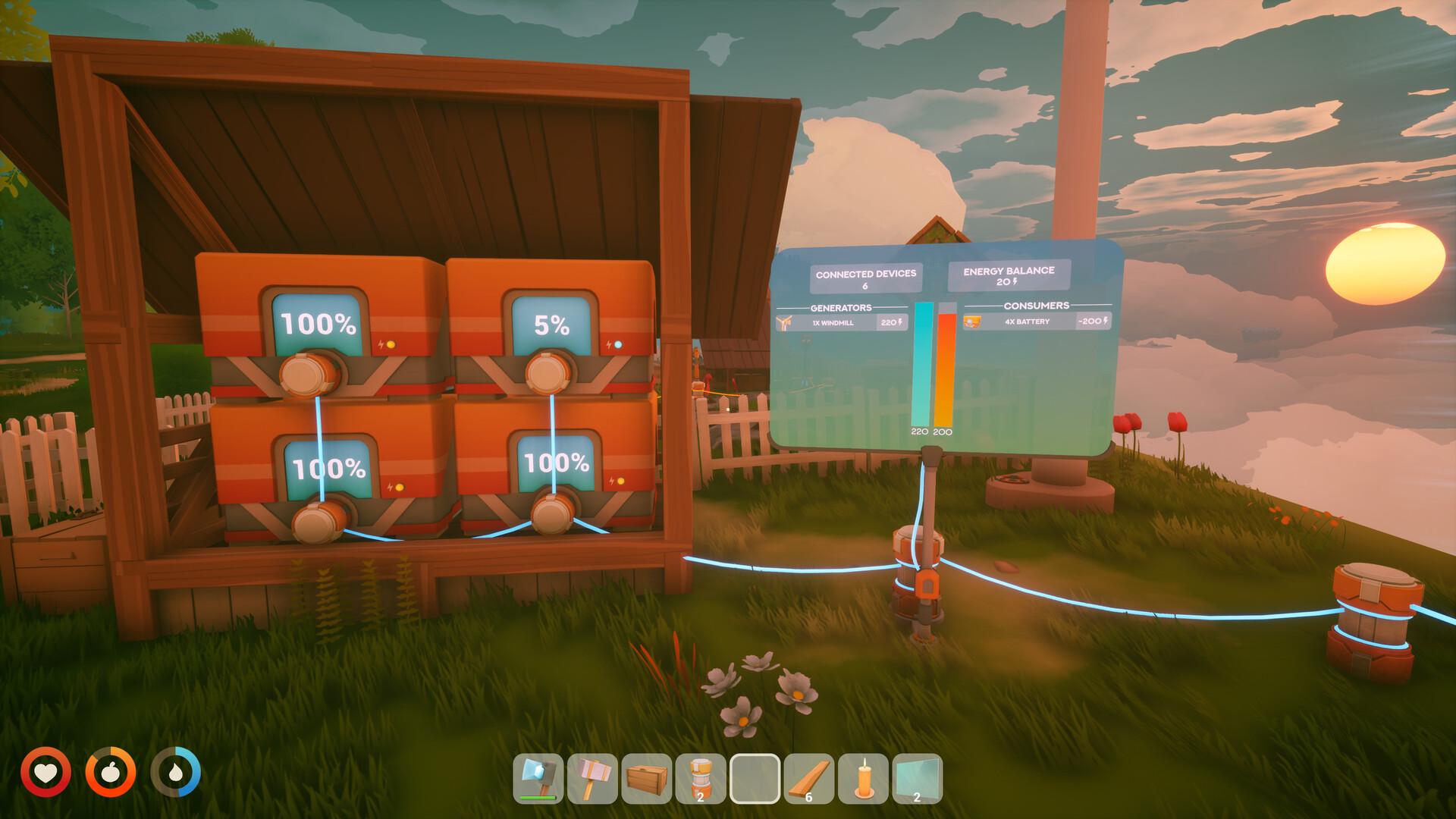
The Network Display is the readout for a power grid. It reports the number of connected devices and an overall energy balance, then splits the grid into generators and consumers with a running figure for each side. A windmill might contribute a positive figure while a bank of charging batteries shows as a negative draw, and the balance between the two columns is what tells the player whether the network is running a surplus or a deficit.
The same readout makes the cost of automation visible. Transport drones, for example, are among the heavier draws on a grid, so a row of them can flip a comfortable surplus into a deficit and force either more generation or a switch to gate them.
Batteries show their individual charge as a percentage on the unit itself, so a glance across a battery bank shows which cells are full and which are still filling.
Energy Management Tips
Combine solar, wind, and water generation so at least one source is always producing power.
Use batteries to bank surplus daytime power for use at night.
Use switches to disable non-essential systems during storms when solar generation drops.
Use wireless power for high-traffic areas to keep the base layout clean.
Roof Panels and Cable Holders
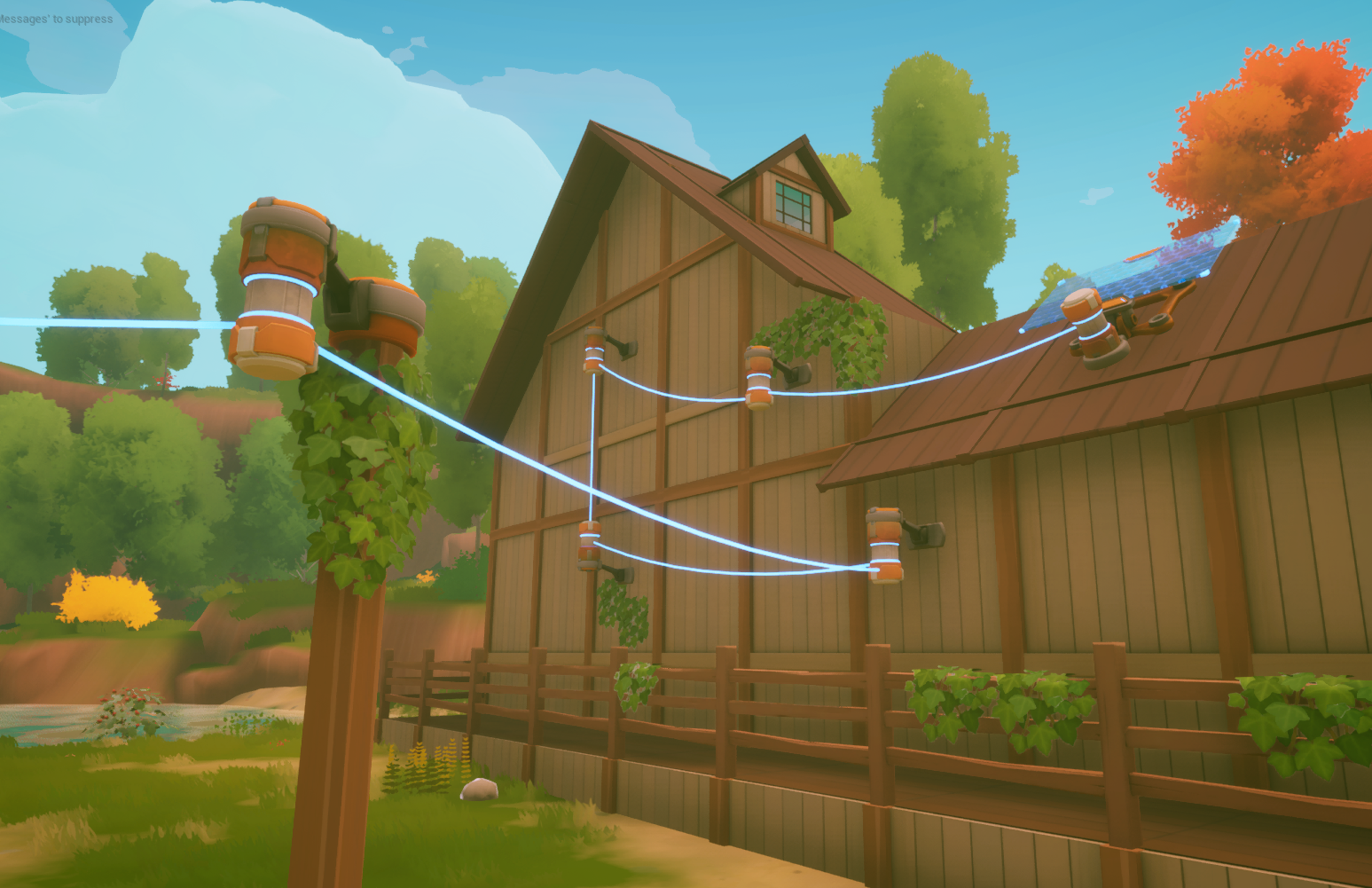
Version 1.3.0 adds roof-mounted solar panels and connector holders for pillars and walls. These provide more placement options for a building and its cables. The same update renamed the Algae Drone to Fishing Drone; this is a name change, not a second drone added to the device roster.
Version 1.3.0-304818 reached Steam on September 30, 2026. The announcement placed the console rollout after platform approval; a matching live version has not been confirmed for PlayStation 5, Xbox Series X|S or Nintendo Switch 2 as of October 8. Check the installed version before relying on these changes on another platform.