
Loading...
Loading...
Gameplay
September 8, 2026 at 11:15 PM
Add wikilinks to table cells (1 new links)
Showa American Story is a single-player role-playing game played from a third-person camera, with full controller support. You control Chigusa Choko and nobody else. The game is built as one long road trip across the alternate United States it invents, following America's Route 50, and the studio has said flatly that what it is making is a road movie rather than a series of levels.
The developers have been unusually direct about the genre label. In statements made in 2023 and again in 2024 they described the project as an RPG rather than an action game, on the grounds that it leans on plot, immersive quests, character development, exploration and collection, and that its greatest appeal is following the story to uncover the customs and culture of the world.
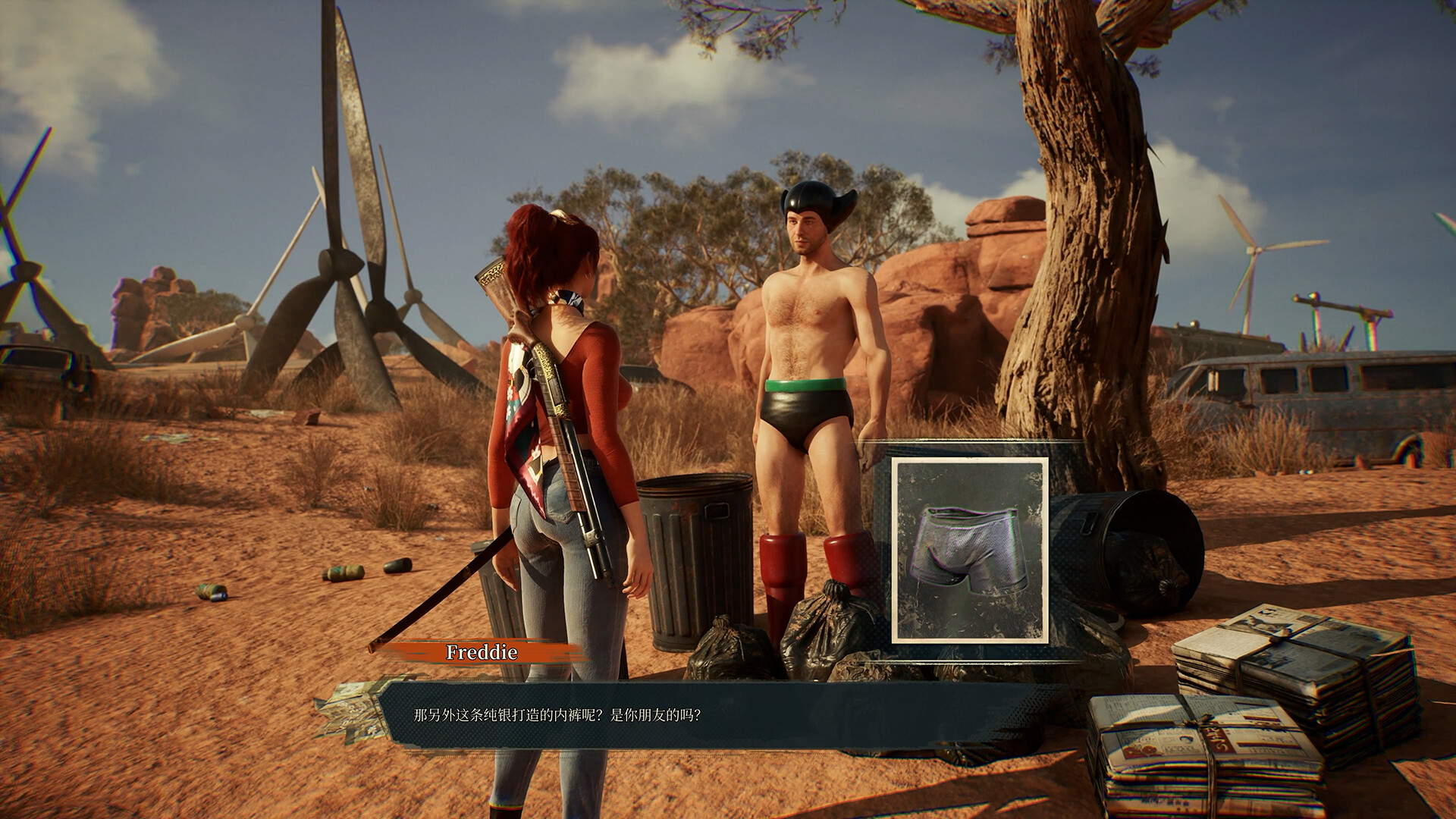
The game is a semi-open world. City areas open up as the main story advances and each is freely explorable inside, connected by travel in the RV rather than forming one continuous open map. The studio has said explicitly that it is not an open-world game. Neo Yokohama and Mount Neo Yokohama are the areas shown publicly so far, both in the build shown at gamescom 2026. Cities and World Structure covers the areas themselves, and the era they sit in is described on Showa 66 Setting.
Combat runs in real time in the field, with weapons swapped on the fly. The official feature copy calls it brutal and straightforward. Weapons fall into three groups in the studio's current framing: melee weapons, ranged firearms, and other strange contraptions. A 2025 developer talk put the arsenal at over ten weapon classes, deriving into more than a hundred individual weapons. Combat and Weapons carry the detail.
The game runs on main quests and side quests. Official copy puts it plainly: as you take on main and side quests, you will steep yourself in the unique culture of Showa America. Side quests flesh out the world's characters and lore and unlock gradually as the main story moves forward, and the studio said in 2026 that a player who does no side quests at all can still finish the game. A 2022 developer statement described quests as linear in structure rather than problems with several valid solutions, and noted that some side quests are repeatable.
The main story is linear. The studio said in 2024 that there are no branching endings. Dialogue choices do exist, and the publisher's copy says a player's actions and dialogue choices will impact the world around them, but that is the studio's framing of a linear story with reactive moments in it, not a claim of branching narrative paths.
Exploration is one of the four official feature pillars, and the rewards named in official copy are weapons, outfits, items, collectibles and experience, all of which are put to use back at the RV. The world is dense with people to talk to: a 2025 developer talk put the count at over 1,500 interactable NPCs whose dialogue changes as the main story advances. Street furniture is interactive too. A 2024 statement described gachapon capsule machines and vending machines that take a coin and dispense a real prize.
Getting around is done by vehicle. That same 2024 statement listed the RV, a motorcycle, a bicycle and other vehicles the studio has not disclosed, all of them driven by the player rather than handled in a cutscene, and said motorcycle colour variants are collectible. Nothing has been shown of how any of them handle, so this wiki does not describe driving.
Everything picked up on the road ends up at The Guren Express, Choko's modified motorhome. It is her mobile base and the place the progression systems live. Levelling, skill trees and weapon upgrades are covered on Progression; the stat-raising routines she performs inside the vehicle are covered on Daily Activities; the arcade cabinets and street diversions scattered through the world are covered on Minigames. Items collected out in the world can be mounted on the RV's walls.
There are three difficulty levels. Two were selectable in the build shown at gamescom 2026, and the studio confirmed a third, easier setting in September 2026. None has a settled English name across languages, so none is named here. The studio has said that getting past content you are stuck on should come from stat growth and the skill tree rather than from turning the difficulty down, and that players will not be gated behind a difficulty choice. A gore intensity setting was described in 2024 as going into the options menu.
Every figure below is a studio statement made before release, and none of them describes the finished game.
Measure | What the studio has said | When it was said |
|---|---|---|
Content balance | Roughly 40 percent story, 30 percent combat, 30 percent exploration | 2024 |
Main story | Roughly 20 to 25 hours | Estimates given between 2022 and 2025 |
Main story, most recent estimate | 25 hours or more | 2025 |
Full playthrough with side content and exploration | Toward 50 hours | Estimates given between 2022 and 2025 |
Pillar | What the official copy attaches to it |
|---|---|
Brutal and Straightforward Combat | Real-time fighting across a wide spread of weapon types. See Combat and Weapons. |
Exploration with Rich Rewards | Weapons, outfits, items, collectibles and experience found on the road and spent back at The Guren Express. |
The Absurd and Fantastical 80s | The tone and texture of the world. See Showa 66 Setting. |
Unique Characters and Cinematics | A narrative-driven RPG leaning on lavish cutscenes, playing out like a classic 80s film. |
Showa American Story is announced for PC and PlayStation 5. A PlayStation 4 version was part of the original January 2022 announcement and no longer appears in current platform listings. No formal cancellation has been announced. Release and Platforms carries the current listing detail.