

Showa 66 is the year Showa American Story gives for its own setting, and it is a year that never existed. On that date the game builds an alternate history: an unbroken Japanese economic boom that ends with Japan buying up most of the United States and turning it into an economic and cultural colony.
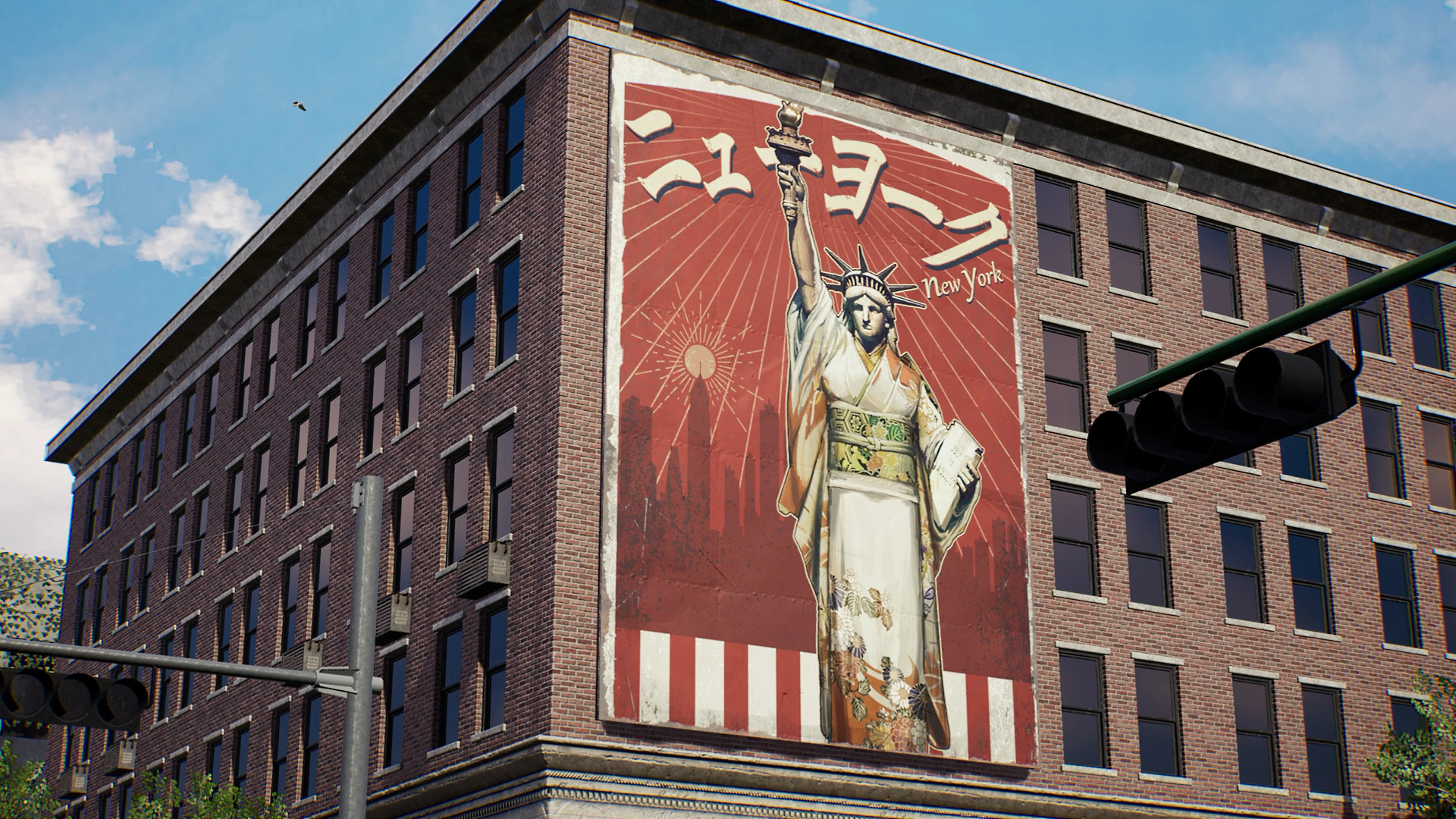
A Year That Never Happened
The term appears in the game's about text in English, Japanese and Simplified Chinese, so it is not a fan coinage or a translation artefact. It is what the game calls its own year, and the arithmetic behind it does not work.
The game gives its own setting as Showa 66. The real Showa era ended at Showa 64, which fell in 1989, so Showa 66 is a date that never happened; had the era continued it would correspond to 1991. The English store description separately places the story in the late 1980s. Both descriptions come from the game's own materials.
The creative director has said the impossible date was deliberate. Speaking in late 2024, he explained that a year outside the real calendar makes the world read as fiction at a glance, and that it lets the game show a Japan that kept compounding its bubble-era wealth instead of watching the bubble burst.
The Premise
The English about text opens with the line that Japan has bought out most of the United States with its strong economic power. The Japanese copy carries the same sentence with 昭和66年.
Fuller official wording puts it less gently. Japan wielded the blade of its overwhelming economic power and bought up virtually the entire United States. The country that had led from the centre of the world stage was reduced to an economic and cultural colony of Japan. A surge of immigration planted Japanese culture firmly within the American continent, and the two cultures amalgamated rapidly.
That world does not last. The Cataclysm ends its social order before Chigusa Choko wakes into what is left of it, and the places she travels between afterwards are covered on Cities and World Structure.
Where the Idea Came From
The premise grew out of a television news programme the creative director saw as a child, which claimed the land inside Tokyo's Yamanote loop was worth enough to buy the whole United States. He said in a late 2024 interview that he never knew whether the claim was true, but that it stayed with him.
Naming the World
Place names in the setting invert a colonial habit. Settlers prefixed their hometowns onto new ground as New York and New Orleans; here the same instinct is applied to Japanese cities instead, which is how Neo Yokohama gets its name. The creative director said in 2024 that he had named the city before he learned that a real Shin-Yokohama exists.
Built From Memory
NEKCOM Entertainment said in 2024 that it did no location scouting for the game and had no Japanese cultural supervisor on the project. Asked that year whether such a supervisor existed, the creative director said there was none, and that everything in the game is made from his own memories and sensibilities and those of the development team.
He was born in China in 1983 and has never lived in Japan or the United States. The media he grew up on arrived during the Reform and Opening-Up era and was, by his own estimate, roughly 70 percent Japanese and 30 percent American. The setting is therefore a remembered Japan and a remembered America rather than a researched one.
The studio named three pillars for the whole work in 2024: violence, romance and comedy. Development History covers the creative director's account of the project at length, and Music covers the soundtrack.