
Loading...
Loading...
Animals and Welfare
July 4, 2026 at 08:11 PM
Added nine newly-revealed base-game animals (hippopotamus, red panda, tree-kangaroo, newt, peacock butterfly, humphead wrasse, brown trout, plus crocodile and chimpanzee detail pages) with conservation data; noted expanded Zoopedia taxonomy (Vulnerable tier, twelve biomes, Oceania)
Animals are the heart of Planet Zoo 2. Every species is a realistically simulated creature with its own needs, and a habitat only thrives when those needs are met. The sequel rebuilds animal behaviour around what Frontier calls an improved animal brain, producing more natural and varied actions such as herding, grazing, and reacting to the world around them.
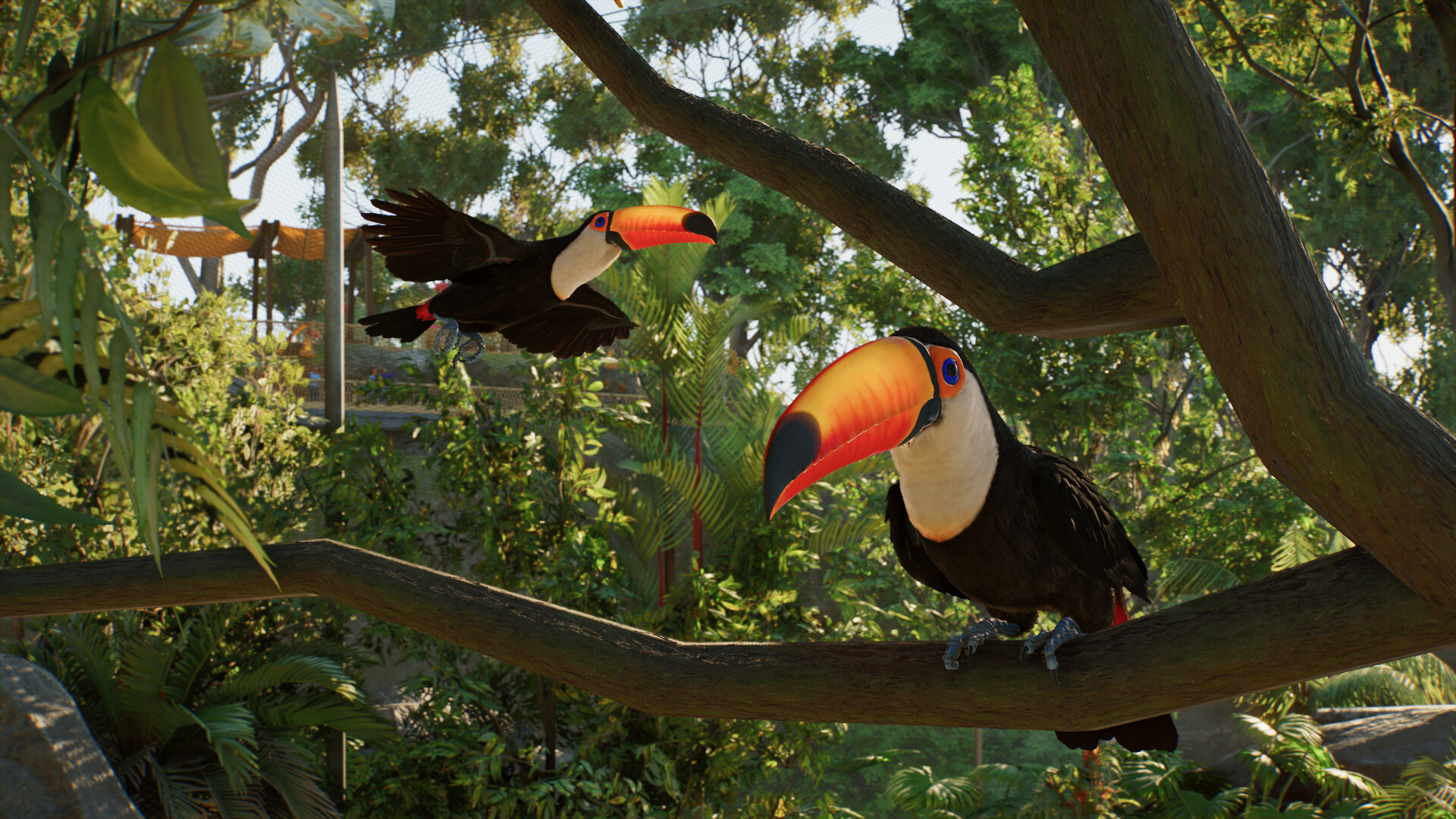
Welfare is tracked through clear on-screen indicators, and animals now show more obvious physical reactions to their surroundings and condition, making problems easier to spot. Frontier highlights a generational leap in fidelity, with detailed fur, feathers, and scales, along with authentic breathing and sounds.
Behaviour is also more expressive. Layered animations communicate an animal's mood and emotional state at a glance, without the player needing to open a menu, and species show off newly detailed actions such as more dynamic climbing and jumping, resting on raised frames, and rubbing against their surroundings.
Players raise animals from their earliest moments and can breed them across generations, while enrichment items help keep animals stimulated and healthy. Conservation is a central theme: animals can ultimately be released, and that effort extends beyond the zoo through the new Wildlife Reserves.
Cohabitation returns from the first game and takes on a larger role in management, letting compatible species share a single habitat. Frontier has said it will detail how cohabitation works closer to launch.
For the first time in the series, zoos can keep fully aquatic species in aquariums and free-flying birds in aviaries, greatly broadening the kinds of life on display.
Frontier has not yet revealed the full animal roster, but the in-game Zoopedia is now live as a reference for the animals shown so far, with new species added in weekly drops ahead of launch. Twenty animals were catalogued as of early July 2026, and later drops expanded the list well beyond the announce trailer, adding the Common Hippopotamus, Red Panda, Goodfellow’s Tree-Kangaroo, Danube Crested Newt, Humphead Wrasse, Brown Trout and the European Peacock butterfly, the first invertebrate shown for the game. The species confirmed so far, grouped by type:
Group | Examples shown so far |
|---|---|
Mammals | Lion, Western Chimpanzee, Plains Zebra, Sumatran Tiger, Grey Wolf, Red Deer, Masai Giraffe, Eurasian Beaver, African Savannah Elephant, European Bison, Common Hippopotamus, Red Panda, Goodfellow’s Tree-Kangaroo |
Reptiles | Saltwater Crocodile, Hawksbill Turtle |
Aquatic life | Blacktip Reef Shark, Ocean Sunfish, Pufferfish, Blackspotted Puffer, Humphead Wrasse, Brown Trout |
Birds | Toco Toucan, Secretarybird, White-tailed Sea Eagle, Great Hornbill, African Penguin |
Amphibians | Danube Crested Newt |
Invertebrates | European Peacock (butterfly) |
A further set of six species, including the Golden Eagle, Golden Lion Tamarin, Great Hammerhead Shark, Axolotl, Blue and Gold Fusilier, and Longfin Batfish, is tied to the game's deluxe release rather than the base game.
The Zoopedia is the game's in-game reference for every animal, and it is also available on the official website. It catalogues each species by three animal types, Aquatic, Avian, and Terrestrial, alongside the biome and continent it is found in and its real-world conservation status. As the roster has grown the taxonomy has broadened to twelve biomes, from Desert, Taiga and Tundra to Reef, Open Sea and Lakes and Rivers, and nine continents including Oceania. The recognised conservation tiers are Least Concern, Near Threatened, Vulnerable, Endangered, and Critically Endangered. Each entry covers the animal's appearance, size and weight, taxonomy, wild population, and social and breeding behaviour. Frontier notes the Zoopedia is a work in progress, so its stats and artwork may change before release.
Animal | Edition | Found In | Conservation Status | Wild Population |
|---|---|---|---|---|
Secretarybird | Base | Africa | Endangered | 6,700 to 67,000 |
African Penguin | Base | Africa | Endangered | 19,800 |
African Savannah Elephant | Base | Africa | Endangered | 320,000 |
European Bison | Base | Europe | Near Threatened | 2,518 |
Sumatran Tiger | Base | Asia | Endangered | 400 to 600 |
Saltwater Crocodile | Base | Asia, Oceania | Least Concern | 500,000 |
Western Chimpanzee | Base | Africa | Critically Endangered | 21,000 to 53,000 |
Common Hippopotamus | Base | Africa | Vulnerable | 115,000 to 130,000 |
Red Panda | Base | Asia | Endangered | 10,000 |
Goodfellow’s Tree-Kangaroo | Base | Southeast Asia | Endangered | Unknown |
Danube Crested Newt | Base | Europe | Least Concern | Unknown |
European Peacock | Base | Europe, Asia | Least Concern | Unknown |
Humphead Wrasse | Base | Indo-Pacific reefs and coasts | Endangered | Unknown |
Brown Trout | Base | Europe, Asia, North America, South America, Oceania | Least Concern | Unknown |
Axolotl | Deluxe | North America | Critically Endangered | 50 to 1,000 |
Golden Eagle | Deluxe | North America, Europe, Asia, Northern Africa | Least Concern | 85,000 to 160,000 |
Golden Lion Tamarin | Deluxe | South America | Endangered | 4,800 |
Great Hammerhead | Deluxe | Tropical and warm temperate oceans | Critically Endangered | Unknown |
Blue and Gold Fusilier | Deluxe | Indo-Pacific reefs | Least Concern | Unknown |
Longfin Batfish | Deluxe | Western Pacific reefs | Least Concern | Unknown |
Animals listed in the Zoopedia so far, with the real-world conservation data shown for each. The roster is growing through weekly reveals, so this is a partial list rather than the full lineup.
