

Overview
The relationship and social system in Paralives is built around a label-based framework that allows Parafolk to develop nuanced, multi-layered bonds with one another. Rather than reducing a relationship to a single bar or a single descriptor like "friend" or "enemy," the system assigns multiple specific labels to each connection. A Parafolk can simultaneously be a friend, a fitness buddy, and a sibling to another character, with each of those labels evolving independently over time. This design reflects the complexity of real human relationships and gives players meaningful control over how their characters connect with the people around them.
Socializing in Paralives is driven by a core loop: spend time together, fill the Together Bar, choose a Together Card, and watch the relationship evolve. The system is contextual, taking into account where the characters are, what they are doing, and what objects are nearby to offer relevant and dynamic social options.
Relationship Labels
Every relationship between two Parafolk is described by one or more relationship labels. These labels are unlocked through play and can be upgraded to higher levels as characters continue to interact. For example, meeting someone for the first time may lead to a basic "Friend" label, but only through sustained interaction will that friendship strengthen into a deeper bond.
Labels are not mutually exclusive. A single pair of Parafolk can share several labels at once. One character might be simultaneously a friend, a coworker, and a romantic partner to another. Each label tracks its own progression independently, so it is possible for two characters to be close friends but only casual coworkers. This layered approach adds depth that goes well beyond a simple friendship or romance meter.
Labels cover a broad range of relationship types, including platonic bonds, romantic connections, family ties, professional relationships, and rivalries. The specific labels that become available depend on the context of the interactions and the choices the player makes through Together Cards.
The Together Bar
The Together Bar is the central mechanic that drives social progression. When two or more Parafolk spend time together and interact, the Together Bar gradually fills up. Under the current design, it takes approximately twenty in-game minutes of social progress to fill the bar completely.
During this time, characters engage in conversation and activities as a group. Unlike some life simulation games where the player must manually queue individual interactions one at a time, Paralives is designed so that characters stick together and continue interacting naturally. The player guides the general direction of the socializing rather than micromanaging every single exchange.
Once the Together Bar is full, a clickable icon appears. Clicking this icon presents the player with a set of Together Cards, allowing them to choose what happens next in the social encounter.
Together Cards
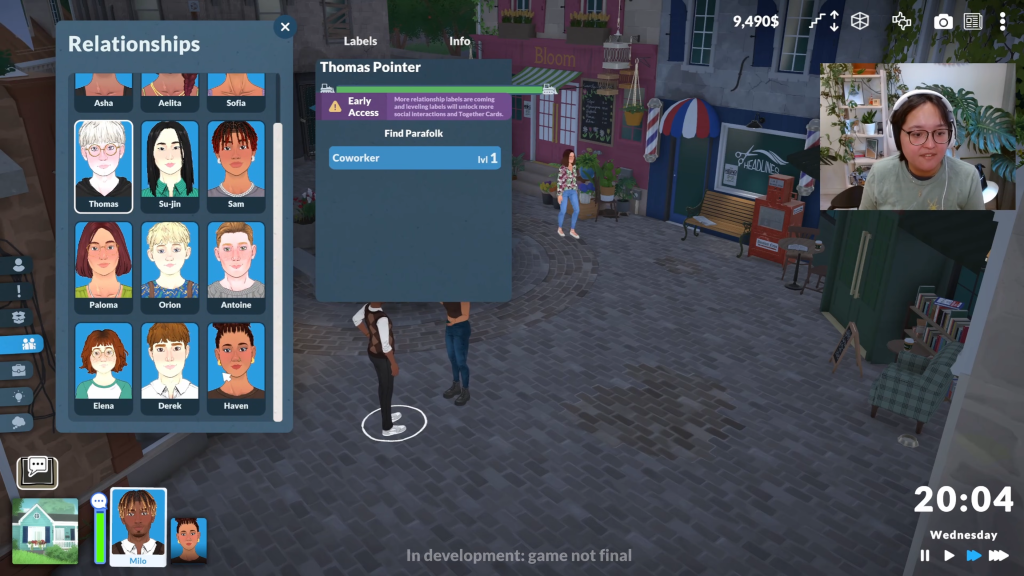
Together Cards are the primary tool players use to shape relationships. When the Together Bar fills up, the player is offered a choice of three Together Cards. Each card represents a different social action or conversational direction that the Parafolk can take. Selecting a card determines what the characters do next and can unlock or upgrade relationship labels.
Together Cards are context-dependent. The game evaluates several factors when generating the available cards:
Location: Where the Parafolk are (at home, in a park, at a restaurant, etc.)
Activity: What the Parafolk are currently doing (eating, exercising, watching TV, etc.)
Companions: Who else is present in the group
Nearby objects: What items and interactive objects are within reach
Relationship history: The existing labels and their levels between the characters
Personality: The traits and preferences of the Parafolk involved
This contextual system ensures that social interactions feel organic. A card that appears during a dinner at a restaurant will differ from one that appears during a workout at the gym. A label-advancement indicator on a Together Card shows which relationship labels will be unlocked or upgraded if the player selects that card, giving the player clear information about the consequences of their choice.
Together Card Variants
In addition to the base Together Cards, the system includes emotional variants that allow the player to express different intentions through the same basic interaction. A neutral Together Card and its emotional variant share the same root interaction but carry a different tone or intent.
Each variant is indicated by a distinct color:
Color | Tone | Description |
|---|---|---|
White | Neutral / Standard | The default version of the interaction with no special emotional charge. |
Green | Friendship | A supportive or encouraging take that strengthens friendly bonds. |
Pink | Romance | A flirtatious or romantic spin that can initiate or deepen romantic relationships. |
Dark Blue | Skills and Hobbies | Interactions tied to shared interests, skill discussions, or hobby-related conversations. |
Red | Mean | A hostile, ironic, or confrontational version of the interaction that may damage the relationship. |
Dark Red | Discomfort | Interactions that create awkwardness, unease, or social tension. |
For example, a white Together Card might offer the option to "Compliment outfit," while its red variant changes that to "Compliment outfit (ironic)." Choosing the ironic variant could make the recipient feel embarrassed, angry, or sad. The target Parafolk may then be offered their own cards to respond, such as insulting the character who was rude to them. This back-and-forth creates dynamic and sometimes unpredictable social situations.
Together Card variants can also directly influence the emotions of the Parafolk involved. Selecting a specific emotional variant may shift a character's mood, which in turn affects future card availability and relationship progression.
Social Interaction Topics
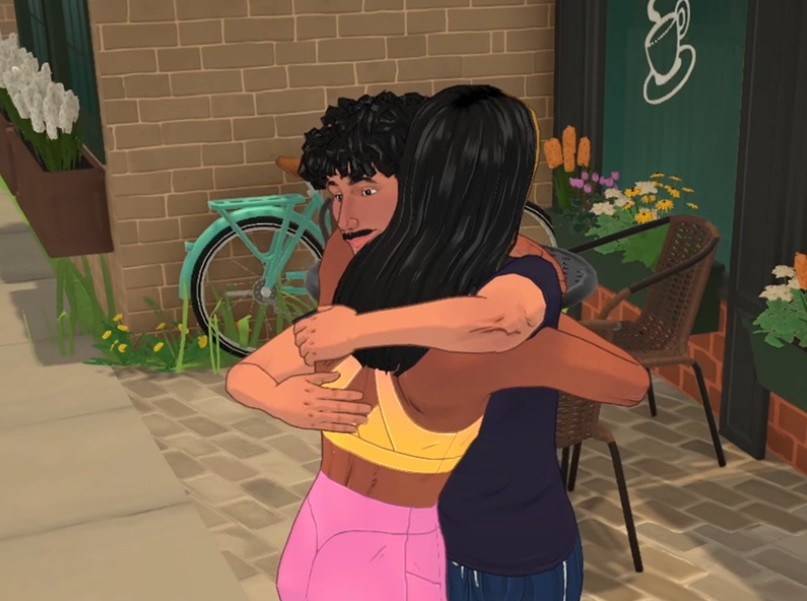
Conversations between Parafolk cover a wide range of topics, including music, the weather, politics, cooking, jobs, and personal interests. The topics that come up are influenced by the personalities of the characters involved and the context of the situation.
The interaction system supports a spectrum of social behaviors:
Compliments: Players can choose to compliment another Parafolk, with sub-menu options to deliver the compliment sincerely, flirtatiously, or ironically
Insults: Parafolk can insult others based on conversation context or personality, such as insulting someone for being a less skilled cook or for having a lower-paying job
Backhanded compliments: Players can be passive-aggressive, delivering praise that subtly undermines the recipient
Gossip: Characters can discuss and share opinions about other Parafolk in the town
Deep conversations: Meaningful exchanges that strengthen bonds and can unlock deeper relationship labels
Social Perks
Social Perks are personality traits chosen in the Paramaker that shape how a Parafolk handles social situations. Each perk is bought with Personality Points, and the right perk makes a Para measurably better at a particular kind of relationship. The Early Access build includes five Social Perks.
Social Perk | Effect |
|---|---|
Good at Being Alone | Thrives in solitude. The Para gains a unique solitary need and is happier spending time by themselves rather than constantly socializing. |
Good at Making Friends | Friendly social interactions succeed more often and friendships build faster, making it easier to grow a wide circle of friends. |
Good at Taking Care of Others | Excels at comforting and supporting other Parafolk, able to soothe negative emotions and help with the needs of others. |
Good at Romantic Relationships | Romantic interactions land more reliably, with better odds on flirty cards and access to stronger romantic options. |
Good at Cooperating | Happier and more effective during group activities and shared tasks, benefiting from being part of a team. |
A sixth perk, Good with Family, is not available in the current Early Access build; it had not been added by any patch through Hotfix 0.1.8b as of September 21, 2026. The development team has described it as planned, and the perk list as a whole is subject to change as the game grows during Early Access.
Group Socializing
One of the distinguishing features of the social system is its support for group interactions. When multiple Parafolk are together, they interact as a group rather than in isolated pairs. The player does not need to queue separate interactions for each pair of characters. Instead, the group dynamics play out naturally, with the Together Bar and Together Cards applying to the group context.
This design makes social gatherings, outings, and family dinners feel more cohesive and realistic. Activities like visiting a restaurant or hanging out at a park become opportunities for multiple relationships to develop simultaneously.
Relationship Label Categories
Relationship labels in Paralives are organized into six distinct categories, each covering a different type of bond between Parafolk. This categorization helps the game generate appropriate Together Cards and ensures that relationships develop in ways that feel authentic.
Category | Description | Examples |
|---|---|---|
Family Ties | Blood relations and familial bonds | Mother, Father, Sister, Brother, Aunt, Cousin |
Friendship Types | Platonic bonds formed through shared time and activities | Friend, Trustee, Cooking Buddy, Party Partner, Fitness Buddy |
Romantic Relationships | Romantic and intimate connections | Love Interest, Secret Crush, Lovers, Married |
Professional Connections | Work-related bonds between colleagues | Coworker-type labels |
Enemy Relationships | Hostile or adversarial bonds | Rival-type labels |
Shared Activities | Bonds formed through doing activities together | Activity-based bonds (e.g., Fitness Buddy) |
Combo Labels
Combo Labels are a special class of relationship label that unlock when two separate labels between the same pair of Parafolk both reach high levels simultaneously. Combo Labels offer enhanced gameplay bonuses that go beyond what either individual label provides on its own. For example, if two Parafolk have both a strong Friendship label and a strong Cooking Buddy label, they might unlock a Combo Label that grants additional perks when they cook together.
This system rewards players who invest in building multi-faceted relationships rather than focusing narrowly on a single type of bond. It also creates a sense of progression and discovery, as players unlock new Combo Labels they may not have expected.
Initiative Together Cards
In addition to the standard Together Cards that appear when the player fills the Together Bar, Paralives features Initiative Together Cards. These are cards initiated by non-active Parafolk independently, without the player triggering them. An NPC or household member might spontaneously present the player with a surprise job offer, a romantic gesture, or an invitation to hang out.
Initiative Together Cards add an element of unpredictability to social gameplay. They reflect the idea that relationships are not one-sided; other characters in the world have their own motivations and desires. A Para who has been spending time at the gym might receive an Initiative Card from a fellow gym-goer inviting them to become workout partners.
NPC Relationship Limitations at Launch
At the Early Access launch, NPCs cannot build relationships autonomously. Only player-directed Parafolk can develop connections through the Together Card system. This means that NPC households will not autonomously form new friendships, fall in love, have children, or change jobs on their own.
NPC story progression is planned for a later update during the Early Access period. Once implemented, NPCs will be able to live their own lives, age, form relationships, and change jobs independently, making the town feel more dynamic and alive even when the player is focused on their own household.
Relationship Progression
Relationships in Paralives are not static. Labels can be upgraded over time as characters continue to spend time together and the player makes choices through Together Cards. Meeting someone for the first time will likely result in a basic acquaintance or friend label. Over time, with continued interaction and the right card choices, that friendship can be strengthened to higher levels.
Romantic relationships follow a similar progression. A Parafolk does not simply become a romantic partner overnight. Instead, the player must build the connection through flirty card variants, spending time in romantic settings, and making choices that move the relationship in that direction. The system rewards patient, intentional relationship building.
Negative relationships are also possible. Repeated hostile interactions, ironic compliments, and insults can lead to rivalry or enmity labels. The game does not force relationships to be positive; players have full freedom to create drama and conflict among their Parafolk.
Teen Romance
Patch 0.1.3 (June 6, 2026) added teen romance. Teenagers can now flirt and be in a romantic relationship with other Teenagers, using the same pink Romance Together Card variants and romantic-progression rules as adult Parafolk but limited to other Teenagers. Younger lifestages remain unable to form romantic relationships. See Lifestages for the lifestage rules.
Patch 0.1.4 Relationship Fixes (June 18, 2026)
Patch 0.1.4 corrected several relationship-label and family-planning behaviors. The "Exclusive Lovers" label is now cleared when a couple breaks up, rather than lingering. "Try for baby" is only offered when one Parafolk can get pregnant and the other can get others pregnant; couples for whom that does not apply now receive a want to adopt a baby instead. The patch also fixed cases where a Para could get a want to propose to someone they were already engaged to, or a want to start a relationship with a Para who was already their lover.
Patch 0.1.6 Change to Ask if Single (July 16, 2026)
Before Patch 0.1.6 the Ask if Single interaction treated a Romantic Interest as a relationship, so a Para who had only reached the Romantic Interest stage with someone would be reported as taken. From Patch 0.1.6 onward, Romantic Interest no longer counts, and the answer reflects whether the Para holds an actual relationship label.
The same patch closed a related bug in the Together Cards flow where a Para could propose to themselves.