
Loading...
Loading...
Paradimes
May 12, 2026 at 03:26 PM
Add wikilinks to table cells (4 new links)
Paradimes are the in-game currency in Paralives. Every household has a paradime balance that pays for bills, food, furniture, clothing, transit fares, and any other expense across the open world. Paradimes are earned through Careers, museum milestone payouts, occasional newspaper opportunities, and miscellaneous in-world rewards. They are spent through Shopping, scheduled Economy and Bills, Transportation, and direct purchases at venues.
This article anchors all the confirmed paradime amounts that appear across other launch-build systems, so that other pages can wikilink to a single canonical reference rather than restating exchange rates. Specific item prices, salary numbers, and milestone rewards quoted here come from the confirmed gameplay showcase and Early Access feature recap.
Paradimes are a single household-shared pool, not a per-Parafolk wallet. When any member of the household earns money from a job, milestone, or sale, the amount lands in the shared balance. When any member spends, the cost comes out of the same balance. Bills, lot taxes, and similar recurring deductions are billed against this pool on the weekly cycle managed inside the broader bills system.
The currency is universally accepted across the town's venues. Stores, transit fares, museum gift-shop items, and venue services all draw from the same balance. There is no banking, lending, or savings sub-system at Day 1; paradimes are spent immediately when a transaction is approved.
Paradime balances are visible in the household UI. The current total updates in real time as transactions happen, and recurring bills are previewed in advance so households can budget around the weekly cycle. The currency icon and label are consistent across all interfaces, from the Build Mode catalog to venue purchase popups.
Source | Amount | Cadence |
|---|---|---|
Office Administrator at SuperGamezPlus Inc., Rank 31 | 1,375 paradimes | Per shift, daily on the work-day schedule |
Museum donation milestone (category) | Variable paradime payout | On reaching each milestone in a category |
Newspaper opportunity payout | Variable paradime payout | When a household completes a newspaper-prompted opportunity |
Buried-treasure chest | Smaller paradime drop alongside item rewards | Weekly Thursdays during the hunt |
Item sales (Build Mode catalog refund) | Refund equal to the catalog value | On selling owned items via the delete interaction |
Salary scales with job rank and Expertise System upgrades. Rank Upgrades raise the per-shift salary, while Expertise Upgrades raise it slightly and carry transferable expertise to future applications. The 1,375 paradimes per shift figure shown above is one publicly confirmed reference point from late-game footage at Rank 31; lower ranks pay less, and higher ranks pay more on a continuous progression.
Households can stack income sources. A two-adult household with both Parafolk holding day jobs through Careers, plus a steady drip of museum donation milestones, can comfortably cover weekly bills and still save for larger Build Mode upgrades. Younger Parafolk in school do not earn paradimes directly, but teenage Parafolk can hold compatible-schedule jobs (see School) to contribute income.
Purchase | Amount |
|---|---|
Bus ride on the PL130 line | 3 paradimes per trip |
Outfit purchased from a mannequin at L'Armoire | 50 paradimes per outfit |
Bloom plant shop | Includes a free daily complimentary plant |
Premade food at cafes and restaurants | Variable, generally a small fraction of a daily salary |
Furniture and decor at Market Antiques | Discounted vs the Build Mode catalog price |
Weekly lot tax and utilities | Deducted automatically per the bills cycle |
Spending at venues is generally cheaper than buying through the Build Mode catalog. The 50-paradime outfit at L'Armoire and the discounted furniture at Market Antiques both illustrate the system's incentive to leave the house and shop in person rather than ordering everything from the catalog. The free Bloom daily plant is the strongest of these incentives because it is literally free.
Service-oriented venues also charge paradimes. Hair cuts at Headlines, gym time at the Premium Gym, and cafe purchases at Creme Cafe and The Story Nook all deduct paradimes per visit. The amounts are small relative to a daily career salary, so households can fold these into a routine without disrupting the budget.
Most reliable income comes from Careers. Every job has a daily salary that scales with rank. Jobs are organized into 11 named career domains, and each domain anchors several named workplaces in town, including Bloom, Headlines, the Museum, SuperGamezPlus Inc., schools, and cafes. A household with two working adults across two compatible job schedules can earn double the daily salary by routing both Parafolk through their respective shifts.
The daily post-shift upgrade choice from the Expertise System also influences earnings. Rank Upgrades increase the per-shift salary directly. Expertise Upgrades give a smaller per-shift bump but build a portable expertise that improves applications to future jobs. Extra Upgrades trade salary growth for non-monetary perks such as faster skill progression.
Career changes are common. A Parafolk who hits a salary ceiling in one role can apply for a different position, using accumulated expertise to push their application past the points threshold. The expertise system makes career switching less punishing than it would be otherwise, so households can pursue varied work histories without losing income.
Recurring spend through Economy and Bills covers the weekly lot tax, electricity, and water cycle. Bills are deducted on a weekly schedule rather than triggered by household actions, so households need to keep enough paradimes in reserve to cover the cycle without going into a negative balance. Missed bills can lead to service disruptions inside the bills system.
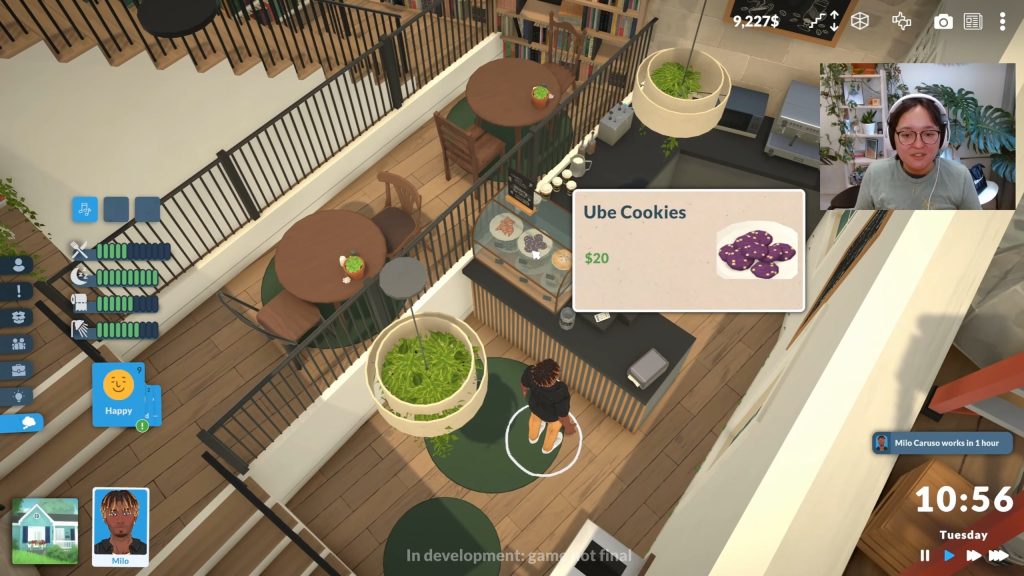
Households can manage bills by upgrading appliances, building efficient floor plans, and choosing energy-conscious furniture choices in Build Mode. Larger or more lavish builds tend to bill higher because they use more electricity and water; smaller, simpler builds bill lower. The trade-off between visual ambition and weekly bill load is a meaningful budgeting decision.
The Museum donation system is one of the launch build's most reliable secondary income streams. Donating collectibles into the donation box advances each category's milestone ladder, and completed milestones pay out lump-sum paradime amounts. Players who lean into collecting can fund a meaningful chunk of household expenses through museum donations alone.
Spending side, Shopping covers all the named launch venues that accept paradimes. Most stores accept paradimes directly, and some venues offer occasional discounts or free items as part of newspaper-driven offers. The combination of named shops plus the museum gift shop gives the launch town several distinct spend tracks.
Buses are the only confirmed paid transit at launch. The PL130 line, anchored at multiple Bus Stops across town, charges 3 paradimes per ride. Walking around the open world is free. Personal vehicles, boats, and other transport options are confirmed post-launch updates and do not yet have paradime costs attached.
Bus rides come out of the household balance automatically when a Parafolk boards. There is no ticketing UI to manage manually; the fare is deducted on entry. Frequent commuters who route every shift through the bus line will spend a small but steady amount on transit each week. Households trying to save can route walking commutes instead, at the cost of more in-game time spent in transit.
Players who want to bypass the regular economy can use the in-game cheat console. As of Early Access, the Cheats article confirms that money manipulation is one of the categories of cheats available to regular players, with commands that adjust the household paradime balance. Players using mods have an even broader range of options: economy parameters such as electricity and water prices, career salary scales, and item base prices are all moddable through the official Modding and Steam Workshop toolkit.
Modded economies can shift the entire feel of paradimes. A more punishing economy mod might double bills and halve salaries; a more permissive economy mod could flip those numbers and remove most budget pressure. Because the launch build supports parameter mods natively, players who prefer either extreme can shape paradimes without writing new code.
Paradimes are the only currency in the launch build. There is no premium currency, no microtransaction tier, and no second tier of in-game money. All future content updates during the approximately two-year Early Access window will be free under the no-paid-DLC commitment, so no additional paid-currency tier is planned.
