Loading...
Loading...
Everland
June 26, 2026 at 02:54 PM
Corrected wikilink existence flags; removed duplicate in-body wikilinks
Everland is the world in which Of Peaks and Tides takes place. Once a thriving civilization where mortals lived alongside divine forces, Everland was shattered by The War Between Heaven and Man. The remnants of that conflict have left behind a fractured landscape where ancient ruins sit alongside wild, untamed terrain.
Everland is an expansive open world with varied terrain types. The environment ranges from lush green forests teeming with creatures to stony cold island sections, sandy beach areas, mountainsides, and valleys that can be flooded by weather events. Each biome presents distinct survival challenges, resource availability, and creature populations.
Location | Description |
|---|---|
Lushland | The starting area, a relatively sheltered region of rolling green hills and scattered ruins. This is where the forebears of the Nolands forged their civilization. Lushland is the player's introduction to Everland's core mechanics before they venture into harsher regions. |
The Ascent | A mysterious remnant structure that silently watches over the fading embers of civilization. Its purpose and origins are tied to the pre-war era. |
A verdant woodland region tied to the Spring God Goumang. Detailed below. |
CyancookGames' official site presents a world showcase that names seven regions of Everland, each with published lore. They sit alongside the narrative place names Lushland (the starting region) and the Ascent (the central pre-war remnant) drawn from the game's story description. The table below summarises each region; The Forest, the Gobi Desert, and the White Mountains are described in more detail in the sections that follow.
Region | Lore |
|---|---|
The Forest | Verdant woodland once watched over by the Spring God Goumang. His abandonment left it corrupted by choking vines that coil like serpents. |
The Plain | A vast, level grassland once blessed for the forebears of Lushland, who built villages, raised livestock, and carved instruments from the bones of strange beasts. Their melodies are said to have tamed beasts and summoned storm and rain. |
The Waters | Home to tribes that mastered hydraulic engineering, fired riverbed mud into water vessels and metal-casting molds, and built ships to journey between islands. |
The Bone Field | Named for the wind-worn bones of the colossal Si, the Ancient Rhino, which once fought beside the ancestors of Lushland and now lie half-buried in earth and silence. |
Elderwood | Home to the sky-reaching iconic giant trees of Lushland. Their vast canopies and interwoven branches form natural walkways strong enough to cross. |
Gobi Desert | Once a verdant plain, now a sea of burning sand scorched by nine Fire Ravens and endless sandstorms. The remnants of a bronze-age civilization lie buried beneath the magma. |
White Mountains | Endless peaks once sacred to Shamans, now sealed under perpetual blizzards. The raging storm is said to come from a wounded, mighty beast crouched in the clouds above. |
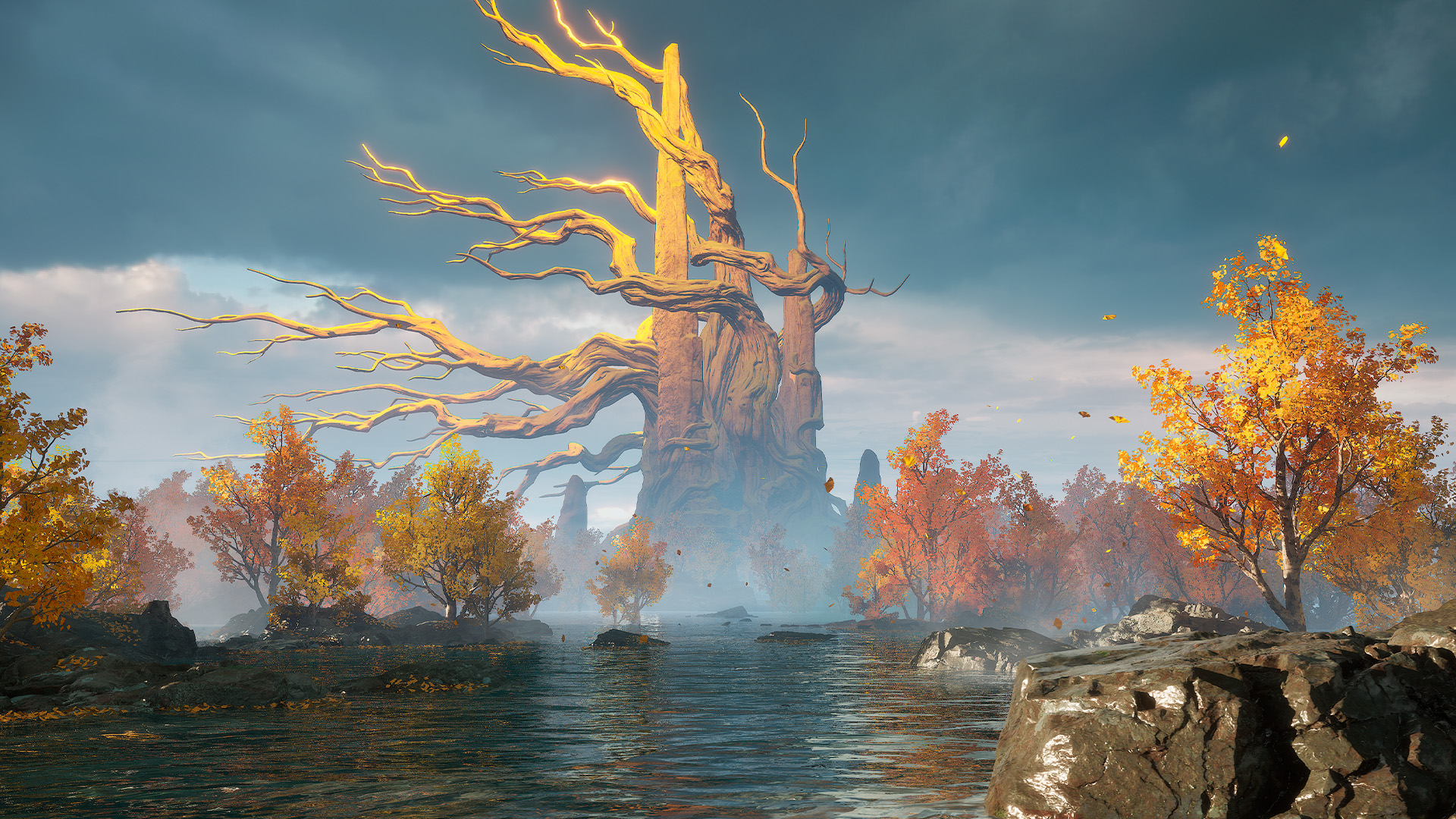
The Forest is a region of dense, verdant woodland in Everland. According to the game's official lore, it was once watched over by Goumang, the Spring God. Goumang abandoned the land, and his golden mask still rests upon an ancient tree deep within the woods, along with the echo of his wrath. The evergrowing seed he left behind erupted into choking vines that writhe like serpents, coiling around the land like a noose, tightening and devouring until the lives trapped within are left twisted and struggling.
This corruption-by-overgrowth fits the wider theme of calamities born from the fall of the gods during The War Between Heaven and Man. The verdant woods are also home to small creatures such as the Owler, which thrives among the realm's harsher denizens.
Two regions preserve the memory of Lushland's lost civilization. The Plain was a level grassland where the forebears built villages, raised livestock, and carved musical instruments from the bones of strange beasts; the winds there still recall how their melodies once tamed beasts and called down storm and rain, in an age when humans and beasts lived in harmony. The Waters were home to tribes that thrived through hydraulic engineering, gathering riverbed mud and firing it into vessels and metal-casting molds, and using their shipbuilding skill to travel between islands. Both regions tie directly into the history of The Nolands.
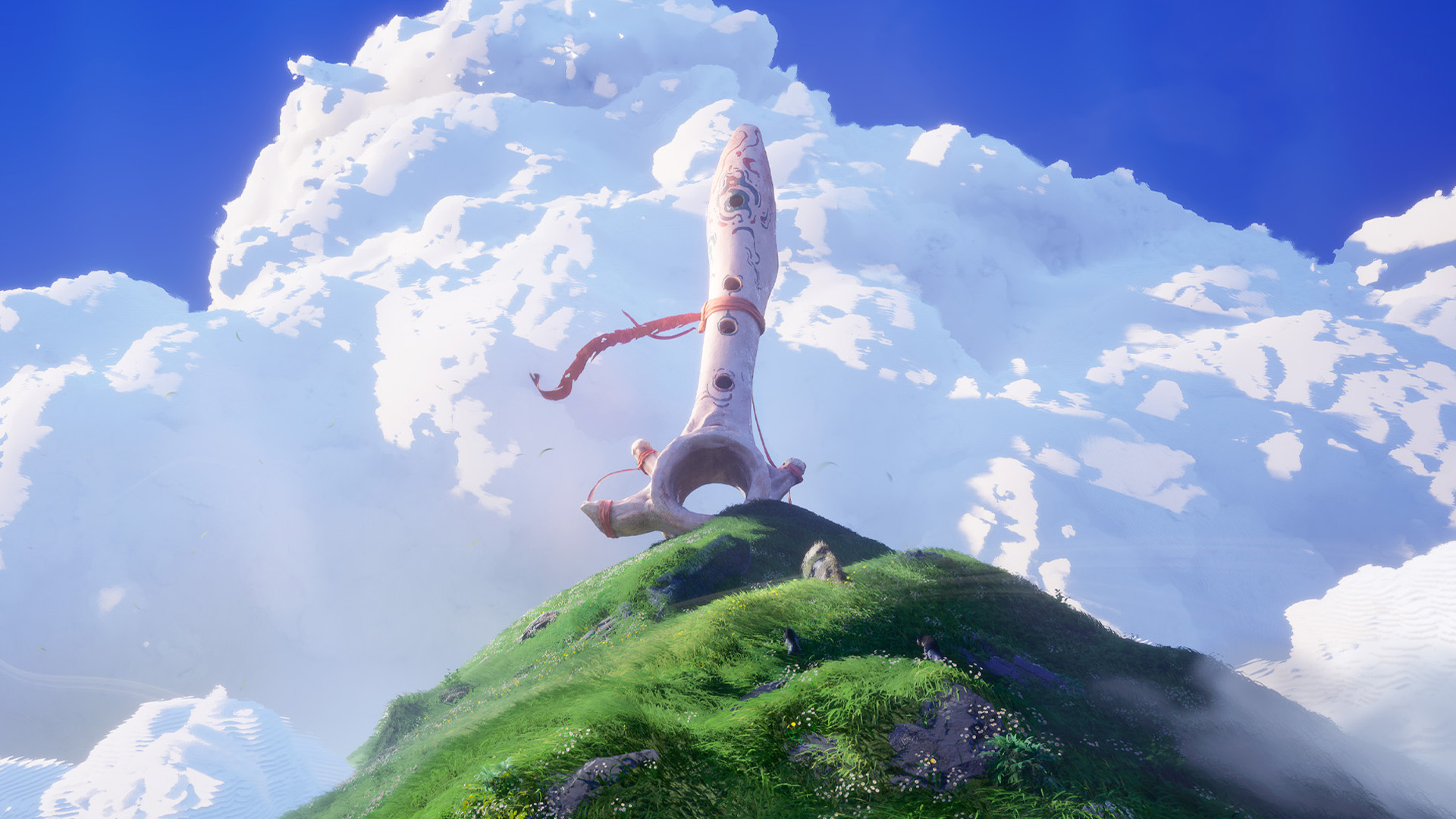
The Bone Field is named for the remains of the Si, a colossal rhinoceros native to Lushland. Fully grown, the Si bears sturdy twin horns and a coat of fur as dense as armor, and in ancient times these beasts stood shoulder to shoulder with the ancestors of Lushland in battle. Now only their wind-worn bones remain, half-buried across the field.
Elderwood is defined by sky-reaching giant trees, the most iconic landmarks of Lushland. They dominate the skyline and draw the eye from afar. When Goumang ruled the realm the trees grew rampant and overflowing with wild life, and their tangled, interwoven canopies form natural walkways strong enough for people to cross.
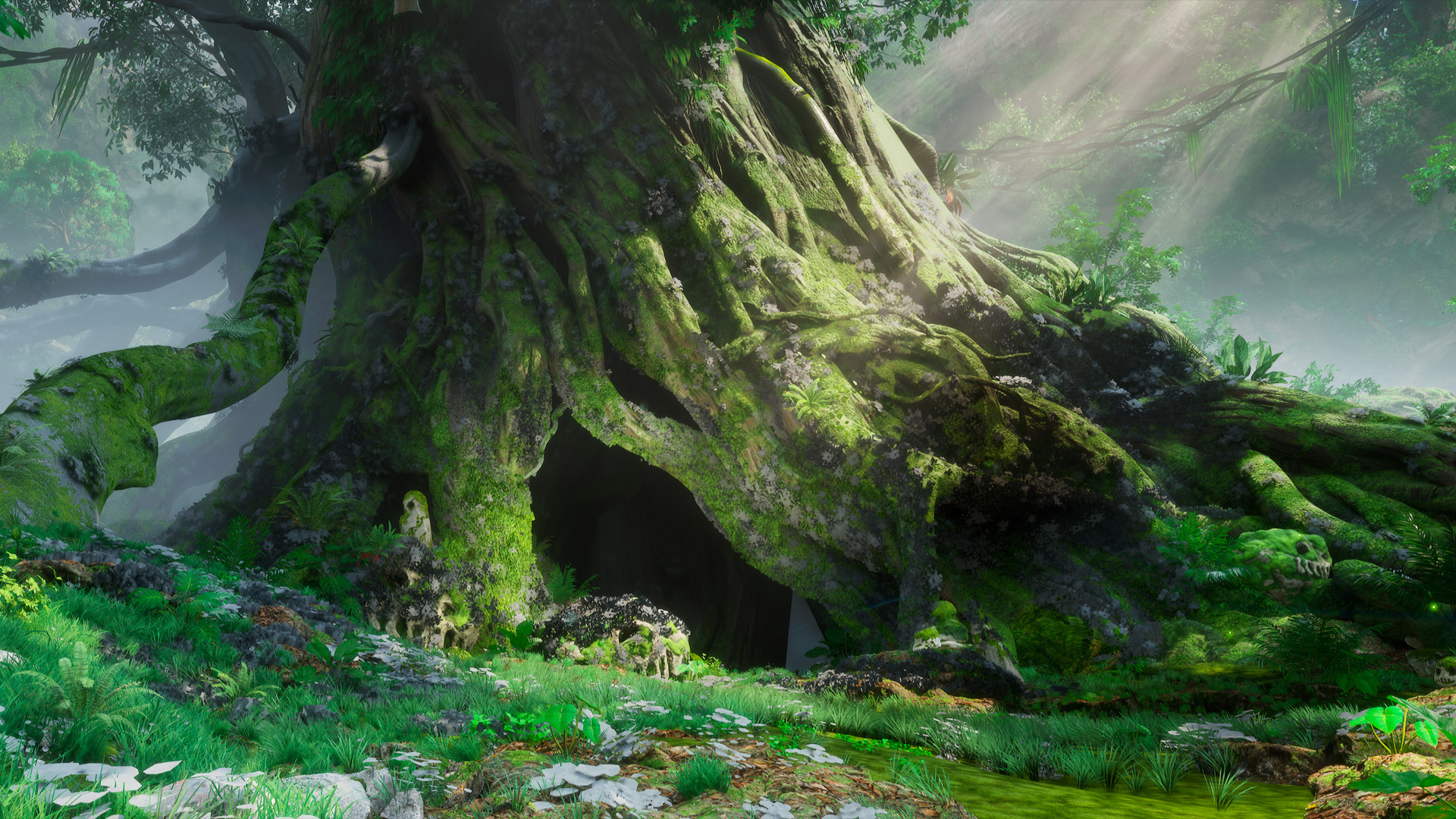
The Gobi Desert was once a verdant plain teeming with flowing water and vegetation. After centuries under the scorching blaze of nine Fire Ravens and the relentless scourge of sandstorms, it has been reduced to a boundless sea of burning sand and barren stone. Yet beneath the desolation, beyond the churning magma, lie the buried remnants of a once-magnificent bronze civilization. The desert is the harsh home of the Owler, which has learned to handle its deadly denizens.
The White Mountains were once sacred to Shamans, but they now lie sealed beneath perpetual blizzards, and the Shamanism civilization is buried in the same frozen silence. Some say the raging storm is born of a wounded, mighty beast crouched deep within the clouds that crown the peaks, whose every glacial breath is a curse that freezes the world. The White Mountains are the clearest in-world source of the blizzard hazards that strike Everland.
Everland's architecture, flora, and creature design draw heavily from East Asian mythology and traditional aesthetics. Pagoda-style structures dot the ruins, and many of the creatures are reinterpretations of figures from Chinese folklore, including beasts like the Qiongqi and Zhuyan.
The land itself is a hazard. Everland experiences dynamic Seasons and Weather patterns, including flooding rivers, sandstorms, blizzards, and tidal surges that reshape coastal areas. Calamities, residual divine forces from the ancient war, also strike unpredictably, bringing wind storms, lightning barrages, firestorms, and water surges that can devastate player-built structures.
Exploration in Everland is nonlinear. Players can travel on foot, ride tamed creatures (including flying mounts), and use crafted vehicles and gliders to traverse the terrain. Climbing is always available as a traversal option, and players can earn gliding by completing a flying trial minigame. Bouncy fauna and large bubbles scattered throughout the world serve as traversal aids, launching players to otherwise inaccessible areas. The Physics System interacts with the environment: falling rocks can block paths, fire can clear dense brush, and rising tides can open or close water routes.
Before the war, Everland's mortal inhabitants built a civilization under the protection of four elemental deities. That civilization is now in ruins. The Nolands, the surviving human faction, scrape by in small settlements, scavenging ancient technology and materials. The player begins as one of the Nolands, working to reclaim and rebuild within this broken world.
The game's official description frames Everland's geography in three deliberate registers, all of which appear in the official copy:
Phrase | Usage |
|---|---|
Lush valleys | Habitable regions where vegetation thrives. Source of food, building materials, and most starter resources. |
Rugged peaks | High-altitude regions such as the White Mountains, sealed beneath blizzards and home to the realm's hardest survival conditions. |
Fractured landscapes | Mid-altitude regions hollowed out or sheared apart by the cataclysm. The remains of fallen civilization sit here. |
The game's official copy refers to "the shattered Ascent" as a landmark that "silently watches over the fading embers of what once was." The Ascent is described as the last surviving piece of pre-war infrastructure, a place where the divine relics of the old era persist in ruined form. No gameplay specifics for the Ascent have been published yet, so its role as either an explorable location, a narrative hub, or a thematic motif remains unconfirmed. It is recorded here as the confirmed name for the central pre-war remnant in Everland's geography.