Loading...
Loading...
Street Racing
April 19, 2026 at 03:37 PM
Link cleanup after slug rename (2026-04-19)
Street Racing is a competitive side activity in Neverness to Everness where players race vehicles through the streets of Hethereau. Races can be run against NPCs at designated locations around the city or against other players in multiplayer lobbies. The activity blends arcade-style driving with meaningful progression: winning races earns Fons, the city's primary currency, and can unlock vehicle parts and cosmetic items. Street racing sits alongside fishing, mahjong, taxi driving, and part-time jobs as one of many recreational activities woven into Hethereau's daily life, offering a change of pace from combat and exploration while still providing tangible progression rewards.
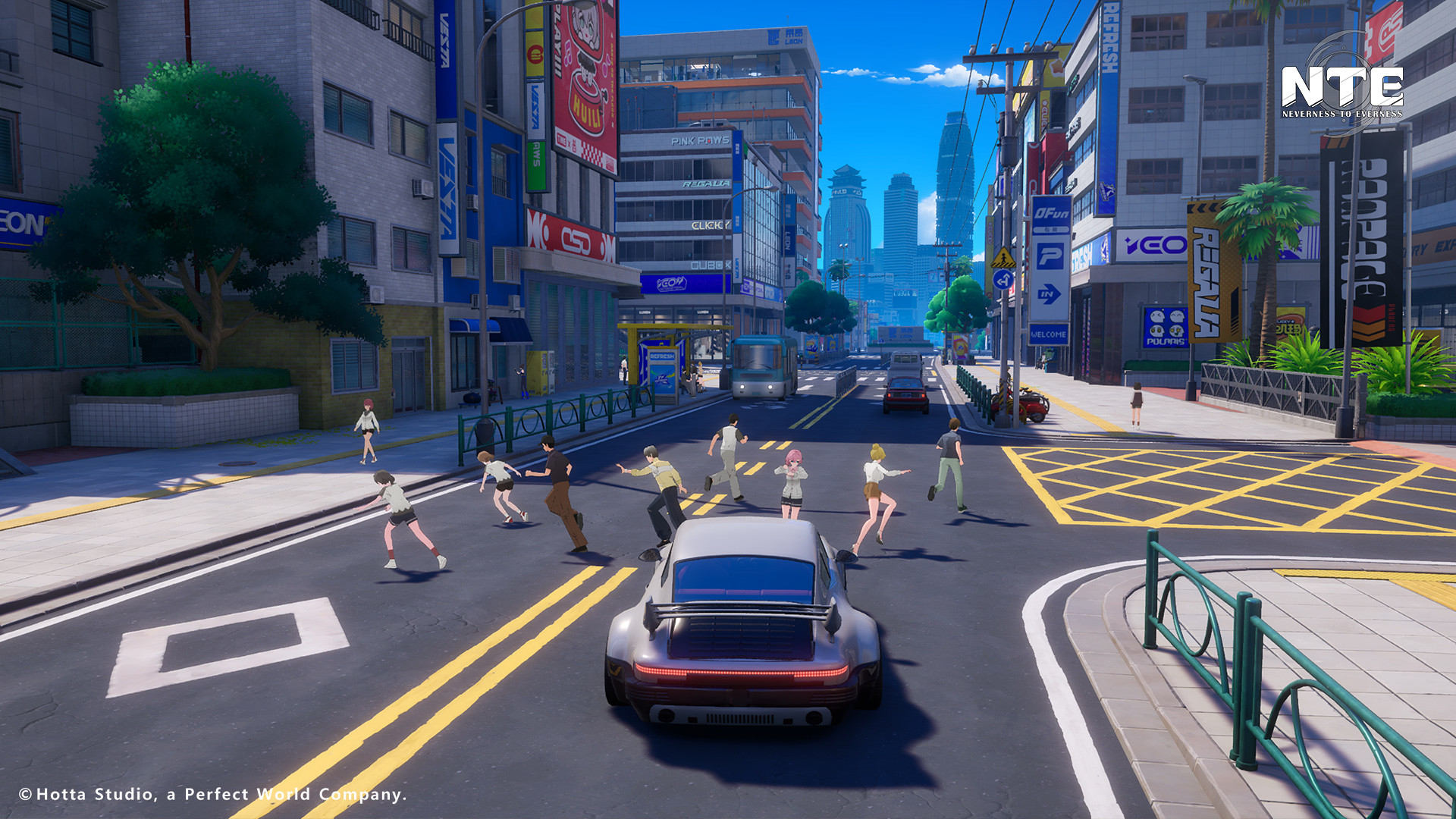
Races take place on the road network of Hethereau, weaving through the city's neighborhoods and districts. The urban layout provides natural variety in race routes, with tight turns through downtown alleys, longer straightaways along the waterfront, and winding paths through residential zones. Players select a vehicle from their personal garage, line up at a starting point, and compete to finish the course in the fastest time.

NPC races are available at fixed locations scattered across the city. These act as introductory challenges and a consistent source of Fons income. NPC opponents follow predictable racing lines and rarely take risks, making them useful for practice and learning new routes. Multiplayer races, by contrast, pit players against human opponents who adapt their lines, take shortcuts, and apply pressure in ways that AI drivers do not.
Racing locations unlock progressively through the City Tycoon system. As players level up their City Tycoon rank, new race starting points and more challenging NPC opponents become available across different districts of Hethereau.
Players can drive in either first-person or third-person view. First-person mode places the camera inside the vehicle cabin, giving a closer sense of speed and immersion. Third-person mode pulls the camera behind and above the vehicle, making it easier to judge turns and see surrounding traffic. Both perspectives are fully available during races, and players can switch between them at any time based on personal preference and the demands of a given course.
Different vehicle categories handle in distinct ways, and choosing the right type for a given course can make a significant difference. The game features a high-fidelity physics engine that models acceleration, braking, weight distribution, and tire grip. Vehicles are susceptible to realistic damage: tires can pop, bodywork takes knockback from collisions, and severe impacts can cause a vehicle to explode entirely. This means reckless driving carries real consequences, especially in tight street sections where walls and obstacles are everywhere.
Vehicle Type | Strengths | Weaknesses | Best For |
|---|---|---|---|
Sedans | Balanced handling and predictable cornering | Moderate top speed, no standout stat | Mixed routes with varied turns and straights |
Muscle Cars | High raw power and strong acceleration | Heavier weight makes tight turns difficult | Routes with long open sections |
Supercars | Highest top speed and responsive steering | Fragile at high speed; crashes are costly | Courses with extended straightaways |
Retro Scooters | Nimble, forgiving on sharp turns | Lowest top speed of any category | Tight urban routes with many corners |
Sport Motorbikes | Fast acceleration and compact turning radius | Requires precise control; easy to wipe out | Technical courses demanding quick reflexes |
Drifting is a core driving mechanic that plays a major role in competitive racing. Initiating a drift lets players carry speed through corners instead of braking hard, but it demands timing and practice. Overcommitting to a drift on a narrow street can send the vehicle into a wall, costing valuable seconds.
Players who invest in vehicle customization can fine-tune their ride for competitive performance. Customization covers both visual and mechanical changes. On the cosmetic side, players can repaint their vehicle, swap tires and rims, change bumpers, and apply decals. On the performance side, engine upgrades, suspension tuning, and brake improvements directly affect handling, acceleration, and top speed in races.
A vehicle tuned for racing performance carries those upgrades into every race it enters. This gives dedicated racers an advantage over stock vehicles, though driver skill and course knowledge remain the most important factors. The full vehicle list shows all available models along with their base stats, which can serve as a starting point when deciding which vehicle to invest in.
Racing supports full cross-platform play, allowing a PC player to challenge someone on PS5 or mobile without restrictions. Multiplayer races add an unpredictable element since human opponents adapt their racing lines, take risks, and apply defensive positioning that NPC drivers never attempt.
Players can also team up with friends and race against street crews in different city districts. Crew-based racing encourages coordinated play: members of a crew can share tuning knowledge, practice routes together, and compete as a unit in ranked events. Multiplayer crews and ranked racing promise to reward reflexes and vehicle tuning knowledge, keeping the competitive scene focused on driving skill.
Friends invited to your world through the co-op mode can join races directly, making it easy to organize impromptu competitions without leaving the open-world session.
Hethereau's dynamic weather system directly affects driving physics during races. Rain makes road surfaces slippery, reducing tire grip and increasing braking distances. Wet conditions require drivers to slow down earlier for turns and avoid aggressive drifting that would be safe on dry pavement. Snow and ice are even more punishing, significantly decreasing traction and making high-speed cornering risky.
Weather can change mid-race, so a course that starts under clear skies may transition to rain partway through. Skilled drivers adapt their approach on the fly, shifting from aggressive cornering to cautious braking as conditions deteriorate. Night racing adds a visibility challenge: reduced sightlines make it harder to anticipate turns, especially on unfamiliar routes.
Reckless driving during races or while traveling through Hethereau can raise the player's wanted level through the crime and wanted system. Crashing into civilian vehicles, destroying property, or borrowing cars without permission triggers a law enforcement response. Each wanted level introduces more aggressive police AI behavior, escalating from simple patrol units to coordinated pursuit teams.
Getting caught results in being sent to a detention center. From there, players can pay a fine in Fons, perform community work to reduce their sentence, or attempt to escape. While the wanted system does not activate during organized race events, free-roaming at high speeds between races can easily attract unwanted attention.
Winning races earns Fons, the city currency used for purchasing vehicles, customization parts, housing furniture, and other goods throughout Hethereau. Racing rewards are governed by City Stamina, a weekly resource that caps how many Fons a player can earn from non-combat activities. Once City Stamina is depleted for the week, players can still participate in races for fun and practice, but Fons payouts stop until the weekly reset.
Racing also contributes to City Tycoon progression. Completing races fills City Tycoon experience, unlocking new features like garage expansions, additional race starting points, and higher-tier investment opportunities. As a result, consistent racing is one of the more efficient ways to advance the City Tycoon track while simultaneously earning spendable income.
Learn the routes before competing. Drive race courses casually before entering timed events. Familiarity with turn angles, shortcut opportunities, and obstacle placements gives a significant edge.
Match your vehicle to the course. Use nimble scooters or motorbikes for tight urban circuits and save supercars for routes with long open stretches.
Master drifting. A well-timed drift carries speed through corners and shaves seconds off lap times. Practice on dry roads first, then work on wet-weather drifts.
Invest in performance upgrades. Engine and suspension improvements from the vehicle customization shop translate directly into better race times.
Watch the weather forecast. If rain or snow is expected, consider switching to a vehicle with better traction rather than chasing raw top speed.
Manage City Stamina wisely. Spread racing across the week alongside other part-time jobs to maximize total Fons earned before the weekly cap.
Avoid reckless driving between races. Collisions in the open world raise your wanted level. Keep a clean driving record to avoid costly fines and detention.
Vehicles: Overview of all vehicle types and acquisition methods.
Vehicle Customization: Cosmetic and performance modification options.
Vehicle List: Full database of available cars and motorcycles.
Side Activities and Mini-Games: The complete list of leisure activities in Hethereau.
City Tycoon: The progression system that unlocks racing locations and garage features.
Fons: Detailed breakdown of the city currency earned through racing.
Co-Op Mode: How to invite friends for multiplayer races.
Crime and Wanted System: How reckless driving triggers law enforcement responses.
Stamina System: How City Stamina limits weekly Fons rewards.