Loading...
Loading...
Seoul
July 4, 2026 at 06:27 PM
Added future-maps direction: candidate locations (subway, apartment complexes, general hospital), per-map unique layout and rules, and no planned real-time environmental changes
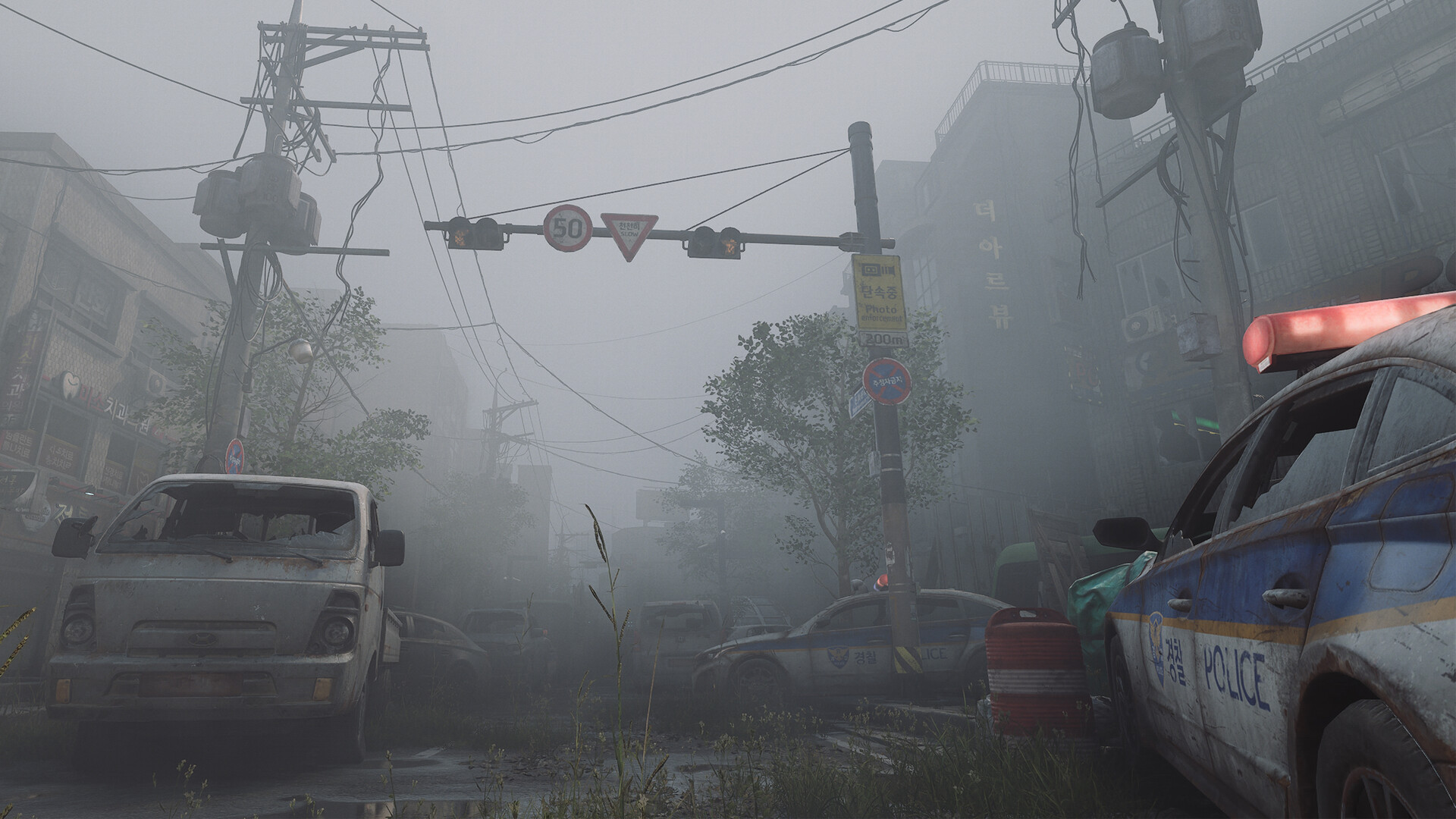
Seoul is the in-fiction setting of NAKWON: LAST PARADISE. The game's near-future Seoul has fallen to a citywide outbreak that overran most of South Korea, leaving the surviving population either dead, turned, or huddled inside a single fortified district. That district is Yeouido, the island quarantine zone that gives the subtitle its meaning, and it is the home base from which players run nightly expeditions back into the ruined streets. The wider city outside the walls belongs almost entirely to the infected; the Jongno area in central Seoul is the only confirmed expedition map seen in the closed alpha build, and every named landmark in that map is anchored to that district.
For a higher-level introduction to how Seoul fits into the rest of the game, see the overview article. This page focuses on the city itself: the two zones that the player physically moves between, the day and night phases that tie those zones together, and the social and tonal framing that makes Seoul more than just a backdrop for combat.
Yeouido is the fortified safe zone that the title refers to. In the game's fiction it is the last surviving refuge in Seoul, walled off from the rest of the city and operated as a quarantine for survivors who managed to make it inside. The official framing places the player as a refugee in a safe haven built by those survivors, not as a soldier or a free citizen. Refugees pay rent on personal shelters, store supplies, build out workbenches, and prepare gear during the day, then queue up for the night runs that keep the community supplied.
Yeouido's social structure runs on the Citizen Grade system, a central socio-economic mechanic that ranks every refugee inside the walls. Citizen Grade governs privileges, access levels, and which resources or districts a player can move through, with higher grades unlocking more privileges. Money earned in-fiction goes toward rent and equipment upgrades; falling behind on either is implied to put a refugee's standing inside the walls at risk. The exact tier names, point values, and named grades have not been officially detailed, so the wiki treats Citizen Grade as a system rather than a list of specific ranks.
Beyond Yeouido, Seoul is hostile ground. Most of the city has been overrun, and the streets are populated by special and regular infected drawn to sound, by environmental hazards, and by other survivors with their own agendas. The expedition map seen during the closed alpha is built around central Seoul's Jongno district. Every confirmed named landmark in the alpha map sits inside or near that area, including a fictional adaptation of the NAKWON Arcade (named in homage to the real-world Seoul shopping arcade famous for musical instruments), as well as Tapgol Park, a Jongno Building, and a cluster of supporting locations such as a police station, an incinerator facility, two reconstruction sites, two parking lots, two art galleries, the MR and Seongdo buildings, and Hotel Momo.
Other Seoul districts are not currently confirmed as playable in the alpha map. In June 2026 the team previewed the first expedition area outside Jongno: a large indoor shopping mall, inspired by a real complex in the Yeongdeungpo area, that moves the action from open streets to a vertical building explored floor by floor. In the game's fiction the mall was once a survivor stronghold, with casino chips used as currency, before conflict with the NAKWON Governance Committee turned it into an expedition zone. The map is still in development, and beyond it no other neighborhood outside Yeouido and the Jongno landmark cluster has been named as a playable space.
The two halves of the city function very differently in moment-to-moment play. The table below summarizes how each confirmed zone is used.
Zone | In-Fiction Role | Gameplay Function |
|---|---|---|
Fortified quarantine refuge; "Last Paradise" of the title. | Day-phase hub. Hosts personal shelters, workbenches, refrigerators, and storage. Refugees pay rent, hold a Citizen Grade, and prepare for night expeditions here. | |
Jongno expedition area | Overrun central Seoul streets that contain the named landmark cluster. | Night-phase scavenge map. Sessions of up to 16 players drop in to loot, complete quests, fight or evade infected, and reach designated extraction points before dying. |
Wider Seoul | Implied to be lost to the outbreak; not directly visited in the alpha build. | Off-screen in current content. Future maps such as the teased shopping mall would expand the playable footprint outside the existing Jongno expedition area. |
The split between Yeouido and the ruined city is reinforced by the day-night cycle that structures every play session. The two phases are not just visual filters; they determine where the player physically is, what they can do, and how risk is calibrated.
Day phase:
Time inside Yeouido. The player customizes a 3D shelter, places furniture, upgrades workbenches, stores food, and crafts or modifies gear. This is also when long-term decisions about armor, melee weapons, scrap firearms, and quest preparation are made.
Night phase:
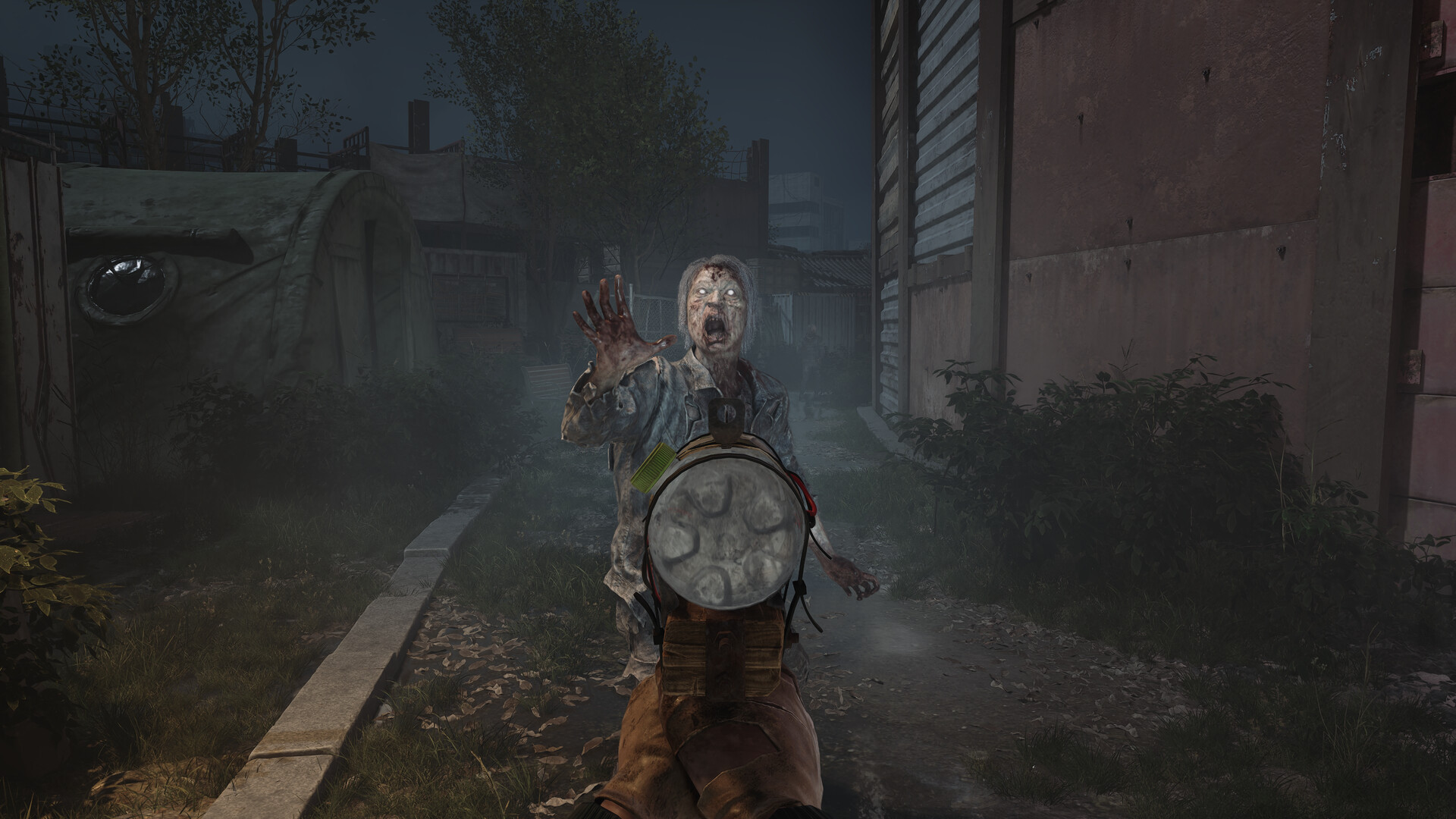
Time in the expedition map. Up to 16 players share the same instance, hunting through Jongno's landmarks for loot, quest objectives such as Key Resource Intel missions, and any rival survivors they choose to engage or avoid. Items carried in are lost on death if the player fails to extract.
Heavy rain:
A third named environmental condition layered on top of the day-night split. Rain muffles ambient sound, so both player footsteps and infected approach noises become harder to read.
Seoul is written as a stealth-horror city with deliberate moral darkness. The official framing tells the player to trust no one, not even the living, and the game director has stated on record that the design intent is a real survival game where the player has to hide, run away, eat, and survive in a world where the zombies are hunting humans, rather than the other way around. That framing is reflected in the city itself. Yeouido is not a power fantasy; it is a refugee zone with rent, grades, and rules. The Jongno expedition area is not a battlefield where the player is the apex predator; it is a graveyard of overrun streets where loud confrontations attract more threats than they solve.
Practical consequences for play follow directly from this framing. Going loud on infected broadcasts the player's location to anyone nearby, including human rivals. Armored infected generate noise when moving and Screamers actively call other infected to a sighting, which means stealth is rewarded and chaos compounds. The Last Stand state ties this back to the player: when health hits zero, the character cannot attack but can still drag themselves toward an exit while an infection meter ticks toward 100%, turning every fall into a tense extraction problem rather than an instant death. Layered on top are wound management concerns, since taking damage in Last Stand directly raises that infection level.
All confirmed Seoul content has come from the two pre-alpha playtests in 2023 and 2024 and the closed alpha that ran from 11 to 16 March 2026. Yeouido has been described in the official teaser site and overview materials as the quarantine zone refuge, and the Jongno expedition area's 14 named landmarks were locked in for the closed alpha build. The wiki treats both as canonical. Beyond those, the city's full geography, government, factions, and casualty figures have not been officially detailed, and the wiki avoids inventing them. Anything not anchored to a primary source is left out, and any new districts or zones added in future tests will be folded into this article as they are confirmed.
A June 2026 Q&A gave a little more shape to how future maps will work, though all of it is in development. Subway stations, apartment complexes, and a general hospital were named as locations the team is considering for future maps, without any being confirmed. The team also said each map is being designed around its own layout and gameplay rules for a distinct feel, and that it is not planning real-time environmental changes within a map. As with the teased shopping mall, none of these locations are playable yet, and the wiki will fold them in only once they are confirmed.