

Extraction is the structural core of every night-phase expedition in NAKWON: LAST PARADISE. The player drops into the ruined city, scavenges supplies, fights or evades infected and rival survivors, and must reach a designated exit to keep what they carried. Failing to extract loses the loadout: anything brought on the run is gone when the survivor dies. For wider context, see the overview and the day-night cycle.
The Extraction Loop
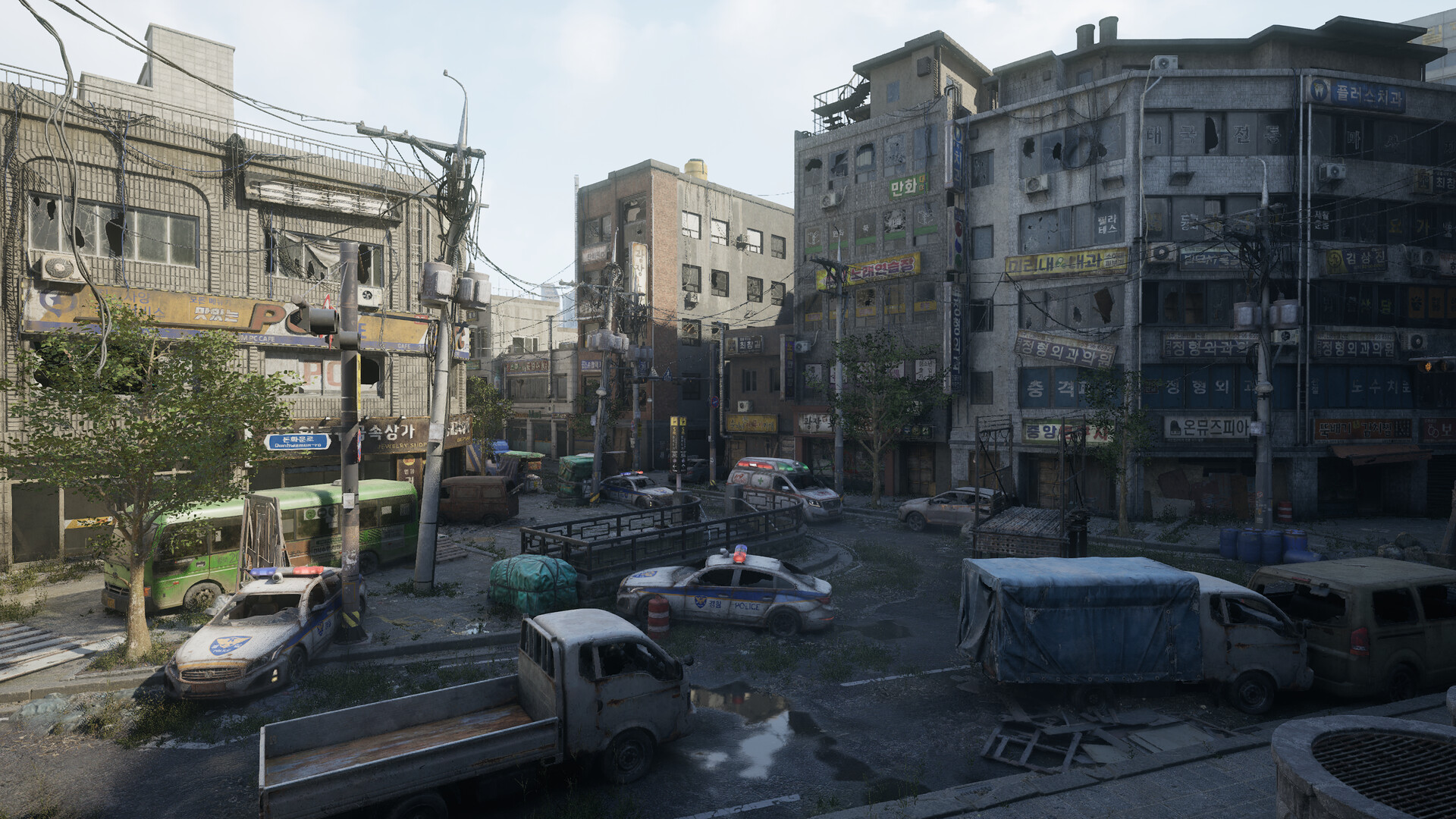
Every night-phase session follows the same shape. Survivors queue together in sessions of up to 16 players, drop into the city from Yeouido, complete missions and scavenge gear across the landmarks of central Seoul, and then route back to an exit before time, Last Stand, or other survivors take them out. Returning through an exit is what makes the run count. Everything else is preparation. Route planning during a run happens through the Tablet, which carries the expedition map alongside quests and notifications.
Phase | What Happens | Failure State |
|---|---|---|
Drop | Up to 16 survivors enter the expedition map from Yeouido. | Cannot fail; the run starts. |
Scavenge | Loot from landmarks, complete missions, manage noise around infected. | Death; loss of carried loadout. |
Route to exit | Travel back through the city to a designated extraction point. | Death; loss of carried loadout. |
Extract | Use the exit to leave the map; carried loot returns to the shelter. | Missed extraction window; possible loss of run. |
The Permadeath Loot Rule
The rule that makes extraction sit at the centre of every decision is the permadeath loot rule. Items carried into an expedition are lost permanently if the player dies and fails to extract. That includes weapons, armor, consumables, mission objects, and any high-value loot picked up during the run. Items stored at the shelter back in Yeouido are safe; items carried on the run are at risk until the survivor returns.
The rule cuts in two directions. It is what gives every expedition real stakes: a careless engagement deep in the city can erase hours of preparation. It is also what makes incremental, cautious extraction viable: even a small bag of common materials, if extracted, is more value than a large bag lost. Players in the closed alpha quickly learned to weigh the value of a fresh objective against the value of the loot already in the bag.
Last Stand and Extraction
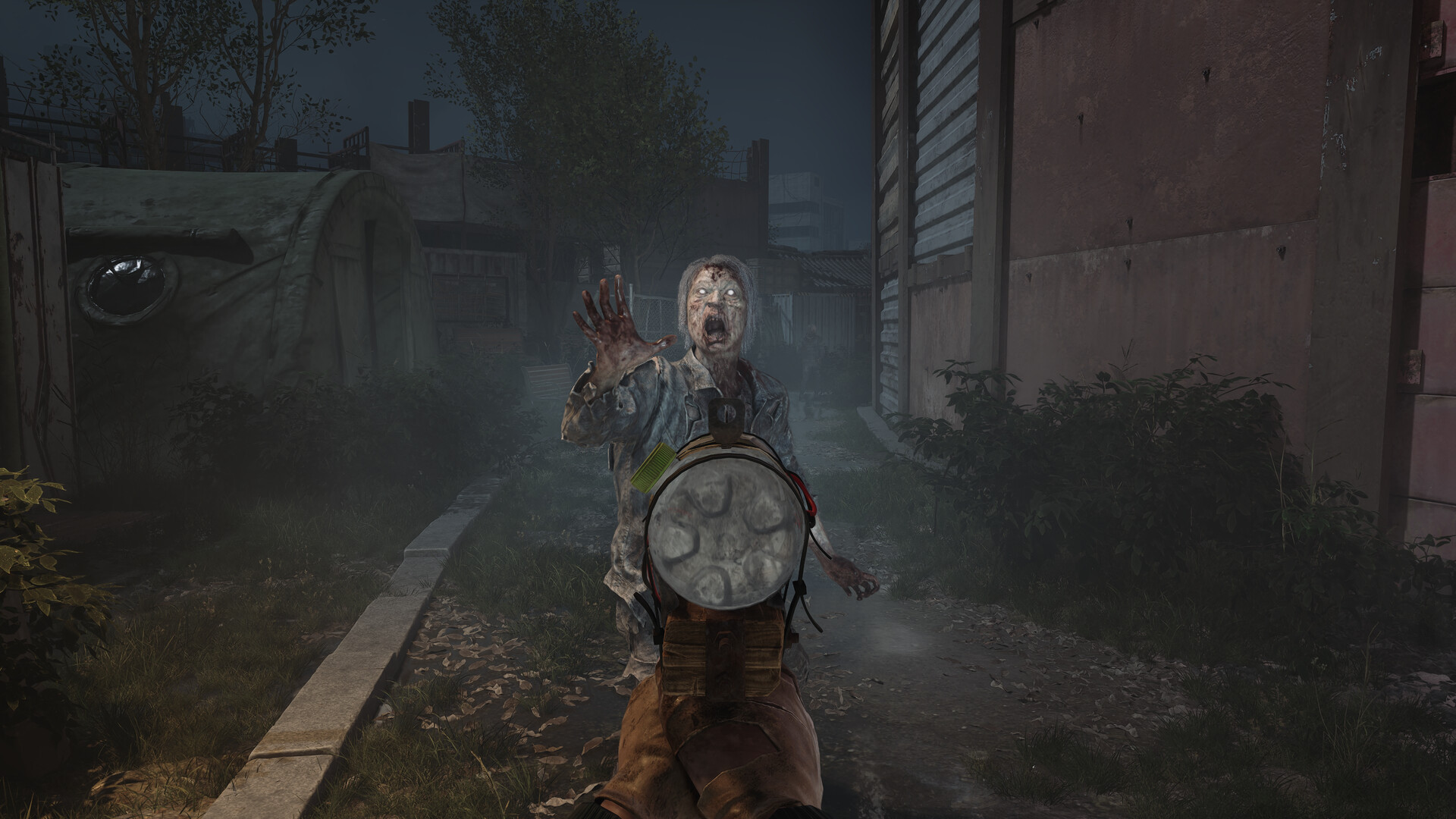
The Last Stand state is the bridge between the moment a survivor goes down and the moment the run is fully lost. When HP reaches 0, the player enters Last Stand and can no longer attack, but they can still move and still attempt to extract. Reaching an exit in Last Stand is a valid extraction; the run counts as long as the survivor crosses the threshold before the infection meter reaches 100%.
This is the design intent behind the layered failure model. A bad engagement does not always mean an instant lost run. A quiet, mobile player who knows the closest exit can recover even a Last Stand into a successful extraction. The same is not true if the player went down deep in the map with no exit in reach.
Noise, Routes, and Extraction Pressure
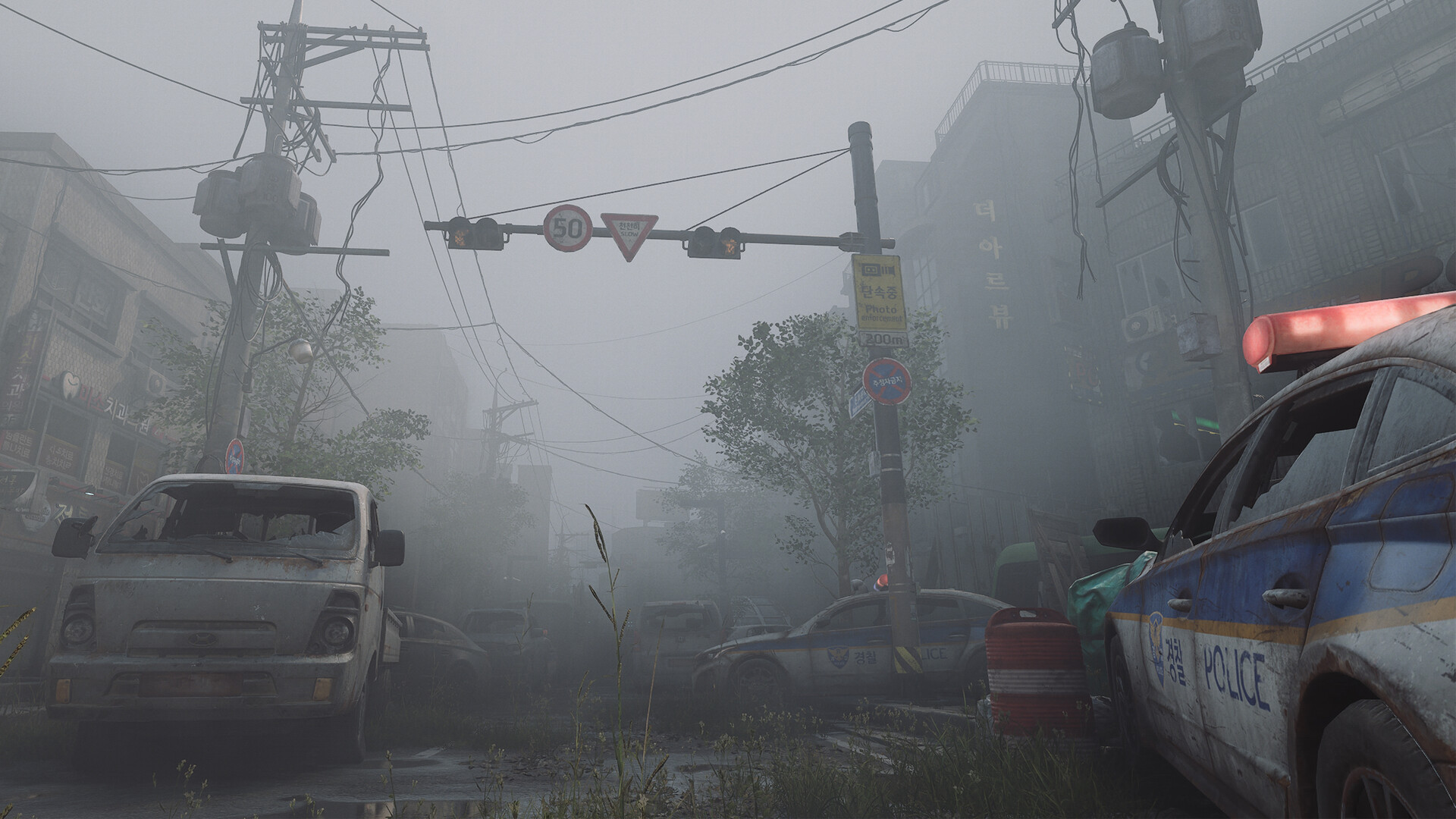
Because the special infected in the closed alpha are highly sensitive to noise, the route to the exit is rarely a straight line. A firearm shot near an exit broadcasts the survivor's position to nearby infected and to other players. Successful extractions usually involve a quiet route, melee engagements where they cannot be avoided, and a final approach that does not draw a swarm to the exit itself.
Weather adds another layer. The closed alpha confirms four weather types on the expedition map: Night, Rain, Dawn, and Early Evening. None of them is full daylight, so every extraction runs in darkness or in the low light around it. Rain muffles both player and infected sound. A rainy expedition is a stealthier extraction window; a clear night with normal audio is a higher-stakes one.
As a sense of scale for how often the loop completes, the official Closed Alpha recap (March 24, 2026) reported approximately 1.8 million successful extractions across the five-day test window. This figure was framed as an engagement signal rather than a mechanics statement; it confirms that extracting is a routine outcome for many players in a given session, not only the elite tail. The recap also recorded 280,000 total participants, 37,468 peak concurrent users, and 393 players who reached the max character level (10). These numbers describe the test, not the eventual launch build, and progression did not carry over.
What Did Not Carry Over
Progress made during the closed alpha did not carry over to the eventual full release. Closed-alpha extractions, the loot they produced, the Citizen Grade earned, and the shelter customization built up during the test were all reset at the end of the test window. The mechanics described above are the rules of the system; the run history from any individual test is not persistent across builds.
Expedition Time Limit
Each expedition also runs against a time limit. The development team has said that, as of the closed alpha and subsequent tuning, a roughly 25-minute window felt appropriate for the North and South Jongno maps, and that this limit will be adjusted per map based on each map's size, difficulty, and gameplay data. A survivor who has not reached an exit when the window closes risks losing the run, which reinforces the value of routing toward an exit early rather than chasing one more objective.
Design Intent and Ongoing Balance
A June 2026 Q&A clarified how the team thinks about extraction difficulty. The extraction step itself is kept deliberately easy, on the principle that anyone should be able to get out; the danger is meant to come from the choices a survivor makes during the expedition to earn a bigger reward, not from the escape at the end. The team also confirmed a design detail about the public exits: the siren that plays there is set up so that it does not lure the infected toward the extraction point. It acknowledged that the loud siren and announcements can make an extraction feel more dangerous than it really is, a gap between presentation and real danger that it is reviewing ways to close.
Balance work on the loop is ongoing. The team said the Smoke skill's extraction success rate during the closed alpha came out higher than intended and is being brought back in line, and that the difficulty of each landmark will be fine-tuned. Both are stated in-development adjustments rather than confirmed current-build behaviour.
What Is Not Yet Public
Smoke, Sirens, and Low-Risk Extraction
A developer Q&A published in early August 2026 answered two community proposals aimed at the same problem: extraction attempts that carry too little risk.
The first proposal was to make smoke grenades disperse automatically at extraction points. The team acknowledged that this would be an elegant way to stop cheap extractions but rejected it, on the grounds that it would remove a strategic option from players rather than make the choice more interesting. The current design keeps the smoke and changes what happens inside it: infected continue to interact with and attack a survivor on physical contact even when vision is obscured. Smoke therefore keeps its tactical value without erasing the danger of the exit itself.
The second concerned sirens. An in-fiction explanation that sirens operate on a frequency the infected cannot perceive was in fact explored during earlier alpha testing, and the team dropped it. Its conclusion was that the idea lacked intuitive clarity, because players could not immediately understand why the infected would ignore a loud sound. Instead of a more elaborate lore justification, the team is pursuing a rule players can read at a glance: either a siren does not sound in a given situation, or it sounds and the infected react to it. The stated objective is behaviour that stays clear and predictable in the moment.
Specific exit counts per expedition map, named extraction points, exact timing windows, and the rules for forced or contested extractions have not been published in detail. The dossier captures the loop and the failure modes; the exact map geometry of where exits sit is left to future build coverage. A June 2026 preview noted that an upcoming indoor shopping-mall map will rework expedition routes and the extraction method around vertical, floor-by-floor movement, but that map is still in development and its extraction layout has not been detailed.