

Overview
Mysticism is the discipline that links Beyonders to the supernatural in Lord of Mysteries. Rituals are the specific procedures Beyonders use to channel mystical power: divinations, summonings, blessings, hypnoses, advancement ceremonies, Tarot Club gatherings, and pacts with higher-Sequence entities. The system underpins almost every Beyonder ability, potion preparation, Sequence advancement step, and major story beat in the campaign.
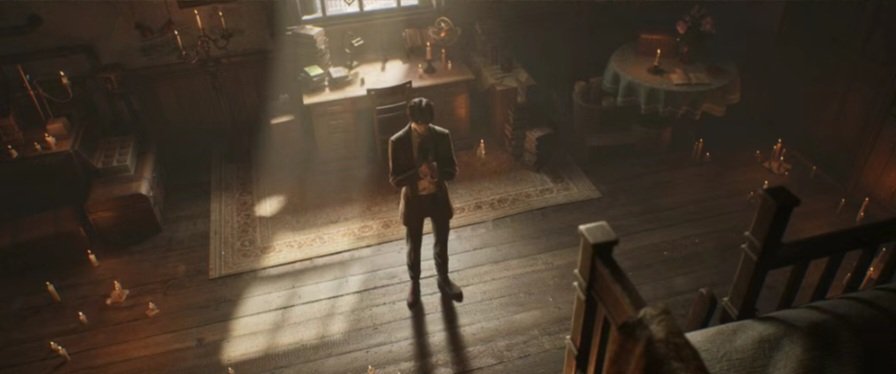
Components of a Ritual
Most Beyonder rituals share four components:
Component | What it requires |
|---|---|
Setting | The physical location must match the ritual's nature. A divination prefers a quiet candlelit space, a sea-themed ritual prefers an open shoreline or a ship's deck, and an advancement ceremony routes through a Pathway-aligned chapel. |
Materials | Candles, incense, ritual chalk, blood from a Beyonder donor, a piece of the target's body such as hair, a fingernail or a drop of blood, and Beyonder-specific potion ingredients. |
Verbal components | Chanted phrases, often in archaic dialects of Loen or in pre-Fifth-Epoch occult tongues. |
Performer state | The performer must be in the right mental and emotional state. Acting in role boosts effectiveness, acting out of role can fail the ritual outright. This is the source-material root of the Acting Method mechanic. |
Common Ritual Types
Ritual type | Purpose |
|---|---|
Divination | Reads the future, the past, or hidden truths. The Seer Pathway's signature category. |
Summoning | Brings an entity, a spirit, a Beyonder consciousness or an artifact, to the ritual venue. Risky: a failed summoning can bring the wrong thing. |
Hypnosis | Places a target into a trance state. The Spectator Pathway's signature category. |
Blessing | Applies a temporary buff. Most Pathway-aligned blessings tie to specific deities of the Seven Orthodox Churches. |
Sealing | Locks an artifact, an entity or a memory away from access. See Sealed Artifacts. |
Advancement | The Sequence advancement ceremony, specific to each Pathway. Drinking the next potion is the centrepiece, but the surrounding structure of location, props and verbal components decides whether digestion succeeds. |
Tarot Club gathering | One of the setting's most distinctive rituals, convened by Klein Moretti at a set weekly hour in the Sefirah Castle inside the Gray Fog. Members project consciousness through the Fog to attend. |
Acting Skills
The live game splits a character's abilities into three families, and one of them is where ritual practice lives day to day. Ordinary skills are the general combat toolkit, special skills are the Pathway's distinguishing abilities, and acting skills are exploration tools that grow as the character advances up the Sequence ladder. Acting skills are the mechanical face of mysticism outside a set-piece ceremony: named examples include a pendulum divination used to read a party's fortune before a run, and possessing a cat in order to squeeze through a gap and reach a space the character's own body cannot enter.
Community guides describe the same loop from the progression side. A Sequence 9 Seer is expected to actually do divination work, reading cards, telling fortunes for NPCs and writing up the results, because those acts are what feed the digestion meter that gates the next potion. That framing matches the published Acting Method and Digestion Progress language, though the per-act values behind it have not been published.
Player Rituals
The player performs rituals throughout the campaign, executing each step rather than watching a cutscene:
Step | What the player does |
|---|---|
Choose the venue | Select a ritual site or transition the camera to one. |
Lay out materials | Place the required ritual components. |
Speak the words | Perform the ritual's verbal components. |
Hold the role | Maintain performer state, the Acting Method check that runs through the ritual. |
Resolve | Watch the ritual land. Success grants the outcome, partial success grants a partial outcome plus a sanity cost, and failure can trigger sanity loss, an attack from an unintended entity, or Sequence regression. |
The ritual interface itself has not been published screen by screen, so the sequence above describes the shape of the activity rather than a documented UI.
Failure Modes
Rituals fail in specific, costly ways:
Failure | Consequence |
|---|---|
Wrong materials | Substituting or omitting an ingredient. The ritual either fails to complete or completes with a corrupted effect. |
Wrong verbal components | Missing the timed chant pattern. Drains sanity and may invoke the wrong entity. |
Wrong performer state | Failing the Acting check, the most common failure mode for new players. Drains sanity heavily and can corrupt the outcome. |
Interrupted ritual | An enemy attack or environmental disturbance breaks the ritual part-way. Drains sanity and discards the invested materials. |
Wrong target | Aiming a divination, summoning or sealing at the wrong subject. The ritual completes, but its effect lands somewhere it should not. |
Mysticism in the World
Most ordinary citizens know mysticism exists but treat it as superstition. The Seven Orthodox Churches preach a sanctioned form of it through public worship and church-affiliated divinations, while the private rituals Beyonders run stay secretive. The boundary between socially acceptable mysticism and unorthodox occult practice is one of the campaign's recurring social tensions, and the player's Acting choices and faction reputation interact with that boundary in ways the game is happy to let get complicated.