

Co-Op Multiplayer
Everything known about Kingmakers' cooperative multiplayer mode, including player count, drop-in/drop-out mechanics, how co-op changes gameplay dynamics, army and building ownership, solo offline mode, PvP status, crossplay plans, and community playtest programs.
On This Page
Overview
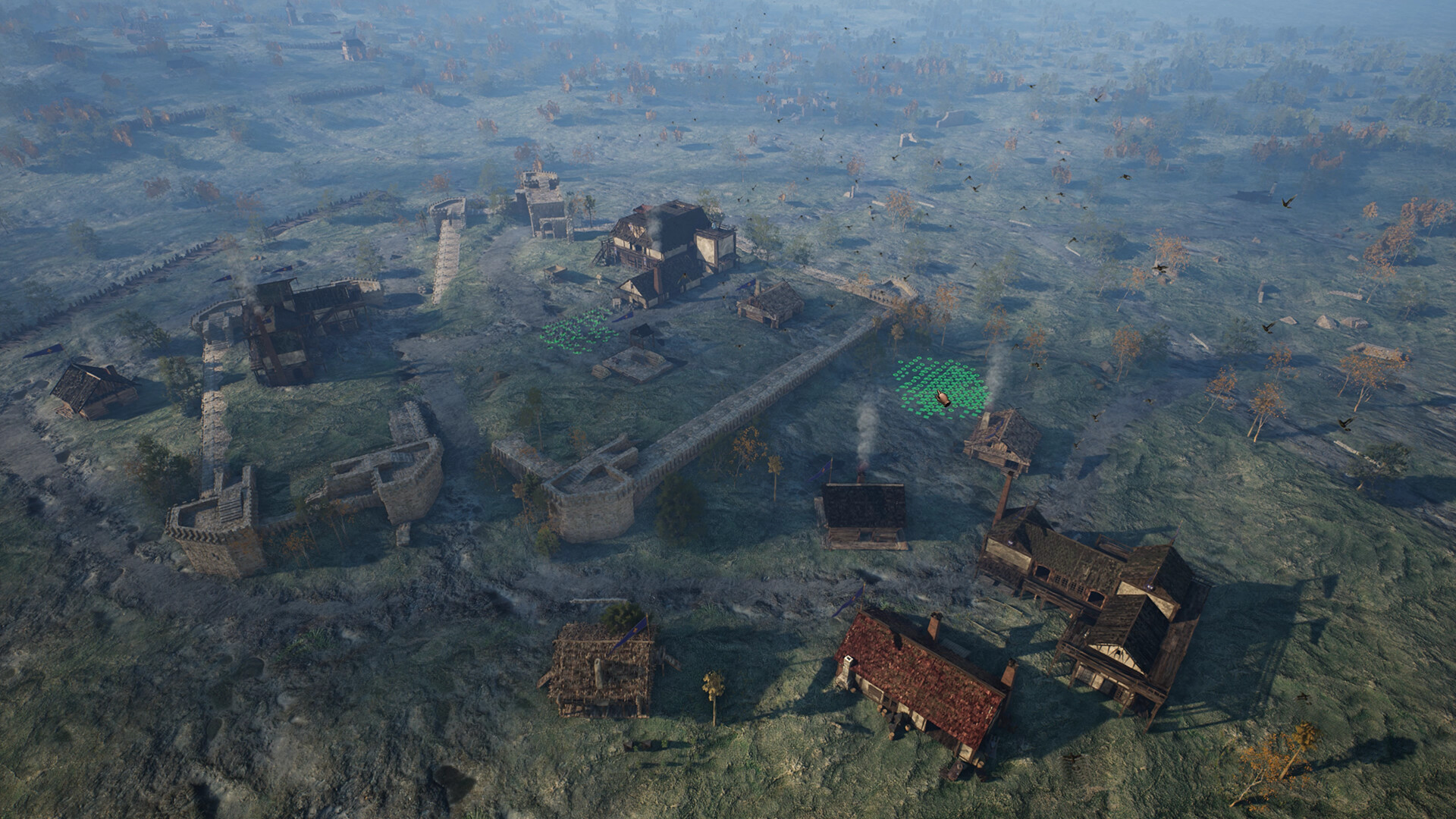
Cooperative multiplayer is a core feature of Kingmakers and one that Redemption Road Games has built the game around from the ground up. Up to four players can join a session together over the internet, each controlling their own character, armies, buildings, and territory. The entire campaign is playable in co-op, and the game does not gate any content behind a multiplayer requirement. Everything that can be done with four players can also be done solo. The co-op design philosophy follows the model established by games like Deep Rock Galactic and Valheim: the same content scales to different player counts rather than offering separate single-player and multiplayer experiences.
Player Count and Hosting
Kingmakers supports up to four players total: the host plus three friends. Sessions are player-hosted, meaning one player's machine acts as the server. The developers have confirmed that online matchmaking will be available for finding sessions with other players, in addition to the standard friend invite system. There is no dedicated server infrastructure at launch; the host player's hardware and network connection determine the quality of the multiplayer experience for all connected players.
Feature | Status |
|---|---|
Max Players | 4 (host + 3) |
Hosting Model | Player-hosted (peer-to-peer) |
Matchmaking | Online matchmaking available |
Friend Invites | Supported |
Local/Split-Screen | Not supported |
Cross-Platform | Planned for post-launch (PC to console) |
PvP | Not planned for Early Access |
Controller Support | Planned for the future |
Drop-In, Drop-Out
Kingmakers uses a drop-in, drop-out system for multiplayer. Players can join an existing session at any time without requiring the host to restart or load a new save. When a player leaves, their armies and structures remain in the game world, managed by AI until another player takes over or until the host decides how to handle the orphaned assets. This means a co-op session can scale fluidly from one player to four and back again without breaking the flow of the game.
The drop-in system is particularly valuable given the length and complexity of Kingmakers' campaigns. Real-life schedules do not always align with campaign progression, and the ability for a friend to jump in for a major battle and then leave without disrupting the host's save state makes co-op more practical for groups with inconsistent availability. The game does not require all four slots to be filled at any time; a two-player session works just as well, and the empty slots can be filled later by new or returning players.
Army and Building Ownership
In co-op, each player controls their own buildings and armies. This is not a shared-command system where all players issue orders to the same pool of units. Each player builds their own settlements, constructs their own production facilities, recruits their own medieval units, and manages their own section of the war effort. Players expand and capture or destroy enemy settlements together, but the infrastructure belongs to whoever built it.
This ownership model creates natural specialization. One player might focus on economy and resource production, becoming the group's logistics backbone. Another might build a large standing army and handle the front-line fighting. A third might invest in fortifications and defensive structures, holding territory while the others push forward. A fourth might stay lean on infrastructure and focus on personal combat effectiveness, operating as a special forces operator who handles high-value targets with modern weapons while the others manage the broader war.
When a player disconnects, their buildings and armies do not vanish. The AI takes over management of orphaned assets, maintaining basic defense and resource production until a player reclaims them. This prevents a disconnect from catastrophically undermining the group's position, though AI-managed assets will not make the same strategic decisions a human player would. If the disconnected player returns, they resume control of their property seamlessly.
Co-Op Gameplay Dynamics
The combination of modern weapons, medieval armies, vehicles, and strategy mode creates a wide range of cooperative gameplay patterns that are impossible in solo play.
Strategy and Shooter Division
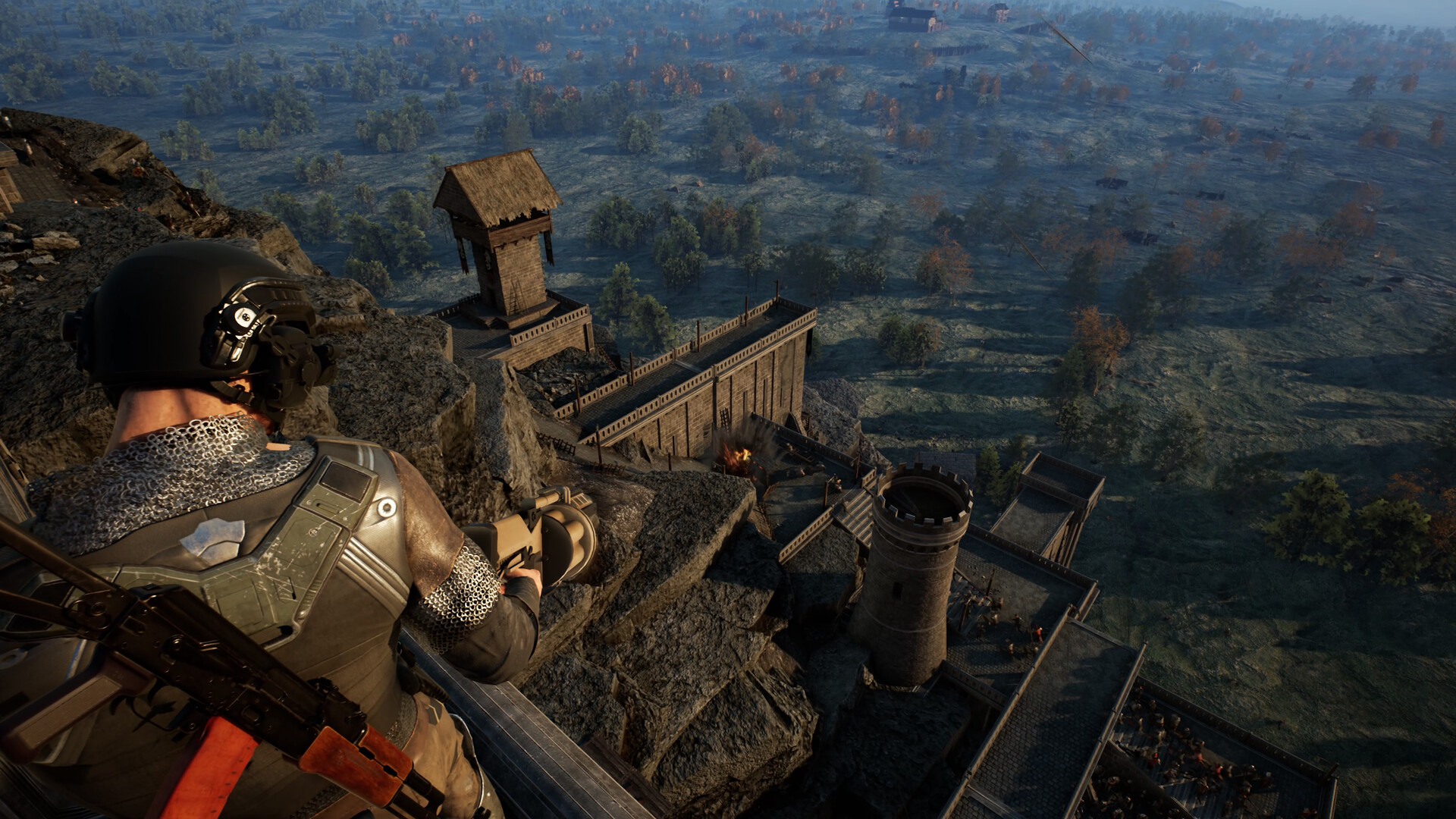
The most natural division of labor in co-op is between strategy mode and shooter mode. One player can remain in the overhead view full-time, directing the overall battle, managing army movements, and coordinating the timing of attacks. The other players operate on the ground in third-person, handling tasks that benefit from personal attention: eliminating enemy officers, destroying siege equipment with RPGs, breaching castle walls, or defending critical chokepoints with gatling turrets and personal firepower. This split lets the "commander" player focus on the big picture while the "operators" handle tactical execution.
Vehicle Operations
Vehicles gain a new dimension in co-op. The convertible car in particular benefits from multiple players: one drives while the others fire from passenger seats, creating a mobile gun platform that can engage targets in every direction simultaneously. The tank, motorcycle, and other vehicles allow players to cover more ground than a single player could, responding to threats on multiple fronts at once. One player on a motorcycle can scout enemy positions and relay information to the commander, who adjusts army movements accordingly.
Territorial Division
With four players building and managing separate territories, co-op games naturally develop a geographic division. Each player might take responsibility for a section of the map, building their own infrastructure and defending their own borders. Joint operations bring multiple players' armies together for major assaults, while each player's home territory remains independently managed. This creates a strategic meta-game about resource sharing, mutual defense agreements, and coordinated timing that adds a layer of player-to-player negotiation on top of the game's existing systems.
Solo Offline Mode
Kingmakers includes a fully functional solo offline mode. No internet connection is required to play the game alone. The entire campaign, all gameplay systems, and all content are accessible in single-player. The solo experience is the same campaign that co-op players experience; it is not a stripped-down version. The player simply handles all responsibilities (combat, strategy, kingdom building) themselves rather than dividing them among multiple people.
Solo play is balanced around a single player managing everything, so the difficulty curve accounts for the fact that one person cannot be in strategy mode and shooter mode simultaneously. The AI takes a more active role in managing the player's armies when the player is on the ground in shooter mode, following standing orders and responding to threats based on the last commands issued. Skilled solo players will develop a rhythm of rapidly switching between modes to maintain control over both the micro and macro aspects of each engagement.
PvP Multiplayer
Player-versus-player multiplayer is not planned for the Early Access release. The developers have stated clearly that PvP may be added later if it is highly requested by the community, but it is not on the current development roadmap. The primary blocker for PvP is anti-cheat implementation. Building a robust anti-cheat system that prevents exploits in a game with this many interacting systems (physics, AI, destructible environments, thousands of NPCs) is a significant engineering challenge that the team has not prioritized over completing the PvE experience first.
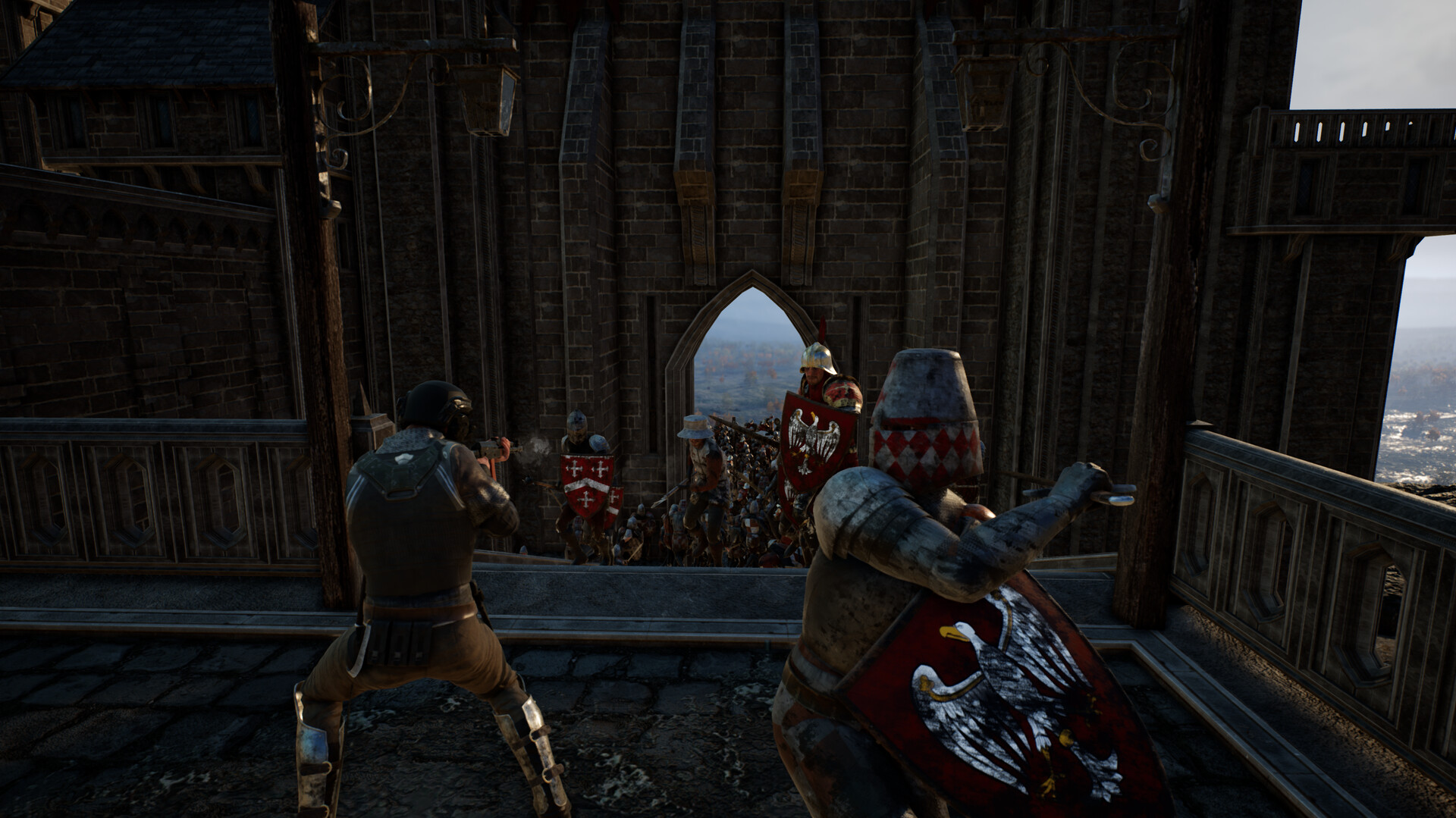
If PvP is eventually added, it would likely involve players commanding opposing medieval armies while also engaging in personal combat, creating a competitive version of the existing hybrid gameplay loop. The potential for PvP in Kingmakers is high given the depth of the strategy and combat systems, but the developers have been transparent about not wanting to release it in a half-finished or easily exploitable state. Anti-cheat is the gate, and until it is solved to their satisfaction, PvP remains a future possibility rather than a current plan.
Crossplay
Cross-platform play between PC and consoles is planned for after the initial launch. Since Kingmakers is releasing on PC first (Steam and Epic Games Store), with PS5 and Xbox Series X|S coming after the 1.0 release, crossplay will follow the console launches. The developers have not provided a specific timeline for crossplay implementation, but it is listed as part of the post-launch roadmap alongside other multiplayer-adjacent features like PvP and controller support. Crossplay also shapes where the game sells. In August 2026 the game director explained that releasing on additional PC storefronts is a significant amount of work precisely because each one needs crossplay and achievement support of its own, which is why Early Access is aimed at Steam and the Epic Games Store while other stores wait. He added that other storefronts had not been ruled out for later.
Community Playtests and Discord
Redemption Road Games runs monthly NDA playtests organized through the game's official Discord server. These playtests are closed sessions that require signing up via Discord, and participants are bound by a non-disclosure agreement that prevents them from sharing footage or detailed impressions publicly. The playtests serve as a feedback loop for the development team, allowing them to test features, balance, and performance with real players before committing to a public release.
The developers have also indicated that they plan to release an open beta or public demo before the full Early Access launch. As of a July 2026 developer update, the team reported reaching a build close to that demo and described it as opening with the game's first mission and tutorial while supporting full multiplayer. The game director said he expected it to arrive later in 2026 but stressed that the timing was not confirmed, and no date for the demo or the full Early Access launch had been set. The demo is intended to let interested players try the game before committing to a purchase. Players interested in the NDA playtests or the eventual demo are advised to join the official Discord, follow the game's social media channels, or add it to their Steam wishlist for notifications.
The Discord community is the primary hub for direct developer communication. The development team is more active on Discord than on public channels like Steam forums, where only major announcements are posted. Playtest signups, development updates, design discussions, and community feedback collection all happen primarily through Discord. For players who want the most up-to-date information and the closest connection to the development process, the Discord server is the place to be.
The first public outing of a playtest build came in July 2026, when a playable version ran on the show floor at an expo in Shanghai. That kiosk build was set up as a single-player experience, which is not how the finished demo is meant to work. The game director has said the public demo will contain the first mission along with its tutorial and will be fully multiplayer. The publisher separately described the intended shape of the game as a four-player cooperative experience rather than a solo one, so the show build should be read as a slice of the demo rather than the demo itself.
Technical Requirements
Minimum PC specifications for Kingmakers have not been finalized as of the most recent developer communications. The game requires a 64-bit processor and Windows 10 or later. Given the scale of the simulation (thousands of AI soldiers, physics-driven destruction, vehicle physics, and the custom GPU animation system), a mid-range gaming PC is the expected baseline for acceptable performance at launch. DLSS support is confirmed, which will help players with Nvidia GPUs maintain higher frame rates. The developers have stated that they are targeting 60 fps on mid-range hardware without relying on frame generation techniques.
For multiplayer sessions, network quality depends on the host's connection since the game uses player-hosted sessions. A stable broadband connection is recommended for hosting four-player games, especially during large-scale battles where thousands of NPC positions must be synchronized across all clients. Players with weaker connections can still join games hosted by others without issue, though hosting may result in lag for connected players if the host's upload speed is insufficient.
The developers have also described a client-side simulation model that spreads the work of running the battlefield across every player's machine. In a 2026 development update, the game director explained that the host and the connected players can hand off control of individual soldiers' AI in real time. When a large group of enemies focuses on one player, that player's own computer can take over driving those soldiers, which eases the load on the host and makes the enemies more responsive to the player they are attacking. This client-handoff system is already in the current build, and the team was still refining it to keep nearby players better synchronized.