

Story and Setting
The full narrative premise of Kingmakers, including the time travel plot, the Welsh Rebellion of 1400 AD, the original and altered timelines, historical figures like Owain Glyndwr and Henry IV, faction choices, multiple endings, and the relationship between past actions and future consequences.
On This Page
Overview
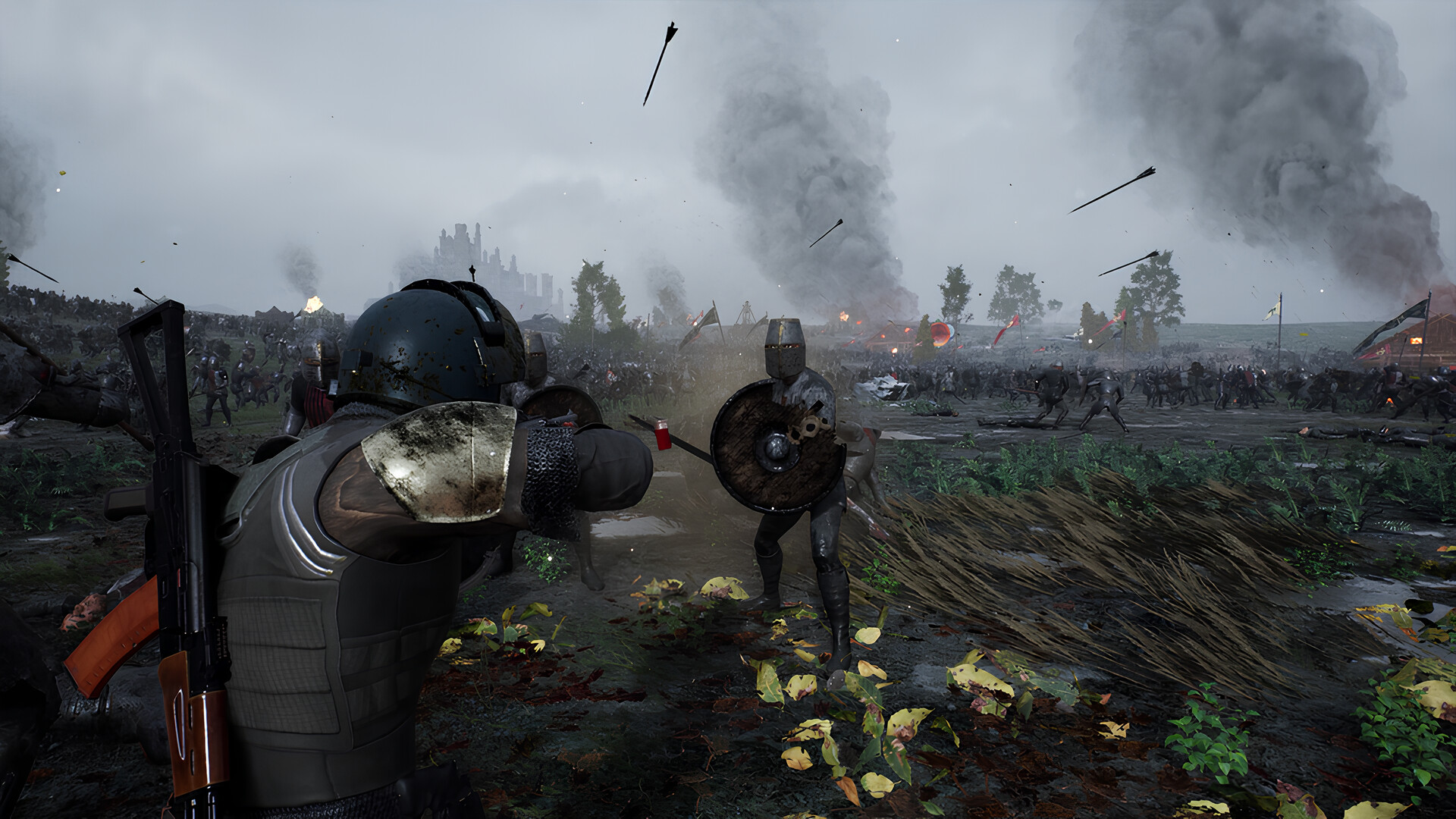
Kingmakers is set in 1400 AD during one of the most turbulent periods in the history of the British Isles. The game takes the real historical event of the Welsh Rebellion led by Owain Glyndwr and layers a science fiction time travel plot on top of it. The result is a setting where assault rifles and attack helicopters exist alongside longbows and trebuchets, and where the player's actions on a medieval battlefield have direct consequences for the future of civilization. The story is not a backdrop; it provides the motivation, the stakes, and the structure for the entire campaign.
The Player Character
The player is not a trained soldier in the traditional sense. Instead, you are a member of a team of scientists who are trying to figure out what in the past led to the current-day apocalypse. Your team has invented a time machine, and through it they can see the world shift and change around them based on decisions made in the past. Through this process, the scientists discover that they must go back to 1400 AD and unite England, Wales, Scotland, and "a little bit of Ireland" to prevent a terrible future.
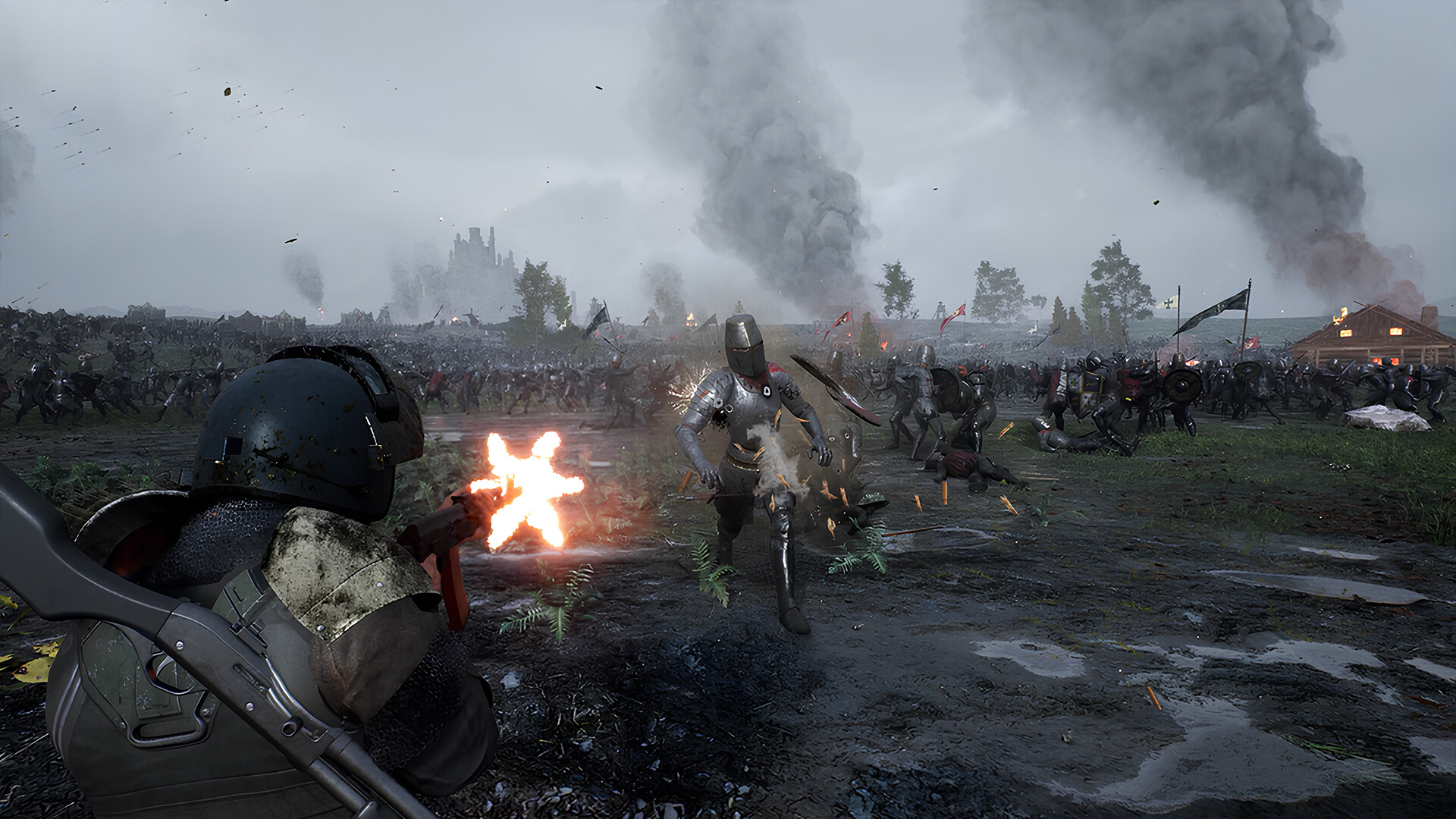
Character customization is planned with what the developers describe as a "ton of options" for the player character's appearance. The specific details of the future the player comes from are being kept as a narrative surprise. The developers have indicated that the present/future sections of the story will be revealed through gameplay, and the exact nature of the apocalypse the player is trying to prevent is part of the mystery that unfolds over the campaign.
The Original Timeline
In the game's lore, history as we know it is not what was supposed to happen. In the original, unaltered timeline, Owain Glyndwr's rebellion against English rule succeeded. Wales broke free from English domination, and under Glyndwr's unified leadership, Britain entered a new era of cooperation and technological progress. This unified Britain went on to develop military and technological superiority far beyond what our own history produced. The civilization that resulted was advanced enough to prevent whatever catastrophe threatens the present day.
The specific details of how this alternate history unfolded, what technologies were developed, and what kind of civilization arose from a Welsh-led unified Britain are part of the game's narrative mystery. One trailer teases what appears to be an optimistic outcome in a futuristic city with cat-shaped floating ships, but "everything is not as it seems" and there are darker elements beneath the surface of that seemingly utopian future.
The Altered Timeline
At some point, a malevolent otherworldly force intervened and changed the outcome of the Welsh Rebellion. Instead of succeeding, Glyndwr's uprising was crushed. Wales remained under English control, Britain fractured into petty squabbles that stunted its development, and the technological and social advantages of the original timeline were lost. The present day exists in this altered, weakened timeline, and humanity is left vulnerable to an unnamed threat as a result.
The game does not spell out every detail of who or what changed history at the beginning. The nature of the malevolent force is part of the mystery that unfolds over the course of the campaign. What the player knows at the start is straightforward: history went wrong, the world is worse for it, and someone needs to go back and fix things. The reveal of the antagonist's identity and motivations is one of the story's central threads.
The Mission
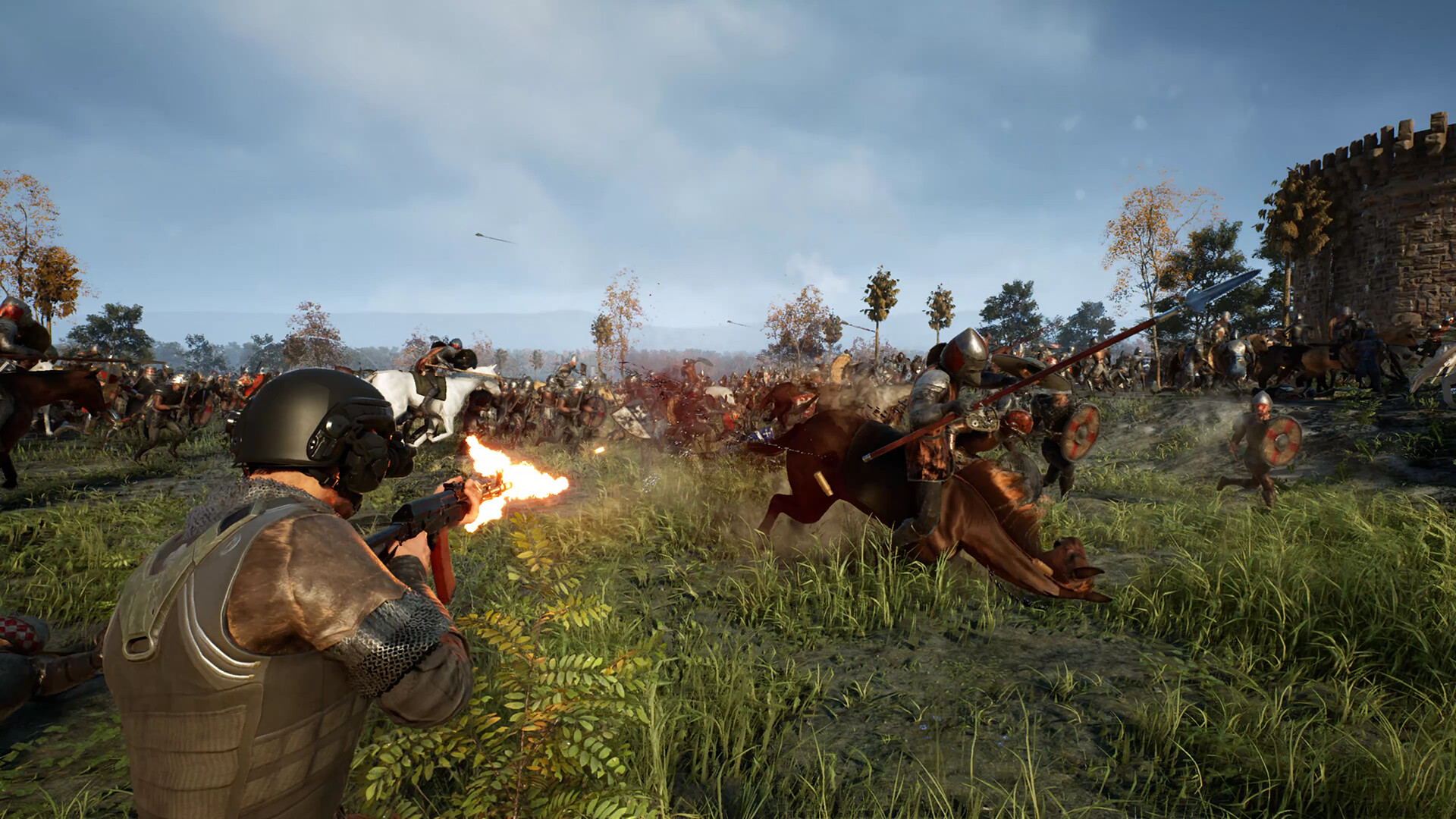
The player is sent 500 years into the past to the year 1400 AD. The mission is to restore the original timeline by ensuring that the Welsh Rebellion succeeds as it was supposed to. The task force arrives with modern military equipment, vehicles, and weapons that are centuries more advanced than anything in the medieval world. The approach is direct: use overwhelming technological superiority to tip the scales of a medieval war.
But the mission is more complicated than simply shooting everyone who opposes Glyndwr. The player must build alliances, manage kingdoms, command armies, and make political decisions that affect which factions provide support and which stand in opposition. Resources gathered in the past are sent to the future as currency, establishing an economic link between the two time periods. The future is described as being in rough shape with limited resources, so requesting new guns and equipment is not trivial. This scarcity gives weight to every resource decision and prevents the modern arsenal from feeling like an unlimited cheat code.
Historical Figures
Kingmakers features several real historical figures from the period, reimagined within the game's alternate history framework.
Owain Glyndwr
Owain Glyndwr (also spelled Owain Glendower in English sources) was a Welsh nobleman who led a major uprising against English rule beginning on September 16, 1400. He is considered the last native Welshman to hold the title Prince of Wales. In actual history, his rebellion initially achieved remarkable success before ultimately declining; Glyndwr was never captured, and his fate remains one of the enduring mysteries of Welsh history. In Kingmakers, Glyndwr is a central figure whose success is the key to restoring the original timeline. The player works alongside him, providing the technological edge his medieval forces need to overcome the English crown's military advantage.
Henry IV
Henry IV (Henry Bolingbroke) was the King of England during Glyndwr's rebellion. He seized the throne from Richard II in 1399 and spent much of his reign dealing with rebellions and challenges to his authority, including Glyndwr's Welsh uprising, the Percy rebellion in the north, and various other threats. In Kingmakers, Henry IV is one of the primary antagonists. His forces represent the English crown's determination to maintain control over Wales, and defeating or outmaneuvering him is a central part of the campaign's main storyline.
Henry V
Henry V, the son of Henry IV, also appears in the game. In real history, Henry V is best known for his victory at the Battle of Agincourt in 1415 and for his role in subjugating Wales during the later stages of Glyndwr's rebellion. In Kingmakers, he is another antagonist aligned against the player's mission. His presence in the game connects the immediate conflict of 1400 AD to the broader question of what happens to England's military ambitions if Wales successfully breaks free and unifies Britain under different leadership.
Faction Choices
The player is not locked into a single allegiance. Kingmakers allows the player to choose to fight for England, Scotland, or Wales. This choice affects political alliances, the enemies faced, and the direction the story takes.
Faction | Alignment | Narrative Implications |
|---|---|---|
Wales | Aligns with Glyndwr's rebellion | Most directly connected to the original mission of restoring the timeline; natural allies include Welsh nobles and those opposed to English rule |
England | Aligns with Henry IV's crown | Creates an alternative path where the player works within the English power structure; different alliances and different battles |
Scotland | Independent northern power | A third path with its own political dynamics, geographic strongholds, and relationships to both Wales and England |
The faction system adds significant replayability. Each faction has its own political landscape, its own geographic territory, and its own set of allies and enemies. Fighting for Wales most closely matches the stated mission of restoring Glyndwr's timeline, but the game does not punish the player for choosing England or Scotland. Different choices lead to different narrative paths with different implications for the game's conclusion. Which territories are friendly, which resources are accessible, and which military forces are available as allies all shift based on the faction choice.
Multiple Endings
Kingmakers features multiple endings determined by the player's choices throughout the campaign. The faction choice is the most obvious branching point, but other decisions contribute to the final outcome as well. The prisoner system (ransom, torture, or execution) affects the player's reputation with different factions. Which alliances are formed or broken, which battles are fought or avoided, and how resources are allocated all feed into the calculation of which ending the player receives.
The developers have confirmed that the game does not have a single canonical ending. The narrative is designed to support multiple conclusions, each reflecting the cumulative weight of the player's decisions across the campaign. Some endings may be more optimistic than others, but the game does not frame any single conclusion as the "correct" one. This approach reinforces the player's sense of agency and encourages replaying the campaign with different faction choices and decision patterns to see how the story responds.
Historical Context
The historical setting of 1400 AD was not chosen randomly. The year marks the beginning of Owain Glyndwr's revolt against English rule, one of the most significant uprisings in Welsh history. In real life, Glyndwr's rebellion started on September 16, 1400, when he was proclaimed Prince of Wales by his followers. Over the following years, the rebellion gained widespread Welsh support and at its peak in 1404-1405, Glyndwr controlled much of Wales, held a parliament at Machynlleth, and formed alliances with France and Scotland.
The rebellion eventually weakened after 1406, partly due to English counter-campaigns led by Prince Henry (later Henry V) and partly due to the loss of French support. Glyndwr's last known raid was in 1412, and he was never captured. His disappearance after the rebellion's decline has made him a legendary figure in Welsh culture. Kingmakers uses this real historical foundation as the starting point for its alternate history, asking "what if the rebellion had been given the tools to succeed?"
The setting is anchored to the Welsh Rebellion of Owain Glyndwr, which began in 1400 and ran for roughly fifteen years. Developer lore posts place the conflict in this early-15th-century window rather than the later Wars of the Roses, so a player can expect the campaign to draw on the rebellion's historical arc (the 1400 uprising, the 1404 peak when Glyndwr was crowned, and the gradual collapse that followed) rather than a single fixed year. An earlier pre-launch note had cited 1461; later developer material settled the period firmly on the Glyndwr rebellion.
Tone and Atmosphere
Despite the serious subject matter, Kingmakers does not take itself entirely seriously. The developers have cited the 1992 film Army of Darkness as a tonal influence, and the absurdist humor of bringing a tank to a sword fight is very much intentional. The game walks a line between genuine strategic depth and gleeful chaos. Quiet moments of kingdom management and political negotiation sit alongside sequences where the player calls in an attack helicopter to strafe a column of knights. The contrast is the point.
The time travel premise provides a narrative justification for the tone. The player character is not a medieval warlord with delusions of grandeur; they are a scientist from the future who has been dropped into a war they barely understand, armed with tools that are wildly out of context. The fish-out-of-water element, combined with the genuine stakes of preventing an apocalypse, gives the story room to be funny without undermining its dramatic backbone. How much the player leans into the chaos versus the strategy is a personal choice, and the game supports both approaches equally.