

The world of Huaxia: Warring States is set in a fictionalized late Warring States era of ancient China. It draws heavily on the historical period but is not a strict historical simulation. The game's lore is its own setting; treat the in-game timeline, factions, and figures as the game's narrative rather than as Chinese history.
Mythological Background
The setting begins thousands of years before the playable era, with a deep-time mythology rooted in Chinese legend.
Era | What Happened |
|---|---|
Chiyou's defeat | In the deepest past, the legendary warlord Chiyou was overthrown. His defeat ended an era of widespread mythical conflict and shifted the world toward human-led order. |
Yan-Huang alliance | After Chiyou's defeat, the Yan and Huang lineages joined to form a long-lasting alliance that dominated central China for over a thousand years. |
Long peace | The Yan-Huang alliance held the realm together through generations of relative stability. Mythical beasts continued to roam the wild places, but the human heartland was largely at peace. |
This deep-time backdrop lives on in folklore, secret realms, and ancient martial-arts lineages. Some retainers are descended from the legendary lineages; some weapons and techniques trace back to the era of Chiyou.
The Zhou Decline
The playable era begins with the slow decline of the Zhou royal house. As the Zhou king's authority weakens, regional powers rise, ancient alliances fracture, and the mandate of central rule fades. Seven major powers begin to contest the realm in earnest, marking the start of the late Warring States period in the game's timeline.
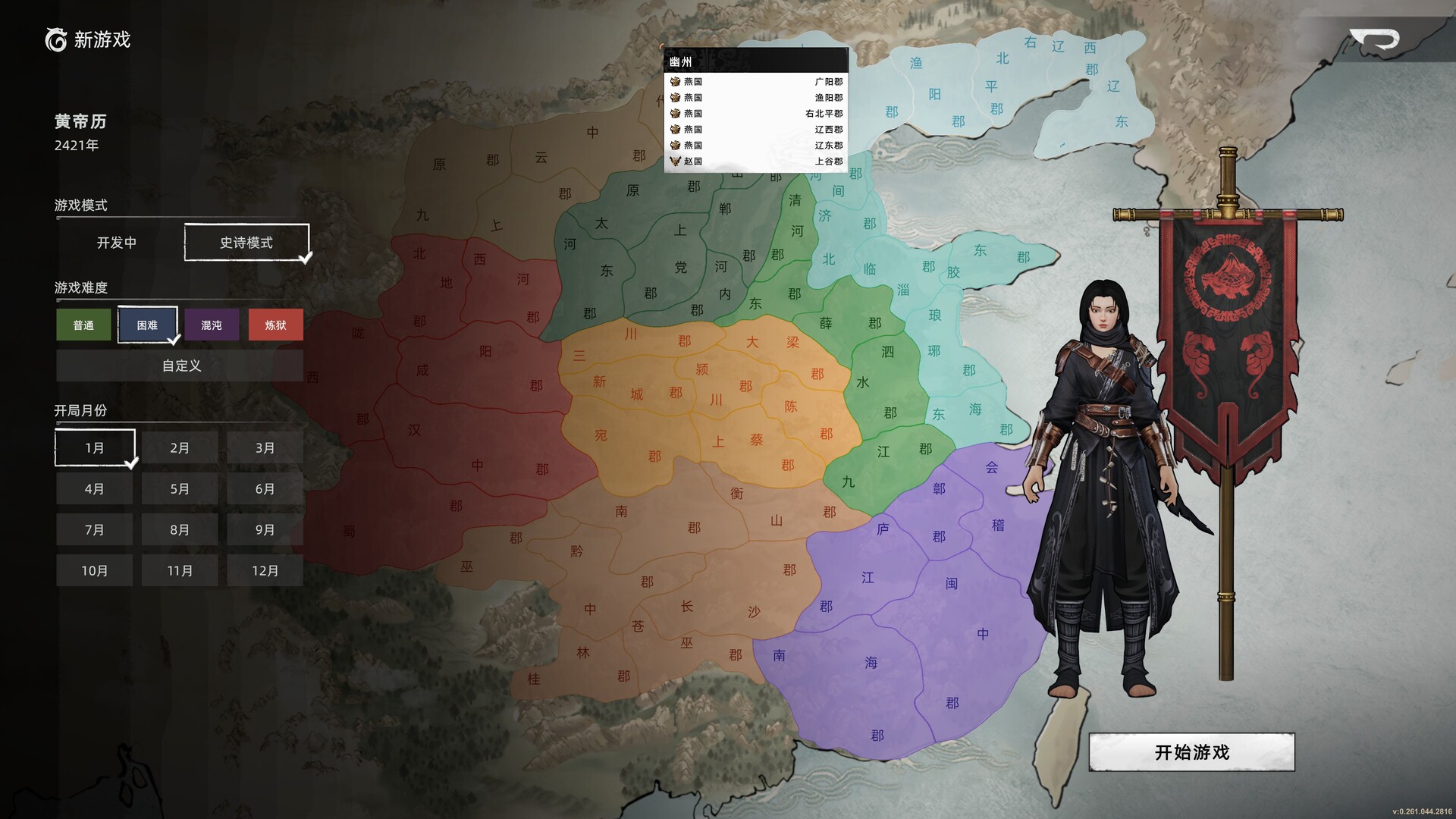
The world is therefore one of fragmented authority. The Zhou royal name still carries some ceremonial weight, but real power has migrated to the rising factions, to wealthy clans, and to the schools of thought whose doctrines guide policy.
The Hundred Schools
Alongside the political fragmentation, intellectual life flourishes. The Hundred Schools of Thought are a flowering of philosophical, military, and political doctrine. Confucian sages preach virtue and ritual, Mohists preach universal love and defensive warfare, Legalists preach harsh law and central authority, and Taoists preach detachment and natural harmony.
Schools are not just lore: they have direct in-game effects on the player character, retainers, and clans that align with them.
Mythical Beasts and Secret Realms
The world is not purely human. Mythical beasts roam frontier wilderness, mountain ranges, and ancient battlefields. Some are individual creatures, some are species, and a few are tied to specific quest chains. Their presence is part of the setting; they are not anomalies.
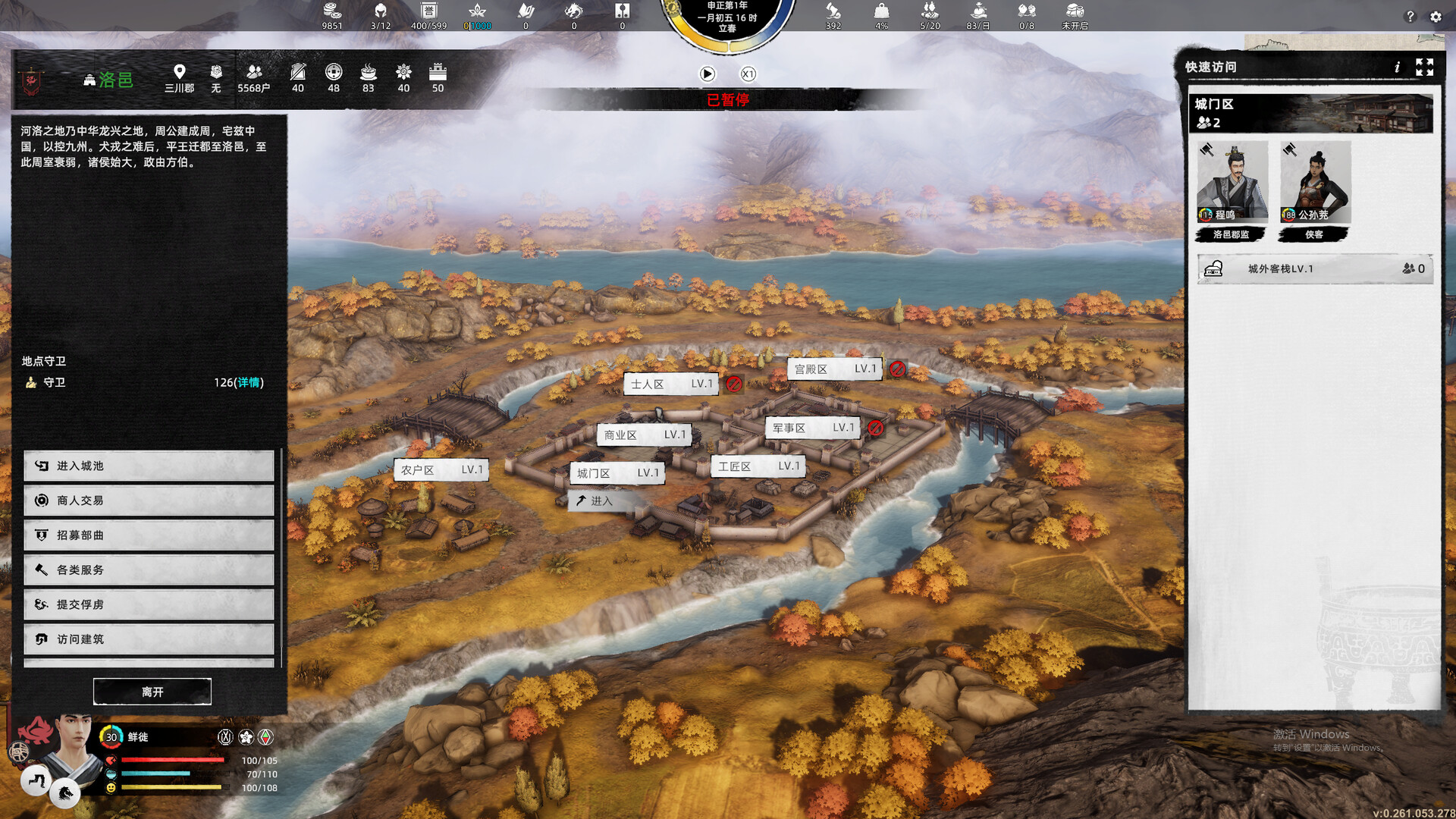
Secret realms are pocket worlds tucked into the geography of the world. They host ancient masters, hidden martial techniques, and rare materials. Entering a secret realm is one of the standout activities for a wandering warrior or a clan adventuring party.
Historical Figures, In-Game
Around eighty historical figures from the late Warring States period appear in the game as recruitable retainers or as questline NPCs. Notable named figures include Han Feizi and Xiang Liang, encountered through cloud quests in the provinces neighboring Yu Province. The in-game versions are inspired by their historical counterparts but fictionalized for stats, personality, and storylines. Treat them as the game's characters, not as biographical accounts.
Visual Style
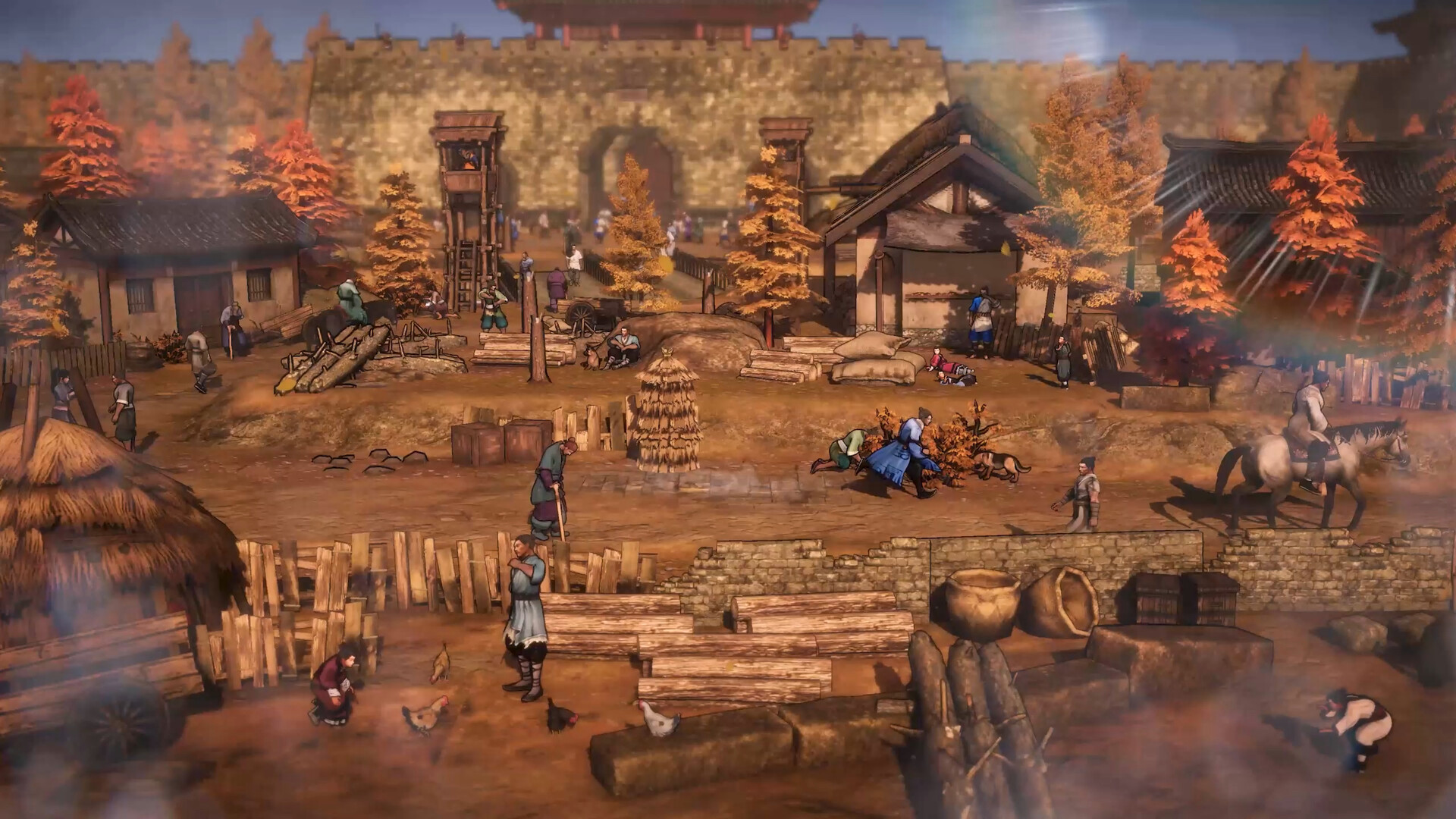
The world is rendered in a 3D style designed to evoke traditional Chinese ink-wash painting. Architecture, costume design, and natural environments lean into the late Warring States period. The visual language reinforces the mythological-historical blend rather than trying to recreate the period strictly.
How Lore Lands in Gameplay
Lore is not just window dressing. It shapes mechanics:
Family origins and bloodlines tie to specific historical lineages, granting starting bonuses through character creation.
Schools of thought give doctrine-based effects on combat, diplomacy, and clan administration.
Retainer recruitment chains include lore quests tied to historical-figure backstories.
Secret realms and mythical beasts gate some of the strongest martial arts and rarest equipment.
Notes for Researchers
If you are using the wiki to learn about the historical Warring States period, treat this article and the rest of the wiki as covering the game's setting, not the historical record. The game does take inspiration from real Warring States history, but its lore deliberately blends fact and myth and changes details for narrative purposes.
Related Pages
Yu Province: the playable map within this setting.
Factions: the seven powers that arise from the Zhou decline.
Hundred Schools of Thought: the intellectual climate of the era.
Retainers: the historical figures who appear in the game.
The Nine Provinces by Name
The Nine Provinces of the setting are Bing, Ji, Jing, Qing, Yan, Yang, Yong, You, and Yu. Only Yu Province is playable in the current Early Access build; the rest appear on the map used to choose a starting position, drawn as the territories of the seven states and subdivided into named commanderies. Each province is further split among the states rather than belonging wholly to one, so a border commandery often answers to a different court than the province around it. See Yu Province and Factions.
Ancestral home is one of the fields on the character setup sheet, and picking one grants craft skill points plus starting reputation with a school of thought and with a local power, so the province you claim descent from has mechanical weight from the first minute of a run. See Character Creation.