Loading...
Loading...
Locust Horde
September 7, 2026 at 01:37 AM
Added topic-matched screenshots from the expanded store gallery
The Locust Horde is the antagonist faction of Gears of War: E-Day. This page covers the faction as this game presents it: a force emerging from underground on Emergence Day that nobody on the surface has a name for, a doctrine against, or any reason to expect. The per-unit roster is on Enemies.
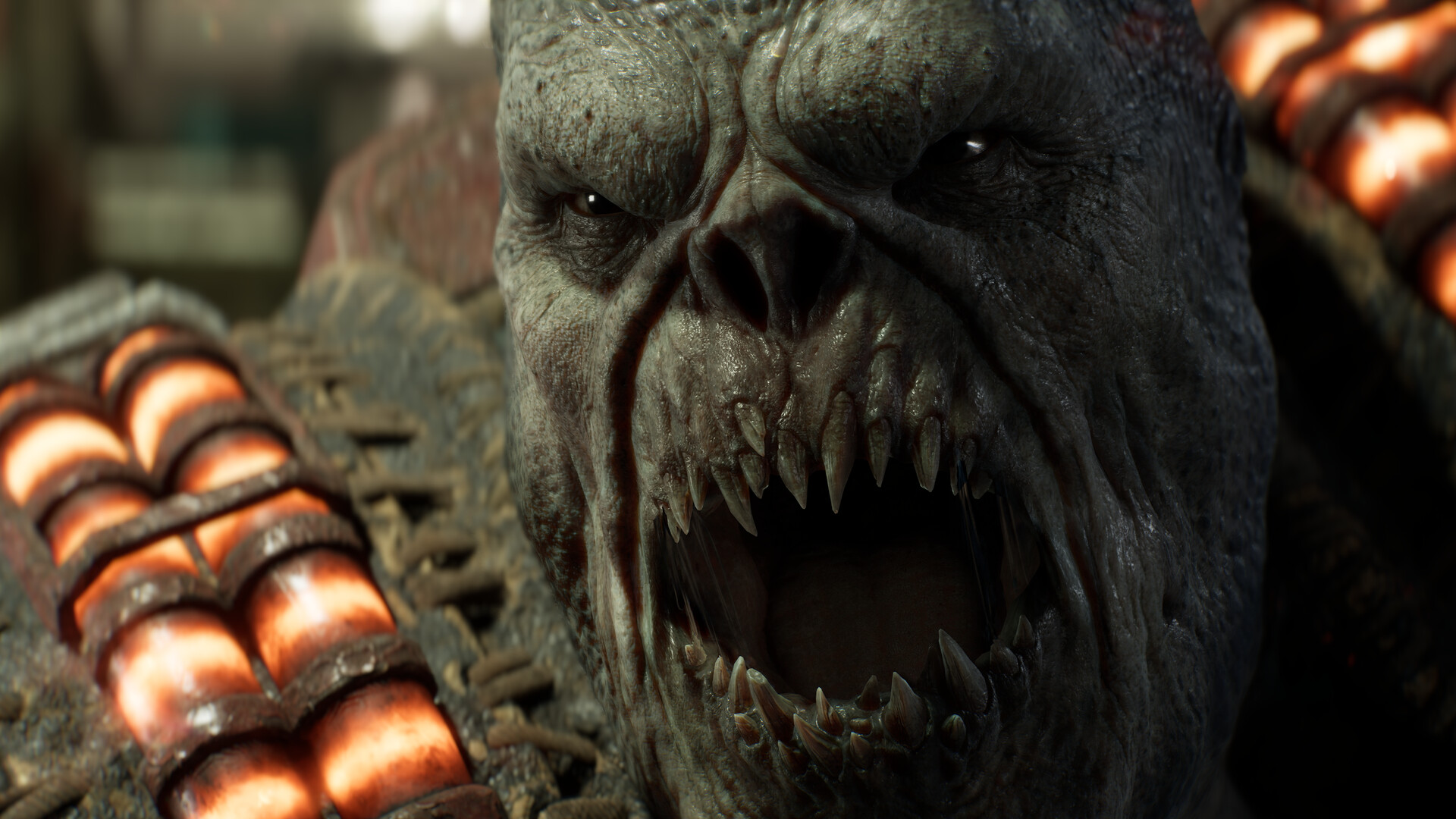
The Locust come from the Hollow, the space beneath the surface of Sera. On Emergence Day the ground breaks open across the entire planet, and emergence holes open anywhere the Locust choose to surface. In Kalona they arrive through tunnels beneath the streets, which is why the COG scanning devices at the centre of Horde Siege exist: they were built by mining companies to find Imulsion and are repurposed to map Locust tunnels under the city.
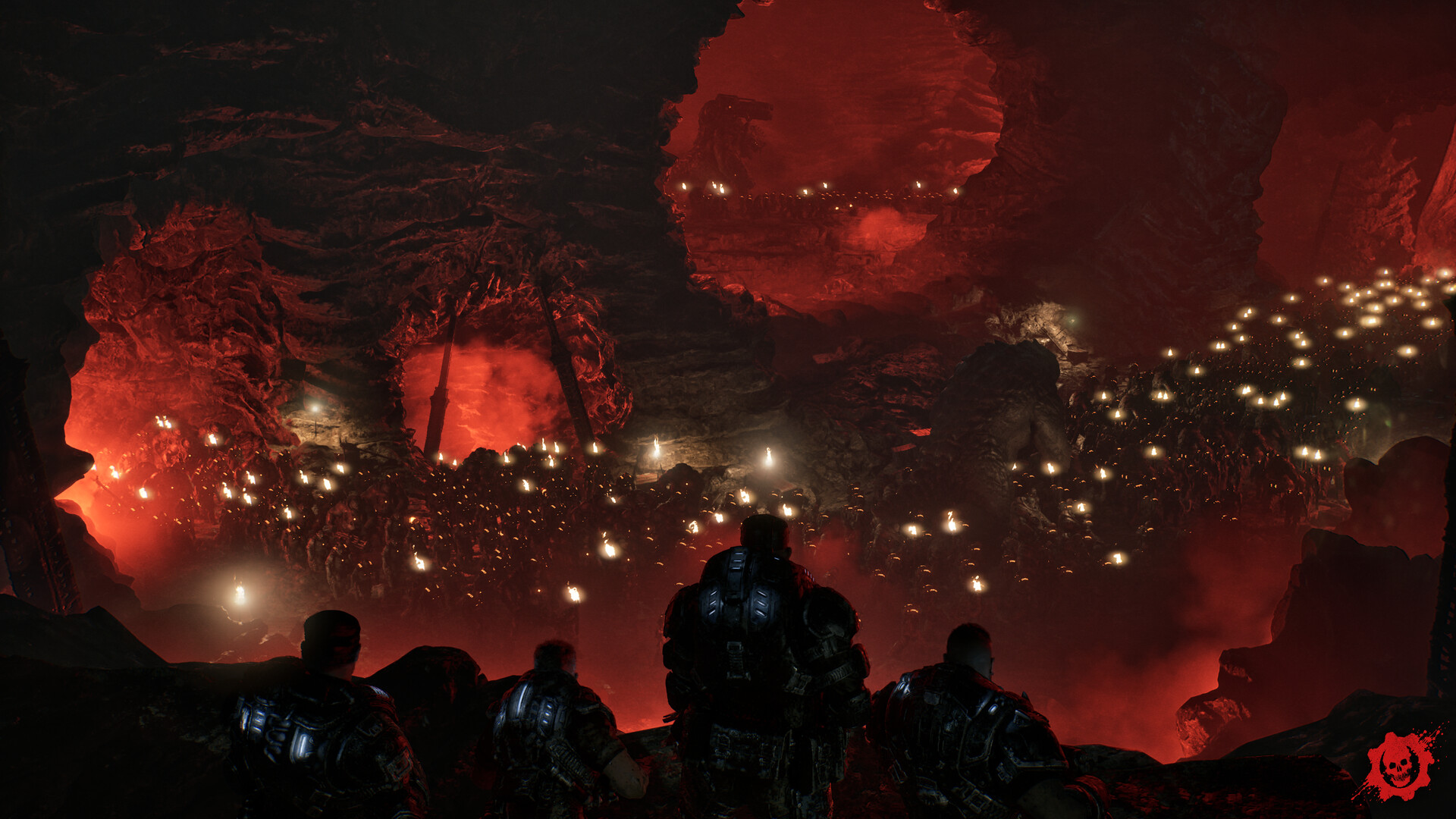
The central reveal of the campaign is what the Locust actually are. The invasion opens looking like a monster attack: waves of feral creatures, no weapons, no formation, no communication. Then Drones appear. Then the Drones pick up guns, take cover, use tactics that mirror how a squad of Gears would fight, and speak.
The studio describes deliberately building the arc so that the realisation lands late: it starts like a monster invasion, almost like a zombie film, and at some point it has to dawn on the characters that there is an army down there with commanders and structure, and that none of it is mindless.
What settles the question is how the armed Drones behave. They hold position and return fire, dive for cover when fired on, pull back or move to flank rather than pressing a losing attack, and coordinate well enough that a squad has to watch its sides. The Grenadiers, the shotgunners of the line, drop a smoke grenade between themselves and their target and then walk through their own smoke to close the distance. Some carry sniper rifles. None of that is animal behaviour, and it is the point at which the surface has to stop calling this a monster attack. Per-unit detail is on Enemies.
Role | Units | What It Tells the Surface |
|---|---|---|
Expendable first wave | Feral, starved and armoured Wretches | Sent ahead in numbers with no weapons and no formation. Reads as an animal attack, which is the intended misdirection. |
Line infantry | Unarmed Drones, then armed Drones | The turn. They take cover, use tactics, carry weapons and speak, so there is a command structure underneath them. |
Squad leadership | Elite Drones | Tougher loadouts and better tactics, combining lesser units into structured enemy squads. |
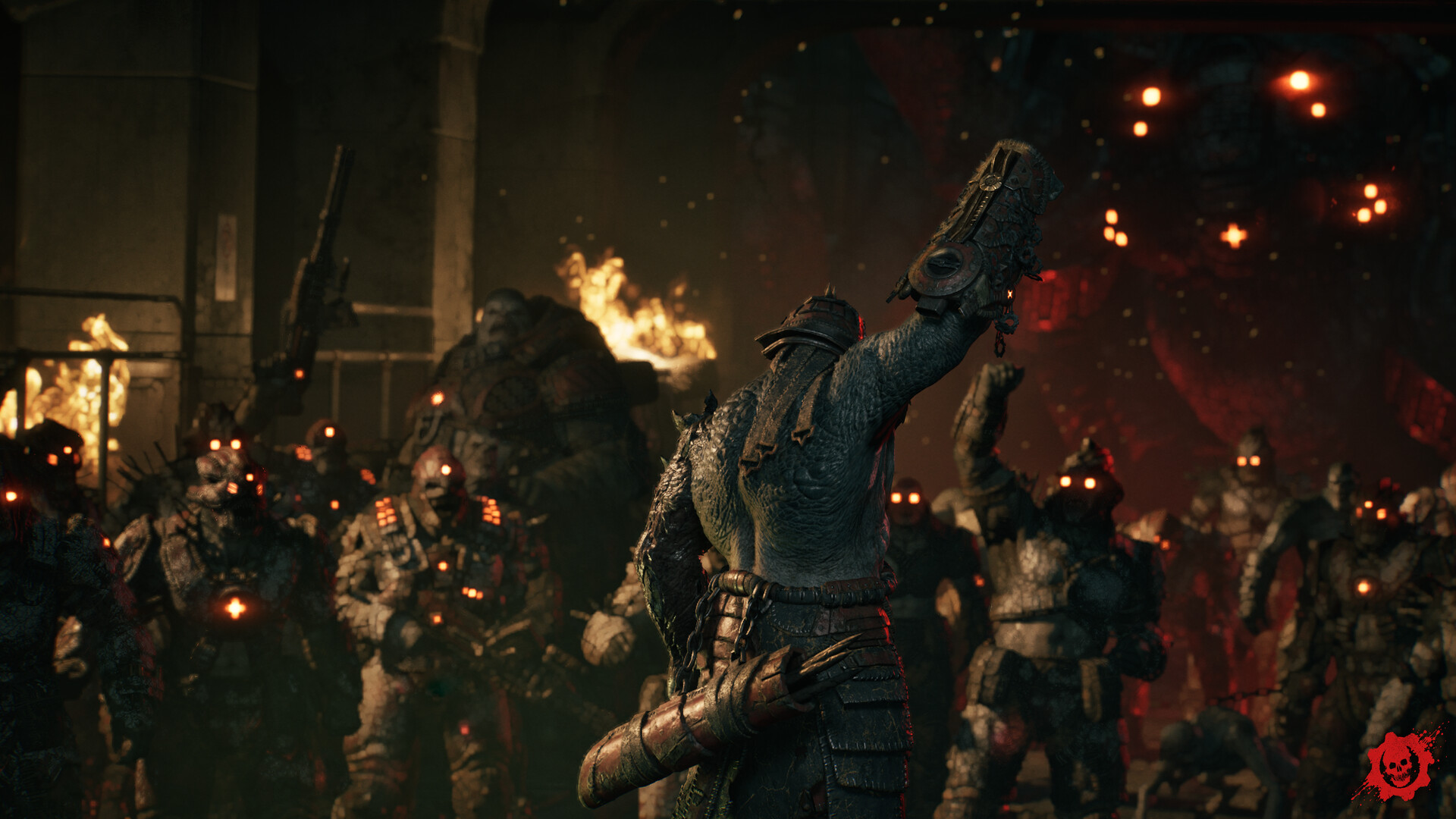
Heavy units | Boomers | Big enough to break a doorway rather than use it, and heavy enough to hold a space on their own. |
Air and support | Seeders, Reavers | Anti-air denial and troop transport. An underground force that can contest the sky is not improvising. |
Command | Vraahk | The campaign's named antagonist, described as a blight commander. His existence settles the question the surface keeps asking, which is whether anyone is giving orders. |
Elite formation | Scorched Legion | Vraahk's own legion. Spikes driven through their own bodies mark them out, and they fight in encounters he is not part of. |
Bosses | Corpser, Brumak | Confirmed in the campaign as well as through the Horde Siege Invasion Event system. The campaign's escalation climbs until Brumaks in armour are on the field. |
Enslaved Hollow creatures | Bile Frog | Not Locust at all, but pressed into the invasion. Only the one has been named. |
The Locust do not fight alone. The game adds new creatures from the Hollow that the Locust have enslaved and unleashed on the surface. The team treats the Hollow as effectively unlimited creative licence, on the reasoning that anything could plausibly live underground and therefore anything could come out of a hole. Only one of these creatures has been named publicly: the Bile Frog, which spits acid.
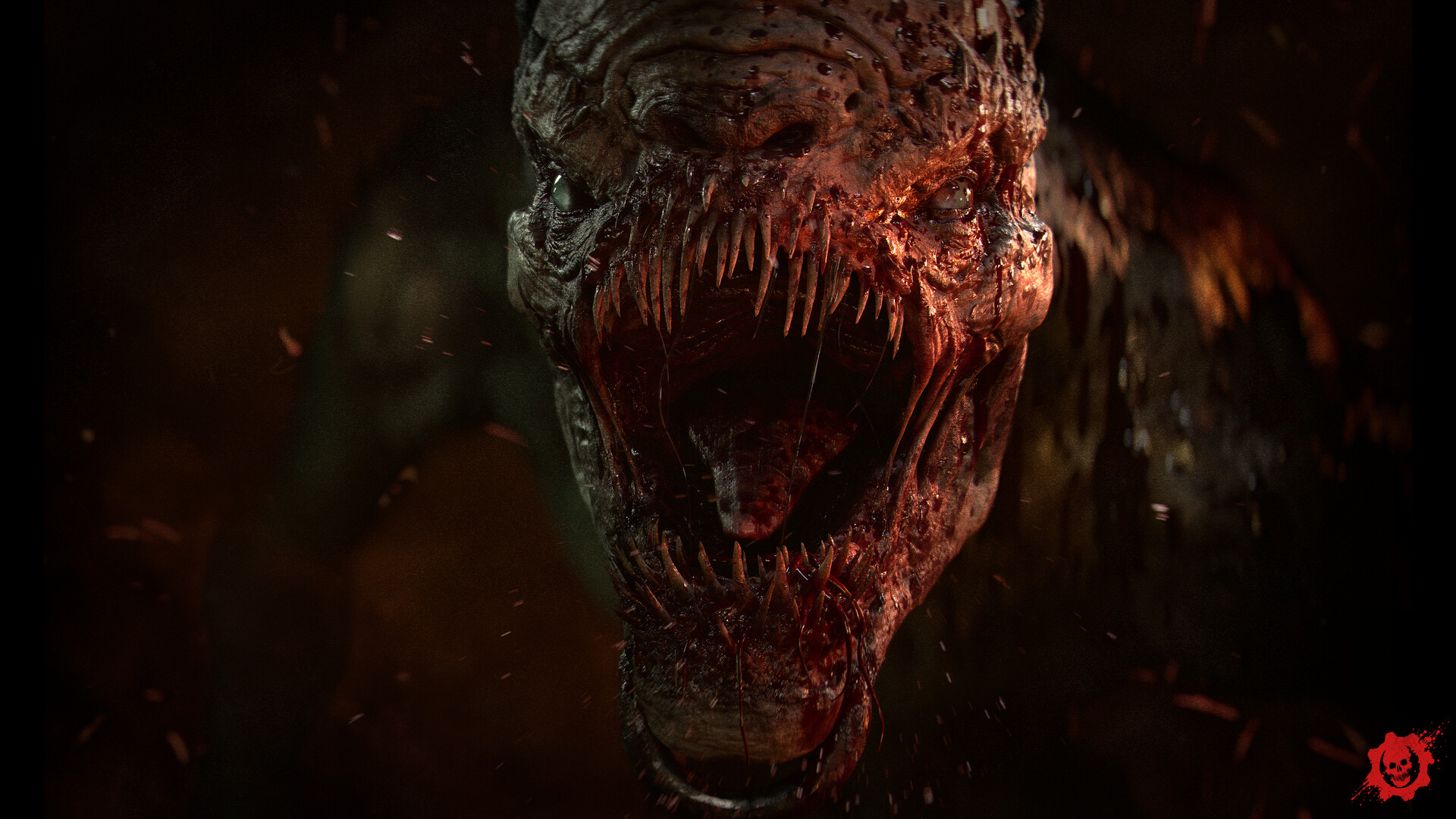
The same logic shapes the Wretches. The design fiction for the first wave is that they were caged, starved into rabid attack dogs and released ahead of everything else, which is why they are drawn skinny and malnourished rather than as the armoured versions the series usually shows.
Because this is first contact, none of the Locust units have names on the surface. The squad nicknames the creatures on the fly as they meet them, and those nicknames become the names. That is a narrative device and a design constraint at once: the game cannot use established terminology in dialogue until the characters have invented it.
The Locust have a named commander in this game. Vraahk is the campaign's antagonist, introduced in the story trailer. The studio describes him as a blight commander who was injured in the Lambent War and came up to the surface to destroy humanity outright, and the stated design intent is that he embodies the brutality of the Locust rather than being an exception to it.
Around him is the Scorched Legion, his own legion of elite units. They are marked by spikes driven through their own bodies, which the studio calls self-mutilation, and the point of them is that the player runs into that brutality in ordinary encounters instead of only in a set-piece fight. Nothing has been said about his position in the command structure beyond commander, about how the player encounters him, or about how his story ends. What is confirmed is collected on Campaign Bosses.
Two large Locust are confirmed by name in a boss role: the Corpser and the Brumak. Both appear through the Invasion Event system in Horde Siege, and both are confirmed in the campaign as well. A Corpser rips through the ground as a sky train collapses, and the campaign's escalation runs up until Brumaks in armour are on the field. Neither of them is the campaign's antagonist; that is Vraahk, covered in the section above. What is confirmed about the boss layer is collected on Campaign Bosses.
Some Locust equipment ends up in player hands. The Heavy Boomshot is the Locust Prototype Boomshot, carried by Boomers and classified as a Heavy Weapon. The Incinerator is a Locust shotgun that fires raw Imulsion. Both are listed on Weapons.
This page records the Locust only as this game presents them, at the moment of their first appearance on the surface. Later developments in the war belong to other entries in the series and are deliberately excluded, as is any material this game has not confirmed.