

The story of Fable (2027) follows a young hero from a quiet childhood in a rural village to a journey across Albion that involves ancient guilds, petrification magic, and a threat that connects to the hero's own lineage. The narrative is designed around player freedom, with the main quest providing direction without forcing a rigid path. As game director Ralph Fulton explained, the story creates stakes tied to the hero's personal journey without "ticking-clock pressure."
Prologue: Childhood in Briar Hill
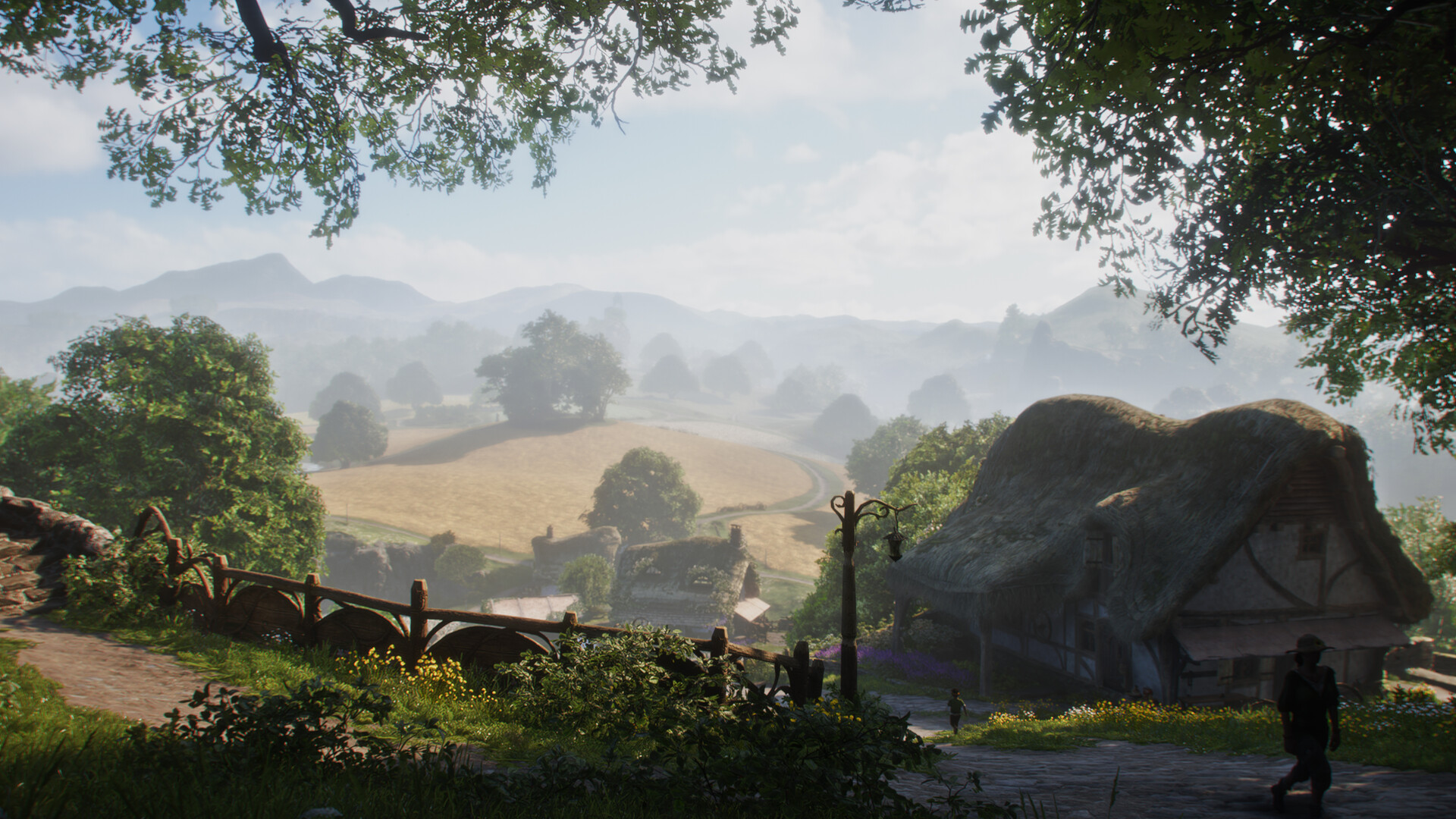
The game begins in Briar Hill, a sleepy rural village where the hero grows up as a child. The early sections establish the hero's family, their grandmother, and the quiet routine of village life. During this childhood phase, the hero discovers latent heroic powers, hinting at a destiny beyond farming and village chores.
The prologue is both story setup and gameplay tutorial. Players learn basic movement, interaction, and the fundamentals of the world through the lens of a child exploring their home village. The tone is warm and gentle, establishing an emotional anchor before the story takes its dramatic turn.
Playground Games has described this opening as roughly the first 90 minutes of the game, played as a child. Across that stretch the hero's powers emerge and they become the first Hero that Briar Hill, and Albion, has seen in a generation. The attack that turns the village to stone follows, and after it the world is fully open with no ticking clock on the main quest.
The Attack on Briar Hill
The inciting incident arrives when a mysterious figure appears in Briar Hill and, with a single act of devastating magic, turns the hero's grandmother and the entire village to stone. Every resident, every building, every familiar corner of the hero's childhood is frozen in place. Playground Games withheld the figure's identity for most of 2026 and this wiki covered her as The Stranger. In September 2026 Ralph Fulton named her outright: she is Isabel, the Hero of Wraithmarsh revealed at the June showcase.
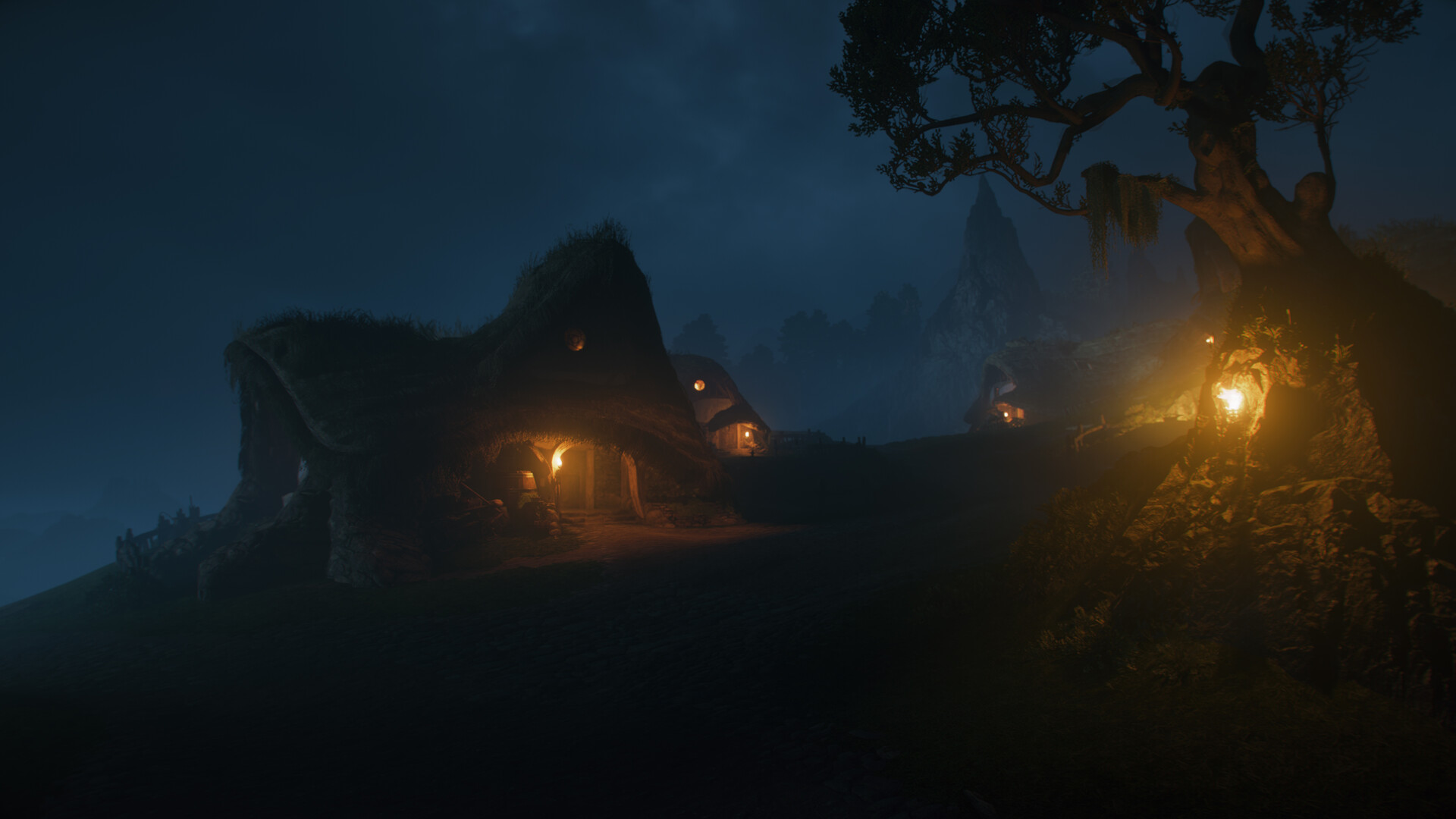
Before being petrified, the grandmother manages to speak a few final words. She mentions Bowerstone and the Heroes' Guild, giving the hero the only lead they have. The petrification is total and immediate. There is no battle, no warning, and no way to fight back. The hero is left standing in a stone village with nothing but a destination.
The Journey Begins
After the attack, the story presents a "soft implication" to travel to Bowerstone and seek out the Heroes' Guild. This is the first major choice point: you can follow the breadcrumbs directly, or you can wander into the open world and explore Albion on your own terms. The game does not punish delayed progress.
A time jump occurs between the childhood prologue and the main game. When the hero sets out from Briar Hill, they are an adult. The gap between childhood and adulthood is left somewhat mysterious. This adds to the hero's desire to understand their powers and the events that destroyed their home.
Humphry and the Heroes' Guild
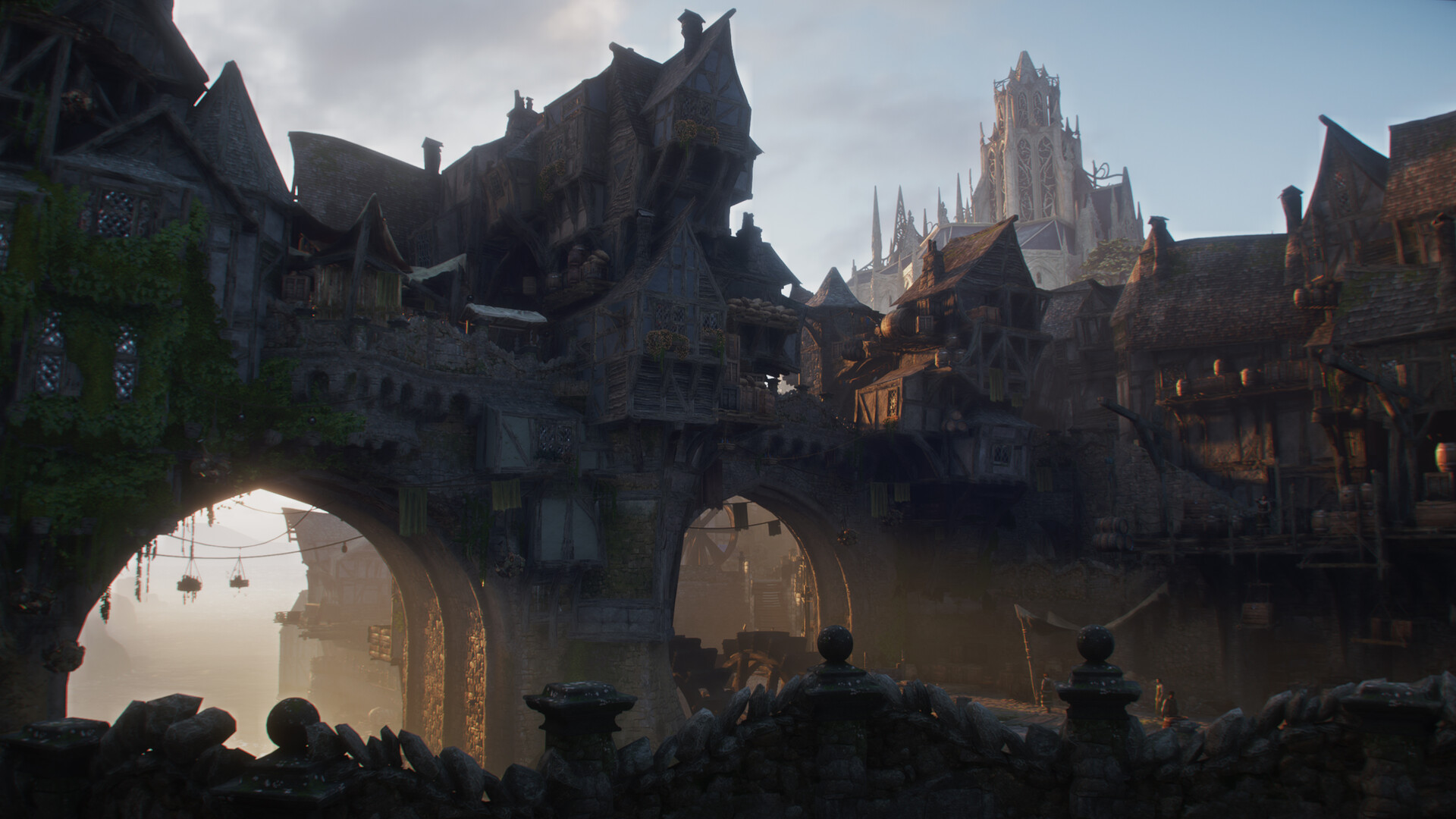
Arriving in Bowerstone, the hero seeks out the Heroes' Guild and meets Humphry the Golden, its reluctant Guildmaster. Humphry is a retired hero who has been hiding in the near-empty Guild for years, content to let the world carry on without him. He is not a noble mentor figure. He is jaded, a bit full of himself, and does not want to train anyone.
Humphry reluctantly takes the hero in and becomes their guide. His backstory connects to the central conflict: he once mentored a powerful heroine who eventually turned to evil and now threatens Albion. That failure weighs on him. Training a new hero is both a practical necessity and a chance at personal redemption.
The Villain: Isabel
At the Xbox Games Showcase on June 7, 2026, Playground Games confirmed the figure at the center of the conflict. Isabel, voiced by Hayley Atwell, is the Hero of Wraithmarsh and the powerful heroine Humphry once took in before she turned. Driven by grief over a tragic injustice, Isabel has convinced herself that she is the one Hero Albion needs, which sets her directly against the player’s Hero of Briar Hill and against her former guardian. Her reveal confirms what pre-release materials had only hinted: Humphry’s failed student and the threat looming over Albion are the same person.
The June 7 trailer leaned noticeably darker and more story-focused, built around an ominous monologue from Isabel. In September 2026 Ralph Fulton removed the last ambiguity about her place in the opening, describing the village and the grandmother as turned to stone by Isabel herself rather than by an agent of hers or by a separate force tied to her.
The Central Conflict
The main story threads involve several interconnected questions, two of which Playground Games has now answered:
Mystery | Details |
|---|---|
Who turned Briar Hill to stone? | Answered in September 2026: Isabel, the Hero of Wraithmarsh. When the opening was first shown the figure was described only as a mysterious stranger, and this wiki covered her under that name. Her motive for the attack has still not been disclosed. |
What happened to Humphry's former student? | Answered across two reveals. The heroine Humphry trained is Isabel: the June 2026 showcase tied her to Humphry, and the September 2026 comment tied her to the petrification. The mentor thread and the attack on Briar Hill are one thread, not two. |
What is the hero's lineage? | The hero's powers and the grandmother's knowledge of the Heroes' Guild suggest a deeper connection to Albion's heroic tradition. |
What threatens Albion? | Beyond the attack on Briar Hill, a larger threat looms over the entire land. The scope of this threat unfolds as the story progresses. |
Tone and Themes
Fable describes itself as "fairytale, not fantasy." The distinction matters. The stories are intimate and personal rather than epic in scope. You are not saving the world from a dark lord (at least not in the traditional sense). You are a person from a small village trying to figure out what happened to your family and whether you can do anything about it.
British humor runs through the entire narrative. The game draws inspiration from shows like The Office, Peep Show, and The IT Crowd. Characters are funny, self-aware, and occasionally pathetic in endearing ways. Humphry brags about past accomplishments to a documentary crew. NPCs have absurd daily routines and petty concerns. The world takes itself just seriously enough to make you care, while keeping a smile on your face.
The mockumentary style seen in trailers is not a marketing gimmick. It appears throughout the actual game, with characters occasionally speaking to camera or being filmed in documentary-style segments. This framing device adds a layer of meta-humor that distinguishes Fable from more earnest RPGs.
Player Choice and the Story
Your choices throughout the game affect the story's direction and ending. The morality system tracks how individual NPCs perceive you, and these perceptions influence quest availability, dialogue options, and resolution paths. A hero known for kindness may be offered peaceful solutions to conflicts, while a feared hero might only have violent options.
The story is not divided into a "good path" and an "evil path." Instead, it is a single narrative that bends and adapts based on the hero you become. Your reputation, relationships, and visible appearance all contribute to how the story plays out in its later acts.
Fable's Narrative Tradition
This entry carries on the tradition of personal stakes driving the story. It is not about cosmic evil threatening all of reality. It is about a person, their family, their mentor, and the choices they make when given power they did not ask for.