
Loading...
Loading...
Open World and Adventurer's Guild
August 27, 2026 at 08:59 AM
Added optional secondary objectives and the on-screen objective tracker shown in official screenshots
Drakantos blends a shared MMORPG open world with a dungeon-crawler mission layer run through the Adventurer's Guild. The open world is where players explore, gather, and progress the story together, while the Guild is where they queue into instanced missions for focused combat. This page covers both halves of the PvE experience and how progression carries across them.
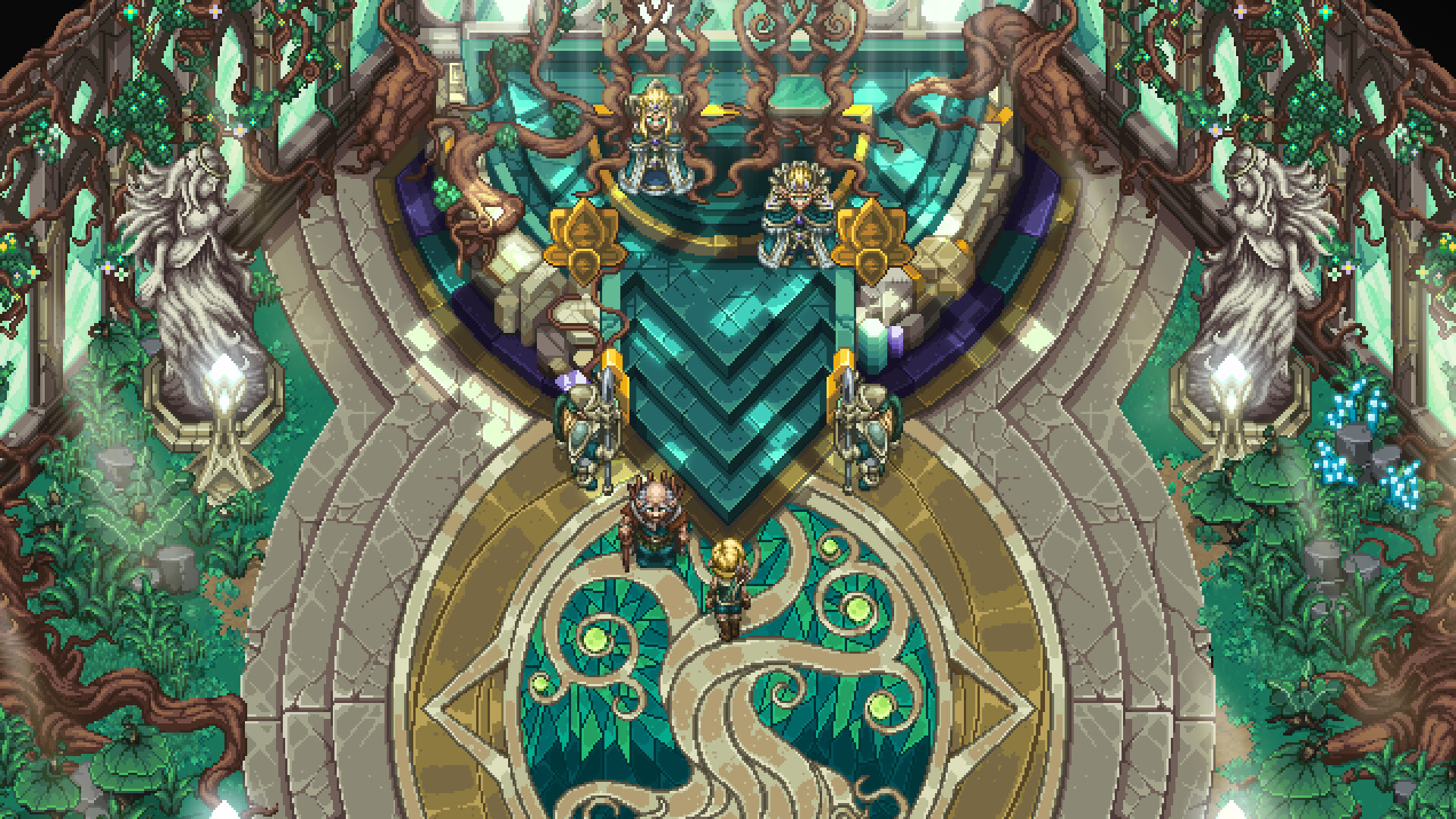
The Adventurer's Guild is the game's dungeon-crawler layer. In the story, it was founded long ago by a group of adventurers who saw the need for a reliable organization to handle the many problems faced by the people of the Empire, and it is known for the skilled fighters, heroes, and mercenaries it sends to lands and villages that local authorities cannot protect on their own. In play, every major city and village has a Guild where players open a world map and pick from a list of available missions. Those missions change periodically, rotating both the maps used and their main objectives, so the content stays varied.
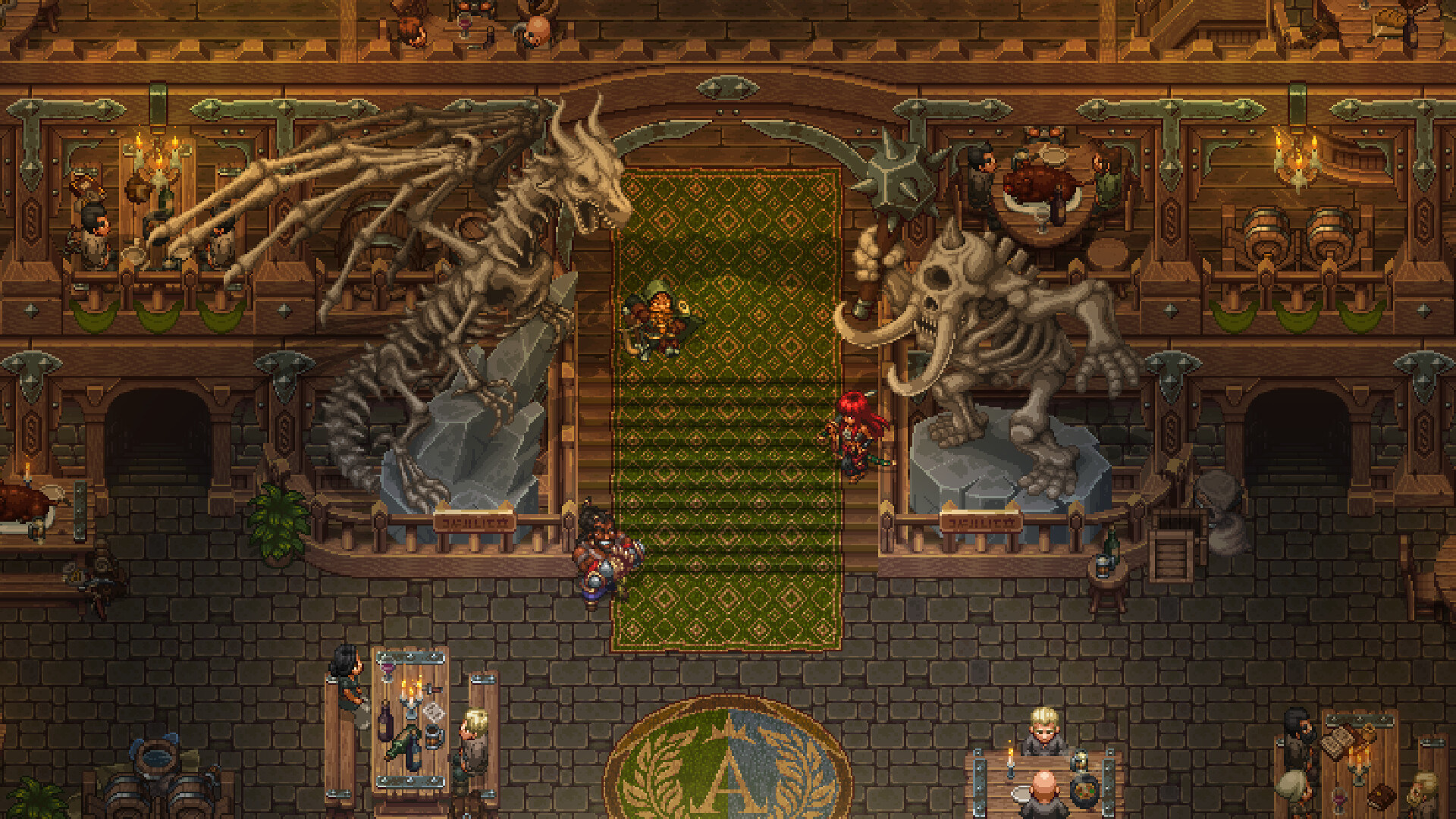
Mission objectives range widely: clearing every enemy, collecting specific items, finding a unique object, escorting merchants, rescuing kidnapped villagers, hunting a wanted boss, defending villages from invaders, or stepping into conflicts between factions. Because the objective varies even when a familiar map comes up, the same map can play very differently from one run to the next. Many missions also carry bounty bosses (see Bosses and Enemies).
Guild progression runs through ranks. The full game is planned to reach Rank 14, with content and enemies scaling up as the rank rises and each rank introducing new challenges. Rank is tied to a player's overall power level from their equipment, so raising power unlocks higher ranks. The closed beta only opened the first region and reached Rank 5, so Rank 14 reflects the full-game plan rather than what was played in beta. Players can also choose to push higher ranks at the minimum power requirement for faster growth, or stay at a lower rank for an easier pace, including running lower-rank missions to help friends. The rank interface was reworked so that each rank shows the exact equipment tied to it instead of a generic rank icon, which makes progress easier to read at a glance.
The Guild draws on 120 different handcrafted mission maps spanning a variety of biomes, all of which function like dungeons. There is no procedural generation; every map was built by hand so it has a unique feel rather than a generic one. The map count grew over development, with an earlier devlog citing over 100 before settling at the current count of 120.
Guild missions are sized for 1 to 4 players. When a mission is chosen it starts automatically after a few seconds, joining any other players queuing for the same mission, or starting solo otherwise. The standard matchmaking queue is for 3 players, and additional players can join an in-progress mission as reinforcements a few minutes after it starts. Premade groups can run with up to 4 friends. Enemy difficulty scales with the number of players, adjusting again if someone quits or disconnects, so the challenge stays consistent. The 1 to 4 cap applies to regular Guild missions; other PvE and PvP content is designed for larger groups.
Aspect | Detail |
|---|---|
Party size | 1 to 4 players |
Standard queue | Matchmaking groups of 3 |
Premade group | Up to 4 friends |
Difficulty | Enemy difficulty scales with the number of players |
Guild rank range | 1 to 14 in the full game (closed beta reached Rank 5) |
Missions run an internal measure of how much each player actually did. It counts how many abilities you land and how many enemies each one hits, weighted per ability, and it deliberately does not count damage, so arriving in strong gear is not by itself a contribution. Rewards then scale to that measure rather than being split evenly: contribute a tenth of the work and a tenth of the mission reward is what arrives, and contribute nothing and nothing does.
A player who falls far below the rest of the group is treated as inactive, and you can add them to an avoid list so the matchmaker never pairs you again. The developers chose this over a player report system on the grounds that reports need moderators to be worth anything and automated reports generate false accusations. The measure is switched off inside a premade party, so carrying a friend through a mission is explicitly fine. Players can also leave a mission at any point without a penalty.
Completing objectives during a mission is scored as well as rewarded. Points accrue as the objectives fall and they raise every reward paid out at the end of the run, while experience arrives as a single lump sum when the mission closes rather than trickling in during the fight.
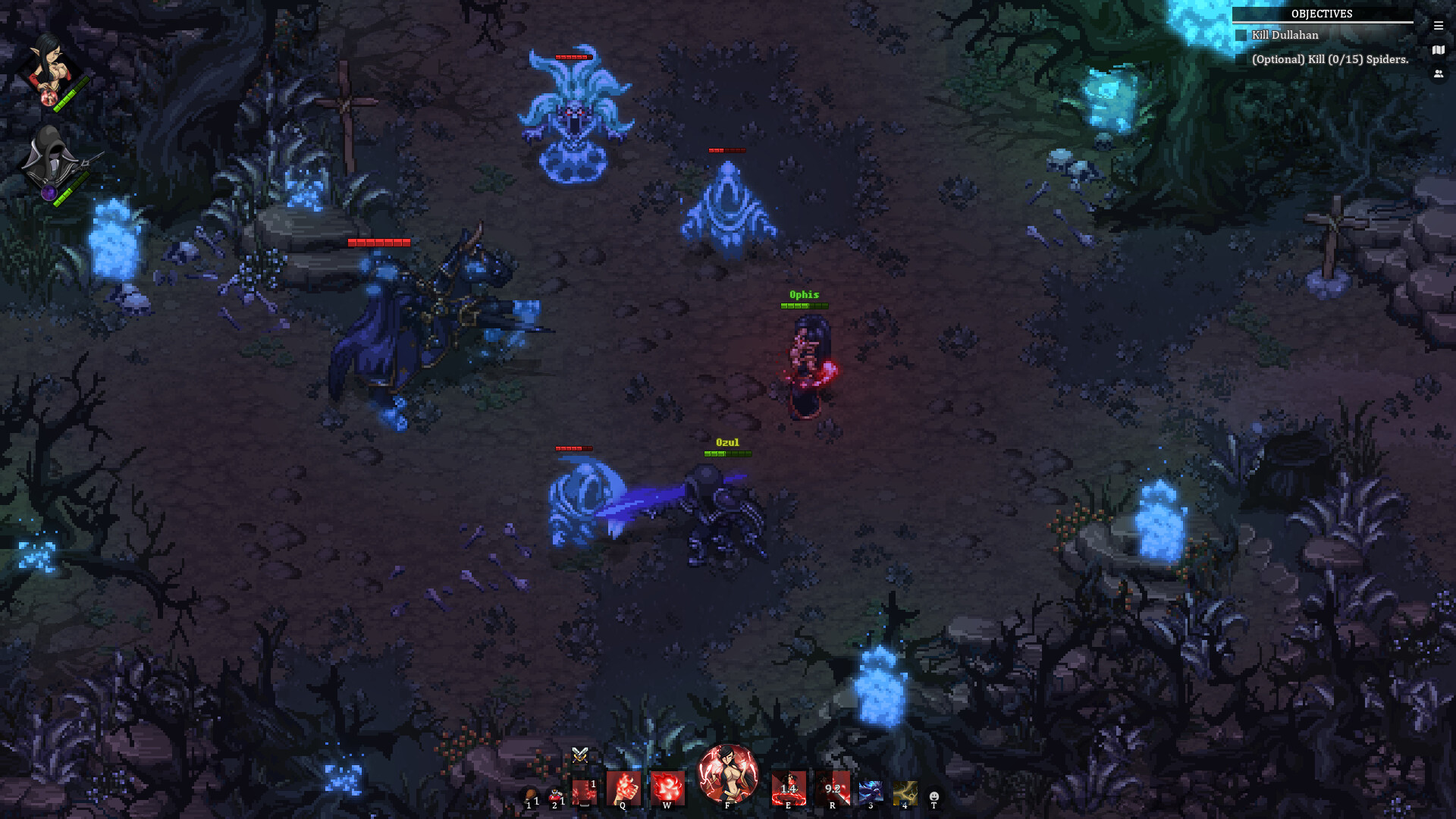
A mission usually carries more than one goal. Official screenshots show an objective panel in the corner of the screen listing a main objective alongside secondary ones marked as optional, each with its own live counter, so a run might ask for a set number of a particular enemy while separately offering credit for clearing a side area or killing a named creature. Taking the optional work is what feeds the point total described above rather than being a detour from it.
Outside of missions, the open world is a shared MMORPG space where players meet everyone else on their server. It focuses on exploration, facing enemies, finding hidden chests and secrets, solving puzzles, gathering resources such as ores and wood, hunting for pets, story progression, and side quests. Maps in both the open world and the Adventures are covered by a fog of war that reveals as players explore, and a day and night cycle runs throughout, affecting the enemies encountered (see Bosses and Enemies). The cities and regions that anchor the world are detailed under Cities and Locations, and lifestyle activities such as fishing and trading sit in Lifestyle and Economy.
Quests in the open world are built to have a real purpose rather than being linear filler. Their rewards go beyond gold and experience to unlock systems, shops, artifacts, and exploration tools such as a climbing hook that opens up new locations. Some side quests are tied to specific characters or require particular knowledge, so certain missions can only be completed by the right kind of hero.
Gathering nodes in the open world are not fixed to a spot. The whole set resets once a day and comes back in different places, and the reset is shared, so every player on a server sees the same layout at the same time. The developers give that as the reason the game deliberately has no resource markers or map pins: a pin on a node that has moved by tomorrow is worse than no pin at all, and marking them would turn gathering into bookkeeping rather than exploration.
The exploration tool that opens gated ground is described in devlogs both as a climbing hook and as a grappling hook; they are the same unlockable. The small markers players noticed dotted around the map are its anchor points, and several areas are reachable only once you have it.
Progression is heavily account-wide. Heroes are unlocked account-wide rather than per character, and players freely swap between them. While a hero's level and gear do not carry between heroes, artifacts, trophies, their upgrades, and cosmetics such as mounts and pets are all shared across the account. Quests give horizontal progression, meaning completing a mission on one hero counts for the entire account. Once a hero reaches a certain level and power, endgame accessories become shared too, so players do not have to re-farm endgame gear for every hero. The build pieces themselves are covered in Orbs, Artifacts, and Trophies, and the full roster in Heroes.
The Guild has its own reward economy. An Adventurers Guild credits shop refreshes monthly and offers a range of rewards in exchange for credits, which are earned only by completing Guild missions. That makes regular mission participation the path to the shop's rewards. A separate Ticket system feeds into this loop: Tickets can be exchanged for Guild credits, and they can also be used during missions to activate temporary effects.
Ticket | Effect |
|---|---|
Growth Ticket | Boosts experience gains during a mission. |
Soulbound Ticket | Significantly increases drop rates, but locks the dropped items to your account. |
Rare involuntary PvP can occasionally break into Guild missions, and certain open-world chests carry their own PvE or PvP rewards; both are covered in PvP Modes. The collectible rewards earned across the open world and Adventures, including pets and mounts dropped by endgame bosses, are detailed in Pets, Mounts, and Collectibles.
