
Loading...
Loading...
Survival Basics
April 27, 2026 at 04:29 PM
Cleaned punctuation and AI-style phrasing (2026-04-27)
Survival Basics covers the confirmed survival pillars of Don't Starve: Elsewhere. The familiar hunger and sanity meters return, and they sit alongside a new set of traversal hazards introduced by the move into 3D movement. The studio has summarized the survival challenge with three directives: do not fall, do not linger in the Fog, and above all else, do not starve. New arrivals should also read the Overview and the Getting Started primer.
The reveal frames survival around three independent ways for a run to end. Each ties to a different pillar of the design.
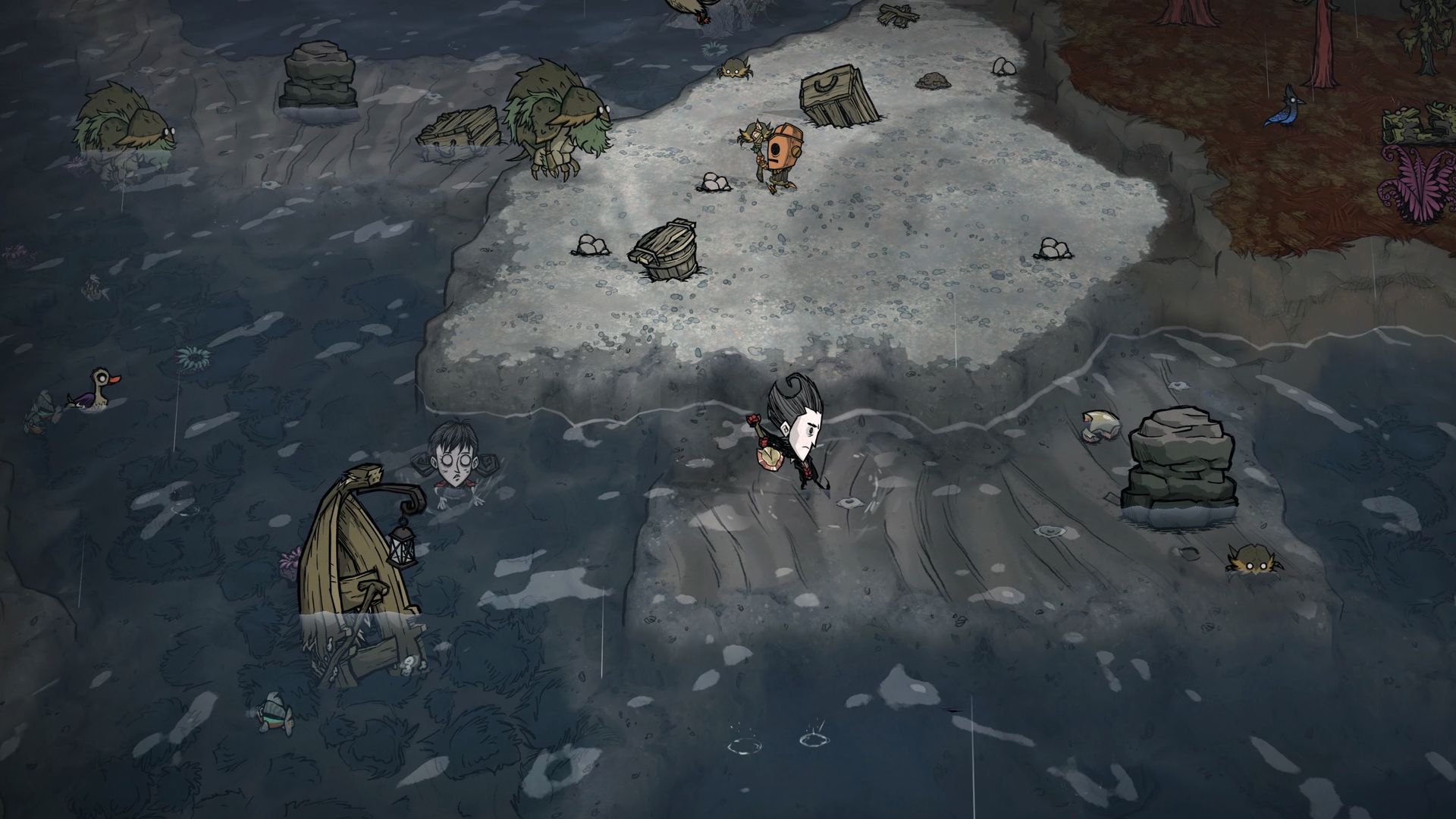
Failure State | Linked System | Player Directive |
|---|---|---|
Don't Fall | 3D movement, elevation | Falling damage is a new lethal risk created by the move into 3D. Watch your footing on cliffs and plan descents instead of dropping blind. |
Don't Linger in the Fog | Fog System, sanity | The Fog drains sanity the longer you stand in it. Brief incursions can be worth it; staying inside is not. |
Don't Starve | Hunger, food, cooking | Starvation remains the namesake threat. Keep food coming in faster than your hunger meter falls. |
Hunger is the pillar the franchise is named after, and it returns in Elsewhere as a meter the player has to keep topped up. Gathering, farming, and cooking are confirmed parts of the food loop. Players are expected to forage ingredients, hunt or trap creatures, grow crops at a base, and prepare meals at cooking stations to convert raw food into more efficient calories. Specific drain rates, hunger types, satiation values, and recipe lists have not been disclosed.
Sanity is retained from the franchise and returns as a separate meter. In Elsewhere it is closely tied to the new Fog System, which drains sanity while the player is inside it. Fog exploration is framed as a deliberate sanity tax: the Fog conceals secrets and resources, but extracting them costs sanity that has to be recovered elsewhere. Specific thresholds, penalties, and recovery sources have not been disclosed.
The shift to 3D movement adds a risk category the earlier games did not have. Falling damage is a real failure state, and elevation is now a survival variable on its own. The world is built as a multi-tiered world that stacks mountains, plateaus, cliffs, rivers, seas, and cave systems on top of each other.
Climbing exposes you to height, and a wrong jump can kill on impact.
Bridges, ledges, and cliff edges are failure points, especially during weather or at night.
Caves and high-altitude regions add their own creatures and conditions on top of the height threat.
Each biome has its own climate behavior layered on top of the shared survival meters. The reveal calls out two examples: redwood forests come with relentless rainstorms, and high-altitude regions are cold enough that exposure becomes its own risk. Other biomes are confirmed to exist but their specific climate effects have not been detailed.
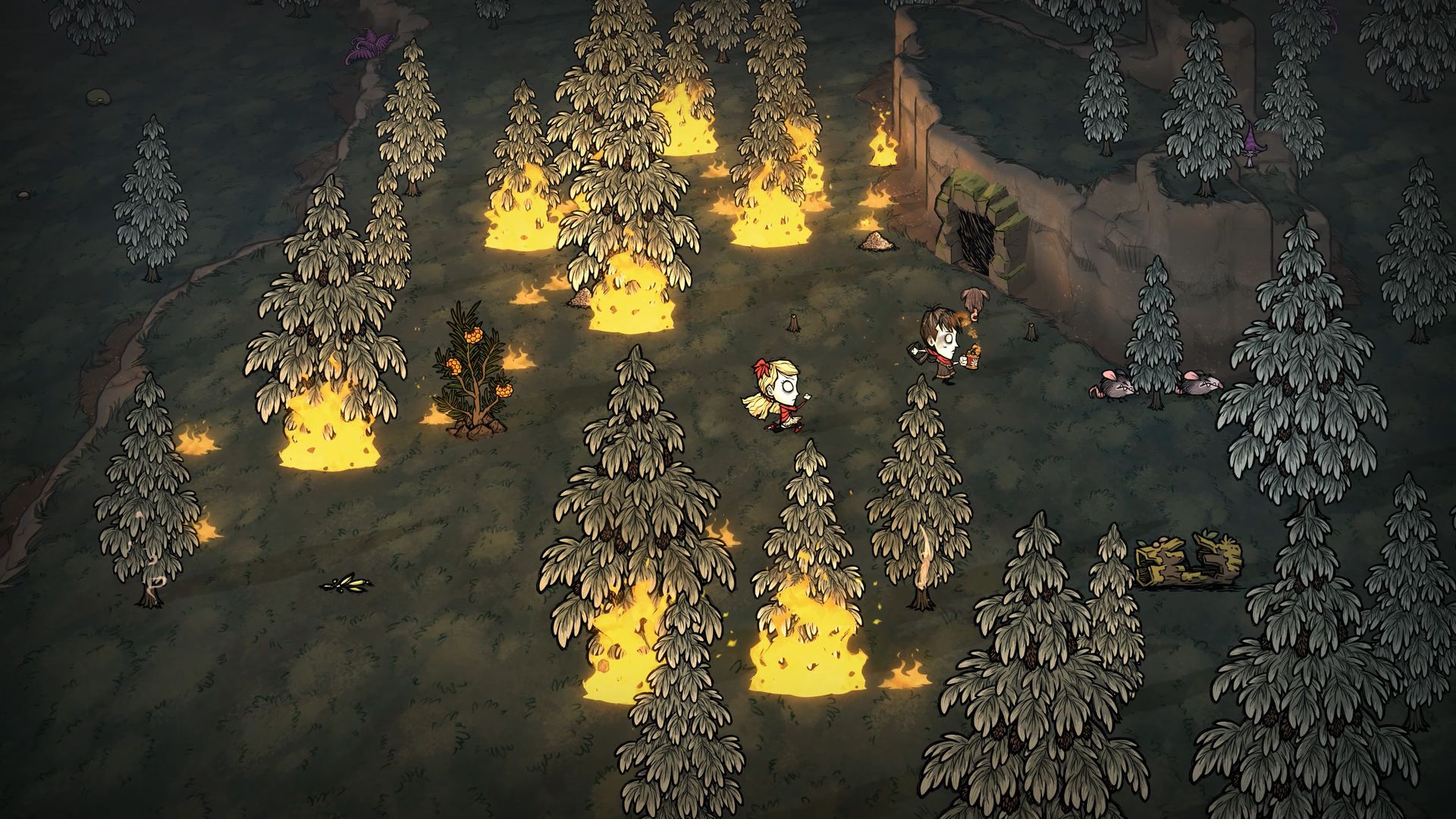
Crafting and base-building are confirmed pillars. Players harvest materials, craft tools and equipment, and build out a defensible base to support longer expeditions. Specific recipes, structure types, tech-tier progression, and unlock requirements have not been disclosed.
Both multiplayer co-op and solo play are supported. In co-op, players share resources around a common base and can divide up survival roles. Solo runs use the same world systems and meters.
Treat the items below as open until the studio confirms them.
Specific stat values for hunger, sanity, and health meters.
Hunger drain rate per in-game minute or activity.
Sanity thresholds at which negative effects begin and how severe they get.
Temperature mechanics, including how cold and rain modify other meters.
Whether nightfall introduces a distinct creature roster or different rules from daytime survival.
Day-night cycle length and how it interacts with the survival meters.
