

The Fog is one of the headline new systems in Don't Starve Elsewhere: a thick Fog creeping across the landscape, cursing all it touches. It is dynamic, it spreads, and it pressures the player on every long expedition. See also the Overview and Survival Basics.
What the Fog Does
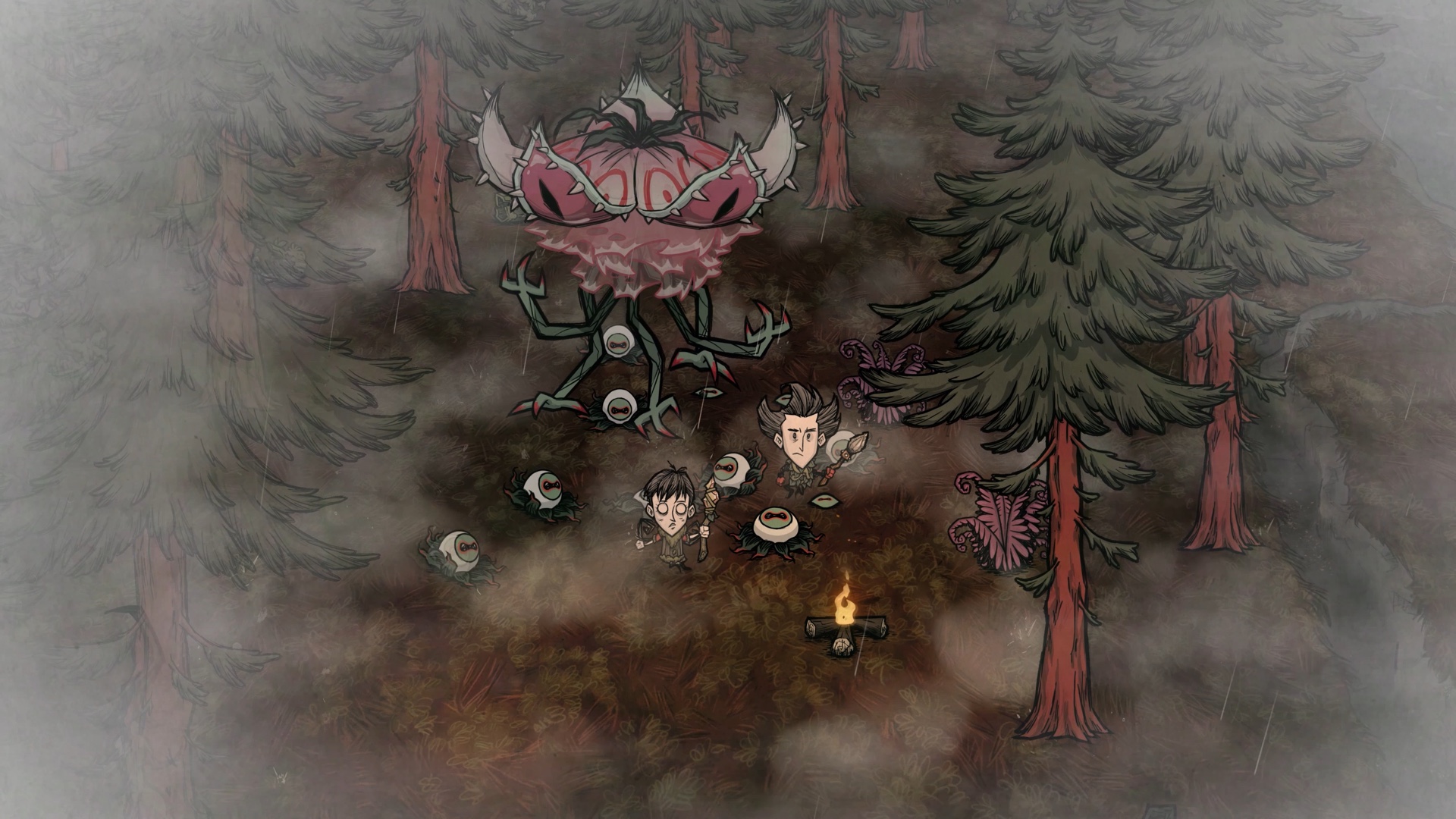
The Fog is a dynamic hazard that creeps across the landscape rather than a fixed weather pattern tied to a single biome. It spreads outward over time and curses whatever it covers. Ground that was safe on one expedition can be inside the Fog on the next. Two properties are confirmed: it is thick (implying limited visibility inside) and it curses what it touches. Specific visual effects, terrain transformations, and creature spawns are not yet detailed.
Risk vs Reward
The Fog is a deliberate risk and reward system, not a pure obstacle. The studio frames the choice directly: run from it, or risk your sanity to explore its secrets. The cost is paid in sanity rather than hunger or health.
Approach | Cost | Possible Payoff |
|---|---|---|
Flee or Reroute | Lost time, longer travel paths | Preserved sanity, safer return |
Quick Incursion | Moderate sanity drain while inside | Access to whatever sits on the near edge |
Deep Exploration | Heavy sanity drain plus exposure to whatever lives inside | Whatever secrets the Fog hides at depth |
Sanity Drain
Lingering in the Fog costs sanity. That much comes straight from the studio, which frames the Fog as a choice between running from it and risking your sanity to learn what it hides. Sanity is therefore confirmed as a resource the Fog spends, and the Fog is the system most directly tied to it, which makes managing it part of planning any long trip. How sanity is presented has not been published: it has not been called a gauge, given a scale, or shown on screen, and the way earlier games laid it out is not evidence for this one. Drain rates, thresholds, and recovery sources are likewise undisclosed. See Survival Basics for how sanity fits the wider loop.
One of Three Core Failure States
The studio summarizes the survival challenge with three directives. The Fog sits between a traversal hazard introduced by 3D movement and the franchise's namesake threat.
Directive | System | What It Means |
|---|---|---|
Don't Fall | 3D movement, elevation | Falling damage is a new lethal risk from 3D and multi-tiered terrain. |
Don't Linger in the Fog | Fog System, sanity | The Fog drains sanity the longer you stand in it. Brief incursions can be worth it; staying inside is not. |
Don't Starve | Hunger, food, cooking | Starvation remains the namesake threat. Keep food coming in faster than your hunger meter falls. |
How it Reshapes the World Loop
The Fog adds a moving environmental threat layer earlier entries did not have. In prior games the map was fixed once generated; in Elsewhere the Fog itself moves, reshaping how players use the rest of the world.
Base placement has to account for whether the Fog can reach the chosen site.
Expedition planning factors in Fog cover on the return path, not only the way out.
Recovery cycles matter: sanity spent has to be regained before the next incursion.
Base relocation may become necessary if the Fog encroaches on a long-term camp.
The Fog interacts with the multi-tiered world, though specifics of how elevation, caves, and water layers affect spread are not disclosed.
Unconfirmed Details
Treat the items below as open until the studio details them.
Specific curse effects on terrain, structures, crops, items, or players.
Named secrets, rewards, or unique resources hidden inside the Fog.
Propagation rate, predictability, and whether spread can be slowed or reversed.
Whether the Fog has a creature roster of its own.
Interactions with weather, day-night cycle, seasons, or biome climate.
Multiplayer. Whether a group inside the Fog shares one sanity penalty or each player pays their own.
Whether tools, structures, or consumables can resist or push back the Fog.
For the broader first-run picture, see Getting Started.