

Multiplayer
Multiplayer in Don't Starve Elsewhere supports solo play and online co-op, with in-game chat and Steam Family Sharing on the Steam side. This article covers confirmed modes and features, how co-op works at a high level, coexistence with Don't Starve Together, and the multiplayer details that have not yet been disclosed.
On This Page
Don't Starve Elsewhere supports both solo play and online co-op. The marketing line from Klei Entertainment sums it up plainly: gather your friends or go it alone. The same world, the same survival ruleset, and the same threats apply either way. For the broader project pitch, see the main overview, for first steps see Getting Started, and for the survival loop multiplayer sits on top of, see Survival Basics.
Modes
Two play modes have been confirmed and listed on the storefront. Party caps, host model, and persistence behavior have not been published yet.
Mode | Notes |
|---|---|
Solo | Single-player session with no other humans. The full survival loop, biomes, and Fog hazards are tuned to be tackled alone if preferred. |
Online Co-op | Cooperative survival with other players over the internet. Resources gathered and bases built can be shared between teammates, with in-game chat for coordination. |
Steam-Listed Features
The storefront tags five feature categories, three of which are multiplayer-relevant. A separate interactive-elements disclosure on the same page adds two more details that are often quoted as feature tags.
Item | Source on the Store Page | What It Means |
|---|---|---|
Multi-Player | Feature category | The parent multiplayer tag for the game. |
Co-Op | Feature category | Play alongside other survivors rather than against them. |
Online Co-Op | Feature category | Play together with other people over the internet in a shared session. |
Steam Family Sharing | Feature category | Eligible family members can launch the game without buying a separate copy, subject to the platform's standard rules. |
In-Game Chat | Interactive-elements disclosure | Signals chat between players inside the game. It is not one of the feature category tags, which is a common mix-up. |
Online Interactivity | Interactive-elements disclosure | Covers player-to-player interaction over the internet more broadly. |
Language coverage sits in its own table on the same page: nine languages carry interface and subtitle support, and none is listed with full-audio localisation. See Platforms and Release for the full breakdown.
How Co-Op Works
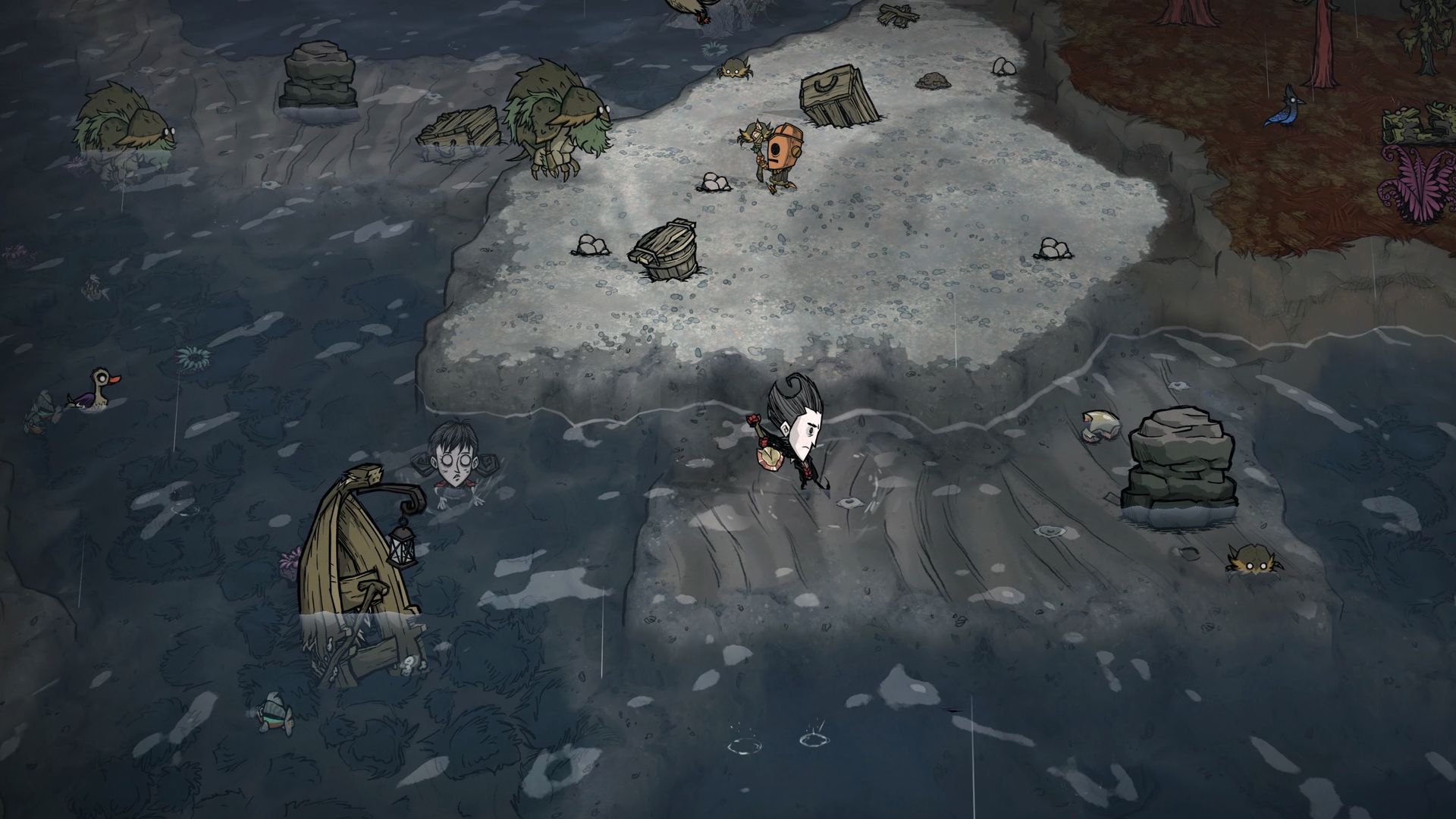
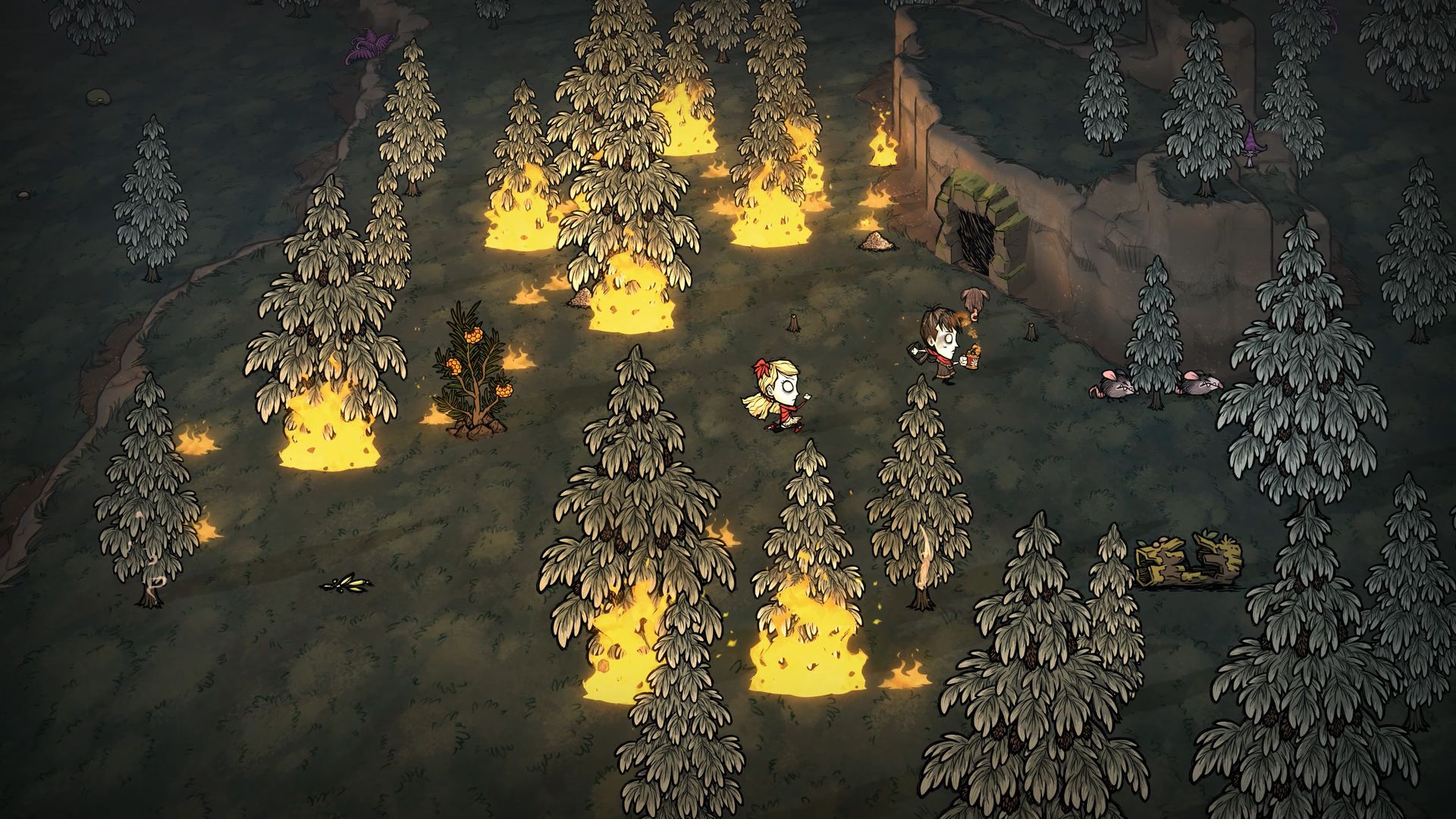
Co-op is cooperative survival rather than competitive play. A group works the same survival loop together, sharing resources and a base while splitting roles such as scouting, gathering, cooking, and defense. The reveal stills back this up: three survivors work the same tidal shore, two fight the same creature in the fogged forest, and two run from the same gargoyles, so co-op is shown as a group in one place rather than players off on separate errands. Hunger, sanity, and the falling and Fog hazards apply to every player individually, but food, tools, and structures produced by any one player can support the rest of the group. See Survival Basics for the mechanics every co-op group has to manage.
Hosting, world player caps, what happens when the host leaves, and whether progress carries between sessions have not been spelled out publicly.
Coexistence with Don't Starve Together
Klei has been explicit that Elsewhere is not a replacement for Don't Starve Together. The studio's position, set out in an April 16, 2026 post, is that it is not winding down Don't Starve Together and aims to support both games concurrently, with the older game keeping the slower update cadence it already had. Klei added that Elsewhere had been in development for several years at that point.
Skin carryover from Don't Starve Together is unresolved rather than ruled out. Klei has said it has no direct answer yet, that it would like players to be able to use skins they already own, and that it chose early in development not to let skin compatibility limit how Elsewhere's characters were designed. No cross-progression has been announced, so groups should plan on separate save data for each game.
Unconfirmed Details
Several common multiplayer questions do not yet have official answers. The list below tracks what has not been disclosed.
Maximum party size for an online co-op session.
Dedicated server hosting, in addition to player-hosted sessions.
Drop-in and drop-out join behavior during an active session.
Whether co-op worlds persist when the host is offline, and how saves migrate between players.
Cross-progression or shared unlocks between solo and co-op characters.
Voice chat inside the game itself.
Mod support, including any Workshop-style integration.
Whether the Fog's sanity cost is shared across a group or paid separately by each player inside it.
This article will be updated as new multiplayer details are confirmed. Anything not in the Modes or Steam-Listed Features tables above should be treated as unconfirmed.