Loading...
Loading...
Stealth and Bluff System
May 17, 2026 at 06:21 AM
Embedded screenshots into article body (Content update 2026-05-17)
Stealth and Bluff System describes the non-violent toolkit James Bond uses to move through populated environments in 007 First Light. The system layers three things on top of standard third-person stealth: a social-stealth model for crowded areas, a context-aware Bluff dialogue mechanic for talking past guards, and an Instinct resource that powers both. It deliberately does not work like Hitman's outfit-swap disguise system, even though the studio is the same.
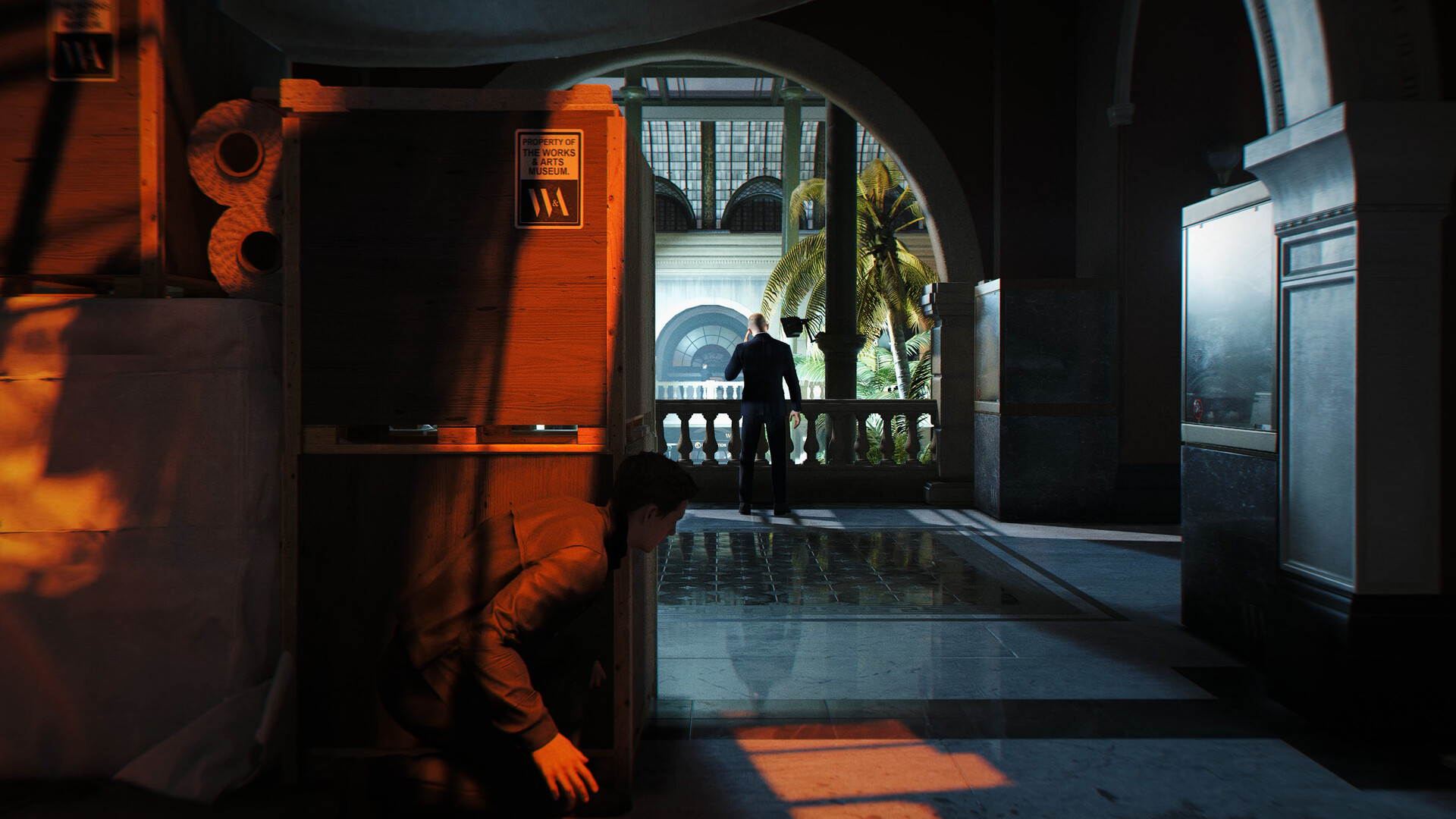
Bond can move openly through populated areas (galas, lobbies, market crowds, corporate floors) as long as he is not actively wanted. While in a crowd he can:
Eavesdrop on scripted conversations to gather intel and unlock dialogue branches.
Pickpocket specific NPCs for keycards, codes, and quest items.
Reposition to manipulate sight lines and time patrol rotations without drawing attention.
Tail a target through a crowd, with the camera framing tightening as Bond closes distance.
Crowd density and NPC awareness vary by mission. Some early-mission crowds are essentially passive cover, while later missions populate the same space with mixed civilians, guards, and high-value targets who all react differently to Bond's presence.
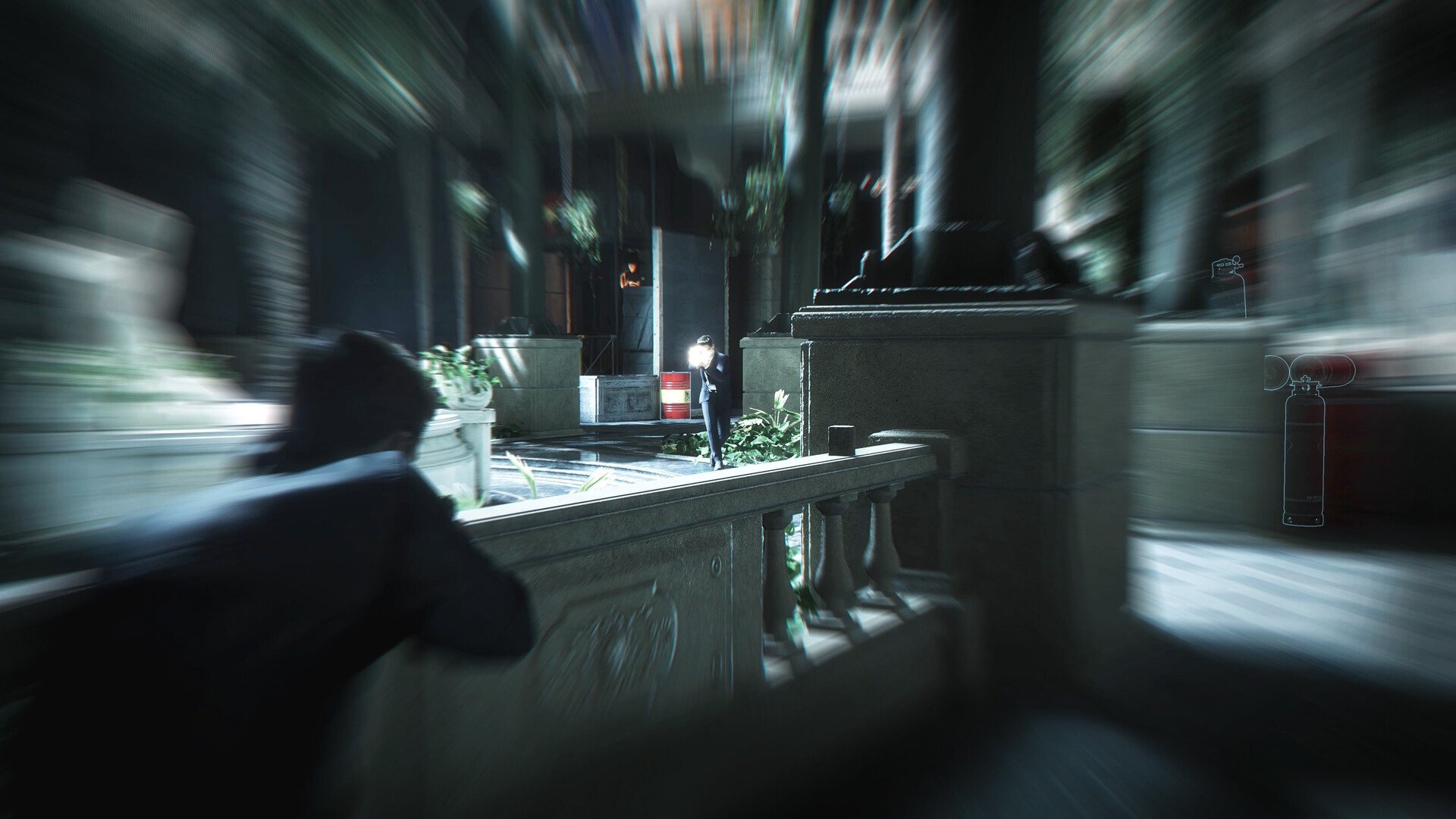
Outside of social spaces, the system reverts to a more traditional stealth model. Guards have visible vision cones and an alert meter that fills based on distance, exposure, and posture. Breaking line of sight resets the meter; being caught in a partial sight cone briefly raises suspicion that can still be defused by repositioning.
Two features differentiate it from a stock stealth model:
Marked guards. Some NPCs have a small dot above their head indicating they cannot be bluffed. These are typically high-importance personnel who already have detailed information about who should be in the area.
Instinct. A regenerating resource that lets Bond highlight threats and interactables via the Q-Lens. When Instinct is full the Bluff dialogue option becomes available; when it is empty most bluffs will fail.
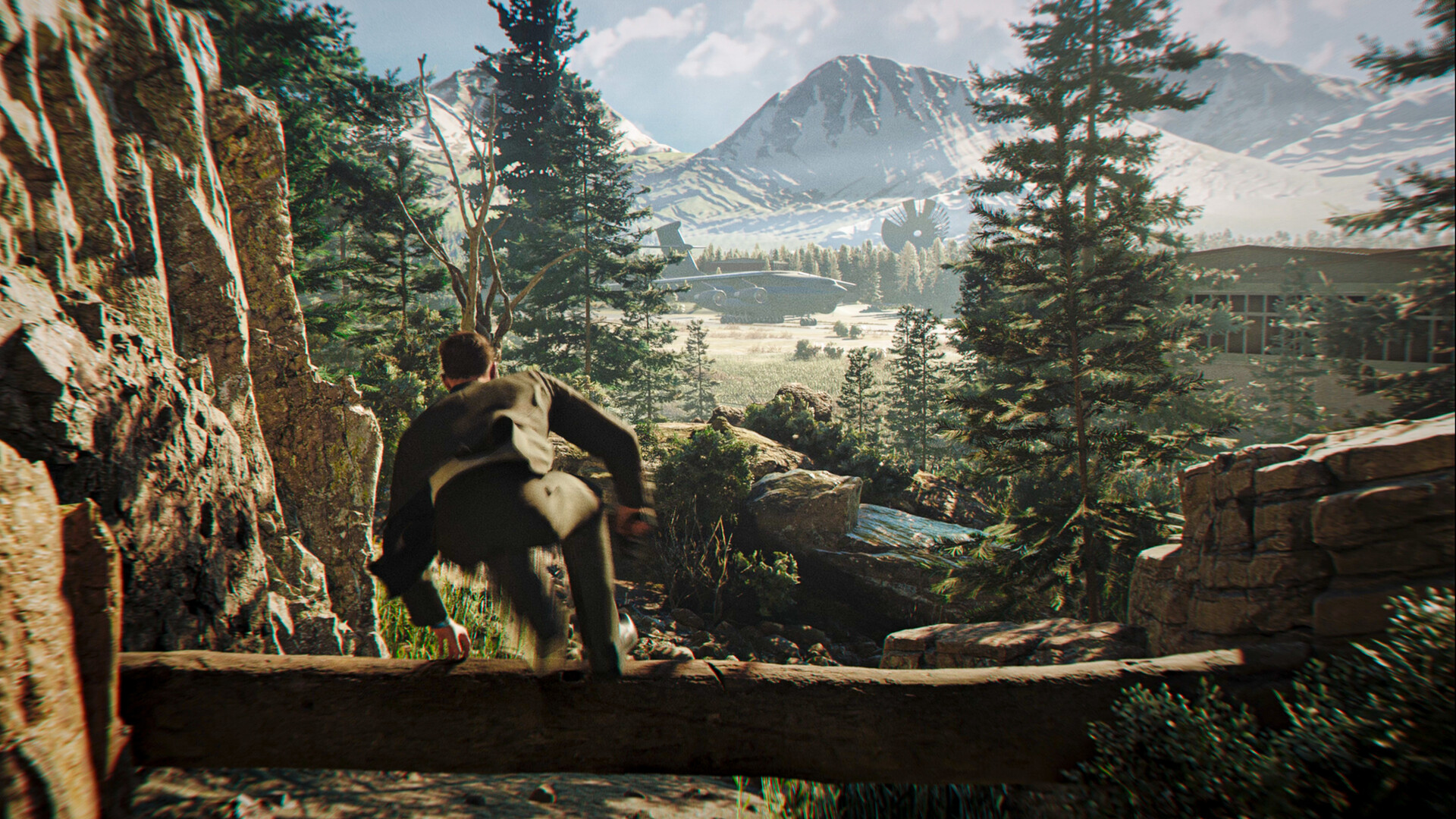
Bond does use disguises in the campaign (a parka in the Iceland prologue, formalwear at the gala settings), but they are scripted to specific moments rather than a free-form outfit-swap system. Picking up a knocked-out guard and putting on the uniform is not a mechanic. Treat disguises as narrative tools, not a tactical layer.
If Bond is spotted in a stealth state, instead of dropping straight into a firefight he can usually attempt to talk his way out. When a guard begins challenging him, a dialogue wheel opens and offers context-aware response options. Each option is shaped by:
The guard's role. Janitorial staff and rotating security are easier to bluff than department heads or specialist patrols.
The mission location. Bond can sell a story about being a penetration tester at a corporate site or a repair contractor at an industrial site; the same line at a gala would fall flat.
Bond's prior choices. The system tracks what story Bond has been telling and prevents him from contradicting himself.
Instinct. A full Instinct bar effectively guarantees the best response is available; an empty bar limits Bond to weaker options.
Successful bluffs reset the alert state and let Bond continue moving. Failed bluffs immediately raise the alert and may transition the encounter into combat, where the Combat System rules take over.
Situation | Outcome |
|---|---|
Guard has a dot above their head (high-importance NPC) | Bluff is unavailable; only stealth or combat will resolve the encounter |
Bond has already failed two bluffs in the same encounter | Bluff is unavailable; remaining guards treat Bond as hostile |
Bond is carrying a visible non-civilian weapon | Bluff is restricted to a narrow set of weapon-specific cover stories |
Instinct is empty | Bluff is available but the best dialogue options are locked out |
Bond is in a restricted area without a plausible role | Bluff is harder to land and may require a specific story already established earlier in the mission |
Eavesdrop early. Most missions plant the exact cover story Bond will need later as overheard dialogue in the opening minutes.
Use the Q-Lens to scout for marked guards before approaching. Plan paths around them rather than into them.
Keep Instinct topped up before walking into a populated room; the best bluff options are gated behind it.
If a bluff fails, do not immediately try a second one. Reset to stealth, break line of sight, and approach from a different angle.
Bring the Dart Phone and Smoke Pod when planning a heavy social-stealth approach. Both are covered in Q Branch Gadgets.