

Combat in 007 First Light blends cover-based shooting, dodge-and-parry melee, environmental kills, gadget-driven distractions, and slow-motion headshots. IO Interactive has cited the Batman: Arkham freeflow combat system and the Uncharted franchise's destructive set-pieces as primary influences. The combat layer sits underneath the License to Kill restraint rule: Bond will not shoot an unarmed person, and many encounter designs ask players to find non-lethal solutions when restraint applies.
Core Combat Loop
Square: punch. Light melee strikes and the freeflow combo opener.
Circle / X: block, parry, sidestep. Contextual defense. A timed parry opens a heavy follow-up.
Triangle: grab object. Bond picks up nearby objects (bottles, chairs, ornaments) to bash opponents.
X + Circle simultaneously: takedown. When an enemy is off-balance, the takedown finishes them in a stylized animation.
Hold L1: gadget wheel. Brings up the three-gadget loadout chosen pre-mission.
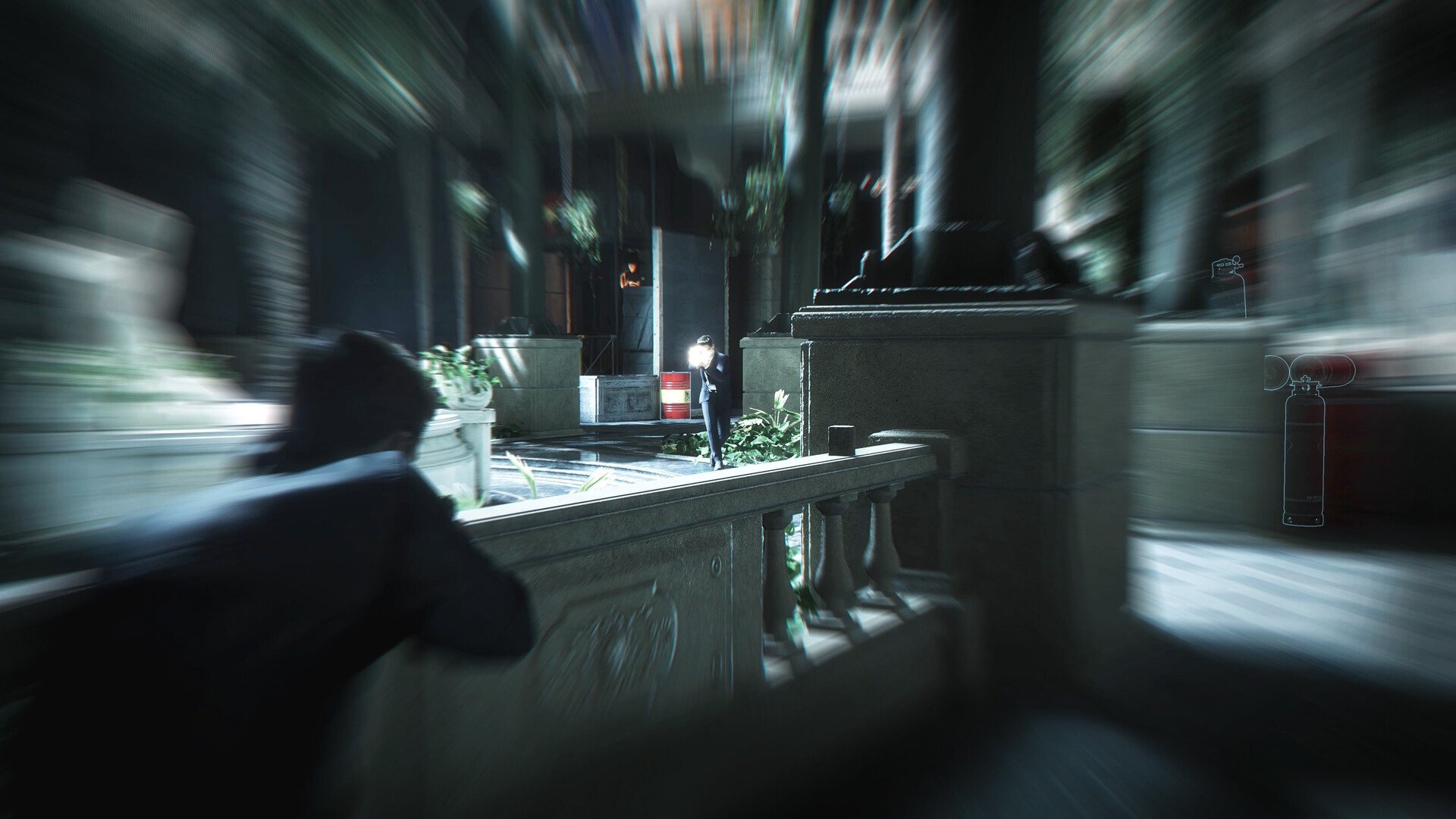
Slow-Motion Headshots
Aiming a firearm at an enemy's head and pulling the trigger triggers a brief slow-motion window. This slow-motion shooting is the Focus skill, one of the abilities drawn from Bond's Instinct meter, the resource covered in the Stealth and Bluff System article. The slow-motion mechanic is a focus-based system: a small focus meter regenerates over time, and burning a slow-mo headshot consumes a charge. The Combat System supports up to three queued headshot targets when the focus meter is full.
Environmental Melee
The environment is the third combatant in every fight. Bond can shove shelves onto opponents, burst steam pipes for line-of-sight cover, kick fire extinguishers into clustered enemies, throw an emptied pistol as an improvised projectile, and use vents and rafters as routes between encounters. Several combat-style trophies require environmental kills.
Cover and Suppression
Cover snapping is automatic on press. Sustained suppressive fire forces enemy AI to hunker behind cover, opening lateral routes. The AI is described as deliberately less aggressive on standard difficulty ("forgetful, deaf, and blind") so that stealth and combat alternate fluidly; higher difficulties tighten the AI's reaction times.
Improvised Weapons
Object | Effect |
|---|---|
Empty firearm | Throw at an enemy as a projectile; reliably stuns at melee range |
Wine bottle / glass / decorative | Smash on head for a one-hit knockout in stealth context |
Chair / barstool | Larger area-of-effect bash |
Fire extinguisher (kicked) | Flies into clustered enemies; triggers the "Firestarter" trophy when an enemy is pushed into one |
Steam pipe (shot or struck) | Bursts to obscure sight lines and force AI relocation |
Gadget Integration in Combat
Gadgets are accessible during fights without breaking the action. Holding L1 brings up the gadget wheel. The Q-Watch can hack thrown grenades mid-flight, the Laser Strap can disarm enemies, and the Dart Phone can disorient enemies for a parry opportunity. The Missile Pen is the dedicated heavy-combat option once unlocked.
Balancing During Development
Senior combat designer Tom Marcham has said the team knew early on that it did not want the game to be all about shooting, and that one of the project's hardest challenges was making a gunfight that breaks out in the middle of a stealth encounter feel good rather than like a fail state. The License to Kill escalation rules are part of the answer: in what the team calls dynamic escalation spaces, a close-quarters fight can turn into a gunfight at almost any point once an enemy draws a weapon, keeping fists, firearms, gadgets, and social approaches all viable in the shipped game.
Combat-Style Trophies
Trophy | Requirement |
|---|---|
Soft landing | Tackle an enemy over a ledge |
Sleight of hand | Disarm an enemy by shooting a weapon from their hand |
Positively shocking | Make an enemy taser another enemy |
Short fuse | Shoot at an enemy while they are throwing a grenade |
He'll live | Knock out an enemy by shooting him in the legs |
Firestarter | Push an enemy into a fire extinguisher |
Damp Squib | Hack a grenade before it explodes (Q-Watch) |
Disarming personality | Disarm an enemy with a laser (Laser Strap) |
Always have an exit plan | Use a gadget to escape a confrontation |
License to Kill
Combat is shaped by the License to Kill System. Bond will not shoot an unarmed person, and most missions stage encounters that require non-lethal solutions or de-escalation. The restraint rule operates as a soft AI behavior on Bond rather than a hard fail state: triggering an unarmed kill in animation is gated by the system rather than punished afterward.
Difficulty Tiers
Difficulty | AI Posture | Stealth Detection | Damage Taken |
|---|---|---|---|
Recruit | Slow reaction; long detection windows | Forgiving cones of vision | Reduced damage taken; generous health regeneration |
Intended (standard) | Balanced reaction; medium detection windows | Standard cones of vision | Standard damage; standard regeneration |
Hard | Faster reaction; shorter detection windows | Tighter cones of vision | Heavier damage; reduced regeneration |
Veteran (highest) | Aggressive AI; immediate alarm propagation | Strict cones of vision; no second chances | Heaviest damage; minimal regeneration |
Reviewers commonly note that the standard "Intended" difficulty makes stealth sections easy. Players seeking a denser combat challenge tend to bump difficulty to Hard or Veteran.
Related Articles
License to Kill System