

This article is incomplete
Some sections are missing or need additional details. Help improve it by contributing.
Tides of Annihilation uses a skill-based progression system where player ability matters more than stat growth. Difficulty is selectable, gear changes what a build does rather than how large its numbers are, and boss fights are designed to push players forward rather than punish failure.
A Light Levelling Layer
The developers have described the levelling layer as deliberately thin. Asked about it directly, they said the game has levels and skill trees but is not heavy on them the way an action RPG or a Soulslike would be. The August 2026 playtest bore that out from the other side. Players earned experience from battles, but nobody who played the build came away able to describe how levelling actually works or what the skill trees contain, and hands-on accounts reported no visible stat growth at all. Power in that build came from which knights were equipped, which weapon and armour were worn, and which badges filled the available slots.
The one growth axis players did notice was the health bar, which expands over the course of the campaign. Everything else described as long-term progression came down to the range of builds the equipment allows rather than to rising numbers.
What Gear Actually Does
Earlier pre-release material described armour as purely cosmetic. The playable build did not work that way. Weapons and armour carried their own affixes, including a sword that drained health, a weapon that raised airborne attack power, and armour that reduced damage taken while airborne. A separate slot system of equippable badges sits alongside them with a hard cap on slots, so a build is defined by what gets left out as much as by what goes in, and some badges carry a drawback as part of the deal: one traded away the ability to drink healing flasks in exchange for a revive in the middle of a fight. Outfits are the cosmetic layer and do not touch combat. See Weapon Types for the weapon side of this.
The studio confirmed the shape of that layer itself in September 2026. Asked how much equipment and loot matter, Ary Chen said they enrich the combat experience, that equipment and badges were added on top of the knights themselves, and that the combinations of knights, gear and rewards feed directly into how a fight feels. It is a short answer, but it settles that gear is a build system rather than a stat ladder, which is what the playable build showed from the other side.
Spectral Knight Unlocks
Progression largely comes through unlocking new Spectral Knights. Over 10 knights are available, each with distinct combat styles and elemental affinities. Building different knight team compositions and learning their synergies is the primary form of character growth. The August 2026 playtest build carried five of them, four of which could be equipped at once.
Selectable Difficulty
Difficulty selection is confirmed by the studio itself. Its own recruitment copy for the first hands-on event stated that the build contained multiple level segments and boss challenges and offered multiple difficulty options, and the producer has described differences in difficulty as a deliberate layer of design rather than a damage multiplier. An earlier developer question and answer session put it more plainly still: unlike most Souls-like titles, the game has difficulty mode selection, with controls kept simple enough for players who want to play an action game without being a hardcore one. The studio has since framed the aim as balancing accessibility with depth, and has said outright that this is not a Soulslike.
Two tiers are attested by name in hands-on accounts of the August 2026 build: a standard setting, and a hardest setting that several creators recorded whole boss fights on. Beyond that, no available account describes the selection screen or lists the options as they appear in the game, so this article does not print a tier list.
More useful than the names is what the settings change. The producer has described the standard setting as the one where the direct pleasure is building knight combos and pressing an advantage, and the harder setting as the one where a fight becomes a question of reading each enemy's moves and using each knight's particular characteristic to answer them. The same encounter shifts from an offence problem to a puzzle. He has also described the main line as tuned around heavy reward and light punishment, with the sterner tests placed in optional content for players who want them.
The developers have been clear that the game is not a Soulslike, despite visual comparisons to games like Elden Ring. The emphasis is on stylish, fast-paced action in the tradition of Devil May Cry.
Boss Fight Philosophy
Producer Kun Fu has explained the studio's approach to boss fights:
The studio has described a clear set of design goals for every boss, with encounters built around the pacing of that part of the game. It has also said it pays close attention to how repeated attempts feel, and tries to minimise unnecessary repetition while keeping narrative and combat continuity intact.
How a failed attempt is handled is only partly described. No account of the public builds reports a reward, a buff or any carry-over for losing a boss fight, and the studio has not published one. What hands-on accounts of the gamescom sessions do report is a checkpoint between boss phases, so a death late in a multi-stage fight did not send the player back to its opening. What is on record is the intent behind the tuning: avoiding the frustration loop common in punishing games while still maintaining a sense of accomplishment.
Gameplay Length
In a 2024 interview the developers gave an average of over thirty hours, with more than thirty boss fights spread across the campaign. Asked again in September 2026, the studio declined to restate either figure, saying development was still under way and the plan still being adjusted. That is a refusal rather than a correction, so the 2024 numbers stand here with their date attached. Level design is hand-built rather than open: contained, medium-sized areas with branching side paths, arena fights that lock the exits, light puzzles, and traversal gated behind particular knights, which rewards returning to a place once the roster has grown. Hands-on players disagreed about whether that adds up to a Metroidvania, and the honest answer is that the individual pieces are there without one connected map behind them.
Difficulty And Pacing
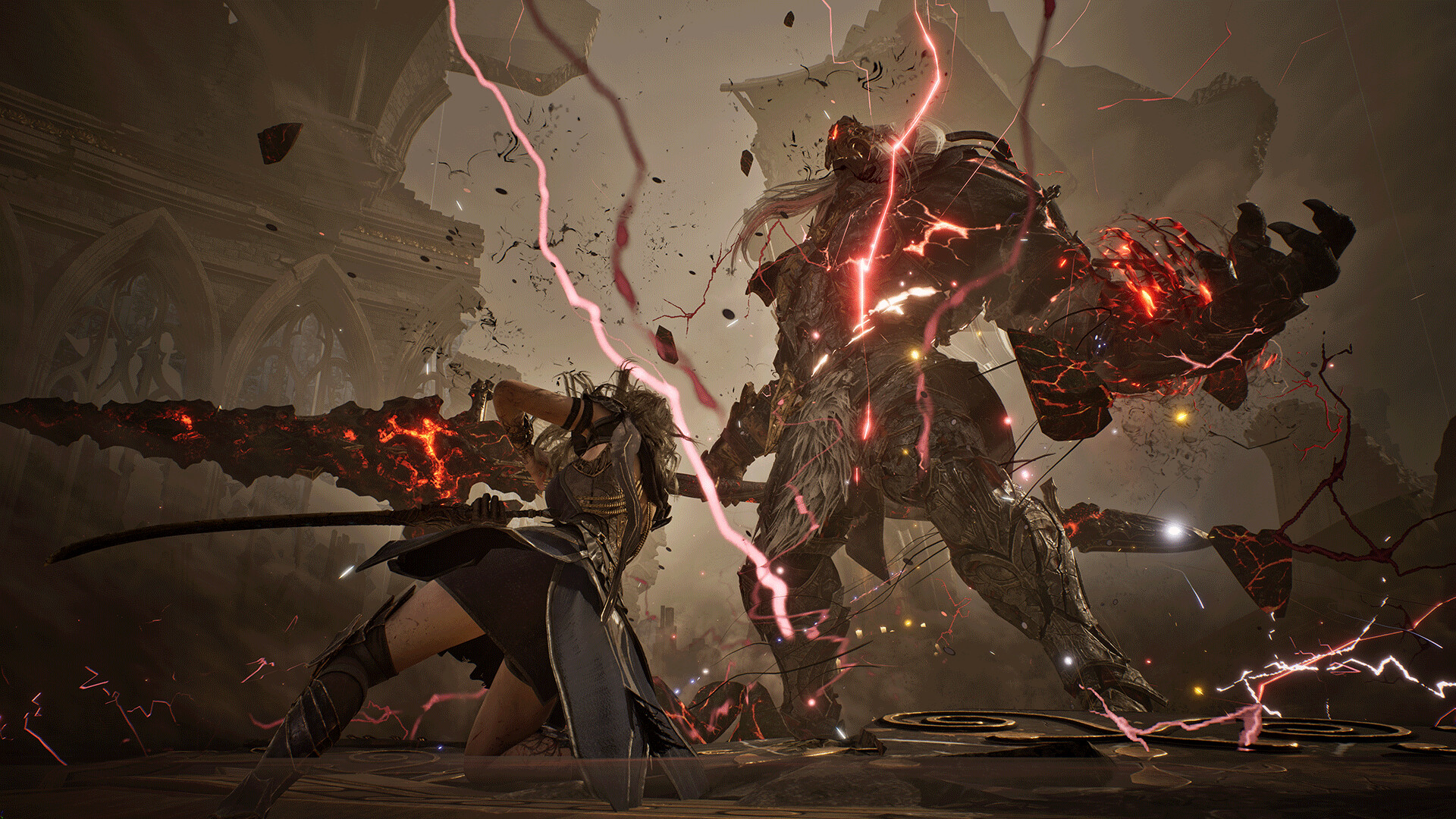
The developers have repeatedly emphasised that the game is stylish action in the Devil May Cry lineage rather than a punishment-driven challenge runner. Producer Kun Fu has explained that boss fights are tuned to push the player forward, each one designed to make progress feel earned rather than to wall a campaign run.
The playtest gave that tuning its first public test. On the standard setting players described the game as forgiving without being trivial: parry windows and dodge invincibility are generous, one bad hit does not empty the health bar, Gwendolyn recovers quickly from a knockdown, and bosses drop health items when a fight is going badly. Gear can lean further in the same direction, with one-time revives and health-draining weapons available. The hardest setting was reported as a genuine test, and several boss fights were recorded on it. There is no stamina bar at any setting, so pacing is a question of recovery frames and spacing rather than of a resource.
Weapon Mastery
Progression also tracks the player's growing mastery of the weapon system. Because there is no damage-by-equipment curve, the meaningful gains come from understanding how a weapon's combos chain into the Dual Frontline Battle System. The August 2026 build handed players several equippable swords with different abilities rather than several weapon classes, so the weapon switching the studio has described is still reported rather than demonstrated. See Weapon Types.
Knight Roster Unlocks
Each new spectral knight added to the roster is functionally a major progression milestone. A new knight brings a new elemental affinity, a new combat style, and a new Partnered State merge effect. The studio has confirmed over ten knights, so the long arc of the campaign is paced around layering those knights into the four-slot Dual Frontline loadout.
Cosmetic Customization
Collectible cosmetics include outfits, hair styles, and makeup options for Gwendolyn, several of which are obtained from optional side content. None of these affect combat stats. This means the player can wear the look they prefer without paying a power-curve tax for starter gear. The same logic applies to Niniane in her sword form, which is the default weapon throughout the campaign.
What the First Playable Build Showed
System | State in the August 2026 build |
|---|---|
Experience | Earned from battles |
Stat growth | None visible to hands-on players |
Levels and skill trees | Stated by the developers to exist and to be light. No player who tried the build could describe how they work |
Health | The health bar grows over the course of the campaign |
Stamina | No stamina bar |
Gear | Weapons and armour carry affixes; a capped set of badge slots defines the build |
Rest points | Restore healing flasks, respawn enemies, and allow equipment and knight changes |
Difficulty | Multiple options, with a standard tier and a hardest tier attested |
Everything in that table is an observation of a pre-release build rather than a statement of final design. See Chengdu Playtest for the event itself.
Producer Statement
Producer Kun Fu has summarised the philosophy in pre-release interviews as setting very clear design goals for each boss, framing every encounter as both a skill check and a presentation piece. The intent is that the player walks away from a fight remembering the choreography rather than the wipe count.