
Overview
Peregrini Aurorae, meaning Dawn's Pilgrim, is the sword Coen carries in his right hand. The name was revealed with the key art the studio published in early 2026, where the blade is described as a fateful omen paired with a balance, the symbol of equilibrium and justice, while Coen's left arm is scarred with the runes that let him cast. The image states the character in one frame: the sword on one side, forbidden magic on the other, and an eclipse behind him.
Coen did not come by the blade untrained. His father Pieter, a former mercenary, taught him the basics of swordsmanship from a young age, on the reasoning that it might one day save his life.
Weapon Class
The developers have confirmed that the game mostly features different types of swords: short swords, long swords, and great swords, which feel different from each other and change how fast Coen attacks. Peregrini Aurorae is a long sword. Coen can also pick up axes and other weapons along the way, with a joking aside about a pickaxe, so the named blade is one option rather than the whole arsenal. Earlier summaries describing it as the only weapon in the game are out of date. Gear and upgrades are covered under Equipment and Crafting.
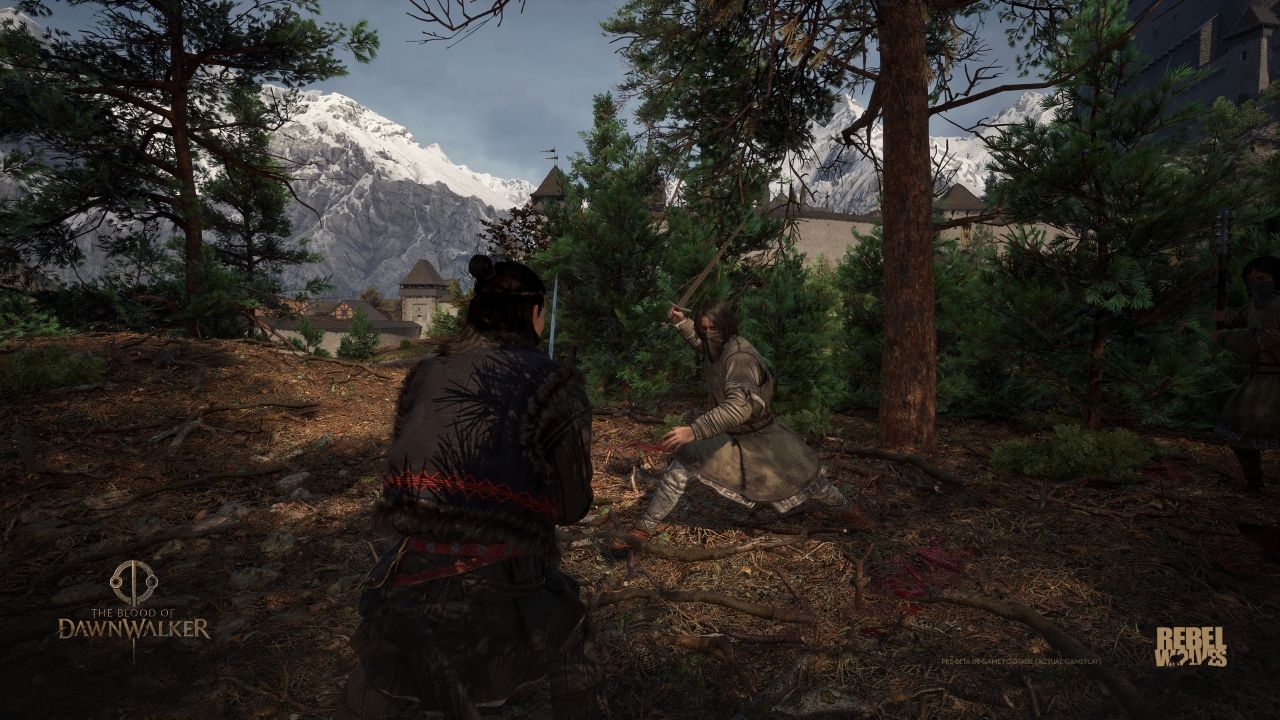
Swords can be found, earned through quests or bought from merchants. Compare a weapon's damage, bonuses and weapon art before replacing an upgraded blade. Blacksmith upgrades cost materials and denarii, so consider the next upgrade cost as well as the weapon's current stats. Weapon arts belong to individual weapons and provide options alongside the Swordmastery abilities.
The Imbued Sword is another late-game option. Its quest chain starts with a broken relic and three missing shards, then leads to a shrine encounter and the final imbuing. Compare that quest reward with Peregrini Aurorae and other weapons against the needs of the current build. Weapon type, upgrades and bonuses matter when choosing a sword for an encounter.
Daytime Combat
Sword combat is built to be adapted to preference. A player can use omniblocks and omniattacks, which choose swing directions automatically and deflect incoming strikes, or commit to the fully directional, tactical approach and read the opponent's movement to pick each response. Reading an incoming attack, choosing the right answer and finding an opening is what separates a win from a death, and which route is used is left entirely to the player. The systems are covered in Combat and Directional Combat.
Every attack is constructed from three phases: windup, anticipation, and swing frames. The team describes this as producing a particular kind of agility, approachable for newcomers while leaving depth for anyone chasing mastery. Encounters are designed so that positioning, timing and commitment matter rather than reflexes alone. A large part of the combat was shot in motion capture and then adjusted by animators to match the game's mood, with artists and designers drawing on Historical European Martial Arts and other historical material, though the team is clear that it was never the intent to recreate medieval combat habits one to one.
Mechanic | What is confirmed |
|---|---|
Weapon classes | Short swords, long swords and great swords, each feeling different and affecting attack speed. Axes and other weapons can also be picked up. |
Omniblock and omniattack | Automatically choose swing directions and deflect incoming strikes, the alternative to full directional control. |
Three attack phases | Windup, anticipation and swing frames on every attack. |
Artery Strike | A beheading execution. One achievement requires beheading an enemy with it while they are hexed with Burning Blood. |
Perfect Block | A precisely timed block. One achievement requires five in a row. |
Passive abilities | At least three can be equipped at the same time, confirmed by an achievement for doing so. |
Progression
Growth on the sword side runs through Swordmastery, one of the three named Skill Trees alongside Witchcraft and Vampirism. Stumbling on books unlocks new techniques and combat abilities, while passive perks are upgraded separately and support different approaches to swordplay: defence and devastating counterattacks for some, mobility and relentless pressure for others. The developers frame this as more than increasing numbers, calling it developing a fighting style as Coen. Each tree ends in three Ultimate Perks, of which one can be taken per playthrough, and the level cap is 50.

Using the sword at night
Coen can wield Peregrini Aurorae during the day or at night. His night form adds claws as another weapon choice, and Swordmastery remains available. Hex Magic becomes unavailable after sunset as his rune scars heal, while vampiric movement and feeding become available. The night side is covered under Vampiric Powers.
Keep the blade in a night setup when its weapon art or Swordmastery abilities suit the encounter.