This article is incomplete
Some sections are missing or need additional details. Help improve it by contributing.
Swords of Legends takes place in a primordial age drawn from the strange tales of classical Chinese literature. It is a world where mortals, gods, and wandering souls all walk the same earth, so the boundary between the living and the dead is thin and often crossed.
Many of the beings the hero meets come straight from old myth. The game draws on the ancient bestiary known as the Classic of Mountains and Seas for its creatures and threats, giving its enemies and spirits roots in long-standing folklore.
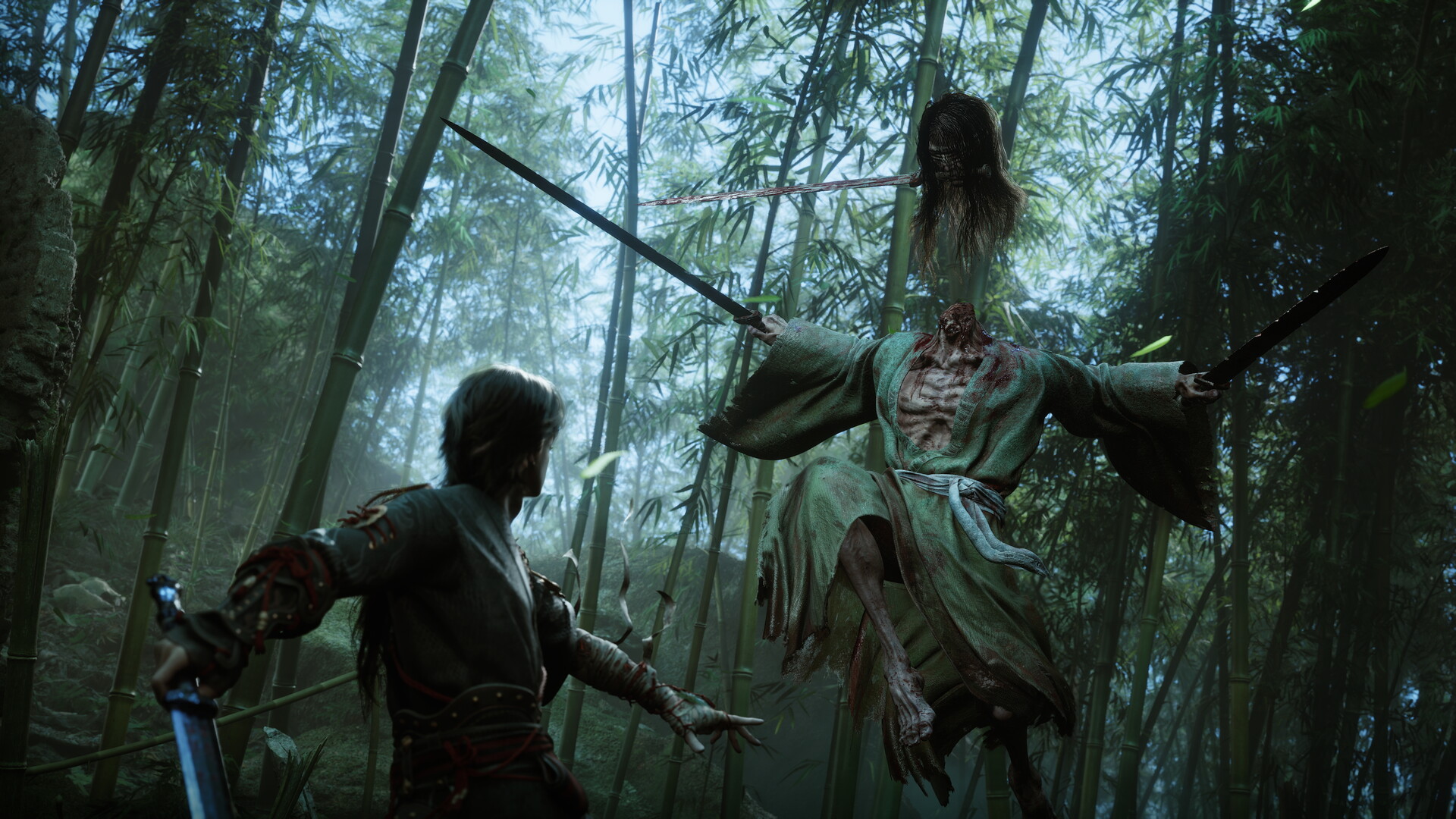
Among the beings the hero encounters are flower-spirits, headless ghosts, and painted-skin beauties, set alongside the gods, demons, and beasts of the same mythology and rendered in fine, brushstroke-like detail.
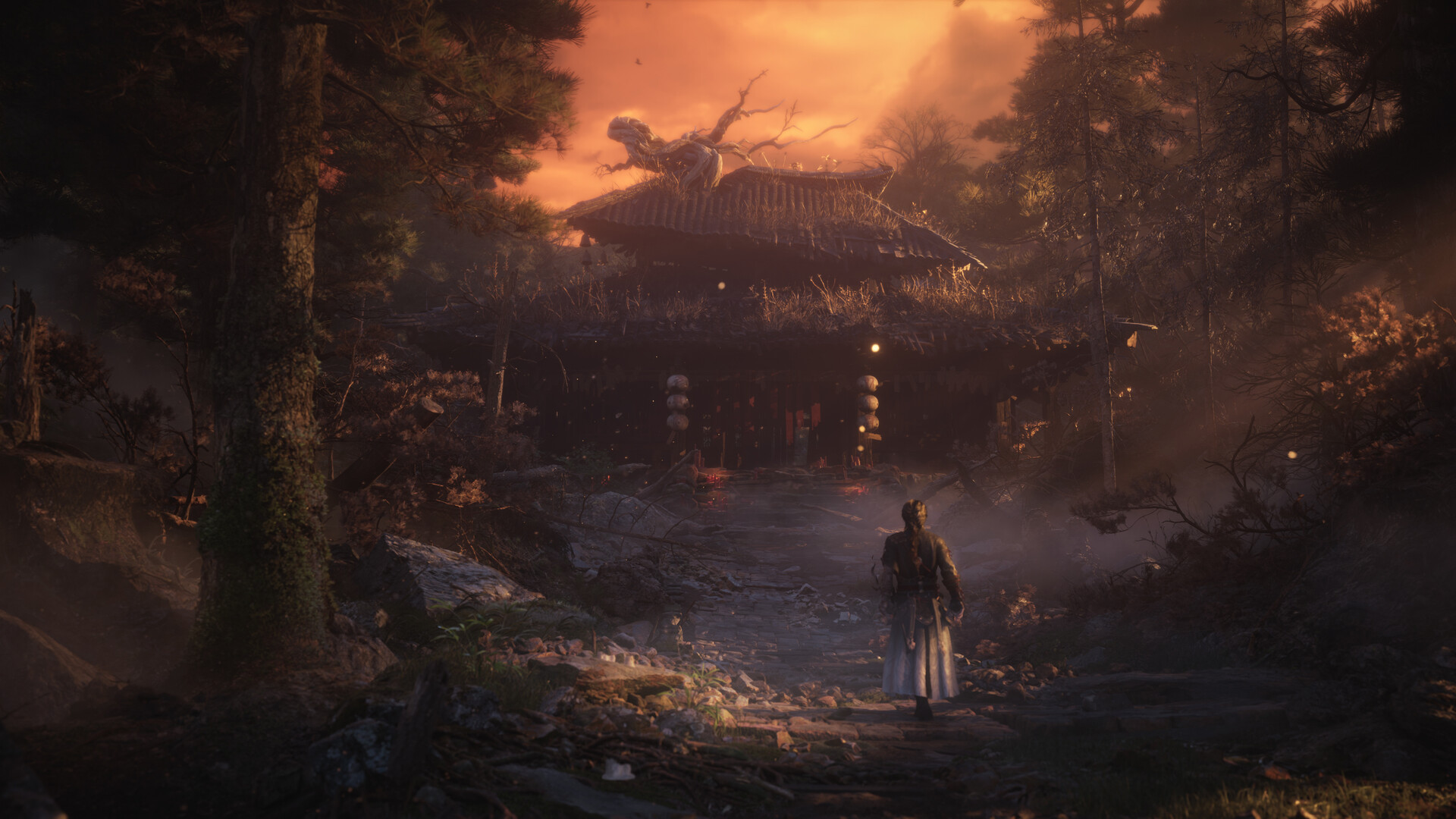
Environments shown so far lean into a classical Chinese fantasy look: lotus ponds at first light, weathered temples drifting with fallen leaves, lonely inns glowing in the mountains, and dense bamboo forests. The adventure is structured as a wide linear journey through large, intricately designed environments, with a strong main story supported by side quests and exploration rather than a fully open world.
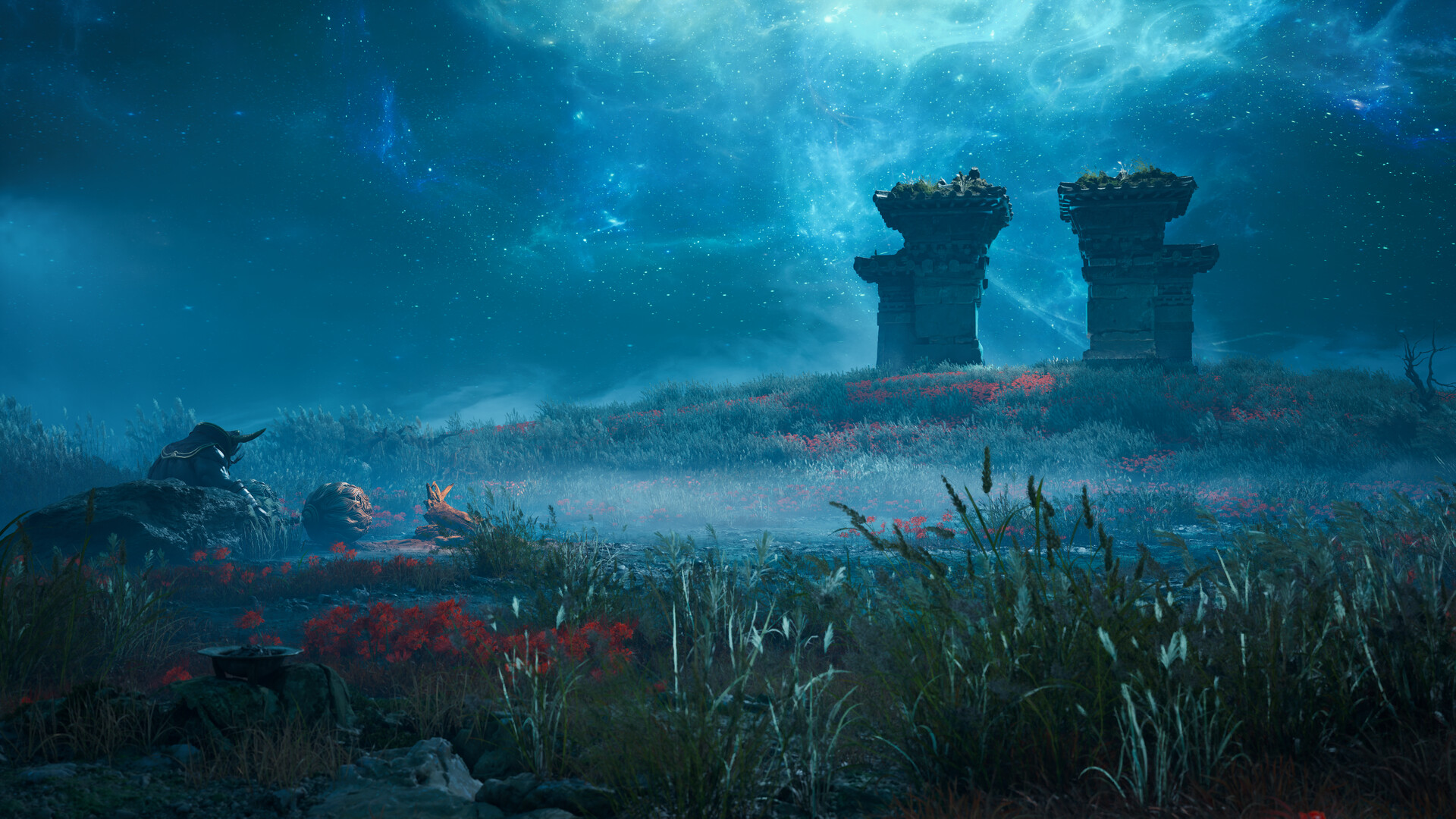
Not all of it is gentle. One official screenshot shows a night meadow carpeted in red flowers, climbing to a pair of ruined stone towers under a sky of drifting star clouds, with a large horned figure in a gold-trimmed cape resting on a boulder in the foreground. The bamboo groves are a battleground rather than scenery: another sets the hero against a headless ghost among the culms, the ghost fighting with a blade in each hand while its own severed head hangs in the air at the tip of one of them.
The underworld order that drives the plot is detailed in The Underworld and the Judge of King Yama, and the hero who travels this world is introduced under Sipan.
Named Locations
Two places in the world have been named so far. Wangchuan is the border between the underworld and the world of the living, and the team has been deliberate about how it looks: rather than staging the crossing as grim or oppressive, they have styled it as beautiful and romantic, on the reasoning that in this tradition life and death are not strict opposites standing against each other.
The Changsheng Ju is a mountain inn, and the place where the teapot-headed Wu Yang waits tables. It is a location in the finished game rather than a demo arena: the studio has confirmed that its area connects to the stage where Kong Kong Zi is fought, and that the route between the two was closed off only for the hands-on build so players would reach the boss sooner.
Both fit the environment types the store copy advertises: lotus ponds reaching to the horizon, temples going to ruin under drifting leaves, and lonely inns tucked into the mountains.
The Three Realms
The team divides the setting into three realms: Heaven, the mortal world, and the Underworld. Earlier stories in the studio's lineage were set mostly in Heaven and the mortal world, and this entry is the one that turns toward the Underworld, which is what puts an officer of that realm at the centre of the story rather than a mortal hero. Because the player character crosses between them, locations in the game sit on both sides of the boundary between the living and the dead.
Sound and Score
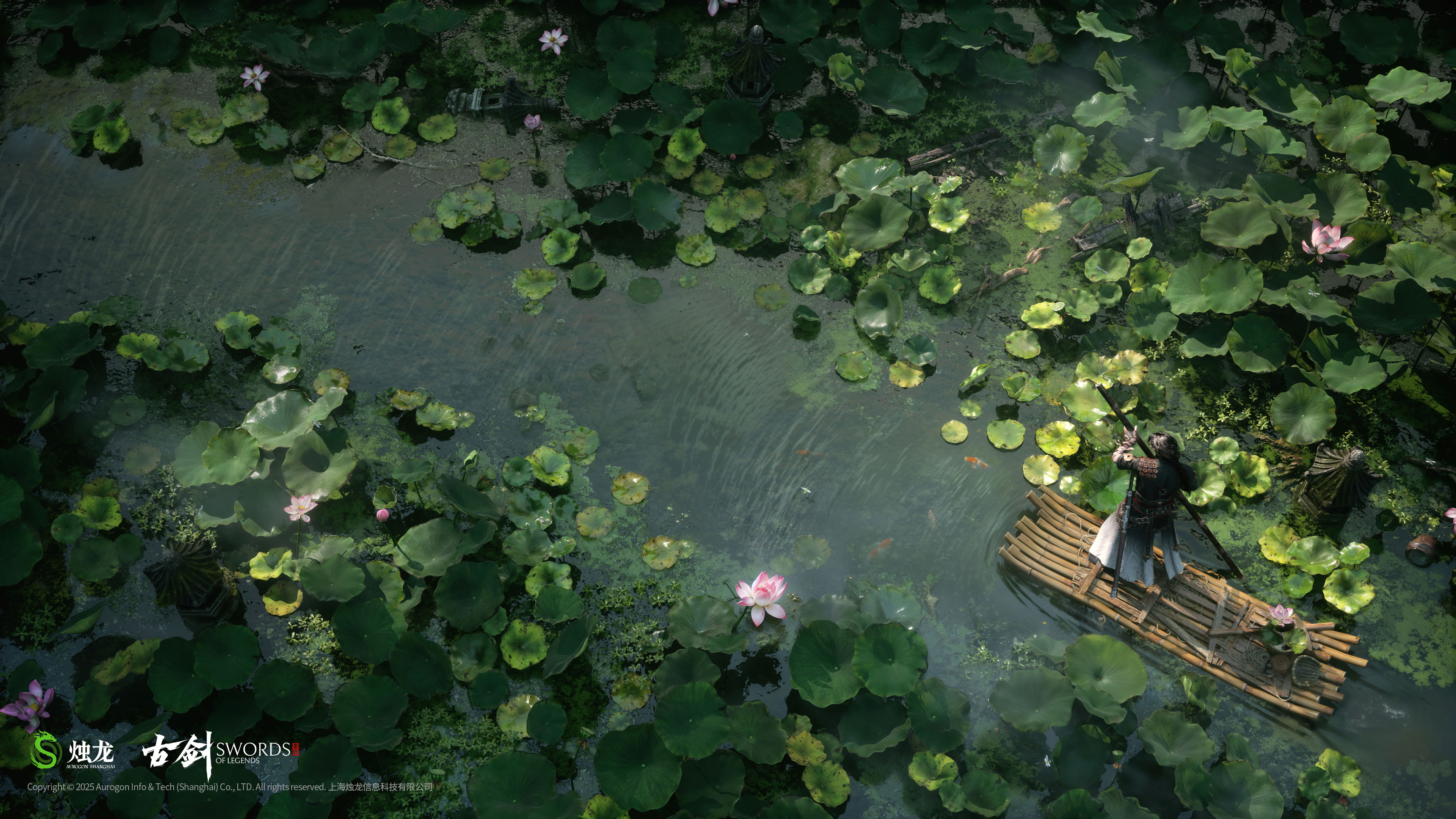
Audio is presented as part of the same classical picture. The studio has described traditional Eastern melodies playing as the player rows a boat across a lotus pond or walks a cliffside path, and the boss music is scored with traditional Chinese opera instruments chosen to match the performance traditions the encounters are built on. English and Simplified Chinese ship with full voice acting.