
Loading...
Loading...
The Castle Economy
August 7, 2026 at 10:01 AM
Swapped in the developed-settlement screenshot and rewrote image alt text to describe what the picture actually shows
Running a settlement in Stronghold 4 means balancing several interlocking systems. Food keeps the population fed, taxes raise income from the people, and honour returns as a resource earned through the life of the court. These inputs feed into one another through supply chains that the player must keep flowing.
System | Role |
|---|---|
Food | Keeps the population fed; production can be slowed by snow and the seasons |
Honour | Earned through the life of the court; rising honour advances the castle through ranks that unlock new buildings, units, and options |
Taxes | Raise income from the people, at the cost of their contentment if pushed too high |
Supply chains | Connect workshops, farms, and stores so resources keep flowing |
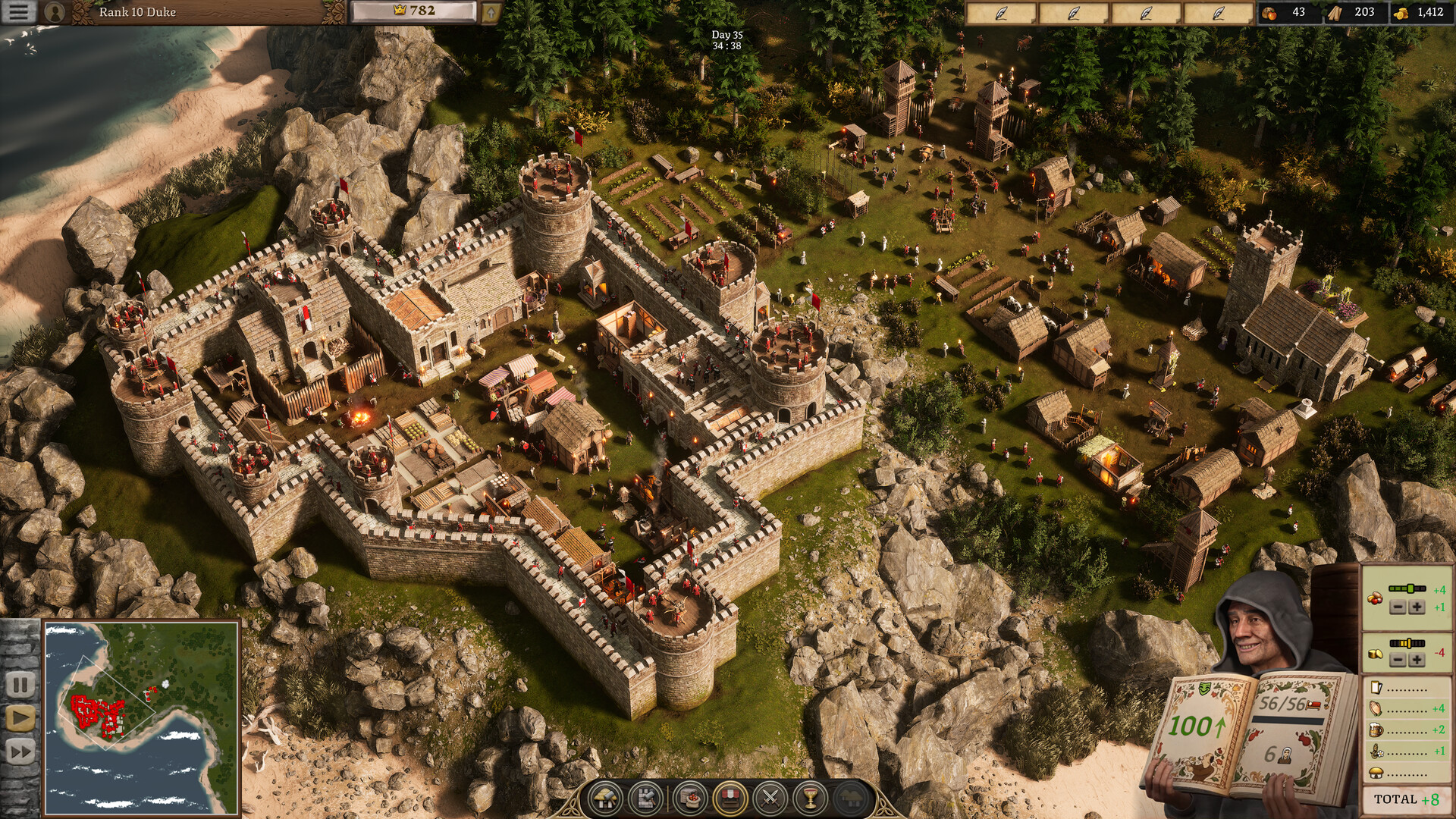
Beyond paying for court life, honour drives a rank system. Raising honour, by building higher quality living quarters, hosting banquets, and similar means, lifts the castle through a series of ranks, and each rank unlocks access to new buildings, units, and options. Progression through these ranks gives a graded route to expanding a settlement across a mission.
The ladder is numbered and each step carries a title, shown at the top of the screen beside the player's portrait. Screenshots of the game in play confirm rank 3 as Man At Arms, rank 7 as Knight, rank 8 as Baron, and rank 10 as Duke. FireFly has not published the full list of titles or the honour thresholds between them.
Rank | Title |
|---|---|
3 | Man At Arms |
7 | Knight |
8 | Baron |
10 | Duke |
Several buildings feed honour and court life. A wide choice of banquets lets a player decide how best to spend banqueting goods, upgradeable houses generate extra honour as they improve, and religious buildings use candles to provide spiritual cover for the population, adding another layer to the economy.
Production chains can run several steps deep. Cow farms, for instance, produce milk that has to be turned into cheese before it feeds the population, rather than yielding food directly as a simple dairy farm would. Keeping each step of a supply chain connected is part of running the economy.
Keeping subjects content is part of the challenge. Push taxes too high or let food run short and a settlement suffers, so players weigh the demands of war and construction against the wellbeing of the people who make the castle work.
The world is stocked with wildlife. A more advanced hunting system tracks three types of roaming animal herd, and the confirmed roster includes boars, deer, wolves, sheep, chickens, crows, rabbits, and cows. Some are farmed, some are hunted for food, and some, like wolves, have to be fended off, so managing animals is part of both the food supply and the defence of a settlement.
The economy is tied directly to castle design: workshops, farms, and stores have to be placed and connected sensibly, and the seasons can help or hinder production from one part of the year to the next.
