

This article is incomplete
Some sections are missing or need additional details. Help improve it by contributing.
Combat in STRANGER THAN HEAVEN is a brutal, hands-on brawling system. Its signature feature is independent control of Makoto Daito's left and right sides, which gives each fight an improvised, expressive feel. Impressions published in June 2026, after a media preview session, described it as closer to a boxing match than a crowd-clearing brawler.
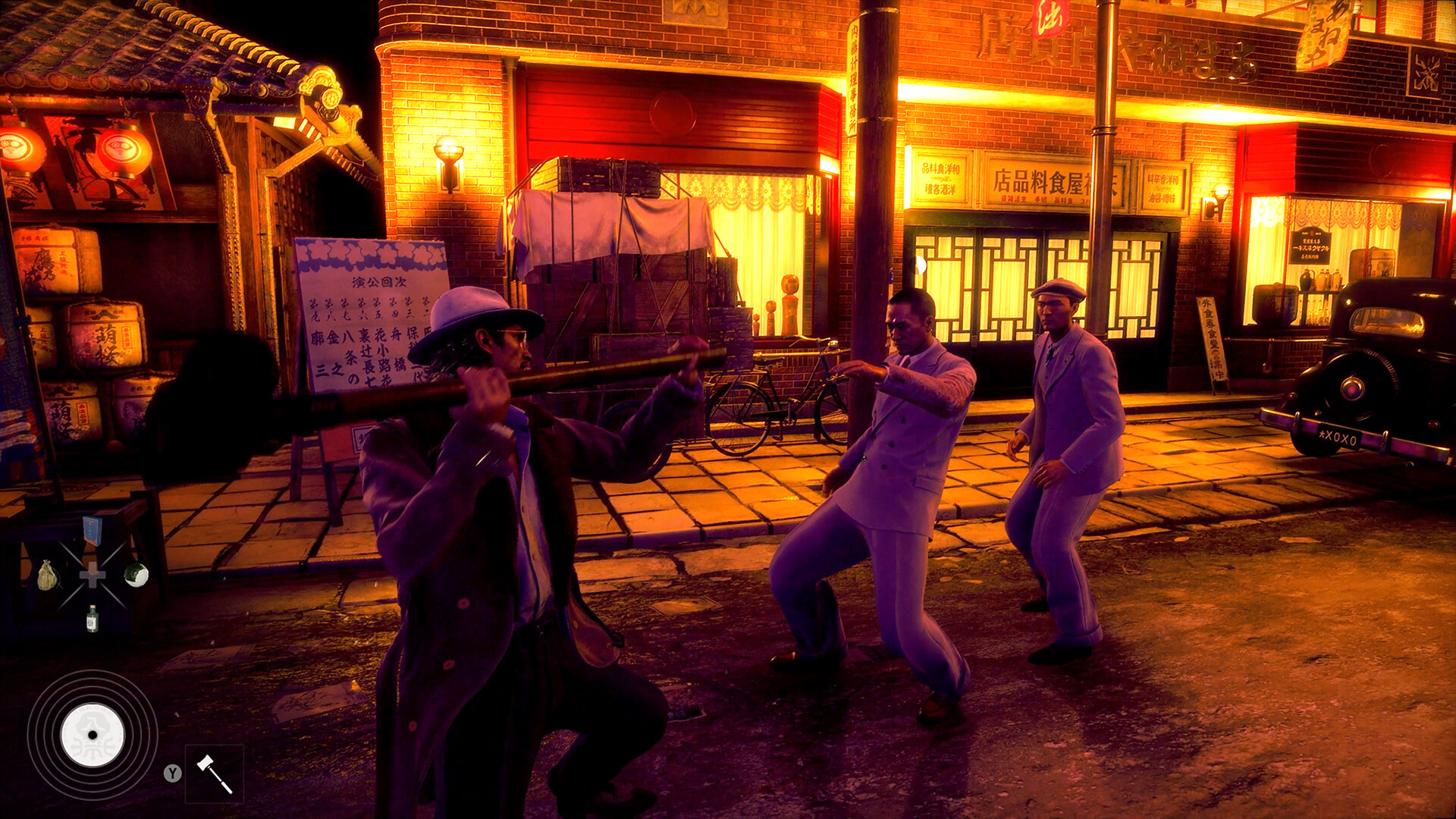
Dual-Sided Control
The left shoulder buttons drive Makoto's left arm and leg, and the right shoulder buttons drive his right arm and leg, so each half of his body is controlled separately. A short press and a long press produce different attacks, and combining the left and right triggers grabs the opponent into a grapple. Players can throw jabs and roundhouse kicks, mix strikes from both sides into combos, and hold a trigger to charge an attack for extra power. Because the two sides are independent, you can block an incoming strike with one hand and counter with the other at the same time, or build asymmetric attack chains that read differently from one fight to the next.
Defense and Stamina
A neutral block guards against attacks but drains stamina quickly, and running out of stamina leaves Makoto open. Holding a direction while blocking, using the shoulder buttons, costs less stamina and, with the right timing, turns into a parry that opens the attacker up for a counter. Dodging rounds out the defensive options. Fights are built around crowds rather than duels: enemies tend to press in and engage one or two at a time, creeping into position instead of swarming all at once, so reading who is about to strike matters as much as raw offense.
Grappling and Ground Combat
Grapples are a core part of the system. Enemies can tie Makoto up or grab his weapon to stop him swinging it, and breaking free means mashing to pummel them with a free hand until they let go. Knockdowns flow into a dedicated ground game: a downed Makoto has to fend off attackers until his stamina recovers, and he can pin a floored opponent to keep up the pressure from on top of them. Brutal context-sensitive finishers, such as plunging a blade into a prone enemy, cap off many encounters.
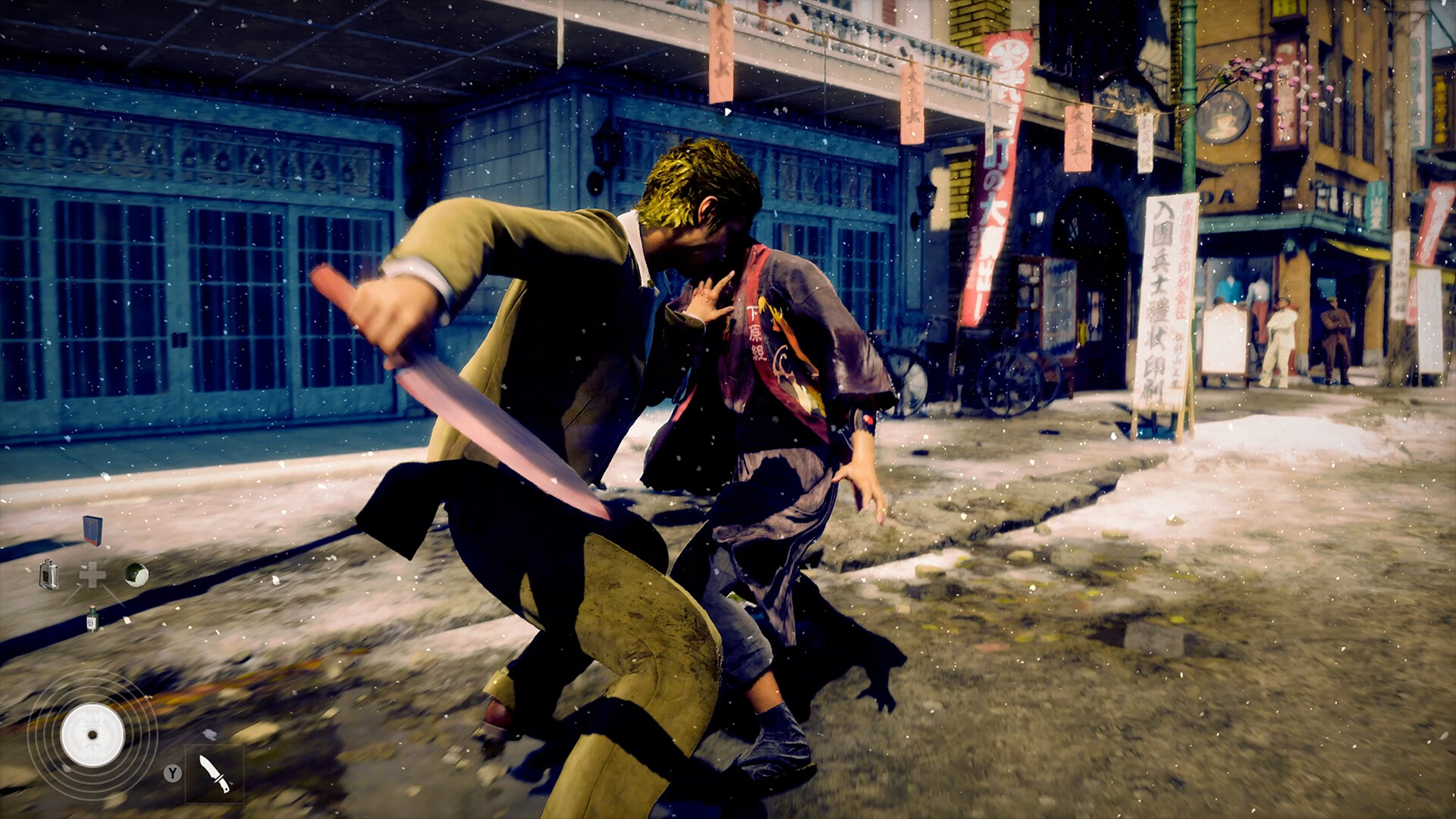
Weapons
The full game includes thirteen weapons. The demo build featured knives, a crowbar, a sledgehammer, a sword, and a dagger, alongside other era-specific arms, and weapons can be upgraded. On-screen health is shown as a row of small markers rather than a single bar, and recovery items are mapped to the directional pad, with some restoring health instantly and others healing over time.
The published description of the weapon set names knives, hammers, and katanas among the arms Makoto uses, and says they can be mastered and enhanced as the eras go by rather than being picked up and discarded. Weapons are not purely disposable: an opponent can seize one mid-fight to stop Makoto swinging it. Four further weapons ship as bonus content, and a blade called Dosu: Kagekiri is attached to pre-orders.
An Evolving Style
Because the story spans fifty years, Makoto's fighting ability evolves with his age and experience. Choices in some encounters, such as whether to punish or spare a defeated enemy, carry consequences within the story. That progression runs from 1915 Kokura in Fukuoka through 1929 Kure in Hiroshima and 1943 Minami in Osaka, and on into the later chapters.
Playing the Combat
Combat was the first part of the game put in front of players. A media preview session in June 2026 gave outlets hands-on time with it, and the impressions that followed are the source of most of what is known about the system beyond the published descriptions.
The first public hands-on demo is built around combat as well. It casts players as Makoto Daito across a series of combat challenges that exercise the dual-sided control scheme and the different fighting styles, and an adjusted and updated version of that build is being shown again in September.
Footage released so far carries a publisher note that it comes from an early, in-development version of the game and that some specifications may differ from the finished product, so the details above should be read as the state of a build in progress rather than as final behaviour.