
Loading...
Loading...
Vulnerability Matrix
May 16, 2026 at 09:12 AM
Added in-world explanation for the absence of kinetic weaponry
Vulnerability Matrix is the named combat framework at the center of SOL Shogunate. Every enemy is built around exploitable elemental weaknesses, and the player's job is to discover those weaknesses mid-fight, switch into the right tools, and channel the matching energy through their attacks to crack the encounter open. See the overview for how it sits inside the wider combat loop.
Fights begin with a question. Most enemies do not advertise their weaknesses up front. The player engages, watches how the target reacts to different strikes, and reads the fight for tells. Once a vulnerability is identified, the loadout becomes the answer: weapons swapped, infusions changed, active abilities selected to channel the matching energy into every strike.
Channelling the right energy does more than add raw damage. It exposes the target's weak point, breaks footing, and opens a tactical window the player can use to land a follow-up, reposition, or push a boss into the next phase. Phase transitions in cinematic boss encounters are tied directly to this exposure-and-stagger loop.
Chaos Manufacturing has framed the absence of kinetic firearms as a setting-driven choice rather than a stylistic preference. Pressurized lunar habitats, vacuum-side encounters, and the legal weight of the sword all point the same direction: the Shogunate codifies bladed combat as the legitimate way to settle disputes, and the practical risks of bullets in domed colonies and on exposed surfaces make those weapons rare. The Vulnerability Matrix sits inside that worldbuilding choice, channelling combat through classical weapons reengineered for off-world warfare rather than ranged firearms.
Weapons accept elemental properties, turning a baseline blade into an energy-charged instrument tuned for a particular kind of foe. Electricity is the publicly confirmed example. The full elemental palette has not been disclosed, so any list of additional types would be speculation. Elements are interchangeable infusions on the same weapon, not separate weapon classes, which is what makes mid-fight adaptation possible. Active abilities work in the same vocabulary, so a loadout pairs an infused weapon with abilities that lean into the same energy.
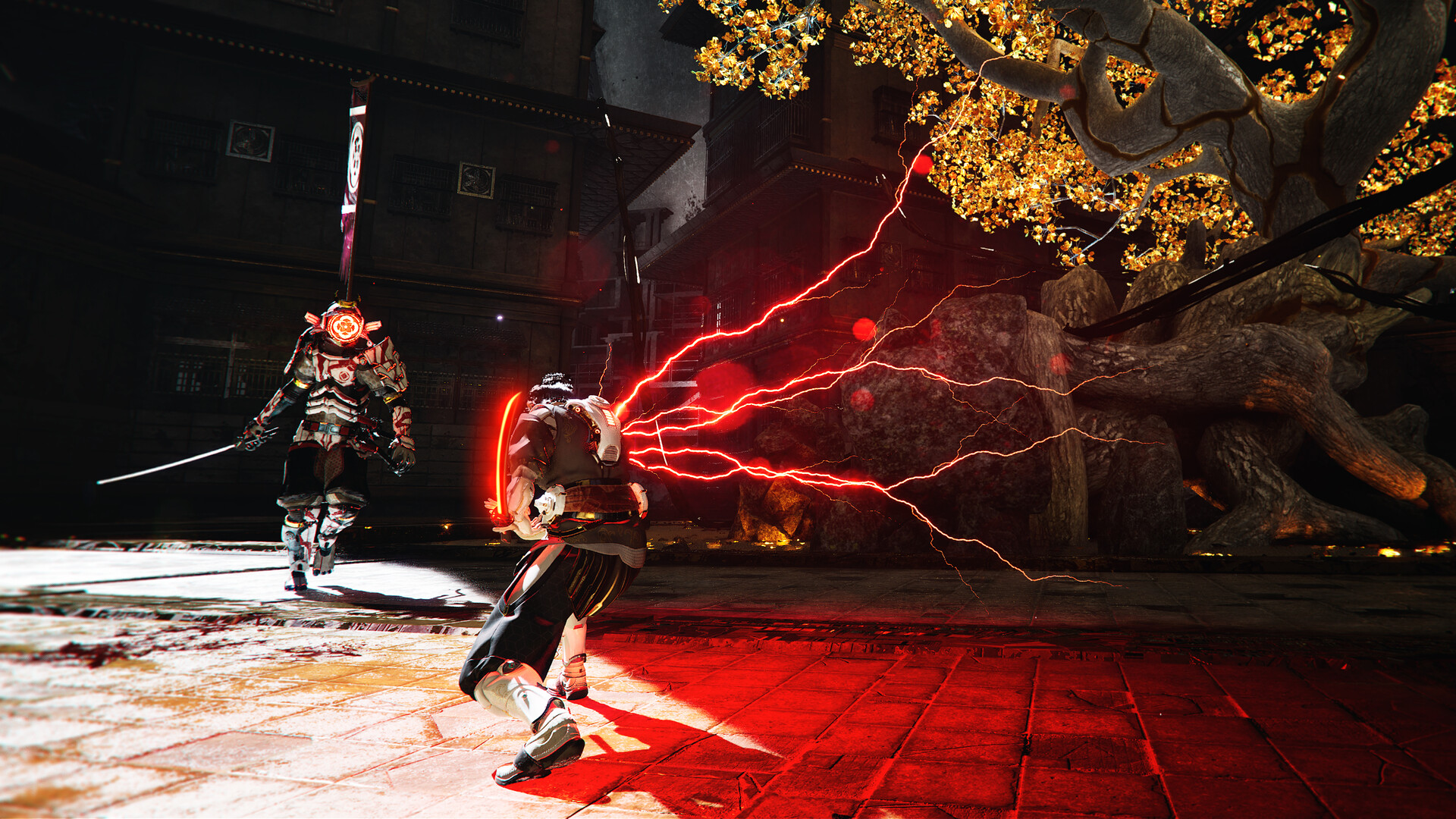
The matrix is not a standalone mechanic. It is the rule that ties three of the game's biggest systems into one decision.
Weapon-elemental infusion supplies the offensive half of the answer, deciding what kind of energy a strike carries.
Gene-splice augmentation supplies the player's half, biasing Yuzuki toward certain energy types or tactics.
Multi-phase boss design supplies the test, shifting movesets and resistances between phases so the matrix has to be re-read on the fly.
Combat here is not built on attrition. The matrix rewards reading the enemy and re-equipping rather than out-DPSing through a wall of HP, and the staggers it produces are the same windows that drive the cinematic feel of bigger encounters. The mechanical emphasis falls on three things:
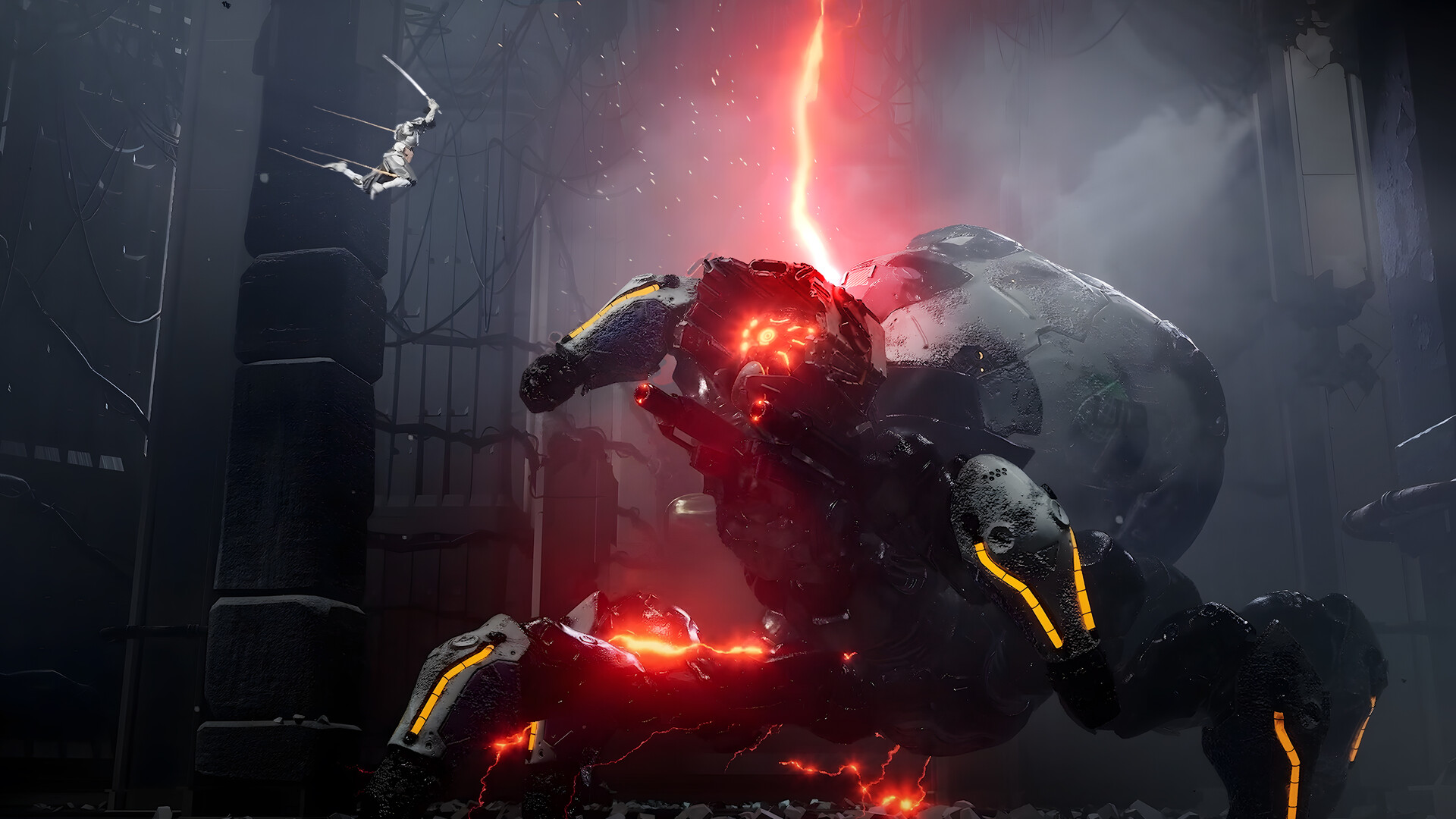
Precision placing strikes where the exposed weak point opens.
Timing channelling energy at the moments that produce stagger and phase shifts.
Adaptability changing weapon, infusion, and abilities as the encounter evolves rather than committing to one build.
Yuzuki is built for this system. Her loadout is intentionally adaptable, her gene-splice augments rotate as the player progresses, and her arsenal of classically designed weapons reengineered for the battlefields of tomorrow gives her a practical reason to swap mid-encounter. The matrix is the vocabulary her kit is fluent in.
Several mechanical specifics have not been disclosed and are left open until publicly verified.
The full list of elements beyond electricity, and how many ship at launch.
Exact stagger thresholds, damage multipliers, and numerical scaling tied to matched infusions.
How vulnerabilities are surfaced in the user interface, including in-world tells or HUD elements.
Whether multiple elemental properties can stack or interact on a single weapon or attack chain.
Named bosses that anchor specific phase transitions to the matrix.
How augmentation choices alter or extend the player's ability to read or exploit vulnerabilities.
