

Overview
SOL Shogunate is Chaos Manufacturing's 2027 single-player third-person action RPG. Marketed as a samurai space opera, it follows the outlaw ronin Yuzuki across the colonized Moon, with combat built around the Vulnerability Matrix and an augmentation gene-splice progression system.
On This Page
SOL Shogunate is an upcoming single-player third-person action RPG developed and published by Chaos Manufacturing, an independent studio of veteran developers. Marketed as a samurai space opera, the game is targeted for a 2027 release on PlayStation 5, Xbox Series X|S, and PC via Steam. It was first revealed in December 2025 and currently has no confirmed launch day inside the 2027 window; the studio's announcement press release said the game would be released "once it's ready", and the storefront still lists the date as to be announced.
Quick Facts
Field | Detail |
|---|---|
Developer | |
Publisher | Chaos Manufacturing (self-published) |
Engine | Unreal Engine 5 |
Platforms | |
Genre | Single-player third-person action RPG |
Setting | Alt-future solar system, primarily the colonized Moon |
Reveal | December 2025 |
Release Window | 2027 (specific date not yet announced) |
Languages | 17 supported, with full audio in English and Japanese |
Players | Single-player only, controller support |
Steam App ID | 3219360 |
Premise
The campaign is set in an alternate-future solar system in which humanity has colonized the planets and culturally adopted feudal Japanese power structures. In this future, the way of the sword is law, and the ruling SOL Shogunate governs from a fortified seat of power on Earth's Moon. The setting is built around a sharp class divide: an elite shogunate aristocracy enjoys Earth-like comforts inside engineered lunar metropolises, while a colonial worker underclass keeps that machinery running far below the spotlight.
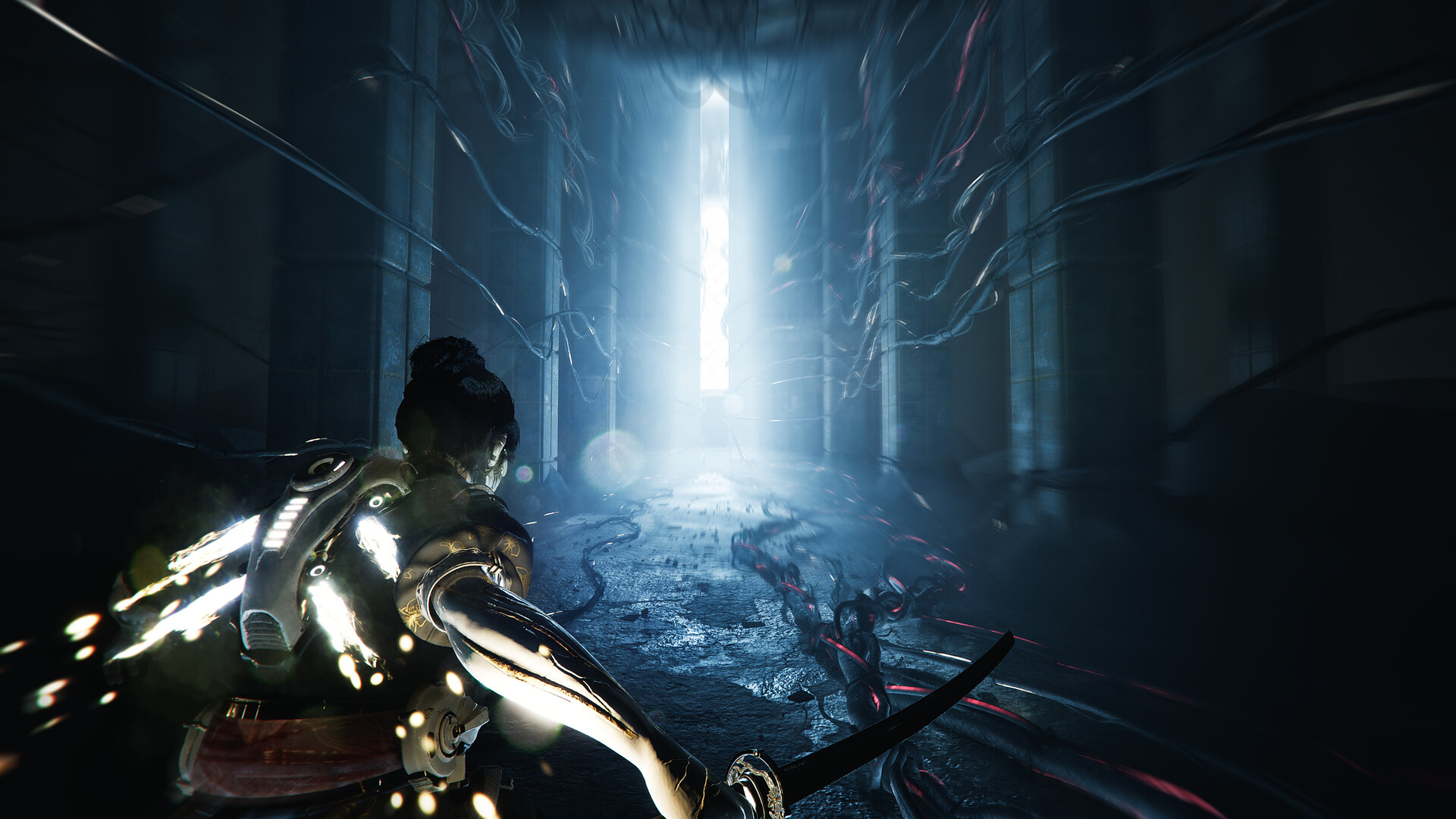
The player controls Yuzuki, the heir of the powerful Tennoji clan. The Tennoji built much of the lunar transport network, including the train lines that link the colonies, but the family is wiped out in a coordinated strike by their rival Karasuma clan, whose wealth flows from lunar mining operations. Yuzuki survives the massacre and is hunted as an outlaw, becoming a ronin. Her opening drive is personal revenge against the Karasuma, but as the story progresses she begins pulling threads on a much wider Shogunate conspiracy that reaches far beyond a single clan feud.
Setting
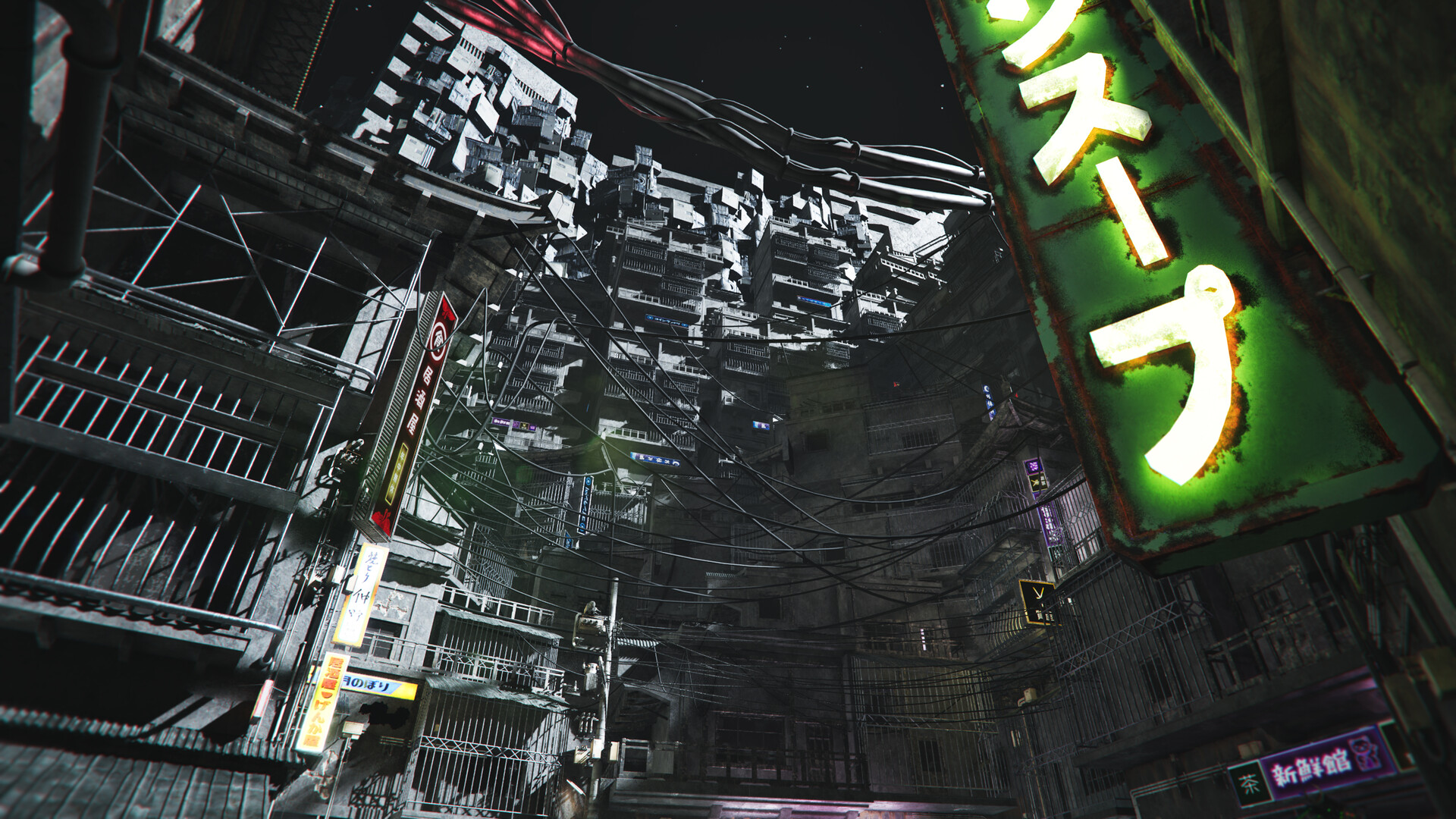
The Moon is the primary stage. Each lunar metropolis is built as an homage to a different era of Japanese history and is held in something close to Earth-normal comfort by centrifugal force and engineered atmospheres. Two cities are confirmed in early shows: Shin-Edo, the so-called Lunar Glass City, an opulent feudal-Edo-inspired capital, and Tenkyo, a Showa-era nightlife district drenched in neon. Around and between those cities, the world includes towering space elevators, bullet trains crossing the lunar surface, mining cities carved directly into impact craters, and a wheel-shaped space station that uses rotational artificial gravity in the style of a Stanford torus.
Three Pillars
The studio describes the design as three pillars working in harmony: combat, story, and music. None of the three is treated as supporting decoration for the others.
Combat is fast-paced hack-and-slash built on movement, resource management, and combos, weighted toward precision, timing, and adaptability rather than the slow attrition of a soulslike. Parrying is available but deliberately not central, and encounters are built around groups of enemies rather than duels, so target selection and spatial awareness matter as much as any single exchange. Multiple weapon types each have their own fighting style, with the katana confirmed as one signature weapon among several classically designed arms reengineered for off-world combat. Encounters are framed around the Vulnerability Matrix, which rewards reading enemies for elemental weaknesses and infusing weapons with the right energy type to expose them. Yuzuki herself is upgraded through Augmentation, a gene-splice progression tree that grants traits such as bio-ceramic skin and enhanced vision. Boss encounters are framed as epic set pieces treated as puzzles, with the player figuring out what tools to use against the threat in front of them. The studio compares the design philosophy to the staged encounters of Metal Gear Solid, where the answer comes from reading the situation rather than out-DPSing through it.
Story begins as a tightly focused revenge plot and widens into a conspiracy across the colonies. Music is built into the game rather than layered on top: the soundtrack scales with battle intensity, and boss fights are scored as interactive music videos so that strikes and finishing blows align with driving, emotionally charged tracks. The first publicly confirmed musical contributor is the Japanese rock band AliA, with additional artists to be revealed.
Story Structure
The campaign is structured around two characters from different walks of life whose worldviews are shattered and pieced back together over the course of the game. Only Yuzuki is playable. The studio has not yet revealed the second character, but the studio CEO has framed the kintsugi visual motif on Yuzuki's body as a direct expression of her side of the shattered-and-rebuilt arc.
The opening drive is personal revenge against the Karasuma clan. As the story progresses Yuzuki uncovers a wider conspiracy across the colonies that ties her family's destruction to systemic conditions inside the Shogunate. The two-character framing is the spine the writers use to keep the wider conspiracy connected to specific people rather than abstract politics.
Structure and Scope
SOL Shogunate is not an open-world game. The studio has described it as a narrative-driven campaign with a specific story to tell, built out of designed levels rather than one continuous map. Exploration is still a large part of it: there are several biomes to move through, access widens the further into the campaign the player gets, and areas are built to hide secrets and locked-away places that need the grapple and unlocked skills to reach. Returning to an earlier location with a better toolkit is part of the design rather than an afterthought.
There is no character creation. Yuzuki is a fixed protagonist, and player expression runs through equipment, weapons, gene splices, and in-game choices instead of an appearance editor. The campaign is single-player only. The studio has ruled out multiplayer and co-op for this title, describing itself as a small team that would rather ship one tight single-player game than spread itself thin, while leaving the door open to co-op on a possible future project.
Length and Difficulty
Chaos Manufacturing has committed to a campaign running at least 10 hours, is targeting a price the studio describes as generous relative to the scope, and has confirmed both an easy and a hard difficulty mode. Exact length, a precise price point, and the modifiers behind each mode are not yet public. Platforms and Release carries the full detail on all three.
Core Systems
System | Summary |
|---|---|
Read elemental weaknesses in combat, then infuse weapons and abilities with matching energy types (electricity is one confirmed example) to stagger enemies and open tactical windows. | |
A gene-splice upgrade tree. Augments include bio-ceramic skin that visibly hardens in vacuum, enhanced vision, and other body modifications that expand survivability. | |
Lunar Traversal | Jet pack, nano-fiber grapple cables, and gravity-assist gear handle the on-foot moveset. Across longer surface stretches, Yuzuki rides a robotic horse or a monocycle, both built for variable lunar gravity. |
Boss Encounters | Large, multi-phase, cinematic fights built around exploiting weak spots, choreographed so that the combat aligns with the soundtrack. |
Skill Tree | A progression tree split across offensive, defensive, and quality-of-life branches that interacts with the augmentation and weapon systems. |
Stated Influences
The team has been open about what it is drawing on. On the action side the names that come up repeatedly are NieR: Automata, Metal Gear Rising: Revengeance, Vanquish, Doom 2016, Granblue Fantasy Re:Link, and The 3rd Birthday, alongside action-led Japanese RPGs such as the Tales Of series and modern Final Fantasy. On the screen side, Cowboy Bebop, the Gundam series, Attack on Titan, the manga Blame!, Kurosawa's Ran, and the film RRR have all been named as tonal reference points. The studio has also pointed at the staged, puzzle-like encounter design of Metal Gear Solid as the model for its boss fights.
These are stated inspirations for the look, feel, and structure of this game. None of them shares systems, characters, or content with SOL Shogunate, and nothing from them should be read as confirmed here.
Studio and Leadership
Chaos Manufacturing is an independent studio acting as both developer and publisher. The team is built from veterans of major action and RPG productions, with games credits spanning Metal Gear, The Sims, Sonic the Hedgehog, Castlevania, Mortal Kombat, Killzone, and Horizon. Several members came in from film and television rather than games: the studio credits its director of photography's film and television background for the look of the reveal trailer, and its narrative director has described her own background as coming from film. The studio's own announcement copy describes the founders only as veteran developers with experience across acclaimed game franchises, and itemises no film credits. Those credits describe where members of the team worked before this project, and none of those games shares systems, characters, or content with SOL Shogunate. Public leadership includes CEO Guy Costantini, Co-Founder Nate Eckman, and Game Director Leszek Szczepanski, and the studio's public team page names eighteen people in total. Internally the studio calls its staff Chaos Agents.
Reveal and Show Cadence
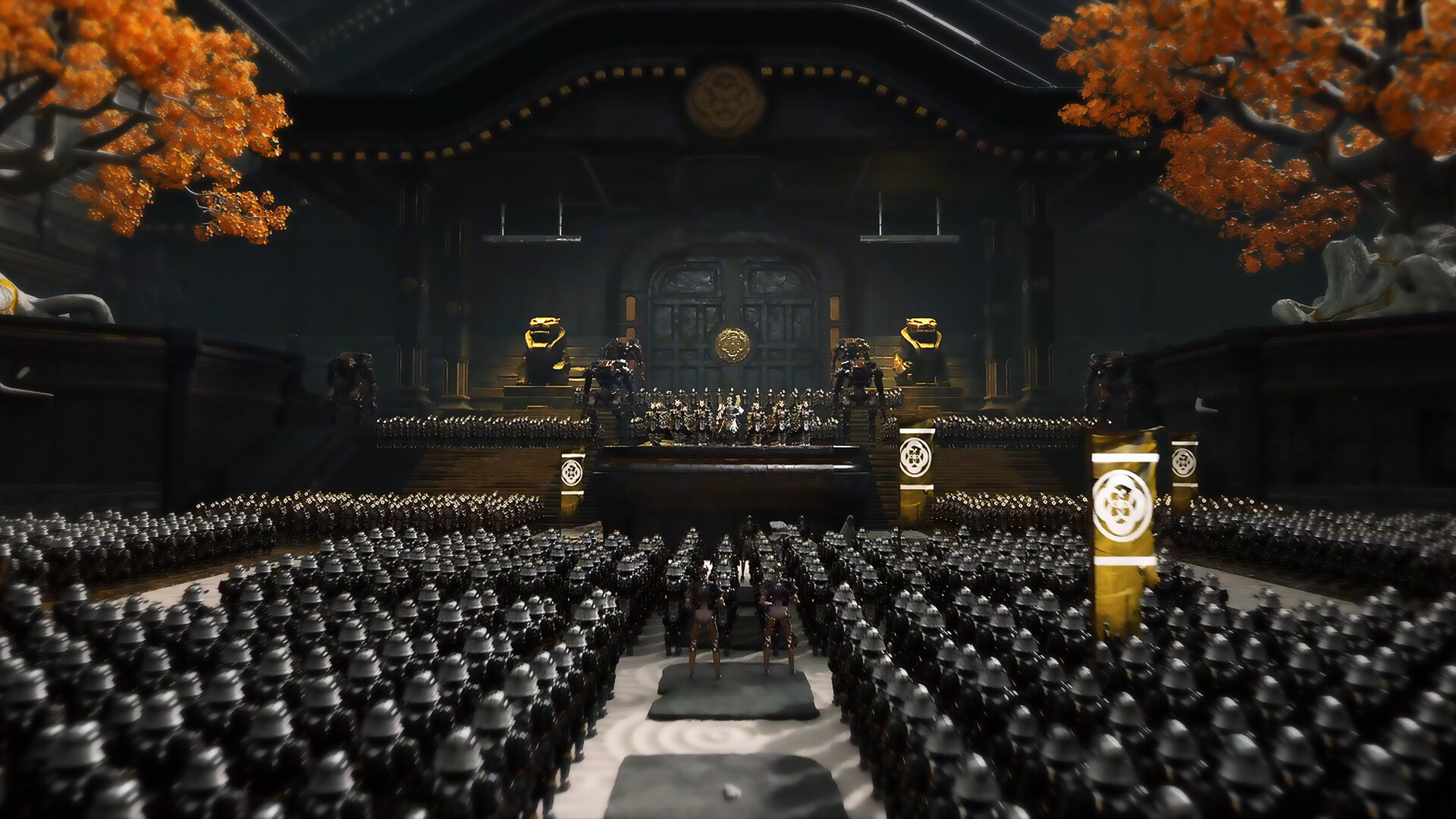
SOL Shogunate was first revealed in December 2025 at the PC Gaming Show: Most Wanted. In April 2026, the studio published a developer diary titled The World of SOL Shogunate, which walked viewers through Shin-Edo and Tenkyo and detailed the Tennoji and Karasuma rivalry. Additional shows are expected as the 2027 window narrows.
Where to Begin
If this is the first page being read, Getting Started is the natural next step. From there, Yuzuki and the Moon unpack the protagonist and setting. Combat-curious readers should visit the Vulnerability Matrix and Augmentation pages, while traversal fans should head to the robotic horse page. Lore readers can dig into the SOL Shogunate Faction page, and readers tracking the launch should follow Platforms and Release.
This article will be updated as Chaos Manufacturing confirms additional systems, characters, and a specific release date inside the 2027 window.