
Loading...
Loading...
The Moon
May 8, 2026 at 08:42 AM
Removed redundant H1 heading from article body
Earth's Moon is the seat of power of the SOL Shogunate and the principal explorable region of SOL Shogunate. It is the stage on which Yuzuki's revenge plot unfolds. For the wider pitch see the Overview; for the political body that rules this world, see the SOL Shogunate. The Moon is described as a network of glass-domed megacities and crater mining settlements stitched together by long-range infrastructure.
Each major city on the Moon is themed around a different era of Japanese history. Inside the domes, centrifugal force and engineered atmospheres approximate Earth-normal conditions: walkable gravity, breathable air, and stable temperatures. Life inside a dome can resemble a richly art-directed period setting, even though the dome itself sits on a barren regolith plain. These megacities are where the elite shogunate aristocracy lives.
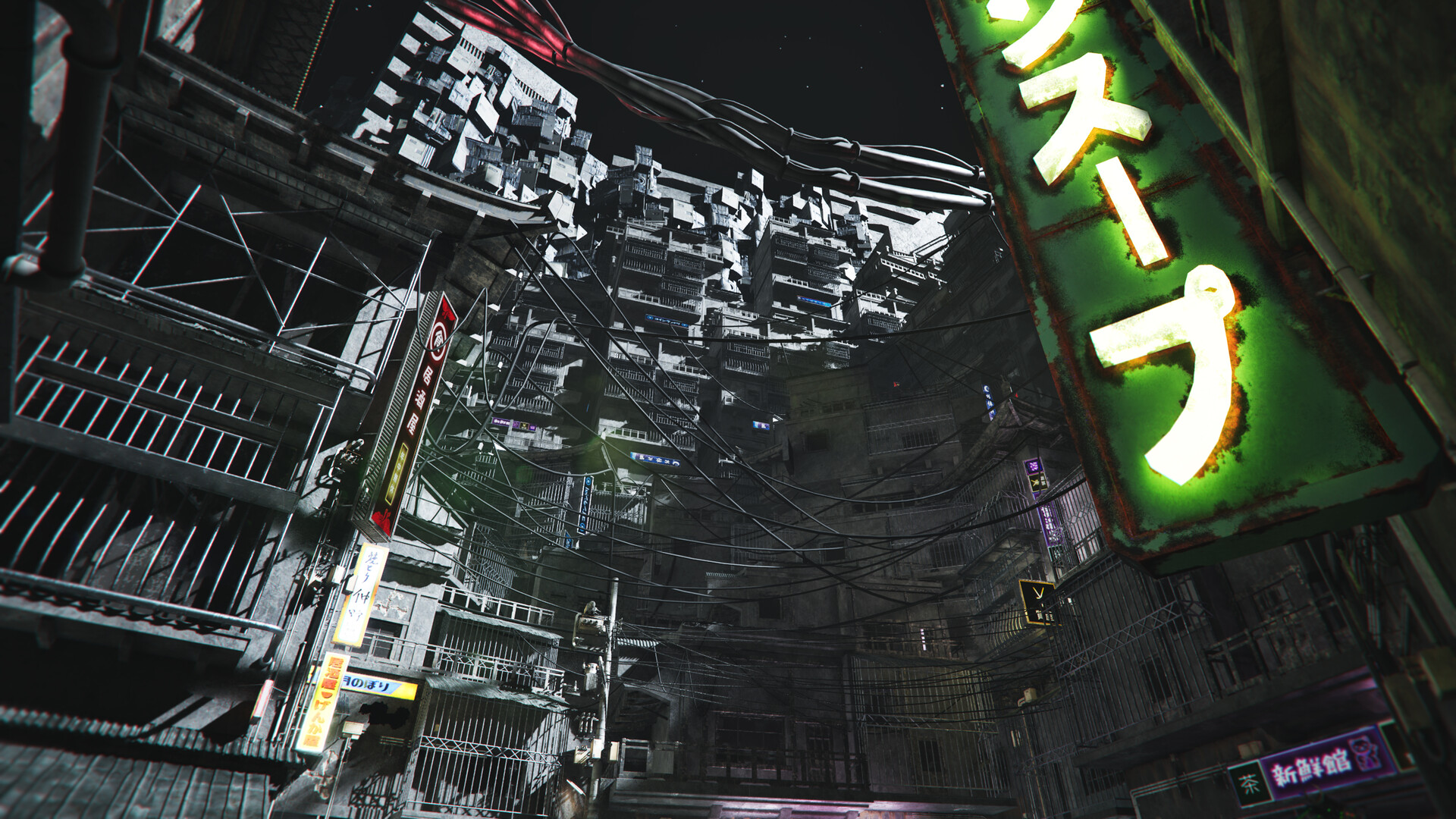
Two cities have been confirmed as flagship locations:
City | Era Inspiration | Role |
|---|---|---|
Shin-Edo | Feudal Edo period | Known as the Lunar Glass City. An opulent capital under a vast dome, dressed with the architecture and street life of a feudal Edo capital. |
Tenkyo | 1980s Showa-era | A nightlife district drenched in neon, built around a late-twentieth-century Japanese entertainment quarter. |
Other lunar cities are implied by the design pitch, but none others have been publicly confirmed.
The lunar world is held together by industrial-scale transit.
Space elevators connect the lunar surface to orbit, moving people and material between the Moon and the wider solar system.
Bullet trains tie cities and districts together across the lunar surface. The Tennoji clan built much of this network, which is part of why the family carries so much political weight before the massacre that opens the campaign.
Opulent elite quarters inside the cities indicate a class divide built into the architecture, visibly separate from the spaces where colonial workers live.
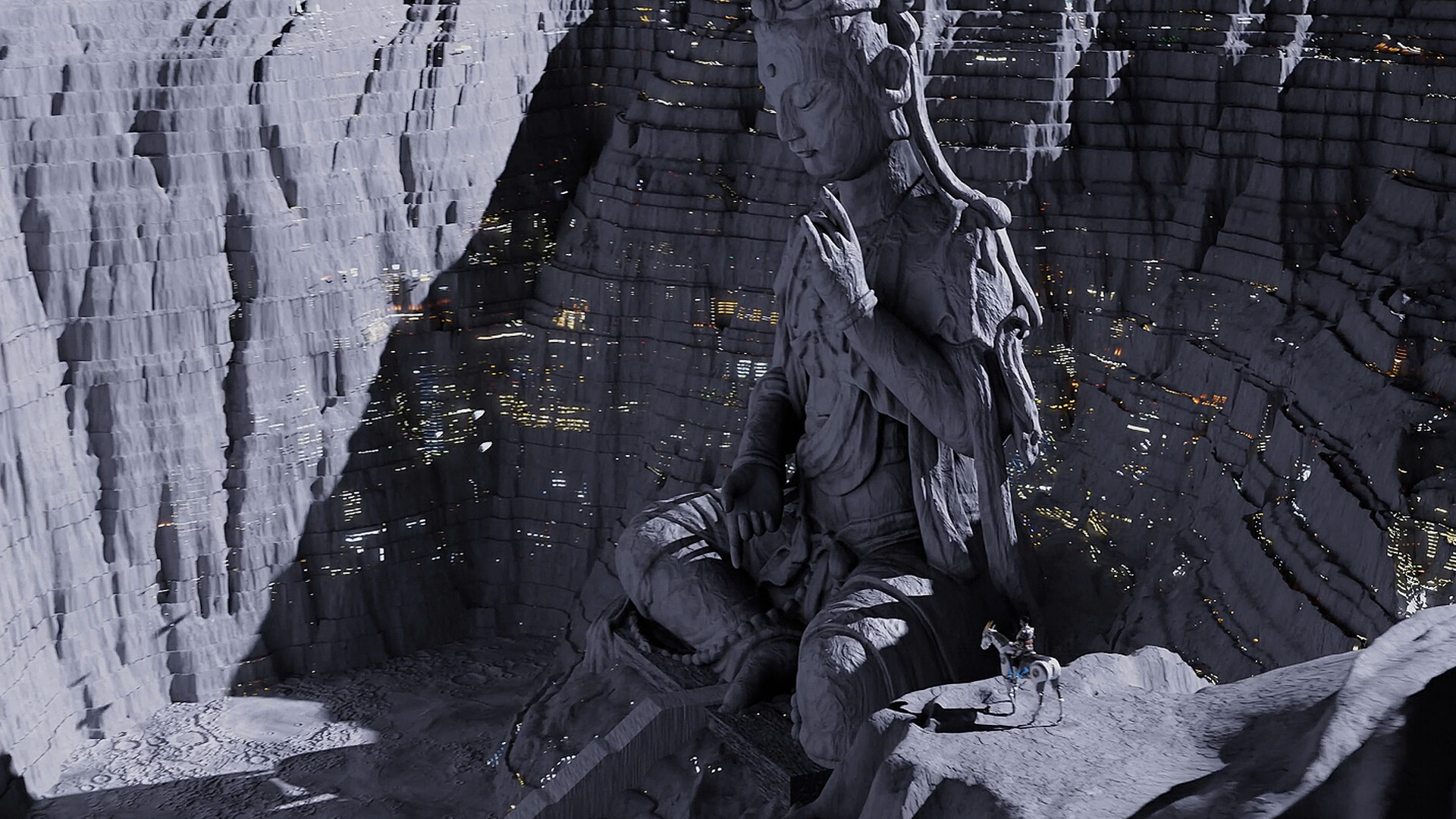
Outside the domes, the lunar surface is hostile. Unpressurized exterior zones face hard vacuum, high radiation, and extreme temperature swings. When Yuzuki steps outside, her bio-ceramic skin hardens into protective plating, letting her fight and move through conditions that would kill an unaltered human. Long stretches between settlements are where mounted traversal matters: a robotic horse, along with a monocycle option, is the long-distance answer for crossing the exterior.
Alongside the glass cities, the Moon is home to mining settlements carved directly into impact craters. These are working colonies tied to the rival Karasuma clan, whose power flows from lunar mining. They keep the resource economy of the Shogunate running but are not the spaces the elite are shown enjoying. Specific named mining settlements have not been revealed.
The Moon's geography extends into orbit. A wheel-shaped space station rotates to generate artificial gravity in the style of a Stanford torus. Combined with the surface space elevators, this orbital layer establishes that travel between the lunar surface and high lunar orbit is part of the world rather than a one-time set piece.
Geography and class line up tightly on the Moon. The visible side of lunar life is the gleaming aristocracy inside the domes: themed cities, elite quarters, a culture engineered to feel like a beautified Earth-bound past. The largely unseen side is a colonial worker underclass that keeps the mines and transit running. The political body responsible for that separation is the SOL Shogunate, and the campaign uses Yuzuki's status as a ronin to move between layers ordinary citizens do not normally cross.
Several pieces of the lunar setting have not yet been officially detailed and should not be treated as confirmed:
The full catalog of cities beyond Shin-Edo and Tenkyo is not yet public.
Named neighborhoods, districts, or landmarks inside any city have not been revealed.
City sizes, populations, and explorable footprints have not been quantified.
How the game handles the lunar day and night cycle is undisclosed.
A full taxonomy of outdoor surface zones, including any named regions or biome types, has not been published.
Orbital locations beyond the wheel-shaped station, and whether other planets in the solar system are explorable, remain unconfirmed.
This page will be updated as more is revealed.
