

The Moon
Earth's Moon is the SOL Shogunate's seat of power and the principal explorable region of SOL Shogunate. It is presented as a network of glass-domed megacities themed after different eras of Japanese history, crater mining settlements, harsh outdoor surface zones, and an orbital wheel-shaped space station, all tied together by space elevators and lunar bullet trains.
On This Page
Earth's Moon is the seat of power of the SOL Shogunate and the principal explorable region of SOL Shogunate. It is the stage on which Yuzuki's revenge plot unfolds. For the wider pitch see the Overview; for the political body that rules this world, see the SOL Shogunate. The Moon is described as a network of glass-domed megacities and crater mining settlements stitched together by long-range infrastructure.
Glass-Domed Megacities
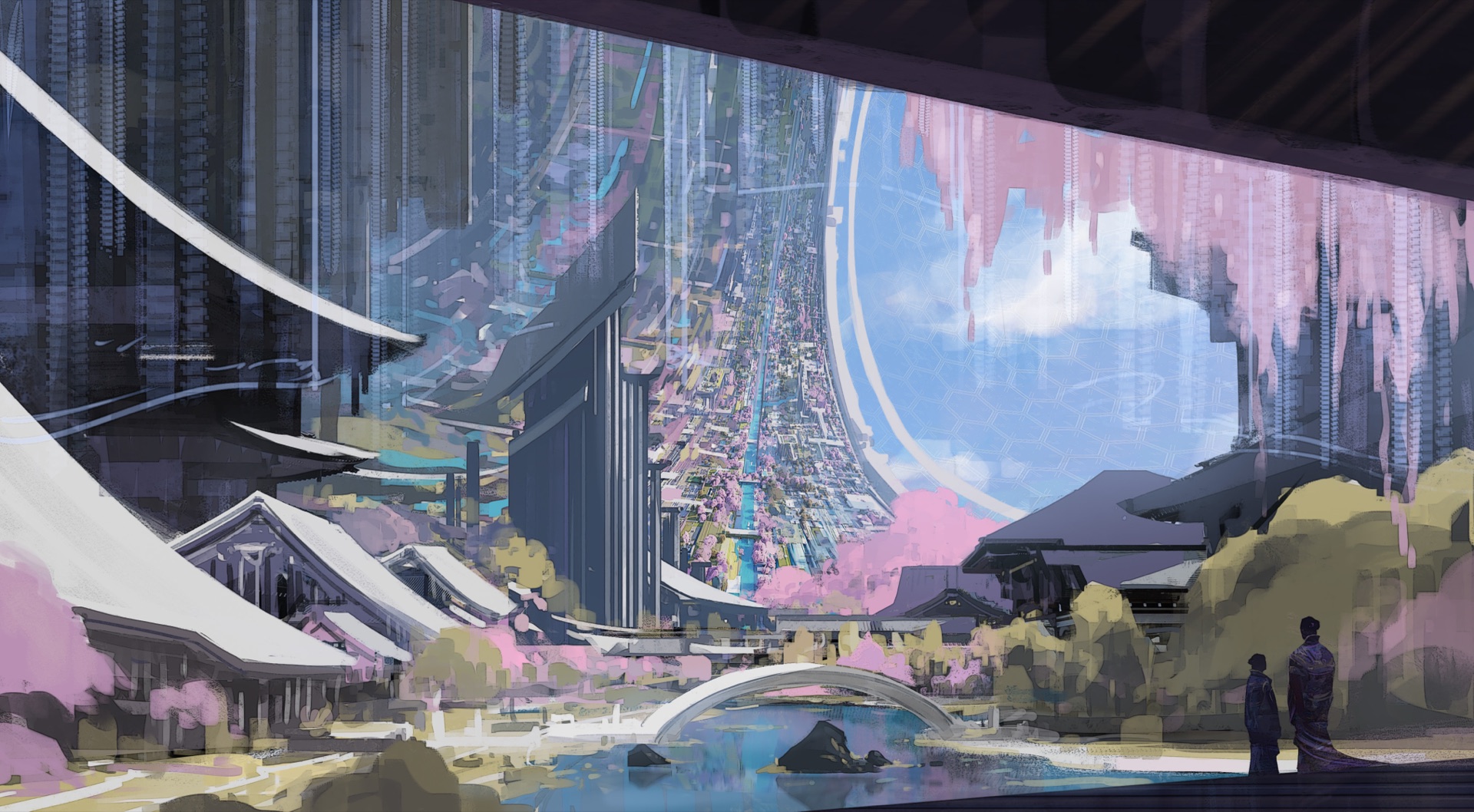
Each major city on the Moon is themed around a different era of Japanese history. Inside the domes, centrifugal force and engineered atmospheres approximate Earth-normal conditions: walkable gravity, breathable air, and stable temperatures. Life inside a dome can resemble a richly art-directed period setting, even though the dome itself sits on a barren regolith plain. These megacities are where the elite shogunate aristocracy lives.
The era theming is a surface, not a description of the population. The studio has said each city is meant to read as a real, lived-in futuristic metropolis made up of many different backgrounds and cultures, so the Japanese-period dressing sits on top of a mixed populace rather than standing in for it.
Confirmed Cities
Two cities have been confirmed as flagship locations:
City | Era Inspiration | Role |
|---|---|---|
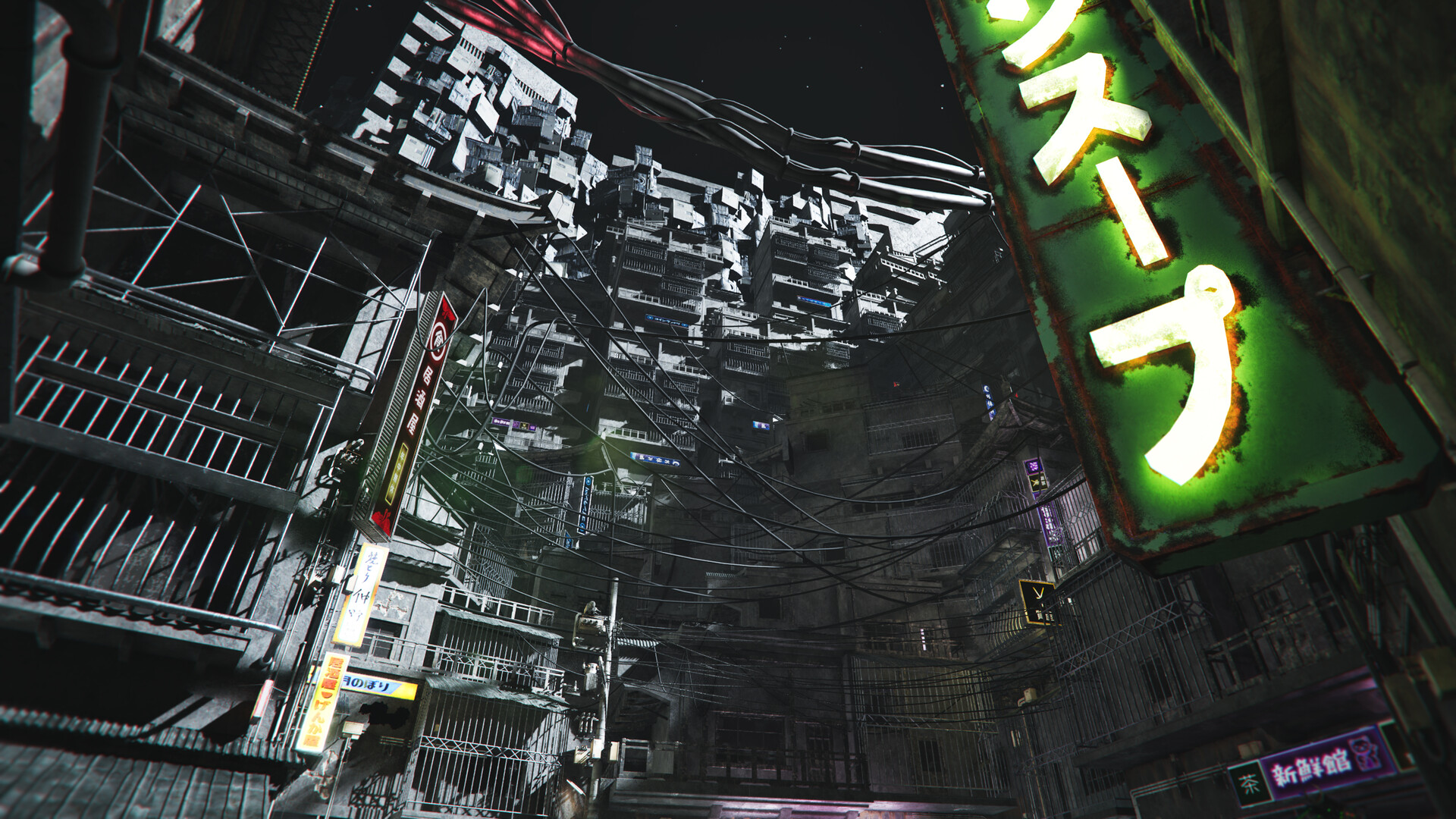
Feudal Edo period | Known as the Lunar Glass City. An opulent capital under a vast dome, dressed with the architecture and street life of a feudal Edo capital. | |
1980s Showa-era | A nightlife district drenched in neon, built around a late-twentieth-century Japanese entertainment quarter. |
These two are the settlements the studio has actually walked through in its own developer diary, and they are the only ones presented that way so far. Other lunar places have since been named, but only as labels written on official concept art: Karasuma Mining City, Karasuma Crater and District 25 all arrive that way and are listed further down this page. Treat a concept-art label as evidence that a place exists rather than as confirmation that it is a flagship city or that any of it is playable.
Infrastructure
The lunar world is held together by industrial-scale transit.
Space elevators connect the lunar surface to orbit, moving people and material between the Moon and the wider solar system.
Bullet trains tie cities and districts together across the lunar surface. The Tennoji clan built much of this network, which is part of why the family carries so much political weight before the massacre that opens the campaign.
Opulent elite quarters inside the cities indicate a class divide built into the architecture, visibly separate from the spaces where colonial workers live.
Outdoor Surface
Outside the domes, the lunar surface is hostile. Unpressurized exterior zones face hard vacuum, high radiation, and extreme temperature swings. When Yuzuki steps outside, her bio-ceramic skin hardens into protective plating, letting her fight and move through conditions that would kill an unaltered human. Long stretches between settlements are where mounted traversal matters: a robotic horse, along with a monocycle option, is the long-distance answer for crossing the exterior.
Worldbuilding around the surface is layered with the remnants of an earlier solar system-wide war. The exterior is not only hostile because of vacuum and radiation. The studio has framed it as a place that still carries the scars and traces of conflicts fought across the colonized worlds before the present-day rule of the Shogunate, which is part of why crossing it is treated as more than just a physical hazard.
Class Divide
Geography and class line up tightly on the Moon. The visible side of lunar life is the gleaming aristocracy inside the domes: themed cities, elite quarters, and a culture engineered to feel like a beautified Earth-bound past. The largely unseen side is a colonial worker underclass that keeps the mines and the transit network running. The split between elite and worker quarters is more than a story note.
Long-term life in low gravity weakens bone and muscle, and the public framing of SOL Shogunate rule is that the wealthy buy back what the Moon costs the body. Inside the engineered cities, the elite have space, time, and equipment to exercise, which keeps them in fighting form. The colonial worker class living below the spotlight does not get the same opportunity, and the gap shows up not just as luxury but as physical capability.
Gravity-manipulation gear builds on the same divide. The hand-and-belt tools that let elites cheat lunar gravity, an evolution of equipment from real-world astronaut programs, are restricted to those who can afford them. Yuzuki carries that gear as part of her Tennoji inheritance rather than as something an ordinary worker on the surface could obtain.
Crater Mining Settlements
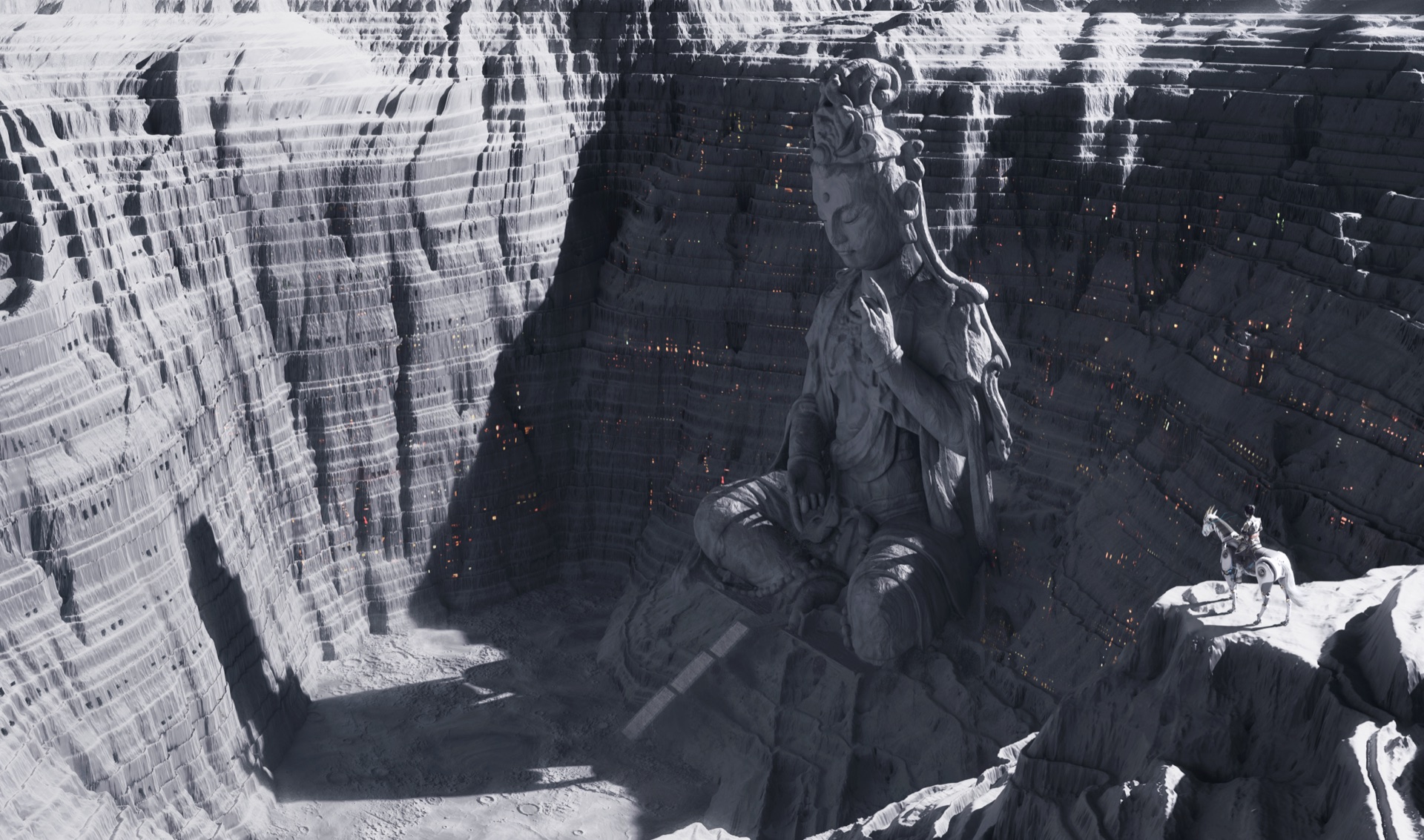
One such settlement is named in the studio's own concept art: the Karasuma Mining City, built around the colossal Daibutsu statue described below. A separate ringed crater settlement is labelled Karasuma Crater. Beyond those labels, the studio has not published a full list of mining settlements or described how any of them play.
Named Locations in Official Art
Chaos Manufacturing's own concept art carries location labels that go further than anything in the published marketing copy. They are the studio's internal names for the places pictured rather than prose descriptions of confirmed content, so treat them as a guide to what exists rather than as a finished gazetteer.
Label | What the Art Shows |
|---|---|
Daibutsu, Karasuma Mining City | A colossal seated Buddha carved into the terraced wall of an open-pit lunar mine, with lit windows threaded through the terraces around it. This is the first named settlement tied to the Karasuma mining operation. |
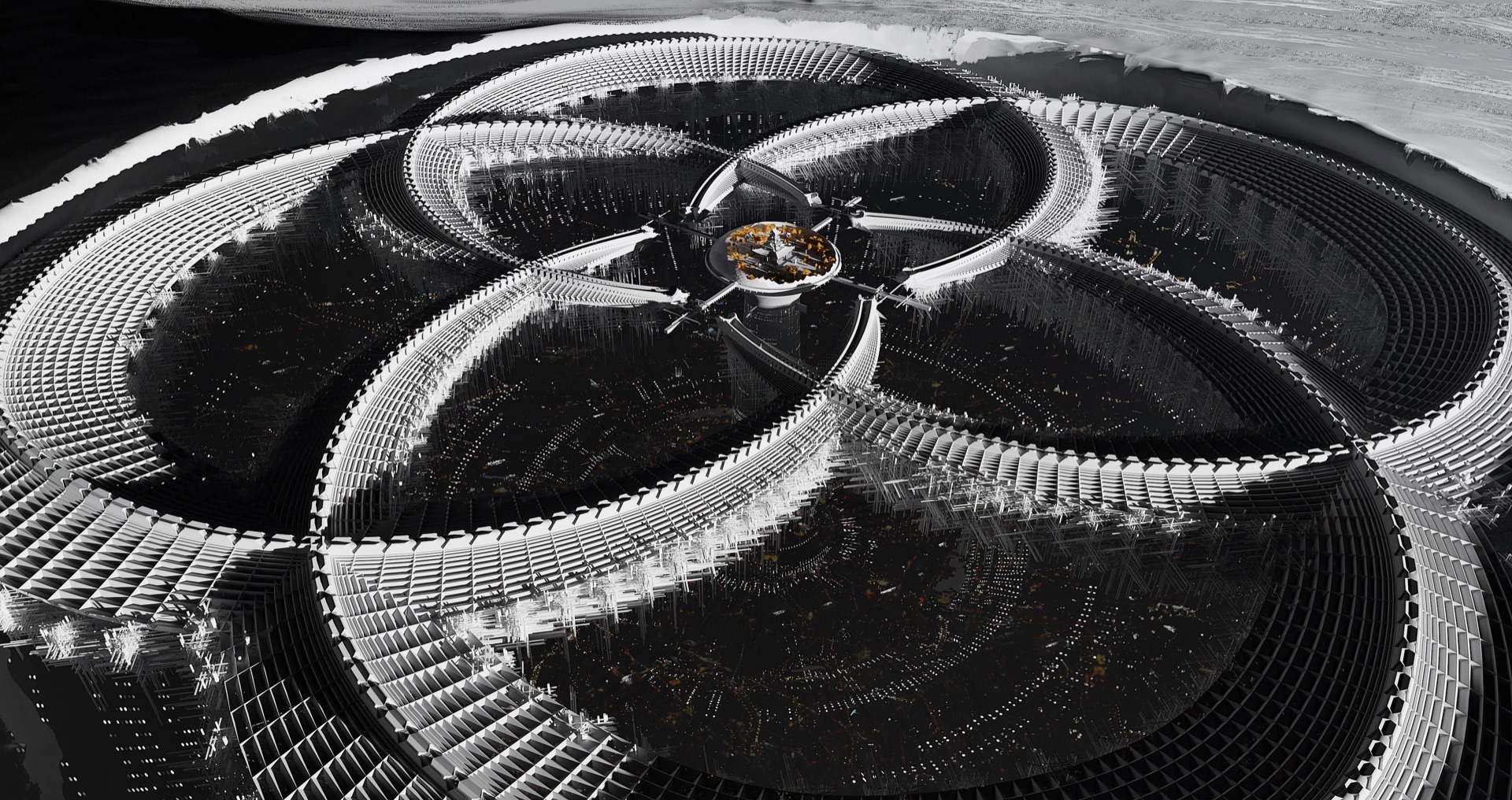
Karasuma Crater | An enormous ringed crater city built as concentric terraces around a central hub. The label describes it as the "seat of Gensai", a name the studio has not otherwise introduced, so nothing about who or what Gensai is should be assumed. |
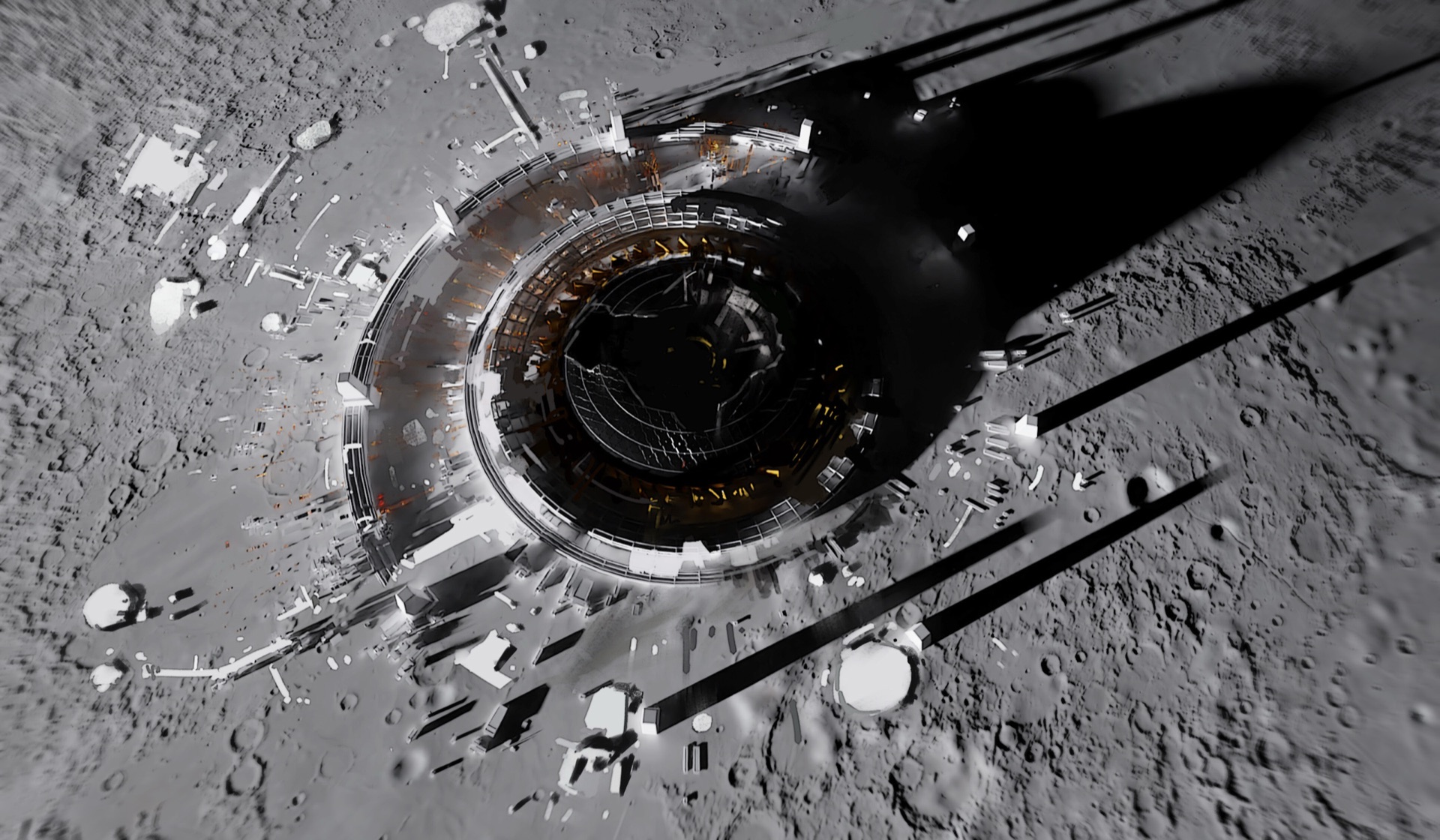
District 25 | Labelled a lunar city ruin. The art shows a circular domed settlement whose dome has been broken open, with the interior structures exposed to the surface. |
Shin-Edo, Tennoji residence | A Tennoji clan residence inside Shin-Edo, alongside separate art of the city under its simulated daytime. |
The studio has published a short piece of lore about the Daibutsu itself. It describes the colossal Buddha of the mining town as reaching back to the very beginnings of human residence on the Moon, hewn from the rock of the Moon itself, and frames it as a testament to the urge to find beauty in the most desolate and isolated of places. That places at least one lunar landmark well before the present-day rule of the Shogunate.
The Broken Dome
The Shogunate Archives also record the fate of a single dome. An earlier colonisation kept a treasured sakura tree in a peaceful domed park until brutal wars broke the dome and the tree froze, cracked and died; in the present era the Karasuma clan has reclaimed it and repaired the cracks with gold kintsugi as a mark of its dominance over lunar resource extraction. The entry is set out in full, along with what it says about a colonisation era before this one, on the page for the ruling Shogunate.
Orbital Component
The Moon's geography extends into orbit. A wheel-shaped space station rotates to generate artificial gravity in the style of a Stanford torus. Combined with the surface space elevators, this orbital layer establishes that travel between the lunar surface and high lunar orbit is part of the world rather than a one-time set piece.
Moving Between the Layers
The political body responsible for that separation is the SOL Shogunate, and the campaign uses Yuzuki's status as a ronin to move between layers ordinary citizens do not normally cross. That mobility is what lets the story reach both the domed cities and the crater mining settlements from the inside rather than describing one of them from a distance.
How the Moon Is Explored
The Moon is not a single seamless open world. The studio has been direct about that: the game is narrative-driven and built out of designed levels rather than one continuous map. There is still a variety of biomes to move through, and access to them widens the further into the campaign the player gets.
Individual areas are built to hide things. The studio has described levels that conceal secrets and locked-away places needing the grapple and unlocked skills to reach, so coming back to an earlier location with a better toolkit is part of the design. The stated framing is a world of lies and unfolding mysteries, where answers surface as the player pushes on and tend to open bigger questions rather than close them.
Unconfirmed Details
Several pieces of the lunar setting have not yet been officially detailed and should not be treated as confirmed:
The full catalog of cities beyond Shin-Edo and Tenkyo is not yet public.
City sizes, populations, and explorable footprints have not been quantified.
How the game handles the lunar day and night cycle is undisclosed.
A full taxonomy of outdoor surface zones, including any named regions or biome types, has not been published.
Orbital locations beyond the wheel-shaped station, and whether other planets in the solar system are explorable, remain unconfirmed.
This page will be updated as more is revealed.