Loading...
Loading...
Contaminated Zones
June 13, 2026 at 01:20 PM
Cross-referenced Week 24 procedural urban/downtown build (in development)
Contaminated zones are areas of the map where deadly spores from the bacteriological war remain concentrated. These zones are central to Rooted's exploration risk-reward loop, as they contain valuable resources and lore content but require protective equipment to survive.
The game world is organized into three tiers of contamination, creating a natural difficulty gradient:
Zone type | Contamination | Characteristics |
|---|---|---|
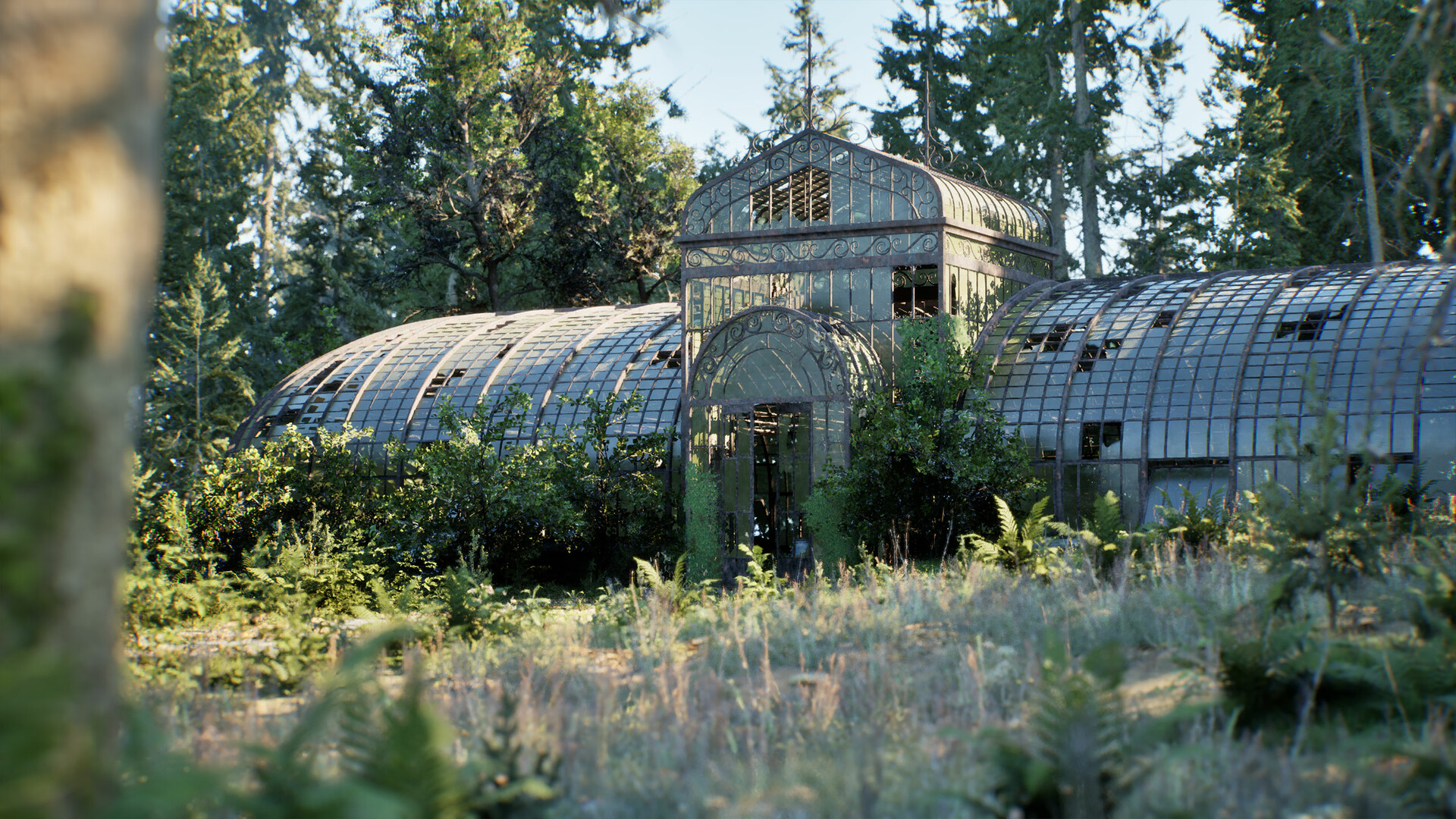
Forest | Safe | Starting area with breathable air. Low enemy density. Basic resources available for early crafting and base building. |
Villages | Transitional | Moderate spore presence. Protection recommended but brief exposure is survivable. Contains buildings that can be secured as outposts. |
City | Heavy | Dense spore concentrations. Full respiratory protection required. High-value loot, story content, and the most dangerous enemies. |
Players need respiratory protection to survive in contaminated areas. The Infection Mechanic governs how spore exposure works. Available protection includes:
Respirator mask: Craftable at a workbench. Provides reduced risk rather than complete immunity.
Antidote: Consumable alternative protection against spore damage.
Gas mask: Additional protective equipment option.
Drones offer a way to explore contaminated zones without risking player health. When deployed into a contaminated area, drones can:
Scout ahead to identify threats, resources, and points of interest.
Place markers that are visible to the player and to teammates in multiplayer sessions.
Operate without being affected by spore contamination.
Drones require energy to operate and attach to the player's backpack when stowed. Their controls are designed to be accessible, and input bindings are configurable.
Venturing into contaminated zones yields better resources and equipment than safer areas. City zones in particular contain advanced materials needed for high-tier crafting, story-related discoveries, and encounters with the most challenging enemies in the game.
The map sorts roughly into three regions. The forest is the uncontaminated starting area where survival pressure stays manageable. Villages form a transitional ring with light contamination and salvageable structures. The city core carries the heaviest spore concentrations, the densest ROTOR patrols, and the highest-tier salvage payouts.
Region | Spore exposure | Hazards | Salvage potential |
|---|---|---|---|
Forest | Low | Wildlife, weather, occasional hostile humans | Basic materials, food, low-tier gear |
Villages | Moderate | Survivors, light contamination, some patrols | Mid-tier scrap, household electronics, vehicles |
Contaminated city | High | Severe spore exposure, ROTOR patrols, hostile groups | High-tier electrical, military scrap, specialty parts |
Crossing into the city core requires equipment that mitigates spore exposure. The infection mechanic tracks exposure over time and turns lethal if ignored, so survivors layer a gas mask with appropriate clothing to extend safe operating windows. Without that protection, even short city visits can spiral into a recovery run after a successful trip out.
Drone companions help survey a zone before commitment. Players can name their drone and dock it on the backpack between deployments. In contaminated territory, a successful scouting pass identifies patrol loops, salvage clusters, and exit lines before the player risks exposure.
Successful runs end at a secured base or vehicle pickup outside the contaminated perimeter. Salvage hauls scale faster than carry weight, which is where Carts, Sleds, and the Alpha Car earn their keep on repeat city runs. Players use base electricity and automation to process loot between runs without losing time.
Severe weather added during Phase 3 raises the cost of long city visits by cutting visibility and travel speed. Coordinating with co-op partners, scouting via drones, and timing runs to favorable weather windows extends safe operating time without changing the underlying gear requirements.
The contaminated downtown that anchors the deepest runs is part of the dense urban environment the studio is actively building. A June 2026 update reported that the road network and the procedural town layout are well advanced, though specific districts are not yet detailed. This work is in development and not yet in the public build.
A June 12, 2026 development update described procedural work on a dense overgrown urban environment, work that is in development and not yet in the public build. The system assembles housing from extracted rules, generating multi-storey buildings, L-shapes with proper roof valleys, attached garages, and porches, and places enemy camps as encounters within the built space. This downtown work is confirmed development direction for the contaminated city areas.