Loading...
Loading...
One-Versus-Many Combat
August 17, 2026 at 11:53 PM
Removed unsourced combat-scale numbers and magnitude claims; adopted Mass Technology naming; corrected fused-blade name
KRAFTON describes the combat as "brutal, visceral, and overwhelming." The game is deliberately designed to feel "bigger and wilder" than traditional action RPGs, driven by "the raw chaos of battle."
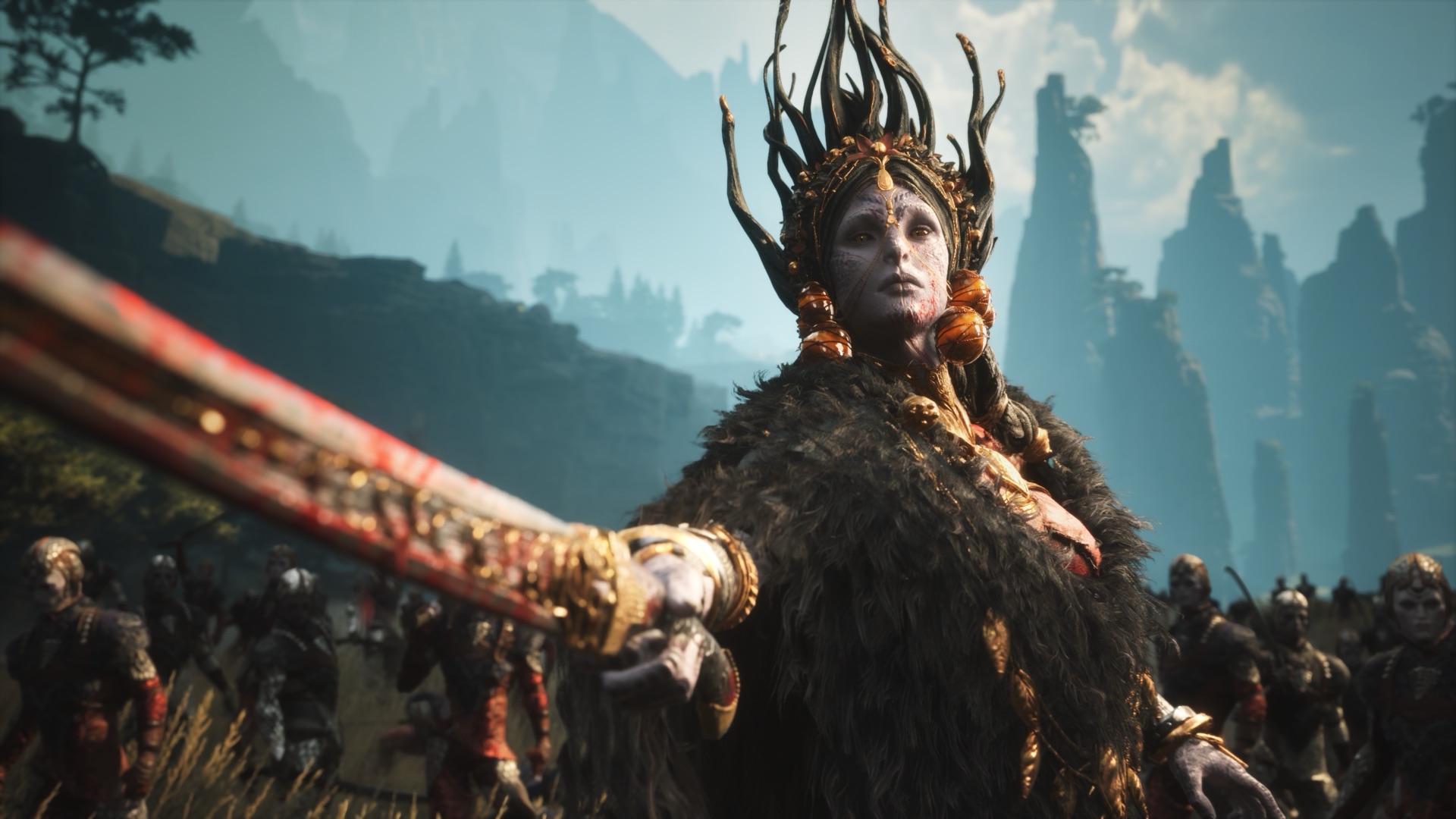
Players fight as a single Rekon warrior against groups of enemies that can number in the dozens or hundreds. This is not a power fantasy where enemies fall over from a single hit. The design combines precise, mastery-driven personal combat with tactical decisions about where and when to engage across a larger battlefield.
The player character is a Rekon, a towering humanoid bird being standing roughly nine feet tall. The size difference matters in combat. Rekon have superior physical reach and strike weight compared to human-sized opponents. The Hero King wields twin star-forged blades that take advantage of that reach.
Raw physical dominance is the starting point. The Rekon is bigger, stronger, and faster than most enemies on the field. But being surrounded by dozens of opponents means strength alone is not enough. You need to read the battlefield and make choices about where to push.
KRAFTON has not published a per-enemy benchmark separating the Hero King from an ordinary Rekon. Its published framing is that a Rekon warrior often fights dozens, and sometimes hundreds, of enemies at once, and that the Hero King cuts through dozens of foes simultaneously while confronting massive creatures. Landing that density in real time is what the studio built its crowd technology for, so that carving through swaths of enemy soldiers feels earned rather than trivial.
Thanks to Mass Technology, enemies on the battlefield react in real time. They do not wait in formation for you to approach. They flank, surround, probe for openings, and respond when you break through their lines. The combat system asks you to adapt constantly rather than memorize attack patterns.
Players fight within the chaos of massive engagements rather than commanding troops from above. You are in the thick of it, and your decisions about which direction to push, which flank to collapse, and when to retreat shape how the larger battle unfolds.
The Hero King's primary weapons are twin star-forged blades made from Stariron, a metal forged at the Final Forge. In the lore, these blades are eventually combined into a single double-bladed weapon called Hope (sometimes rendered Baragi) after the Hero King loses his sword arm. Whether this transformation occurs during the game's story or is a fixed part of the backstory is unknown.
The twin-blade fighting style suits the one-versus-many design. Wide sweeping strikes can catch multiple enemies, while the Rekon's reach means you can connect with targets that smaller warriors could not. The pre-alpha trailer shows the Hero King swinging both blades in arc patterns that carve through groups.
Beyond strength and reach, the Rekon is built for mobility as well as force. Patrik Méthé has stressed that the Rekon is a race rather than a costume, with specific skills and attributes you do not find in a human. KRAFTON has not published figures for movement speed or jump height, so the size and reach advantage is the part that is confirmed.
The Rekon's defining weakness is a fear of water. KRAFTON has described it as a well-known vulnerability of the race and part of what keeps the protagonist from feeling invincible. Whether it operates as a hard navigation rule or a softer situational disadvantage has not been detailed, so treat the tactical consequences as unconfirmed rather than specified.
Press coverage has compared the combat to large-scale crowd-driven action (enemy hordes filling the screen) and to weighty third-person melee action games. KRAFTON's own description settles on "one-versus-many" as the core label: combat that blends personal action with the scale of full-scale warfare, rather than slotting cleanly into either reference point.
KRAFTON has emphasized a zero hand-holding approach. No glowing trails, no cluttered HUDs, no quest markers leading you by the nose. Organic exploration means you find objectives by observing the world rather than following interface elements.