
Loading...
Loading...
The Phantom World
February 11, 2026 at 02:20 AM
Embedded 1 image from gallery
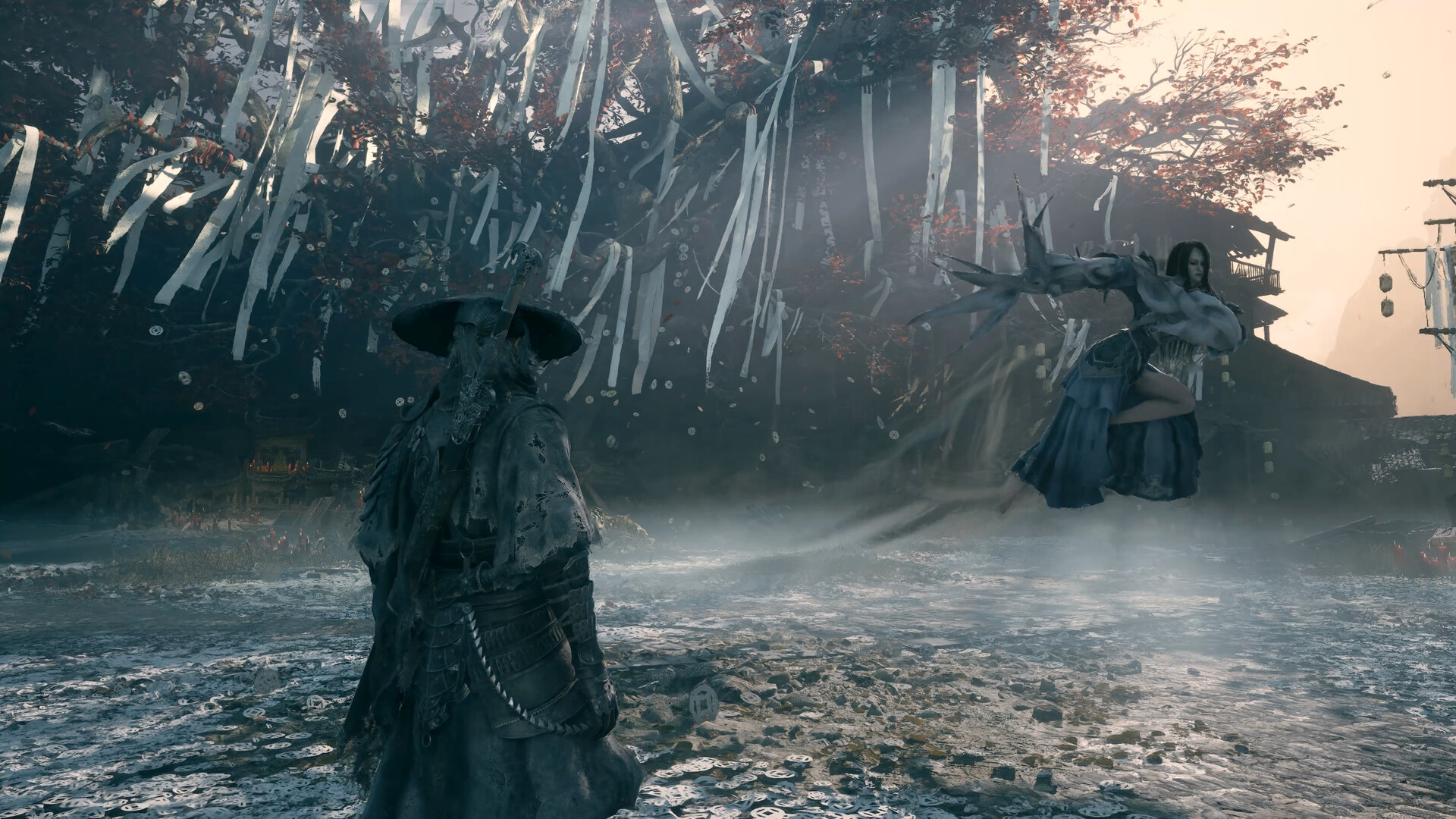
Phantom Blade Zero takes place in the "Phantom World," a fictional universe rooted in China during the Ming dynasty. It is not a historical recreation. S-GAME has layered wuxia martial arts fiction with steampunk, cyberpunk, dark fantasy, and horror into a single setting. The result is a world where ancestral halls sit next to mechanical devices, ornate temples share space with bizarre apparatus, and the line between martial arts and the supernatural barely exists.
S-GAME's CEO, Soulframe Liang (Liang Qiwei), coined the term "Kung Fu Punk" to describe this aesthetic. Traditional kung fu and Chinese culture mixed with modern fashion, steampunk machinery, and cyberpunk elements. It is a deliberate collision of time periods and genres. Ming dynasty architecture shot through a gothic lens, then retrofitted with anachronistic technology. Liang has also described the overall feel as "John Wick in 16th-century China," which captures the mix of elegance, underground power structures, and violent precision.
S-GAME has drawn from a wide range of Chinese cultural traditions for the world design. The research goes beyond surface-level aesthetics into specific regional and historical practices.
Ancestral hall worship - Traditional family shrine practices inform interior architecture and ritual scenes.
Lion dances - Ceremonial lion dance performances appear as part of the world's festivals and public events.
Puppetry - Traditional puppetry shows up in the game's entertainment and performance spaces.
Deity processions - Religious procession ceremonies are reflected in the game's crowd scenes and faction rituals.
Nuo masks - Ancient exorcism masks from the Nuo tradition appear as both cultural artifacts and functional game elements.
Bianlian (face-changing) - The Sichuan opera art of rapid mask changes is referenced in character design and performance scenes.
Beijing opera - Operatic staging, costumes, and movement vocabulary influence both character animations and environmental storytelling.
Imperial ceremonies - Court rituals and state ceremonies inform the political aspects of The Order and its public-facing operations.
This level of cultural specificity is deliberate. Liang has said the team does not water down Chinese cultural elements for Western audiences. The game is steeped in wuxia fiction, Chinese mythology, and Ming dynasty history, and S-GAME expects players to meet it where it is.
Pang Town is a confirmed location in the game. It has its own unique septuple meter music, meaning the soundtrack for this area uses a 7-beat rhythmic pattern rather than the standard 4/4 time signature common in most game scores. This kind of location-specific musical identity suggests that each area in the Phantom World has been given individual attention in both visual and audio design.
The Phantom World uses a semi-open world structure with interconnected, large handcrafted maps. S-GAME has cited pre-Elden Ring FromSoftware level design as an inspiration. That means tightly designed areas that loop back on themselves, with shortcuts that connect distant points once you have explored enough. Not an open-world sandbox, not a linear corridor. Something in between.
The game includes Metroidvania elements through its Phantom Edge system. Secondary weapons function as keys that unlock new paths. S-GAME has confirmed roughly 10 key-lock combinations. For example, the Man-Cutter axe destroys specific barriers, while the Bashpole sledgehammer breaks weakened floors. These tools gate exploration so that revisiting areas with new weapons opens up previously inaccessible content.
Wall-running, inspired by Prince of Persia, is part of the traversal system. Combined with the Metroidvania gating, this means the game rewards players who pay attention to their environment and return to earlier areas with new tools.
The environments shown in trailers and demo footage include misty forests, ruined mountain passes, blood-slicked courtyards, and ornate temples. Some areas have an outright horror element. S-GAME has drawn tonal parallels to Resident Evil and Alan Wake for certain sections. Other areas feel like classical Chinese landscape paintings, just with something wrong at the edges.
The gothic treatment of Ming dynasty architecture is one of the more distinct visual choices. Buildings have traditional Chinese rooflines and structural forms, but the lighting, color grading, and atmosphere push them toward something darker. A temple that looks right from a distance but feels unsettling up close. Mechanical limbs and strange devices appear alongside traditional weapons and period-accurate furniture.
The game takes place in the jianghu, a concept from Chinese fiction describing the domain where wanderers, martial artists, outlaws, and folk heroes exist outside the reach of the imperial court. It is a parallel society with its own rules, hierarchies, and power structures. The Order is one of the dominant forces in this jianghu. The jianghu is not a single location. It is a social world layered on top of the physical one. Anywhere people gather outside official authority is jianghu territory: taverns, mountain hideouts, underground fighting rings, secret meeting halls.
Liang has said: "We want to rediscover games from the PS1 and PS2 eras, but with modern technology." The reference is to action games from that period that were fast, stylish, and built around a strong aesthetic identity. Games that were uncompromising about what they were. This philosophy shows up in the Phantom World's design. Every area has a clear visual identity. Nothing looks generic or reused. The art team commits to the Kung Fu Punk concept completely. See the development history article for more on how this design philosophy evolved over the studio's history.
