

What Procedural Generation Means Here
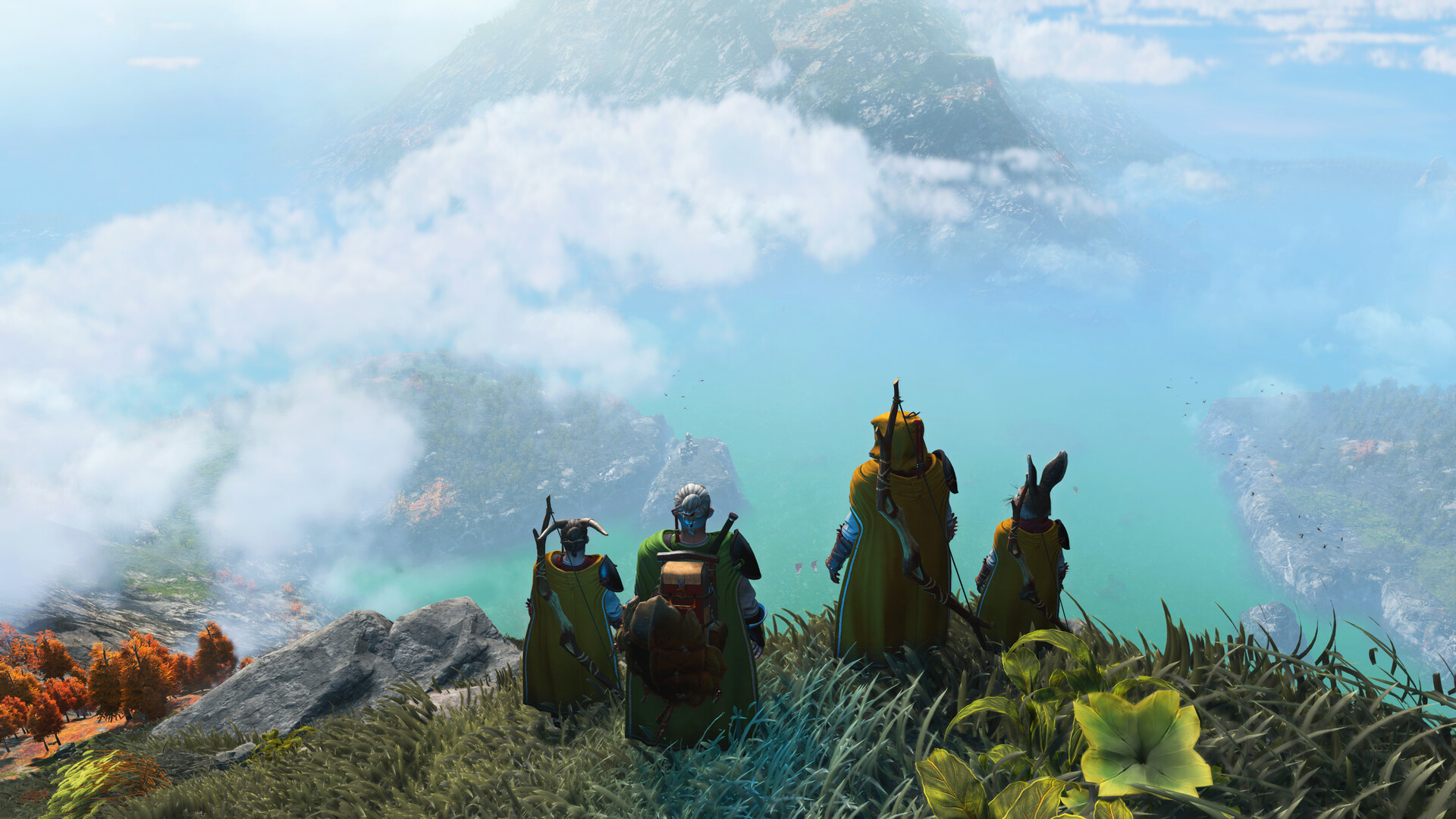
Procedural generation is a method where algorithms create content rather than artists hand-placing every element. Hello Games has been building procedural generation technology for over a decade, starting with No Man's Sky. Light No Fire applies that same foundation to a very different problem.
No Man's Sky generated 18 quintillion planets across an infinite universe. Each planet was relatively simple: a single biome, a set of creatures, some resources. The system prioritized breadth. Light No Fire flips that approach entirely. Instead of infinite planets, you get one. But that one planet is the size of Earth, and it needs to be dense, varied, and interesting enough to hold up under sustained exploration.
One planet, Earth-scale
The planet in Light No Fire has been described as matching Earth's actual dimensions. Sean Murray has not published a walking time for the planet. Community estimates from the reveal trailer put a continuous walk around the equator at roughly 334 days. Either way, the scale is hard to comprehend in gaming terms. Walking across Skyrim takes about 30 minutes. Walking across the biggest open-world games takes a few hours at most.
The procedural system generates terrain, biomes, vegetation, creature populations, and resource distributions across this entire surface. No two mountain ranges look the same. Biomes blend into each other rather than cutting off at hard boundaries. Underwater terrain is generated with the same attention as the surface.
Shared Seed
Every player sees the same planet. The procedural generation uses a single seed, which means the terrain is identical for all players. When one person discovers a mountain, it is the same mountain another player would find at those coordinates. This is what enables the shared-world multiplayer: your discoveries, your buildings, and your paths through the world all exist in the same space as everyone else's.
Four Design Pillars
Hello Games has described the game through four interlocking design pillars:
A Multiplayer Earth: a shared space large enough for all players, where everyone exists on the same planet simultaneously.
A Procedural Earth: generated using Hello Games' proprietary algorithms, building on the technology behind No Man's Sky.
A Fantasy Earth: an ancient, mysterious world where "you're not the hero." The planet has its own history and dangers that existed long before you arrived.
An Unexplored Earth: the emphasis is on discovery, on being the first person to find a mountain range or a cave system that no other player has seen.
Depth Over Breadth
Murray has described the design philosophy as creating "a planet that is as varied as a universe." The challenge is real. In No Man's Sky, sameness was a common complaint: after visiting a few dozen planets, they started blurring together. Light No Fire needs to avoid that problem within a single world.
The Steam page promises "a massively varied and dense planet filled with immersive biomes, unique enemies and valuable resources to discover." Trailer footage backs this up with distinct environments visible in quick succession: forests, deserts, frozen peaks, deep oceans, and volcanic terrain.
Technology Shared with No Man's Sky
Hello Games has confirmed that technology flows between their two active projects. The Voyagers update for No Man's Sky (August 2025) introduced fully walkable, customizable ships built room by room. Murray explicitly stated this ship-building technology is shared with Light No Fire, where it powers the boat-building system.
This bidirectional development means improvements in one game often appear in the other. No Man's Sky effectively functions as a testing ground for some Light No Fire systems, and vice versa. Hello Games stated the relationship plainly in a February 2025 post: Light No Fire is powered by the same engine that drives No Man's Sky.