

One World, All Players
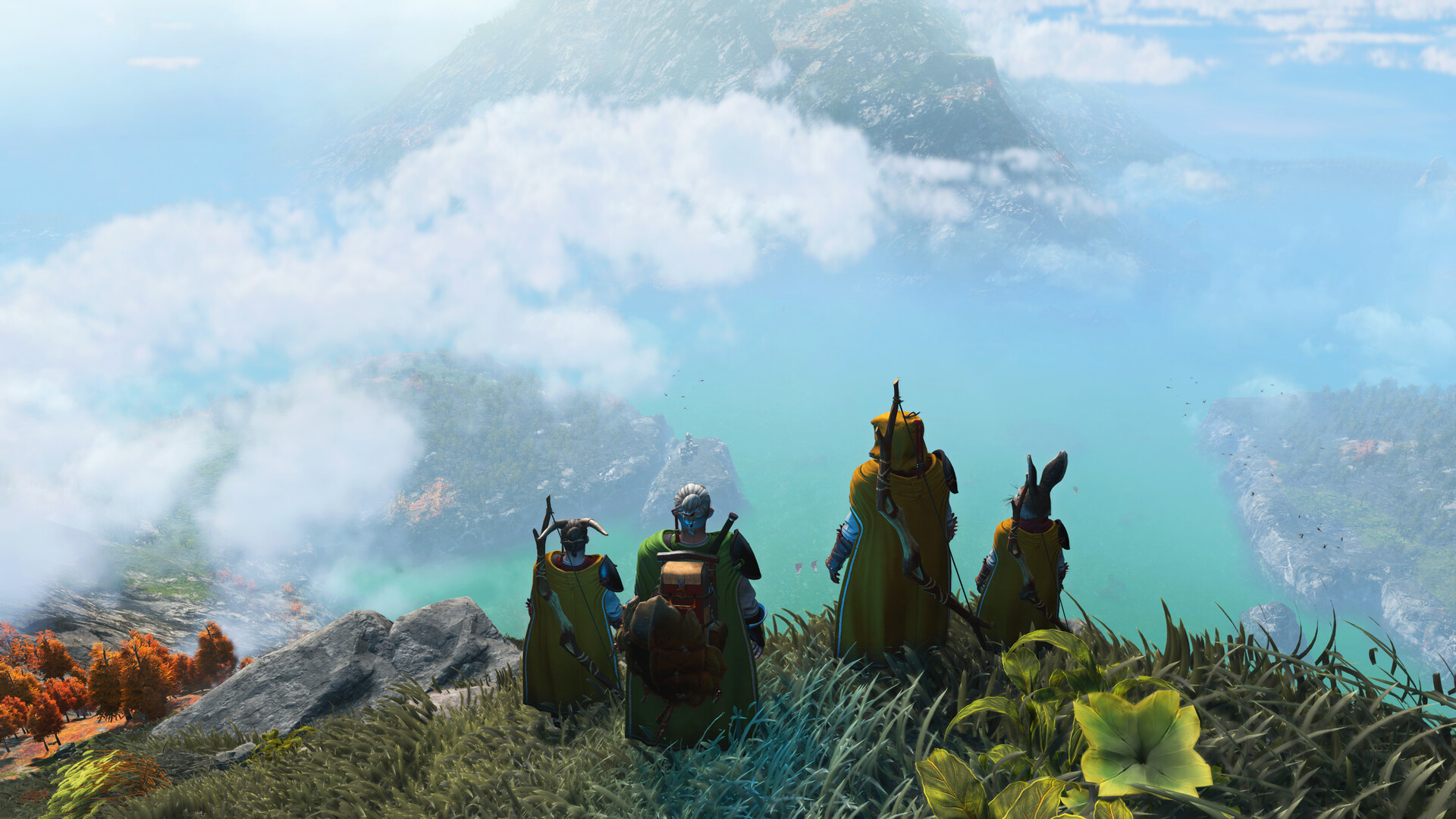
Every player in Light No Fire exists on the same planet. This is not instanced multiplayer where each group gets a private copy of the world. The planet is shared. Build a tower on a hilltop, and another player walking through that area will see it standing there.
The official description puts it plainly: "Meet players from across the globe, build a life, explore and survive together. Construct persistent buildings and communities, or strike out alone to discover the world for others."
Coverage of the reveal framed the scale in population terms: a multiplayer Earth large enough to conceivably accommodate the several billion people who inhabit the real planet. That framing is about physical space, not server capacity, and it is press description rather than a statement from Hello Games. The planet has enough room. Whether the networking can handle millions of simultaneous players in the same world is a separate engineering question that Hello Games has not addressed publicly.
Co-Op and Crews
The Steam page lists the game as supporting both single-player and online co-op. Players can form crews for specific activities, most notably ocean crossings. Murray confirmed that the real oceans require "large boats and crews" to traverse. Ship building and crewing are tied together.
The reveal trailer showed groups of players doing things together: riding mounts across plains, fighting enemies as a group, building structures side by side. At one point roughly 10 players were visible on screen at the same time, based on community frame-by-frame analysis. Whether that represents the maximum number of players visible in a local area or just what the trailer happened to show is not clear.
Player Limits
Hello Games has not officially confirmed the maximum number of players who can be in the same area at once. For reference, No Man's Sky supports up to 32 players per instance. Light No Fire could match that, exceed it, or use a different system entirely. Until Hello Games says otherwise, the actual player cap is unknown.
Persistent Buildings and Communities
What you build stays. Buildings are persistent in the shared world. Multiple players can build near each other to form communities and settlements. The game encourages this directly: "Construct persistent buildings and communities." Other players can discover these settlements while exploring.
This creates a world that changes over time. Early in the game's life, the planet will be mostly wilderness. As months pass, player-built towns and outposts will start dotting the landscape. Given the Earth-sized scale, there will always be unexplored wilderness, but trade routes and population centers should emerge organically.
Solo Play
You do not need other people to play Light No Fire. Solo play is fully supported. The Steam page lists single-player as a feature alongside online co-op. "Strike out alone to discover the world for others" is how the official description frames it. You can explore, build, fight, and survive without ever joining a crew or building near another player.
The planet is large enough that a solo player could go weeks without encountering another person's buildings, depending on where they go. Remote mountain ranges, deep forests, and distant continents will likely stay empty for a long time.
What We Do Not Know
Several multiplayer details have not been confirmed:
Item | Description |
|---|---|
PvP vs. PvE | Can players attack each other? Is there a toggle? Are there safe zones? |
Server architecture | How does the shared world handle thousands or millions of simultaneous players? |
Player visibility cap | How many players can be in the same physical area? |
Griefing protection | Can other players destroy what you have built? |
Communication tools | Voice chat, text chat, emotes, trading interfaces? |
No Man's Sky handled some of these questions over time through post-launch updates. Hello Games may take a similar approach with Light No Fire, adjusting multiplayer systems based on how players actually use them. See the overview for the broader picture of the game's confirmed features.