

A single planet
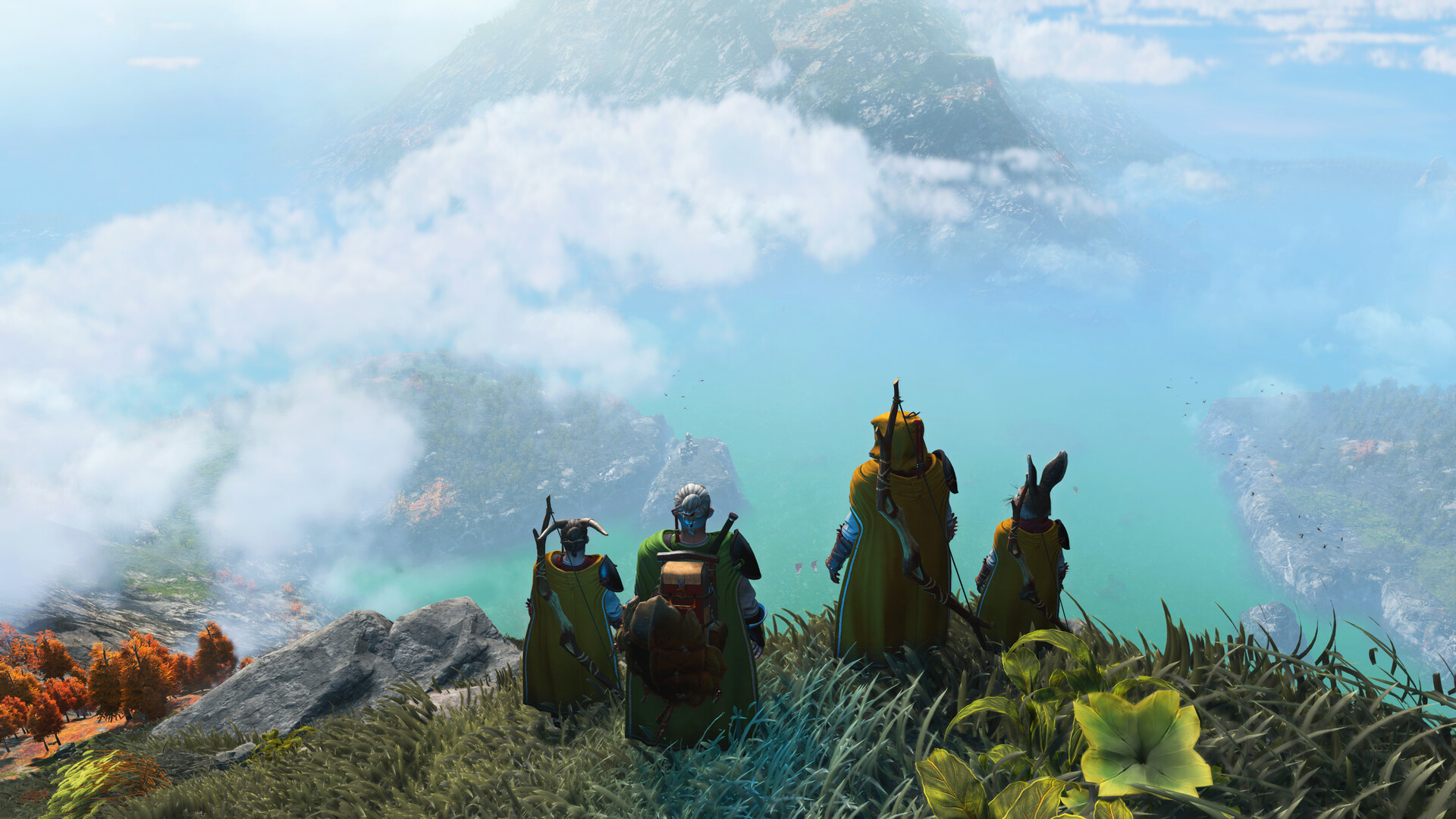
Light No Fire takes place on one procedurally generated planet. That is the entire game. There is no galaxy map, no star system hopping, no warp drives. Hello Games went the opposite direction from No Man's Sky, which had 18 quintillion planets spread across an infinite universe. Here, you get one world, and it is the size of Earth.
The official Steam page describes it as a "truly open world, with no boundaries at a scale never attempted before." That is a bold claim, but the numbers back it up. Community members did the math after the reveal trailer and estimated it would take roughly 334 days of continuous walking to cross the equator. For comparison, walking across the map in most open-world games takes between 30 minutes and a few hours.
Every player shares this planet. There are no separate servers with different world instances. When you build a house, another player on the other side of the planet could walk to it. Sean Murray has called it "a multiplayer Earth, a space that's large enough to conceivably accommodate the 7.8 billion people that currently inhabit our planet." The actual player population will obviously be smaller than that, but the point is the space exists for it.
Scale and Geography
Sean Murray talked about the physical geography in terms that are hard to overstate. His description from the reveal: "Something with real mountains, not video game mountains, but mountains that are miles high [and] taller than Everest." He went on to describe climbing to the top of one and looking out over rivers, canyons and continents from the summit.
That word "continents" matters. This is not a single landmass surrounded by water. The planet has distinct landmasses separated by real oceans. The official description says "every mountain can be climbed, and below them lie endless vistas, oceans and continents perhaps no others have seen." In a world this large, that last part is probably literal. There will be mountain ranges that go undiscovered for months after launch.
The Steam page describes a "massively varied and dense planet filled with immersive biomes." Footage from the reveal trailer confirms several environment types: thick forests, open deserts, snow-covered mountain peaks, underwater areas, and rain-swept coastlines. The ocean floors are explorable, not just flat blue texture to keep players away.
Oceans
Real oceans are a confirmed feature, not decorative water you cannot cross. Murray made this explicit during the No Man's Sky Voyagers update announcement: "Much of the technology we're introducing with Voyagers is shared with our next game, Light No Fire, which is a truly open world, a shared Earth-sized planet, with real oceans to traverse, needing large boats and crews."
This ties directly into the multiplayer and base-building systems. Oceans are not obstacles to avoid. They are regions of the world that require ship construction and crew cooperation to cross. Given the planet is Earth-sized, some of these ocean crossings could be long voyages.
No Loading Screens
The reveal trailer showed continuous movement from ground level to mountaintops, through forests, underwater, and into the sky on dragonback, with no visible loading transitions. The planet appears to be fully seamless. You can stand at the base of a mountain range, climb to the top, look out at a continent-spanning view, and fly to the horizon without hitting a loading screen.
Procedural generation
The planet is procedurally generated, meaning algorithms create the terrain, biomes, and details rather than artists hand-placing every rock. Hello Games built their reputation on this technology with No Man's Sky. The difference here is that the output is a single, shared, persistent world rather than disposable planets you visit and forget.
Because everyone shares the same seed, the geography is identical for all players. The mountain you see is the same mountain someone else sees from the other side. Player-built structures sit on top of the generated terrain and persist for everyone.
Biomes
Environments confirmed through trailer footage and official descriptions:
Mountain ranges with peaks taller than Everest
Dense forests
Arid deserts
Oceans and coastlines
Underwater regions
River valleys and canyons
Rain environments (weather shown in trailer)
The Steam page mentions "immersive biomes" without listing them all. Given the planet is Earth-sized, there is room for far more biome variety than what has been shown so far.
One Planet vs. Infinite Universe
The design choice is deliberate. No Man's Sky gave players everything and nowhere to call home. Light No Fire gives players one place and asks them to make something of it. Murray has described this as the studio learning from what worked and what did not. When everyone is on the same planet, your buildings matter, your communities matter, and the world gets a shared history that infinite procedural universes cannot sustain.