

Vendors are the traders and merchants who buy and sell goods in HUNGER. They are one of several ways for a Living to acquire equipment and offload loot, sitting alongside the player-driven Marketplace at the Chateau and direct trading between players. Each Vendor deals on their own terms, so working with them is a system in its own right rather than a simple shop menu.
How Vendors Work
Every Vendor keeps a specialisation and favours certain categories of goods, so what one will buy or sell differs from the next. Their stock is limited and refreshes over time, cycling in new wares as the state of the world shifts. Prices are not fixed either: they move with scarcity and demand, and a Vendor's read on the player counts for as much as the market does. A survivor who trades steadily or helps a Vendor through their quests sees prices soften and stock widen, while a stranger pays full price for a thinner selection.
Reputation
Each Vendor at the Chateau and beyond keeps a reputation ledger, a running record of every dealing a player has had with them. Reputation grows through repeated trade, through completing a Vendor's quests, and through running the errands and tasks they hand out. As it climbs, a Vendor opens up: better prices, rarer goods, and opportunities that stay hidden from customers who have not proven themselves. Some hold their most valuable stock back entirely until a player has earned their trust. Patience tends to matter more than raw wealth, since the best shelves open to reliable customers rather than to whoever arrives with the most coin.
Currency
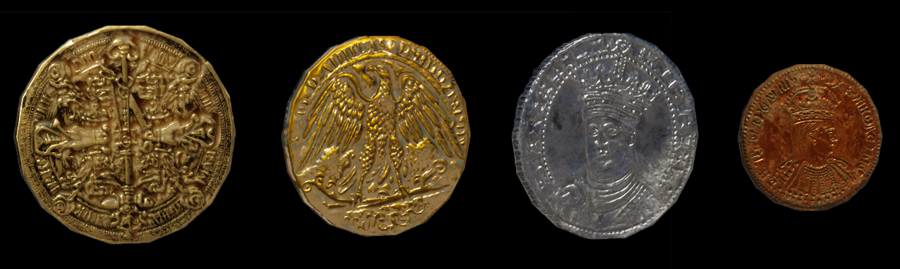
All trade in HUNGER runs on three coins. They convert into one another automatically, so a stack of the smaller coin rolls up into the larger without any manual exchange.
Coin | Role | Conversion |
|---|---|---|
Copper | The smallest measure of value, used for common trade and daily exchange | 100 Copper = 1 Silver |
Silver | The median currency, for sturdier hands and rarer goods | 100 Silver = 1 Gold |
Gold | The mark of true wealth, carried by few and desired by all | Highest tier |
Coin carried out of a successful Expedition transfers automatically into the player's Stash back at the Chateau, held in a dedicated currency slot rather than taking up item space.
Trade as a Playstyle
Vendors are more than a convenience. The weapons a player repairs, the food they carry, and the ammunition they spend all pass through a Vendor's hands at some point, so a strong network of trading relationships is its own kind of security. The developers have said some players may choose to build their power almost entirely through commerce, buying, refining, and reselling goods rather than fighting for them. A gathering or crafting profession feeds naturally into that path, turning raw materials and finished gear into a steady income. HUNGER treats its economy as another arena of competition, where foresight and influence can carry a player as far as combat does.
The Auction House
NPC Vendors are the trading layer available now, and they are meant to be the foundation for something larger. After the Early Access launch, the studio plans to broaden the economy into a player-driven network that links individual players, guilds, and regional markets, with a dedicated Auction House for trade between players. During Tech Test 3, Vendor prices were set deliberately high to mark out the eventual ceiling for that player economy. With player trading not yet in place, those margins made buying equipment feel far more punishing than intended, and the studio has since cut Vendor profit margins significantly. The stated intent is that Vendors still set a natural price floor and ceiling for the economy, but read as useful merchants throughout progression rather than as emergency suppliers of last resort.