Loading...
Loading...
Modular Customization
August 6, 2026 at 11:17 PM
Clarified that the seven equipment categories come from four grouped storefront descriptions with no published layer or slot count; added the stated intent to support mods
Modular customization is the loadout system that lets players reshape the TARTARUS between engagements. Rather than a fixed ship with a few unlockable parts, the dreadnought is described as freely reconfigurable across seven named equipment categories before the player commits to the next stretch of the continuous campaign. For the broader pitch, see the overview.
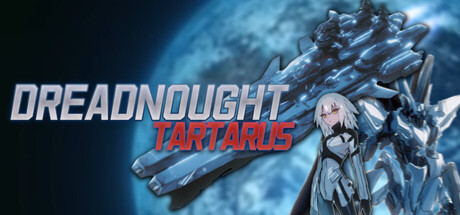
Seven equipment categories have been named publicly. They are presented in grouped form rather than as a formal seven-slot interface: hull structures and functional modules are described together, main cannons, missiles, and super weapons together, and carrier-based fighters and support units together, with tactical loadouts tuned to enemy type given as the purpose rather than as an eighth category. No slot count, layer count, or configuration-screen layout has been published, so treat the seven below as the named categories of equipment rather than as a confirmed number of layers in the interface. Together they control the silhouette, the firing posture, and the tactical role the ship adopts when it advances into a new warzone.
Layer | Role |
|---|---|
Hull Structures | The top-level structural framework. Sets the overall layout and dictates where other modules can attach. |
Functional Modules | Non-weapon systems that keep the ship running in combat: sub-systems, support gear, and operational equipment. |
Main Cannons | Primary heavy weapons for long-range strikes on high-value targets. |
Missiles | Guided ordnance hardpoints for saturation fire and targets the cannons are not built for. |
Super Weapons | Reserved high-impact armaments used in moments where standard weapons are not enough. |
Carrier-Based Fighters | Smaller aircraft launched from the ship to extend its effective range. |
Support Units | Auxiliary craft and systems that reinforce the dreadnought without forming the primary attack line. |
Customization is not a one-time pre-game setup. Because the campaign advances continuously across a strategic map, the loadout is tuned every time the player commits to a new route or warzone. Different zones favour different mixes: an urban defence theatre rewards a different missile and cannon balance than a deep-space line against an extraterrestrial invasion tier. Tuning the equipment categories is part of the same decision as choosing where the dreadnought advances next.
After a player picks the equipment that goes into each layer, every weapon hardpoint can be assigned one of three firing modes: Manual for direct control, Automatic for hands-off coverage, or Focus Fire for a coordinated salvo with other hardpoints set to the same mode. Mode selection sits alongside the loadout as a tactical lever and can be changed mid-fight.
The catalogue of equipment available to slot into each layer grows over the course of the campaign through reverse engineering. Intel pulled from defeated enemies feeds new armaments and modules into the loadout pool, and because there are four distinct enemy categories with different technology bases, engaging a wider spread of opposition produces a wider catalogue to choose from. A cannon recovered from one engagement can be installed before the next route is committed.
The seven categories describe the dreadnought itself. The combat mech carried in the hangar bay is a separate scale of engagement with its own deployment loop. Whether the mech shares parts with the dreadnought's customization layers or runs on a parallel system has not been publicly described.
Customization is meant to extend past the shipped catalogue. In a January 2026 development post the developer wrote that modular refitting and mod support were intended to be the long-term core of the game, framed as an invitation for players to bring in designs from works they like. That is a statement of direction, not a delivered feature.
Nothing has been published about how mods would be authored or loaded: no toolset, no workshop listing, no supported file format, and no indication of whether mod support would be present at launch or added afterwards. Until any of that appears, treat mod support as intent rather than a confirmed feature.
Specifics about the customization system have not been disclosed. Treat the following as open questions:
Total number of named hardpoints per layer (slot counts).
Whether equipment has a rarity or tier system, or whether the catalogue is flat.
Whether installation incurs a resource cost beyond the reverse-engineering step.
Whether the player can save and recall named loadout presets.
Whether some equipment is mutually exclusive within a layer.
Whether the dreadnought's silhouette changes visually with different hull or module choices.
Whether the seven named categories map to seven configuration screens, or are grouped differently in the actual refit interface.