
Loading...
Loading...
Multi-Tiered World
August 7, 2026 at 09:55 AM
Added the stone ruins and gargoyle statuary shown in the reveal stills, plus lightning and thunder in the high country
The Multi-Tiered World is one of the defining design pillars of Don't Starve Elsewhere. The studio describes the setting as a multi-tiered wilderness that stacks distinct biomes at different elevations, each with its own independent climate. Together with full 3D movement and the spreading Fog system, verticality is what most clearly separates Elsewhere from earlier entries. New players should also read the Overview and the Survival Basics primer.
The world is built in vertical layers rather than as a flat plane. Snow-covered peaks tower over forested lowlands, rivers cut through valleys to feed open seas, and caves weave underneath. The map is procedurally generated, so the layout differs each run. Verticality is treated as both navigable terrain and a hazard, and falling has been confirmed as a new failure state alongside starvation and Fog exposure.
The reveal materials list the confirmed biomes below. The studio has indicated that more biomes exist beyond these, but they have not yet been named or described.
Biome | Tier | What Is Known |
|---|---|---|
Snow-Covered Mountain Peaks | High elevation | The highest tier of the world. Snow cover implies cold conditions. Peaks are climbable but dangerous, with falling damage as a real risk. |
High-Altitude Regions | High elevation | Chilling zones with territorial creatures. Cold and wind sit on top of the standard survival meters, and wildlife is described as actively hostile. |
Redwood Forests | Mid elevation | Tall redwood forests with relentless rainstorms. The rain is part of the biome's identity rather than a passing weather event. |
Rushing Rivers | Valley level | Fast-flowing rivers cut through the landscape and connect inland biomes to the sea. Swimming is part of the traversal toolkit. |
Tumultuous Seas | Sea level | Open seas confirmed as part of the world. The word tumultuous signals rough water. Boat mechanics have not been detailed. |
Winding Cave Systems | Below surface | Caves form the lowest tier. They are described as winding, suggesting branching layouts. Spelunking is a confirmed traversal activity. |
Each biome runs on its own climate. Weather and temperature are not global events. Conditions are tied to the biome the player is currently standing in, so crossing a tier boundary can change the survival picture immediately.
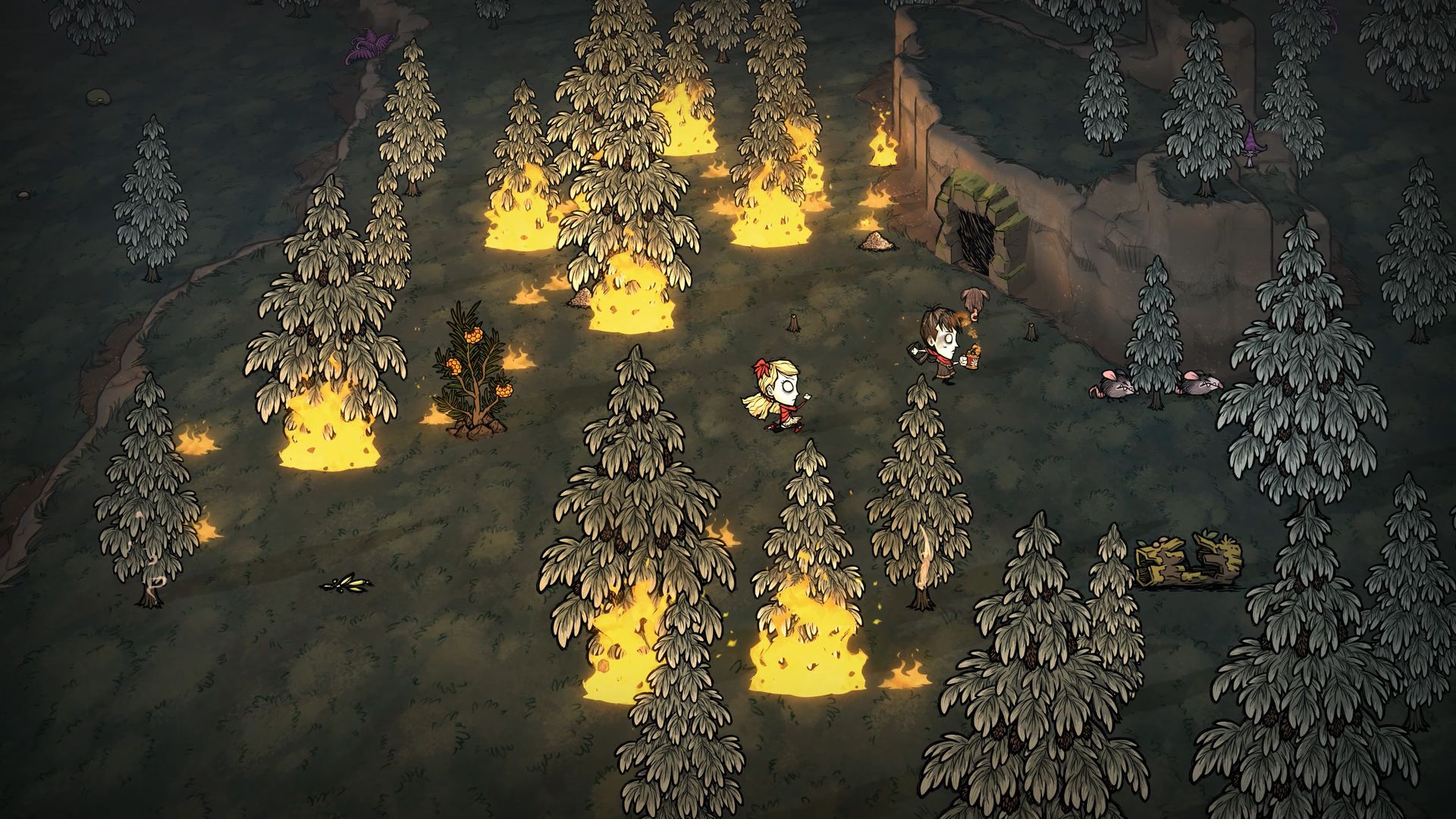
Redwood forests are characterized by relentless rainstorms, an ongoing condition rather than an occasional weather roll.
High-altitude regions are cold and wind-exposed, with the chill itself acting as a survival pressure on top of the wildlife threat.
Other biomes are confirmed to exist with their own climates, but specific weather profiles have not been disclosed.
Storms are not only rain. The studio's own description of the high country talks about fending off territorial creatures that try to bring down the thunder, and the official reveal stills show lightning striking ground level hard enough to set a tree burning in the rain. Whether lightning is a scripted weather beat, a creature-driven attack, or both has not been spelled out, so treat the mechanism as open while the imagery itself is confirmed.
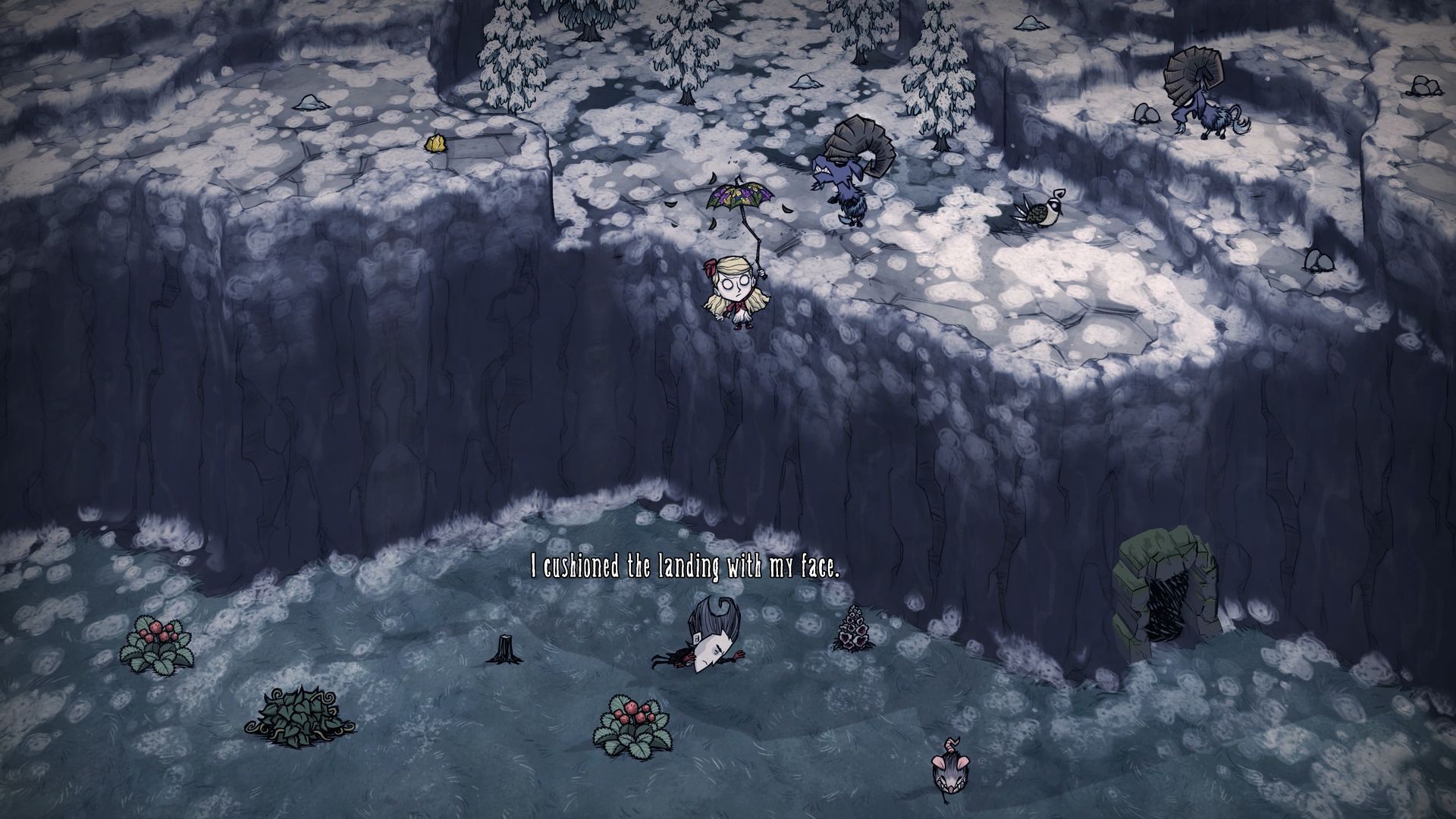
Mountains, cliffs, and plateaus are navigable terrain features and hazards at the same time. Climbing is part of the standard movement toolkit introduced by the move into 3D movement, and players are expected to plan ascents and descents the way they plan horizontal routes. Falling from a height is a lethal failure state, so a missed jump or unsafe descent can end a run. Vertical layout also creates layered encounters: a resource visible from a peak may require a long detour through swimming or caving to actually reach.
The world is procedurally generated, so the layout of biomes, the placement of mountain ranges, the routes that rivers carve, and the entrances to cave networks differ each run. Players cannot rely on memorized maps; every fresh world has to be read from scratch using the same biome rules and tier behaviors.
The world is not purely wilderness. One of the official reveal stills is set among worked stone architecture: a paved courtyard, a tall arched doorway, gothic windows, and carved gargoyle figures mounted on plinths, with survivors crossing it by torchlight in heavy rain. It is the clearest sign so far that built ruins sit alongside the natural biomes as places to explore.
The studio has not named this location, said which biome it belongs to, or explained what the gargoyles do. They read as statuary, and at least one is shown off its plinth and low to the ground, which is why the Creatures and Wildlife page treats them as an open question rather than confirmed enemies. Nothing has been published about loot, interiors, or whether these ruins are hand-authored set pieces or part of the procedural pass.
The studio has been explicit that Elsewhere is set in a brand new world, separate from the setting of Don't Starve and Don't Starve Together. Biomes, creatures, items, characters, and story are designed for this game from the ground up, and prior-series geography should not be assumed to carry over. The pitch describes it as a strange and unforgiving new world filled with magic, monsters, and mystery.
Treat the items below as open until the studio confirms them.
The total number of biomes in the world.
Named locations or landmarks within any biome.
Whether biomes connect by hard borders, gradients, or transitions.
Whether worlds persist between sessions, or new runs always reset the seed.
How biomes behave across the day-night cycle.
How the Fog interacts with biome borders.
Which biome the stone ruins belong to, and whether they are hand-placed or procedurally generated.
Whether lightning is a weather event, a creature ability, or both, and whether it can damage the player.
